


Be the first to join. Keep the badge forever.
The first members of this community earn permanent Founding Member status. It shows on your profile and your dog's profile for as long as you're here.
- ✓Founding Member badge on your profile
- ✓Your dog featured first
- ✓First Dog of the Month nomination
- ✓Always free
⭐ Founding Member spots open
First to join gets the badge
🐕 Be the first dog registered
Add your Lab to the community
📷 Add the first photo
Start the photo wall
8
Discussions
0 members
8 discussions
About the Bedlington Terrier
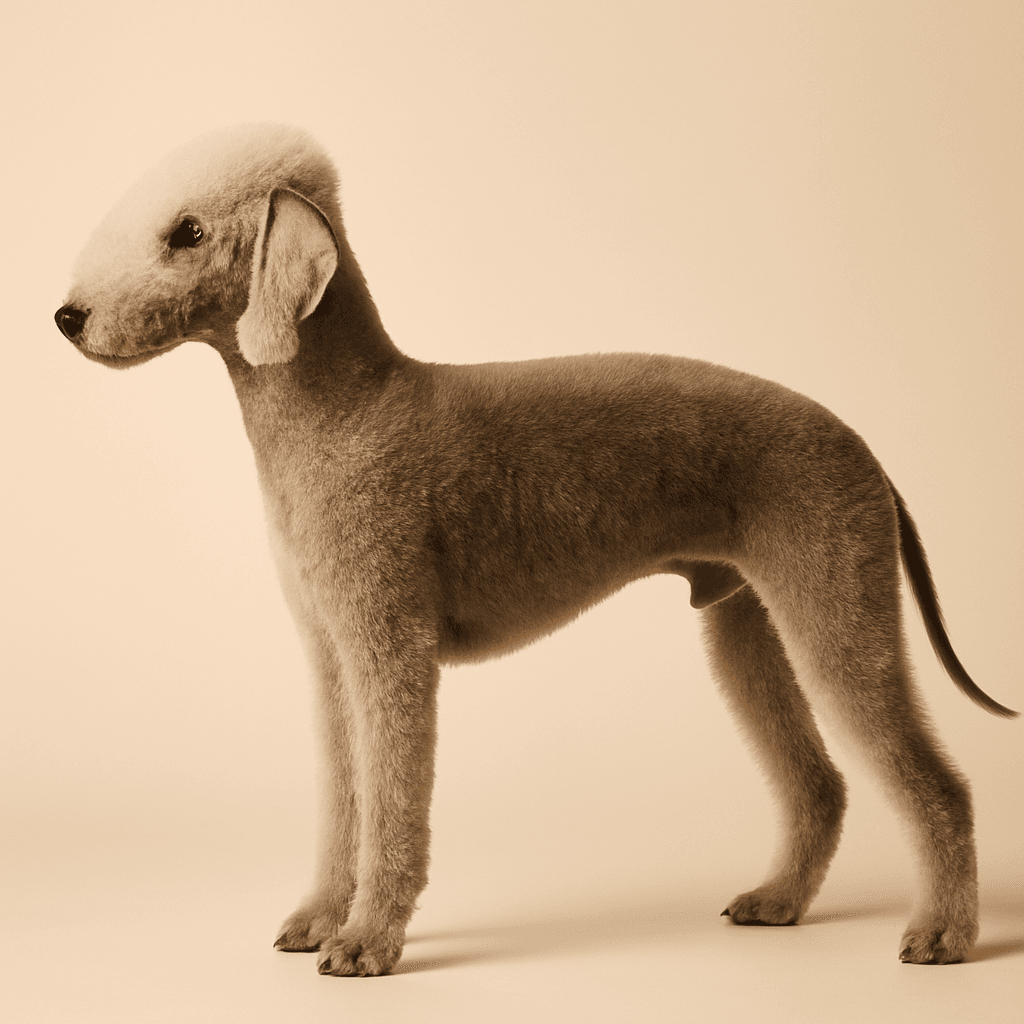
The Bedlington Terrier is one of the most visually distinctive dogs in the world. Its arched back, pear-shaped head, tasselled ears and curly, non-shedding coat give it an appearance so lamb-like that it has spent most of its breed history confusing people who encounter it for the first time. The appearance is entirely misleading. The Bedlington is a genuine terrier - originally developed in the Northumberland town of Bedlington for hunting vermin and racing - with the speed, tenacity and spirit that implies. Registered by the Kennel Club in the Terrier Group, the Bedlington has a distinguished history as a working dog. It was prized by miners in Northumberland for its ability to control rats and was also raced at considerable speed - a reminder that the gentle, curved outline conceals a genuinely athletic, fast-moving dog built for sustained pursuit. It was also a favourite of Romani travellers in the north of England who valued its versatility and quiet effectiveness. In the home, the Bedlington is an affectionate, playful and engaging companion. It bonds closely with its family, is generally good with children and brings a liveliness and curiosity to household life that makes it a consistently entertaining presence. It is not a dog that sits in the corner. It wants involvement, stimulation and activity. The terrier character is the other side of the coin. The Bedlington has genuine prey drive - small animals, cats and rodents are at risk. Same-sex aggression, particularly between males, can occur and requires management. With thorough early socialisation and consistent training these characteristics can be managed well, but they should be understood before purchase rather than discovered afterwards. Copper Toxicosis is the most important health issue in the breed and must be the starting point for any conversation with a prospective breeder. This hereditary condition causes the liver to accumulate copper abnormally over time, leading to progressive liver damage, cirrhosis and potentially fatal liver failure. It can be clinically silent for years before symptoms emerge, by which time significant damage has already occurred. A DNA test exists that classifies dogs as clear, carrier or affected. Both parents must be DNA tested and results provided before you purchase a puppy. A clear dog from two tested-clear parents will not develop the condition. Buying from untested parents is an unnecessary gamble on a preventable, serious and expensive condition. Diet management should reflect the breed's copper sensitivity regardless of DNA status. Organ meats, particularly liver and kidney, are high in copper and should be avoided or strictly limited. A complete commercial adult food with no organ-meat supplementation is the safest approach. Dogs diagnosed with Copper Toxicosis require a formally low-copper diet prescribed and managed in consultation with a veterinary hepatologist. Progressive Retinal Atrophy also occurs in the breed and DNA testing is available. Retinal Dysplasia has been documented. Eye testing of breeding stock and DNA testing for PRA are both reasonable asks before purchasing a puppy. The coat is one of the Bedlington's most distinctive features and requires professional attention every six to eight weeks to maintain its characteristic trimmed shape. Between appointments, brushing helps prevent tangling. The coat does not shed in the traditional sense and is sometimes preferred by owners sensitive to dog hair. Exercise needs are around one hour daily. The Bedlington is more athletic than it appears and benefits from proper daily activity including secure off-lead running. It excels at agility given its speed and athleticism, and training provides the mental engagement a terrier of this intelligence needs. Purchase prices from KC-registered breeders range from £800 to £1,500. Monthly running costs average £90 to £160. Insurance typically costs £25 to £50 per month, though costs rise significantly if Copper Toxicosis manifests in a dog from untested parents. Lifespan is typically 12 to 14 years. The Bedlington Terrier Club and associated breed rescue are the primary UK resources for breed information, responsible breeders and rescue contact. For owners who do the homework on Copper Toxicosis and purchase from properly DNA-tested stock, the Bedlington is a delightful, distinctive and wholly engaging companion.
Quick facts
Meet Our Bedlington Terriers
Register your dog on My Dog and it will appear here automatically.
Bedlington Terrier Photos
No photos yet. Be the first to share yours.
Add a photoActivity Feed
How much exercise does your Bedlington Terrier really need each day?
About an hour a day, but do not be fooled by the fluffy lamb appearance into thinking this is a gentle amble dog. Bedlingtons are proper athletes. They were historically used for racing as well as vermin hunting and that pace and drive is still absolutely there. My Bedlington can cover ground at serious speed when he gets going and he needs the opportunity to do it. Off-lead exercise in a securely fenced area is non-negotiable because the prey drive is very real and persistent. A squirrel or a rabbit across the field and he is gone, recall out the window. We do a mix of a good long secure off-lead run plus shorter on-lead walks, and I supplement that with nose work and training sessions at home. The mental side matters a lot with this breed. A physically tired Bedlington who has had no mental challenge will still be buzzing.
30 June 2026
Any health issues to watch for with Bedlington Terriers?
Copper Toxicosis is the one condition you absolutely must understand before you buy a Bedlington Terrier. This is not an obscure background risk, it is the defining breed health issue. The condition causes copper to accumulate abnormally in the liver, and if it goes unmanaged it can cause fatal liver failure. The critical point is that a DNA test exists that classifies dogs as clear, carrier or affected. Both parents must be tested before breeding. If a breeder cannot produce DNA test results for both parents, walk away. Buying a puppy from untested parents is genuinely dangerous for that dog's life and your finances. Progressive Retinal Atrophy also occurs in the breed and DNA testing is available for that too. Retinal Dysplasia has been documented. The good news is that with properly health-tested breeding stock, these conditions are largely preventable. Lifespan is 12 to 14 years in a well-bred, managed dog.
30 June 2026
What's the one thing you wish you'd known before getting a Bedlington Terrier?
That the lamb looks and the terrier personality are genuinely separate things. People stop us on every walk to coo over how gentle and sweet he looks, and he is affectionate and funny at home, but he is a terrier through and through. Determined, bold, tenacious when he has decided something is worth pursuing, and with a prey drive that means small animals in the garden are a real management issue. The same-sex dog aggression possibility is also real, particularly in males. He is fine with dogs he knows well and has grown up around, but I would not assume any Bedlington is universally sociable with strange dogs without careful introduction. Early socialisation made a big difference to his confidence and manageability, but the terrier nature never disappears, you work with it. The intelligence is a genuine plus though. He picks things up very quickly and agility has been brilliant for channelling all that energy and drive.
30 June 2026
What do you feed your Bedlington Terrier, and why?
Nutrition in Bedlingtons is genuinely medically significant and I think that point needs saying clearly. Even in a DNA-clear dog, I avoid high-copper foods and that means no liver, no kidney, no organ meats at all. For dogs affected by Copper Toxicosis, a low-copper diet is not optional, it is part of managing the condition and limiting hepatic copper accumulation. I feed a complete balanced adult food with two meals a day and I am careful about supplements because some contain minerals that can tip copper levels up. Before adding anything to the diet I would check with a vet first. If your Bedlington has been DNA tested as affected, your vet may recommend a specific veterinary diet. If you have a clear dog, a quality complete food avoiding organ meats as ingredients is a sensible baseline. It is not complicated, but it does need more thought than most breeds.
30 June 2026
Bedlington Terrier of the Month
🏆 September 2026 -- Be the first nominee
Could be your dog.
The first dog registered in this community earns the first Dog of the Month nomination automatically.
Register your dogUpcoming Bedlington Terrier Meetups
No meetups planned yet. Be the first to organise one.
Sign in to organise a meetupCommunity Members
Be the first to join and become the Bedlington Terrier Founding Member.
Join Club