
Dog Grooming in the UK: Everything You Need to Know
Grooming is not optional. Every dog needs some level of coat care, nail trimming, and ear cleaning, regardless of breed, size, or how much time you have. The difference between breeds is not whether they need grooming but how much, how often, and whether you can do it yourself or need a professional.
Grooming Guides
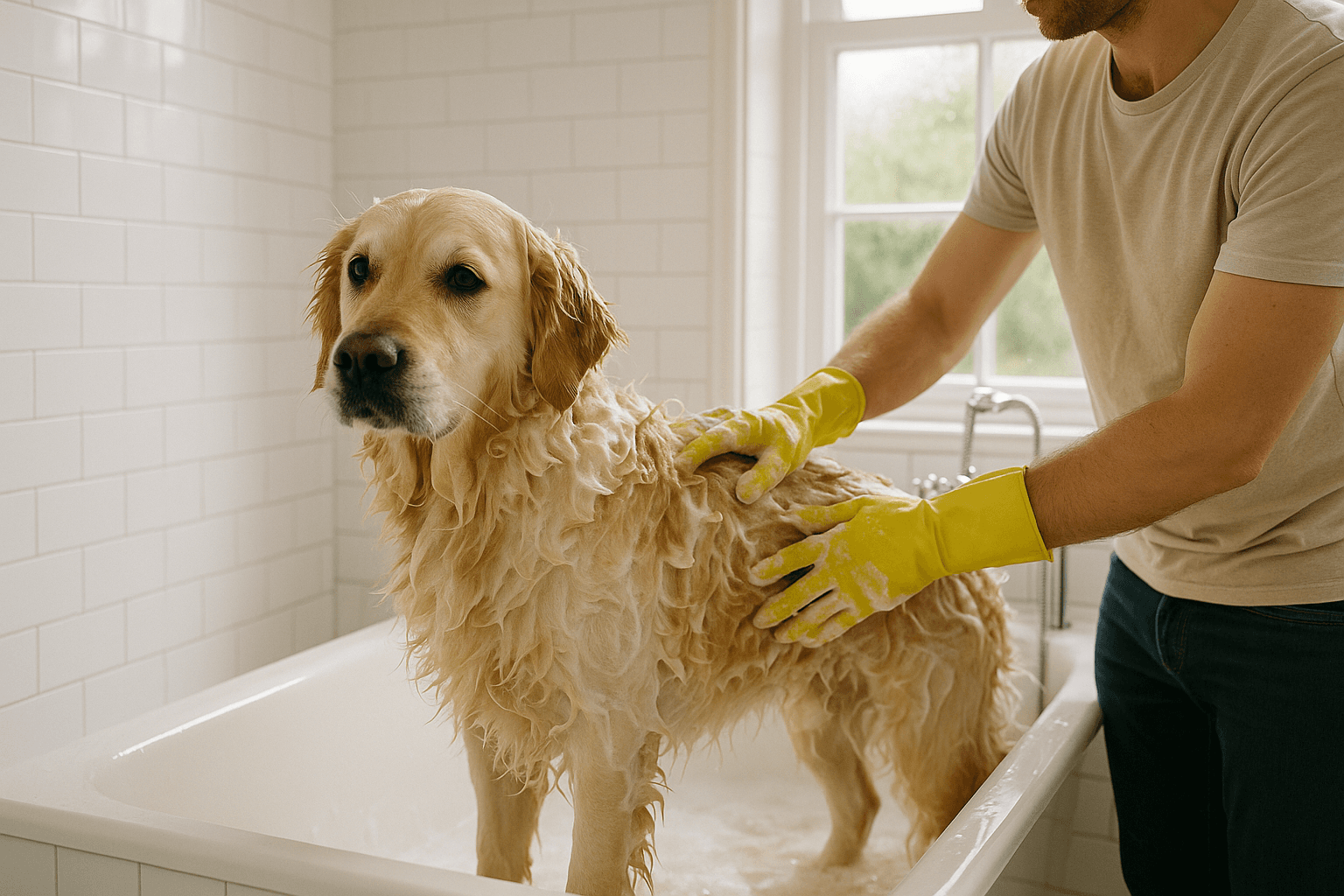
How to Groom a Dog at Home: A Step-by-Step Guide for UK Owners
Most dog grooming tasks (brushing, bathing, nail trimming, ear cleaning, teeth brushing) are well within reach of an owner prepared to learn and invest in decent tools. The tricky part is not the technique. It is starting early, being consistent, and knowing when to stop and call a professional.
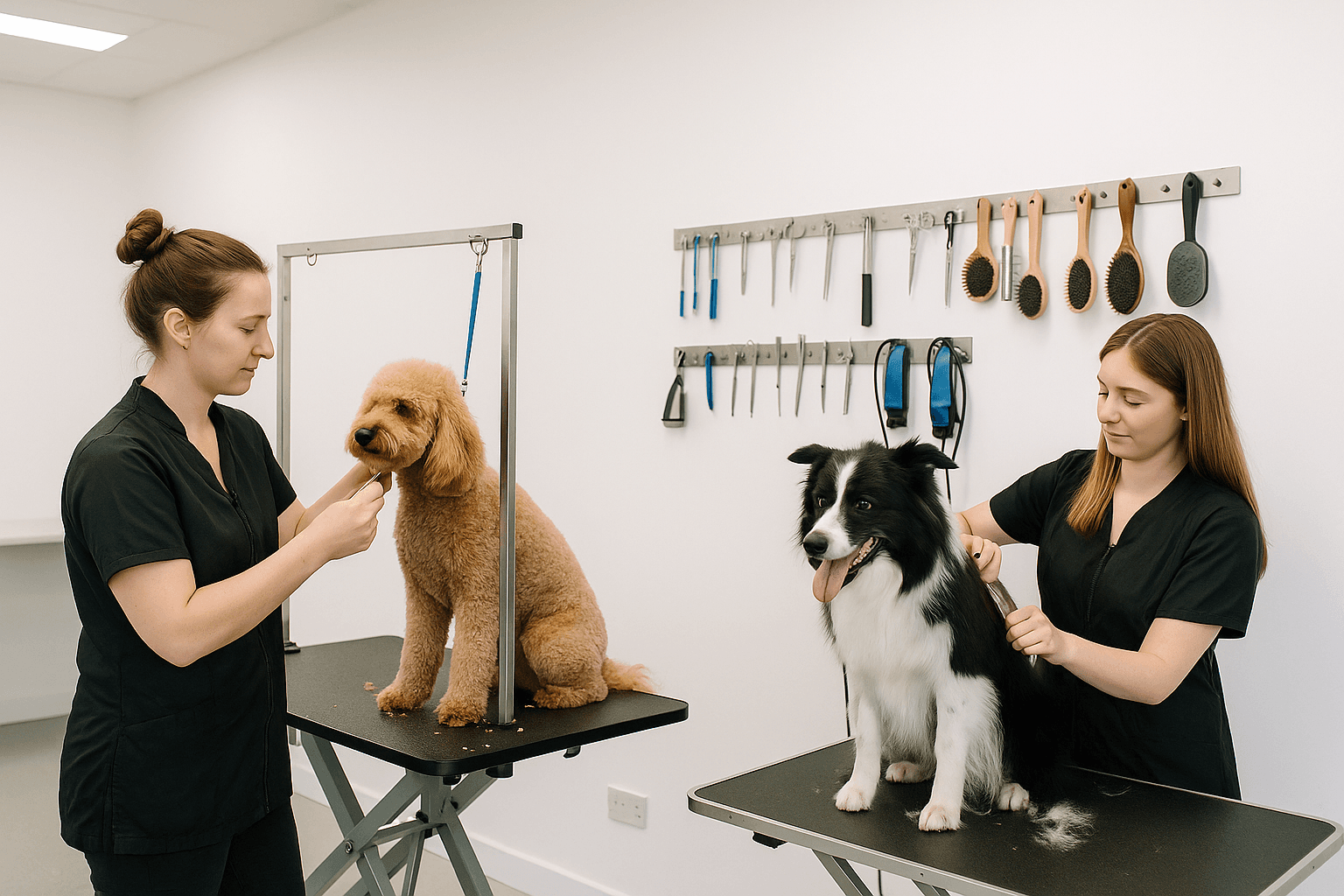
How Much Does Dog Grooming Cost in the UK?
Professional dog grooming in the UK typically costs between £30 and £90 for a full groom. Breed, coat type, size, and location all affect the price, and for high-maintenance coats like Cockapoos and Poodles, annual grooming costs can reach £300 to £520.
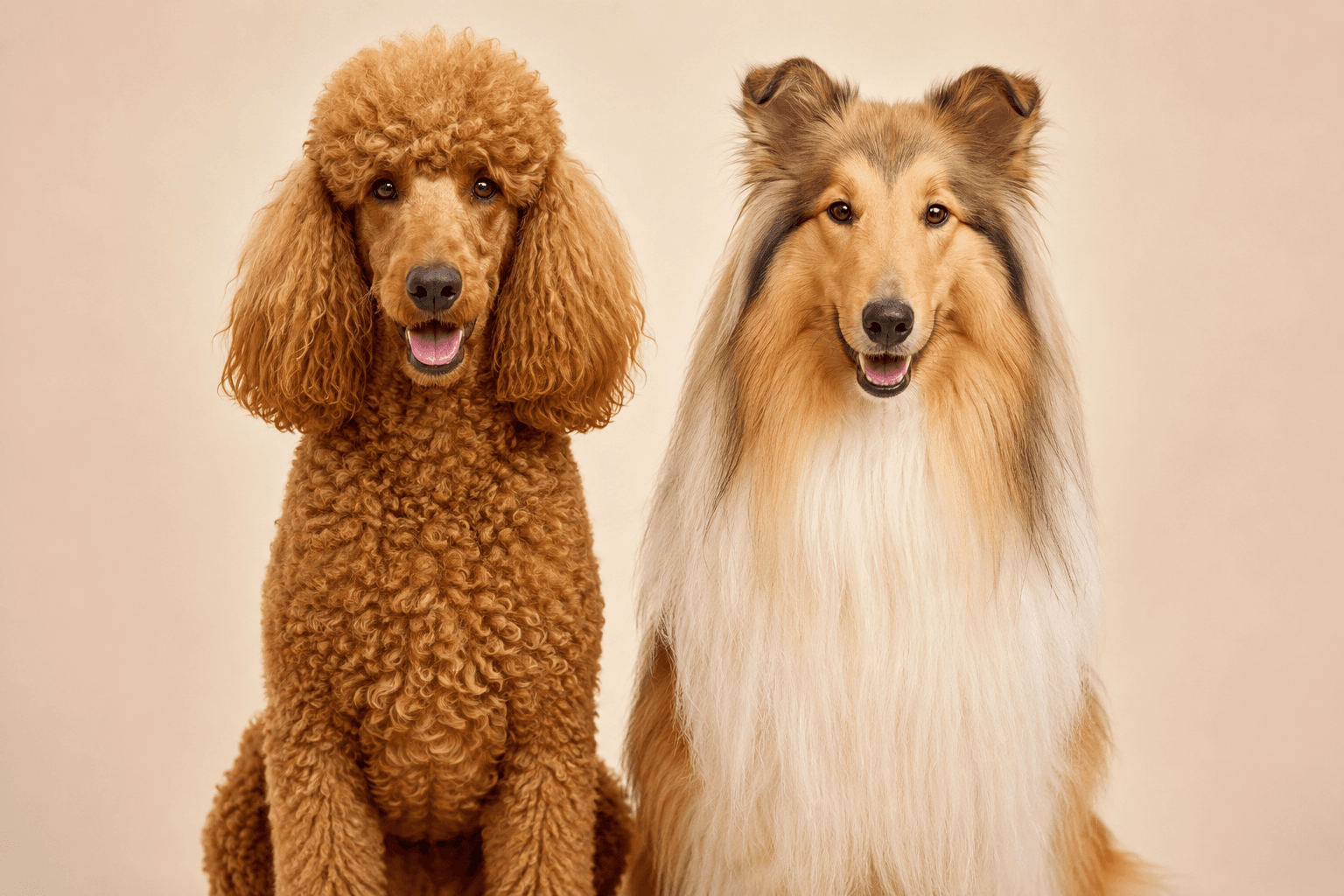
Dog Coat Types and Grooming Needs: The Complete UK Guide
Dogs have seven main coat types: smooth, short double, long double, wire, curly, long silky, and corded. Each one has different grooming requirements: different tools, different frequency, and different demands on your time and budget. Knowing your dog's coat type is the most useful single piece of grooming knowledge you can have.
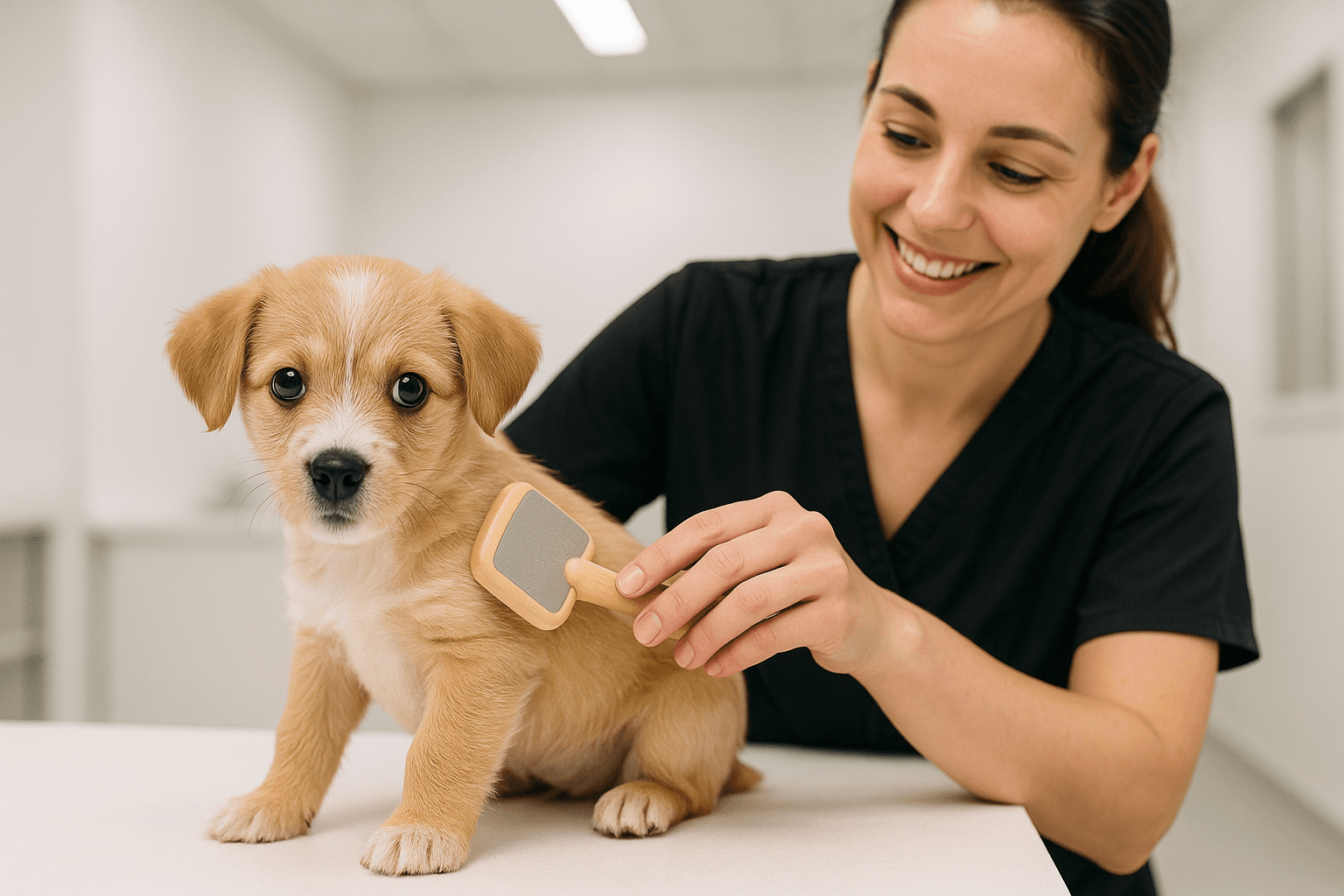
How to Groom a Puppy: The Complete First-Timer's Guide
Start grooming your puppy from the day it comes home. Not because it needs a groom at eight weeks old (it probably does not) but because the window for teaching a dog that grooming is safe, normal, and entirely unremarkable closes faster than most new owners realise. A puppy that learns early becomes an easy dog to groom for the rest of its life.
Find a Groomer
Looking for a qualified groomer near you?
Browse our directory of qualified dog groomers across the UK.
How Often Does a Dog Need Grooming?
The honest answer is: it depends entirely on the coat. Below is a practical breakdown by coat type. If you are unsure what coat type your dog has, the coat type guide covers all seven in detail.
Smooth coats (Boxer, Greyhound, Whippet, Pointer): weekly rub-down with a rubber grooming mitt; bath every four to six weeks. Minimal fuss. Shed regularly but fine hair is easy to remove. Professional grooming rarely needed beyond nail trims.
Short double coats (Labrador, Beagle, Staffie, French Bulldog): brush twice a week with a bristle brush or rubber deshedding tool; bath every four to six weeks. Shed more than smooth-coated breeds, particularly in spring and autumn. One or two professional deshedding treatments a year are worth it if shedding is heavy.
Long double coats (Golden Retriever, Border Collie, Rough Collie, Australian Shepherd): brush three to four times a week minimum, daily during heavy shedding season. Professional groom every eight to twelve weeks. Never shave a double-coated dog: the undercoat insulates in both heat and cold and shaving causes lasting coat damage.
Wire coats (West Highland White Terrier, Border Terrier, Airedale, Wire Fox Terrier): hand-stripping or clipping every eight to twelve weeks. Regular brushing between appointments. Clipping softens the coat over time; hand-stripping preserves texture and colour. Professional grooming strongly recommended.
Curly and wavy coats (Poodle, Cockapoo, Cavapoo, Labradoodle, Bichon Frise): daily brushing without exception, as loose coat gets trapped in the curl and mats rapidly. Professional clip every six to eight weeks. These are the most grooming-intensive dogs you can own. The 'low-shedding' label is accurate; the implication that they are low-maintenance is not.
Long silky coats (Yorkshire Terrier, Maltese, Shih Tzu, Lhasa Apso, Cavalier King Charles Spaniel): daily brushing to prevent tangles. Professional trim every six to eight weeks. Most pet owners keep these dogs in a shorter 'puppy cut' for practicality.
What Grooming Does Every Dog Need, Regardless of Coat?
Coat care is only part of the picture. These four things apply to every dog, every breed, every coat type:
Nails: trim every four to six weeks. Nails that grow too long cause discomfort, affect posture, and can split. Dogs that walk regularly on pavements may wear nails down naturally, but most still need occasional trimming. Check dewclaws too: these never touch the ground and always need trimming.
Ears: clean monthly for most breeds; more frequently for floppy-eared dogs such as Cocker Spaniels, Basset Hounds, and Labrador Retrievers, which are prone to ear infections. Signs ears need attention: visible wax or debris, a mild odour. Signs to see a vet instead: strong odour, redness, discharge, persistent scratching or head shaking.
Teeth: over 80% of dogs show signs of dental disease by the time they are three years old. Daily brushing is ideal; weekly is the minimum that makes a difference. Use dog-specific toothpaste: human toothpaste contains xylitol, which is toxic to dogs.
Eyes: wipe away discharge with a damp cotton pad as needed. Breeds with prominent eyes or heavy facial folds (French Bulldog, Cavalier King Charles Spaniel, Shih Tzu) need more regular attention. Persistent discharge, redness, or cloudiness needs a vet check.
How Much Does Dog Grooming Cost in the UK?
A full professional groom in the UK typically costs between £30 and £90, depending on breed, coat type, size, and location. Prices in London and the South East sit at the higher end. Mobile groomers usually charge a small premium over salon prices for the convenience.
As a rough guide: small short-coated breeds (Jack Russell, Pug) cost around £30 to £45; medium breeds with more complex coats (Cocker Spaniel, Cockapoo) typically £45 to £65; large breeds (Golden Retriever, Standard Poodle) often £60 to £90 or more. Hand-stripping for wire-coated breeds usually adds to the standard clipping price.
For the full cost breakdown including annual costs by breed and how home grooming compares, see the dog grooming costs guide.
Should You Groom Your Dog at Home or Use a Professional?
Most owners do both. A professional handles the technical work (clipping, hand-stripping, thorough ear and anal gland checks) while the owner maintains the coat between appointments. That combination works well for most breeds.
Home grooming alone makes sense for smooth-coated and short-coated dogs where the demands are low: a weekly brush, monthly bath, nail trim when needed. It is also perfectly reasonable for long-coated dogs if the owner learns proper technique and commits to the daily brushing routine required.
Breeds where professional grooming is not optional: any Poodle or Poodle cross, Bichon Frise, Shih Tzu, Lhasa Apso, and all wire-coated terriers. The coat structure of these dogs requires either expert clipping or hand-stripping. An untended Cockapoo coat will mat to the skin within weeks.
How Do You Find a Good Dog Groomer in the UK?
Dog grooming is not a regulated industry in the UK, which means anyone can set up as a groomer regardless of training. The onus is on you to check qualifications and ask the right questions.
Look for groomers with recognised qualifications: City and Guilds Level 3 in Dog Grooming, iPET Network qualifications, or LCGI (Licentiateship of City and Guilds International). Membership of the British Dog Groomers Association (BDGA) indicates a commitment to professional standards.
Ask before booking: have they groomed your specific breed before? Do they allow you to watch the groom, or at least to see the salon? How do they handle nervous or reactive dogs? A groomer who is dismissive of these questions is a red flag.
The Near You groomers directory lists qualified groomers across the UK with ratings and reviews. Filter by location to find one near you.
The Essential Home Grooming Kit
Even if you use a professional regularly, you need tools at home for maintenance between appointments. The basics:
- ‣Slicker brush: the workhorse of home grooming. Removes loose coat and surface tangles from most coat types.
- ‣Pin brush: better for longer, silkier coats where a slicker brush may snag.
- ‣Rubber grooming mitt: ideal for smooth and short-coated dogs. Works in the bath too.
- ‣Deshedding tool (such as a FURminator or similar): for double-coated breeds during heavy shedding. Do not use on curly or wire coats.
- ‣Nail clippers or nail grinder: clippers are faster; grinders are better tolerated by anxious dogs.
- ‣Styptic powder: for accidental nail quick cuts. Stops bleeding quickly.
- ‣Dog shampoo: always breed-appropriate. Never use human shampoo.
- ‣Ear cleaning solution and cotton wool: for monthly ear maintenance.
- ‣Dog toothbrush and toothpaste: use daily if you can manage it.
For detailed product recommendations by coat type, see the grooming tools buying guide.
Grooming by Breed Group
Grooming demands broadly follow KC breed group lines. Use these as a starting point, then check the coat type guide for the specifics of your breed.
Gundogs (Labrador, Golden Retriever, Cocker Spaniel, Springer Spaniel): vary from low-maintenance (short-coated HPR breeds) to high-maintenance (show-trim Cocker Spaniels). Most need regular brushing and periodic professional tidying.
Terriers (Westie, Airedale, Cairn, Border): predominantly wire-coated. Hand-stripping or clipping required. Low shedders but not low maintenance.
Toy breeds (Chihuahua, Yorkshire Terrier, Pomeranian, Maltese): range from minimal (smooth Chihuahua) to demanding (Pomeranian double coat, Yorkshire Terrier silky coat). Size does not equal low-maintenance.
Pastoral breeds (Border Collie, German Shepherd, Old English Sheepdog, Rough Collie): almost all double-coated and heavy shedders. Regular brushing is non-negotiable.
Utility breeds (Poodle, Bulldog, Dalmatian, Shih Tzu): the widest variation in grooming demands of any group. Poodles need the most professional attention of any breed; Dalmatians need very little.
For the full breakdown by coat type, see dog coat types and grooming needs.
Frequently Asked Questions
How often should I bathe my dog?
Can I use human shampoo on my dog?
When should I start grooming my puppy?
Do all dogs need their nails clipped?
What is hand-stripping and does my dog need it?
What should I do if my dog hates being groomed?
Free newsletter
Get the weekly guide for UK dog owners
Breed spotlights, grooming tips and health advice delivered every week.
Join Woof & Woofer