

Be the first to join. Keep the badge forever.
The first members of this community earn permanent Founding Member status. It shows on your profile and your dog's profile for as long as you're here.
- ✓Founding Member badge on your profile
- ✓Your dog featured first
- ✓First Dog of the Month nomination
- ✓Always free
⭐ Founding Member spots open
First to join gets the badge
🐕 Be the first dog registered
Add your Lab to the community
📷 Add the first photo
Start the photo wall
8
Discussions

0 members
8 discussions
About the Bergamasco Shepherd
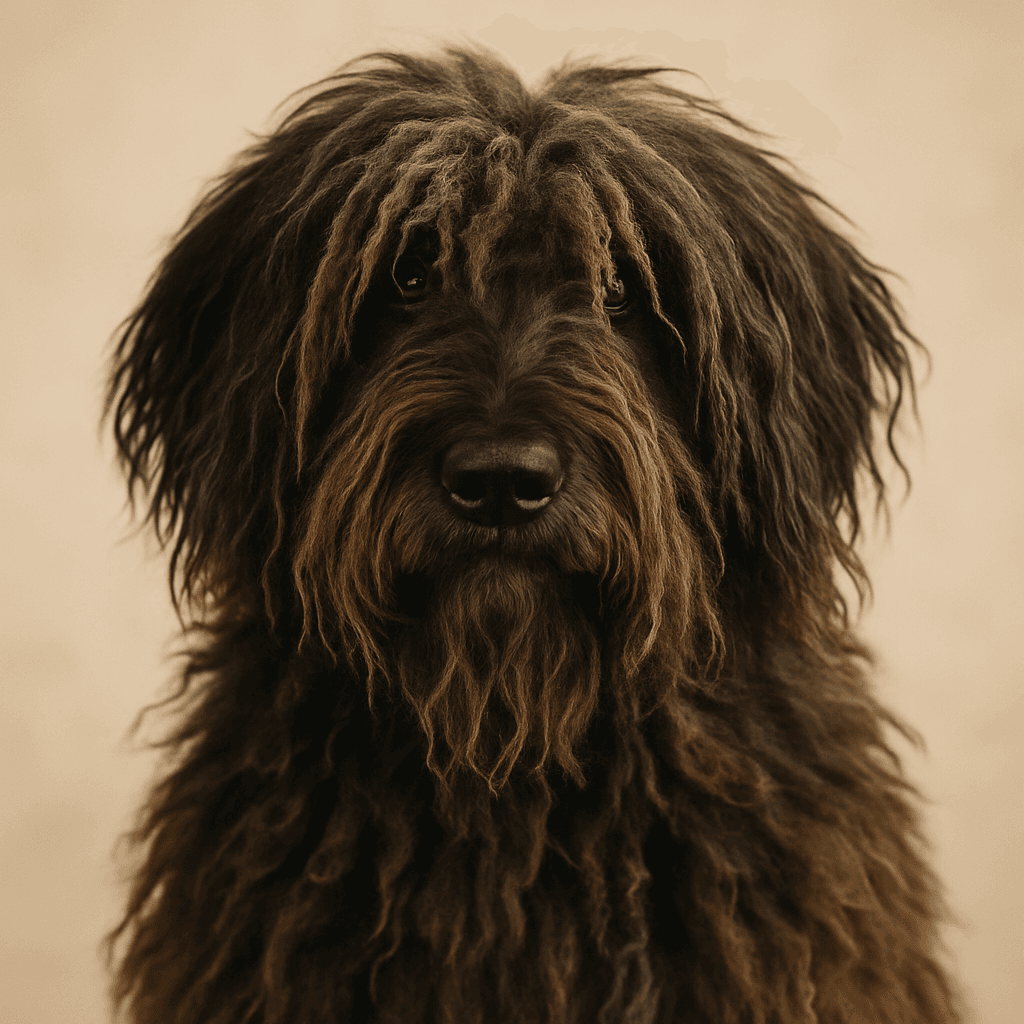
The Bergamasco Shepherd is one of the most visually extraordinary breeds in the world. An ancient Italian herding breed from the Bergamo region of the Alps, it is most immediately recognisable by its unique coat - a dense triple-layered structure that forms naturally into flat, felted mats called flocks, which hang from the dog's body and eventually reach the ground. This is not a result of neglect. It is the breed's defining characteristic, developed over centuries as insulation against the extreme cold of high-altitude Alpine conditions. Registered by the Kennel Club in the Pastoral Group, the Bergamasco is rare in the UK and one of the least commonly kept pastoral breeds. For owners drawn to breeds of genuine antiquity and individuality, it offers something wholly distinctive. The coat is the first thing prospective owners must understand. The Bergamasco is born with a soft, wavy puppy coat that begins transforming in the first year or two of life. The adult coat consists of three different hair types - an oily undercoat, a longer harsh middle layer, and a woolly topcoat - that interweave and felt together into the characteristic flocks. During the maturation period, an owner must physically separate developing mats by hand to encourage the flocks to form correctly and not become a single solid mass. This process takes patience and time but is learned with guidance from an experienced breeder. Once the coat is fully formed, it requires remarkably little ongoing maintenance. New owners must understand clearly that this coat must never be brushed or clipped. Attempting to brush the adult coat destroys it and causes significant distress to the dog. The correct management approach is entirely different from conventional long-coated breeds. In character, the Bergamasco is calm, thoughtful and deeply loyal. It has the independent, self-directed thinking of a breed that worked for centuries at high altitude, making decisions about flock management without close handler direction. It is patient, steady and reliable rather than excitable or reactive. With its own family the Bergamasco is warm and devoted. It is generally good with children and patient in temperament. With strangers it maintains a natural reserve without being aggressive. Socialisation from puppyhood ensures this reserve stays within appropriate limits. Exercise requirements are moderate - around one to 1.5 hours of daily activity. The Bergamasco is well-suited to active households that spend time in the countryside. Training works best with calm, positive and patient methods. Hip dysplasia can occur and hip scoring of parents is recommended. Eye testing of breeding stock is advised. The breed has relatively few documented hereditary conditions. Lifespan is typically 13 to 15 years. Purchase prices range from £800 to £1,500. Insurance of £25 to £50 per month. Monthly running costs average £100 to £180. The Bergamasco Sheepdog Club UK is the primary resource for breed information, responsible breeders and any rescue enquiries.
Quick facts
Meet Our Bergamasco Shepherds
Register your dog on My Dog and it will appear here automatically.
Bergamasco Shepherd Photos
No photos yet. Be the first to share yours.
Add a photoActivity Feed
How much exercise does your Bergamasco Shepherd really need each day?
One to one-and-a-half hours a day, which puts the Bergamasco in a more manageable category than most herding breeds. This is not a dog that needs to run for two hours at full pace. It enjoys walks, hiking and outdoor activity and it genuinely thrives in varied terrain, but it is not the high-drive sporting type. What matters alongside the physical side is mental stimulation. The Bergamasco worked as an independent herder for centuries and it thinks for itself. Nose work and training sessions give that independent intelligence somewhere productive to go. I think of the Bergamasco as a good outdoors companion rather than a high-performance sport dog. It suits active owners who enjoy being outside regularly but do not necessarily want to be committed to agility training or protection sport. Consistent daily exercise and some mental engagement is the recipe.
30 June 2026
Any health issues to watch for with Bergamasco Shepherds?
The Bergamasco is generally a healthy breed with relatively few documented breed-specific conditions, which is genuinely one of its practical advantages. Hip dysplasia can occur and hip scoring of both parents is recommended before breeding. Eye testing is also recommended. Lifespan is typically 13 to 15 years, which is excellent for a dog of this size and reflects the breed's overall robustness. Insurance typically runs £25 to £50 per month. One practical health management point specific to this breed is monitoring body condition through the coat. The flocked coat makes visual assessment genuinely difficult because you cannot easily see the body underneath. I weigh my dog regularly rather than relying on a visual check, because it is possible for weight to creep up without it being obvious until you actually feel through the coat or put the dog on the scales.
30 June 2026
What's the one thing you wish you'd known before getting a Bergamasco Shepherd?
That the independence of this breed is a feature, not a problem to fix. The Bergamasco was bred to make decisions without a shepherd standing next to it, and that heritage is very much present in the modern dog. It is not as acutely handler-focused as a Border Collie or a Malinois. It thinks things through, it has its own perspective, and training requires patience and consistency rather than the instant responsiveness you might expect from some herding breeds. Once I stopped trying to get the sharp, snappy obedience response I had seen in other breeds and started working with the Bergamasco's thoughtful, calm approach, training became much more enjoyable for both of us. The breed is also surprisingly calm and self-contained at home compared to other herding dogs. It is not demanding or anxious, just steady and loyal in a very pleasant way.
30 June 2026
What do you feed your Bergamasco Shepherd, and why?
A high-quality complete dry food appropriate for size and activity level, in two meals a day. Adults generally need around 300 to 400 grams daily, though that depends on the individual dog's weight and how active they are. There are no complex dietary restrictions documented for the breed, so I keep it straightforward. The one thing I am particularly attentive to with the Bergamasco is body condition, because the coat genuinely makes it easy to miss weight gain. I weigh my dog monthly and I run my hands through the coat regularly to feel the ribs and check muscle condition. If the ribs are easy to feel but not visible, body condition is about right. Fresh water is always available. Two meals rather than one is my preference for a dog this size, just to keep energy levels more consistent through the day.
30 June 2026
Bergamasco Shepherd of the Month
🏆 September 2026 -- Be the first nominee
Could be your dog.
The first dog registered in this community earns the first Dog of the Month nomination automatically.
Register your dogUpcoming Bergamasco Shepherd Meetups
No meetups planned yet. Be the first to organise one.
Sign in to organise a meetupCommunity Members
Be the first to join and become the Bergamasco Shepherd Founding Member.
Join Club