Be the first to join. Keep the badge forever.
The first members of this community earn permanent Founding Member status. It shows on your profile and your dog's profile for as long as you're here.
- ✓Founding Member badge on your profile
- ✓Your dog featured first
- ✓First Dog of the Month nomination
- ✓Always free
⭐ Founding Member spots open
First to join gets the badge
🐕 Be the first dog registered
Add your Lab to the community
📷 Add the first photo
Start the photo wall
8
Discussions
0 members
8 discussions
About the Bernedoodle
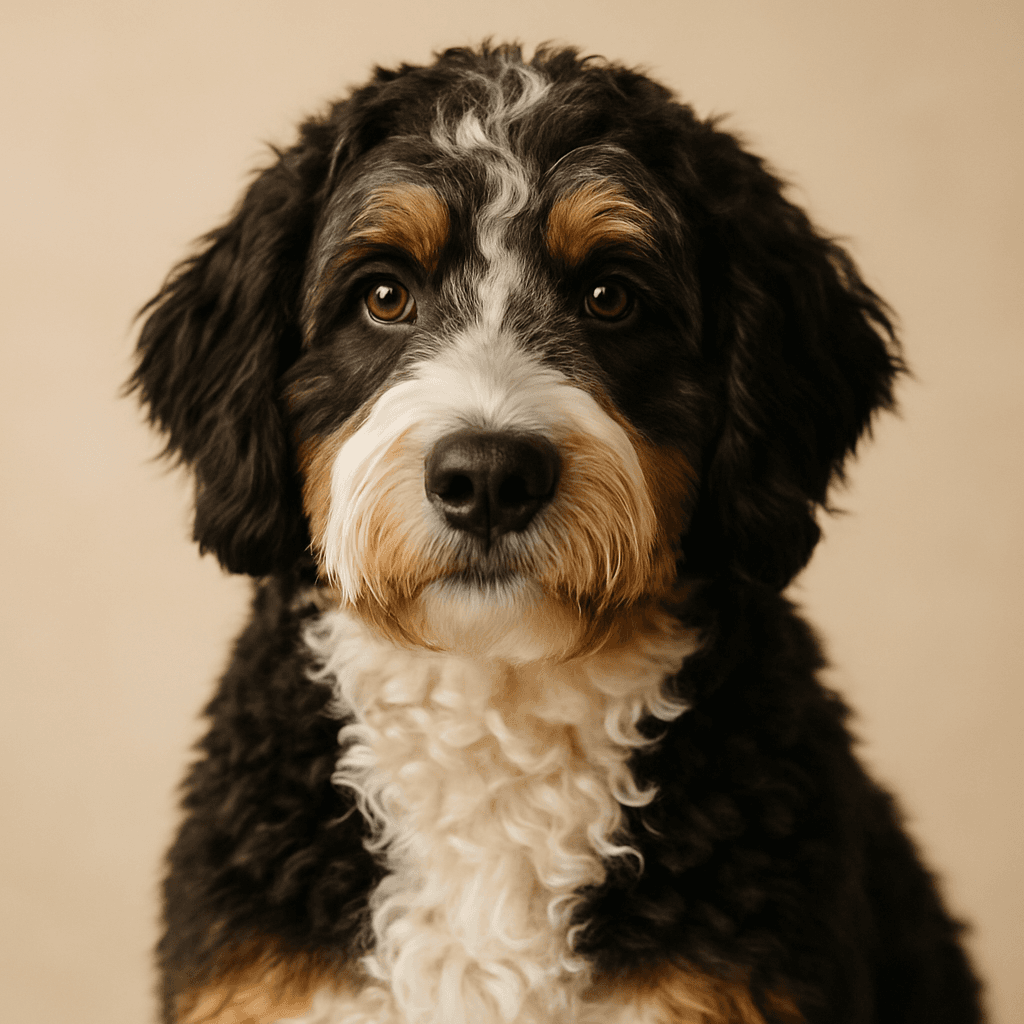
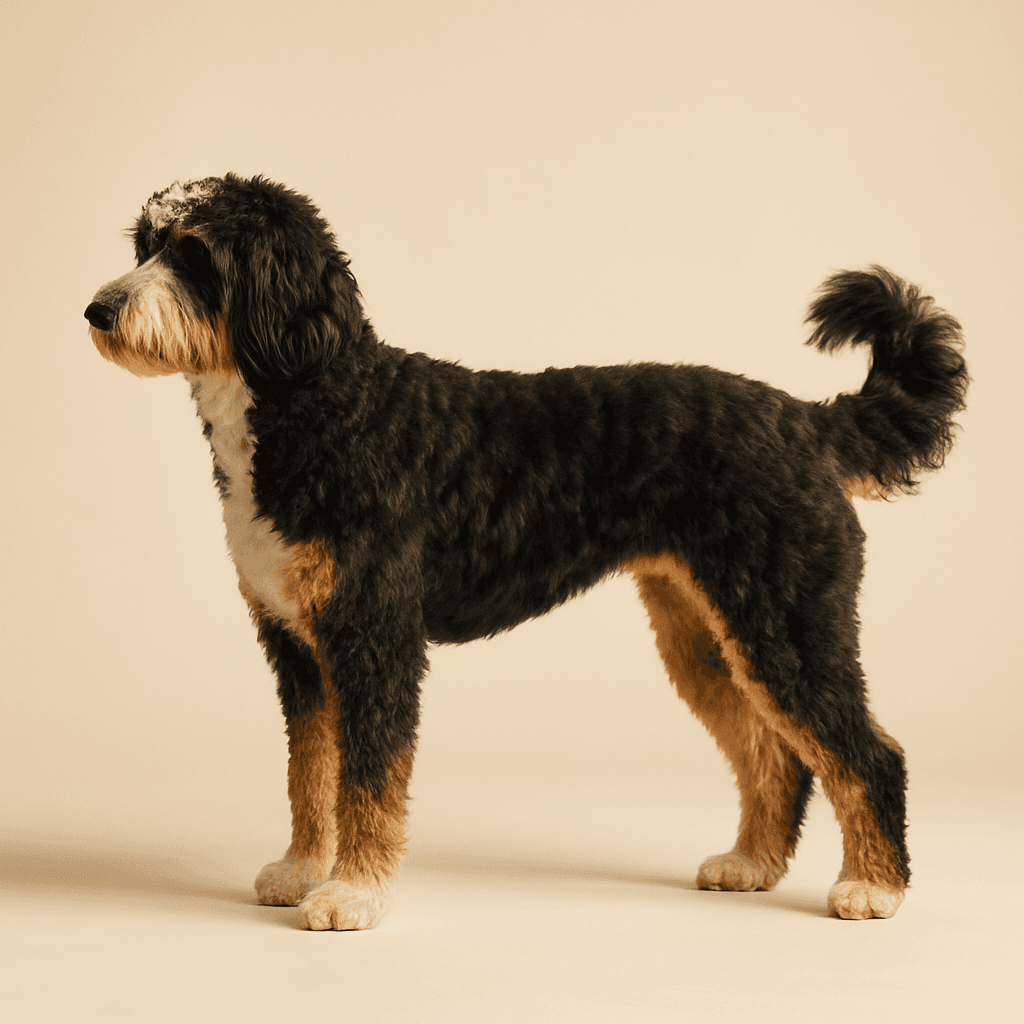
The Bernedoodle is a cross between a Bernese Mountain Dog and a Poodle - most commonly a Standard Poodle for the larger size variant, or a Miniature Poodle for smaller crosses. It is not a recognised breed and is not registered by the Kennel Club, which means there is no breed standard, no mandatory health testing framework and no guarantee of consistent size, coat type or temperament from one litter to the next. At its best, the Bernedoodle combines the Bernese Mountain Dog's famously gentle, loyal temperament with the Poodle's exceptional intelligence and lower-shedding coat. The resulting dog can be an outstanding family companion: warm, engaged, good with children, sociable with other dogs and more manageable on the grooming front than a Bernese. At its most challenging, it inherits the Poodle's high maintenance coat demands and the Bernese's health vulnerabilities, without the predictability of a recognised breed. The first and most important consideration for any prospective Bernedoodle buyer is health testing. The Bernese Mountain Dog is one of the shortest-lived large breeds with a documented elevated risk of histiocytic sarcoma, an aggressive cancer, alongside musculoskeletal conditions including hip and elbow dysplasia. The Poodle is generally healthier but carries risks including hip dysplasia, Progressive Retinal Atrophy, hereditary cataracts and Addison's disease. Crossing two breeds does not eliminate these conditions. Before purchasing a Bernedoodle puppy, ask for the following as a minimum: hip scores and elbow scores for the Bernese parent, Degenerative Myelopathy DNA test for the Bernese parent, hip scores and PRA and hereditary cataract DNA tests for the Poodle parent. Any reputable breeder should be able to provide these without hesitation. High price does not indicate health testing - the Bernedoodle market contains many expensive puppies from completely untested parents. Coat type in a Bernedoodle is genuinely unpredictable, particularly in F1 (first-generation) crosses. Some puppies inherit a wavy coat similar to the Bernese, with moderate shedding. Others inherit a curlier Poodle-like coat that sheds minimally but mats quickly without regular grooming. Some inherit a flatter coat that sheds more. The only reliable way to assess coat type is to see it in person as the puppy develops. Curly-coated Bernedoodles require brushing every day and professional grooming every six to eight weeks. Grooming is the single most common reason Bernedoodles are surrendered to rescue. In terms of character, the Bernedoodle is typically gentle, friendly and highly trainable. The Poodle's intelligence is reliably present and makes training a genuinely rewarding experience. The Bernese influence contributes a calm, loyal quality. Exercise requirements depend on size. Standard Bernedoodles need 1.5 to two hours of daily activity. Miniature variants manage well on 45 to 60 minutes. Both benefit from mental stimulation alongside physical exercise. Lifespan varies considerably. Standard Bernedoodles from health-tested parents with good lines typically live 10 to 14 years. The Bernese Mountain Dog's cancer predisposition remains a risk factor and is not eliminated in the cross. Purchase prices range from £1,500 to £3,500. Monthly running costs for a standard Bernedoodle average £180 to £320. Insurance of £40 to £90 per month. For owners who invest in health-tested stock, commit to the grooming requirements and go in with realistic expectations about size and coat type variability, the Bernedoodle is an excellent and rewarding companion.
Quick facts
Meet Our Bernedoodles
Register your dog on My Dog and it will appear here automatically.
Bernedoodle Photos
No photos yet. Be the first to share yours.
Add a photoActivity Feed
How much exercise does your Bernedoodle really need each day?
For a standard Bernedoodle, you are looking at one and a half to two hours daily, split across sessions. Miniature Bernedoodles sit closer to 45 to 60 minutes. Mine is a standard and we aim for two sessions daily, a longer morning walk or run and a shorter afternoon outing with some training worked in. Swimming and retrieving both go down very well. The Poodle intelligence in this cross means mental stimulation matters as much as the physical side. A Bernedoodle that gets exercise but no mental engagement is still a restless dog. Short training sessions, puzzle feeders and interactive games all help. Individual variation in this crossbreed is significant though. What I would say is assess your actual dog rather than just going by what crossbreed buyers are told to expect, because Poodle-cross temperament and energy levels can lean either way depending on which parent the individual pup takes after.
30 June 2026
Any health issues to watch for with Bernedoodles?
The health picture for a Bernedoodle depends almost entirely on whether both parents were properly health tested, and this matters more than most crossbreed buyers realise. The Bernese Mountain Dog parent should have hip scoring, elbow scoring, eye testing and a DM DNA test done before breeding. The Poodle parent should have hip scoring, eye testing, PRA DNA test and hereditary cataract testing. Both sets of results should be available for you to see before you buy. The Bernese parent brings elevated cancer risk into the cross. Histiocytic sarcoma and other cancers affect Berners at very high rates, and while the cross may dilute that risk somewhat, it does not eliminate it. Lifespan ranges from 8 to 14 years depending on generation and size. Ask specifically about the Bernese parent's family health history alongside the formal test results.
30 June 2026
What's the one thing you wish you'd known before getting a Bernedoodle?
That temperament in a crossbreed is genuinely not guaranteed, and managing expectations around that from the start saves a lot of frustration. The idea that you get the best of both breeds is a lovely marketing concept but the reality is more variable. Some Bernedoodles take strongly after the Bernese parent and are calm, gentle and easygoing. Others lean into the Poodle side and are highly alert, quick-minded and need considerably more mental engagement and training than their buyers anticipated. Mine landed somewhere in the middle, which I think is the common experience, but you genuinely cannot know in advance. What I would do differently is start positive reward-based training from day one, not wait until a problem emerged. The Poodle intelligence means they learn very quickly, which is wonderful with good habits but equally fast with bad ones.
30 June 2026
What do you feed your Bernedoodle, and why?
A high-quality complete food appropriate for the dog's size, in two meals a day. Standard Bernedoodles typically need 400 to 600 grams of dry food daily; miniature adults sit closer to 200 to 350 grams. The Bernese Mountain Dog lines carry a meaningful obesity risk, and overfeeding a Bernedoodle is easier than you might expect, particularly if treats are part of daily training. I monitor body condition at least fortnightly and adjust portions accordingly. Two meals a day rather than one is my preference because it helps keep energy more consistent and reduces the gulp-and-bloat risk. I avoid exercising immediately after meals. There are no complex dietary restrictions specific to the cross, but I would not cut corners on food quality given the Bernese parent's health profile. A lean dog is a healthier dog, and that is particularly true with a breed that carries cancer and joint risk in its background.
30 June 2026
Bernedoodle of the Month
🏆 September 2026 -- Be the first nominee
Could be your dog.
The first dog registered in this community earns the first Dog of the Month nomination automatically.
Register your dogUpcoming Bernedoodle Meetups
No meetups planned yet. Be the first to organise one.
Sign in to organise a meetupCommunity Members
Be the first to join and become the Bernedoodle Founding Member.
Join Club