

Be the first to join. Keep the badge forever.
The first members of this community earn permanent Founding Member status. It shows on your profile and your dog's profile for as long as you're here.
- ✓Founding Member badge on your profile
- ✓Your dog featured first
- ✓First Dog of the Month nomination
- ✓Always free
⭐ Founding Member spots open
First to join gets the badge
🐕 Be the first dog registered
Add your Lab to the community
📷 Add the first photo
Start the photo wall
8
Discussions

0 members
8 discussions
About the Bernese Mountain Dog
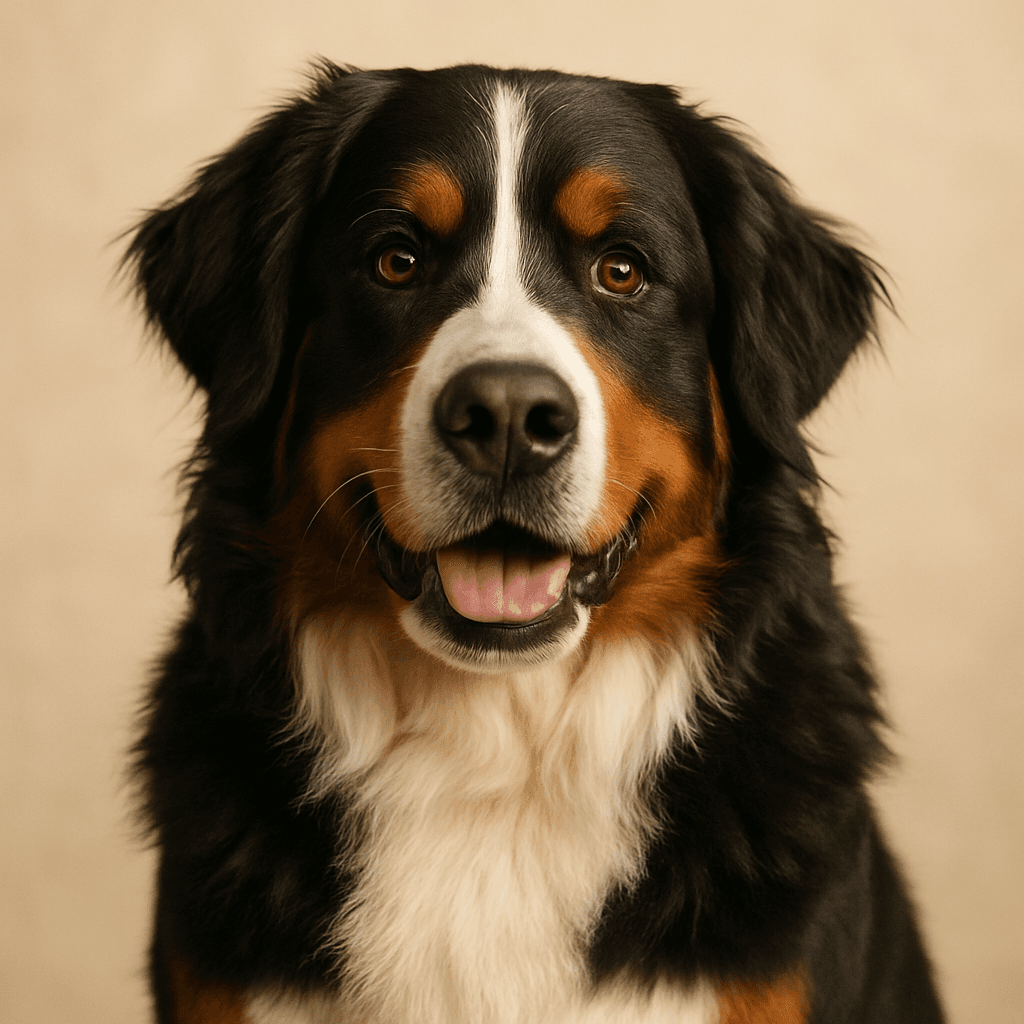
The Bernese Mountain Dog is a large, gentle and strikingly beautiful working breed from the canton of Bern in Switzerland, registered by the Kennel Club in the Working Group. Developed as a draft and farm dog in the Swiss Alps, the modern Berner retains the breed's characteristic gentle temperament, striking tricolour coat and devoted nature. They are exceptional companions for owners who go in fully prepared. Their temperament is consistently warm, gentle and family-oriented. They tend to be excellent with children, get on well with other animals, and respond well to training. For owners who can meet their needs, the Berner is among the most rewarding large breeds available. The health picture is the defining challenge and must be confronted honestly before buying. Bernese Mountain Dogs have one of the shortest average lifespans of any large breed: typically seven to nine years. The primary driver is cancer. Approximately half of all Berners die from cancer, with histiocytic sarcoma, a malignancy rare in most other breeds but prevalent in Berners, being a major contributor. This is not a rare edge case: it is the statistical expectation for the breed. Hip and elbow dysplasia affect the breed at very high rates. Both conditions cause chronic pain, compromise quality of life and may require costly orthopaedic surgery. Both parents of any puppy should have KC/BVA hip and elbow assessments, and buyers should ask to see the scores. The financial reality follows directly from the health profile. Insurance premiums of £80 to £150 per month for comprehensive lifetime cover, combined with large-breed food costs of £60 to £90 per month and the realistic probability of significant veterinary treatment, make the Berner one of the most expensive breeds to own over its lifetime. Non-time-limited lifetime insurance is essential: progressive conditions and cancer treatment will be excluded under annual policies. Purchase prices from KC-registered, health-tested breeders typically range from £1,500 to £3,000. The Bernese Mountain Dog Club of Great Britain provides guidance on responsible breeders and operates a welfare service. For those who want to adopt, some rescue Berners become available, typically from owners who could not manage the costs or health needs that emerged. For owners who go in with clear eyes about the lifespan, health and financial commitments, the Bernese Mountain Dog offers a depth of companionship that is hard to find elsewhere. The grief that typically follows at seven to nine years is profound precisely because what precedes it is so rewarding. Know what you are taking on, prepare fully, and this is a breed of exceptional character.
Quick facts
Meet Our Bernese Mountain Dogs
Register your dog on My Dog and it will appear here automatically.
Bernese Mountain Dog Photos
No photos yet. Be the first to share yours.
Add a photoActivity Feed
How much exercise does your Bernese Mountain Dog really need each day?
About an hour a day for an adult, delivered in one or two walks, and that is a sustainable daily commitment rather than a minimum that needs to keep climbing. Berners are working draft dogs and they enjoy proper exercise, but they are not high-endurance athletes. What matters much more with this breed is managing how and when you exercise them. Heat is a genuine safety issue because the thick double coat means Berners can overheat rapidly. In summer I walk early morning or evening only, carry water always, and at the first sign of slowing or heavy panting we stop. I also avoid repetitive impact exercise, particularly jumping and stairs, because the breed's hip and elbow dysplasia rate makes joint protection a lifelong priority. Swimming is excellent for Berners because it is genuinely low-impact. Mental engagement through tracking and obedience work supplements the physical side well.
30 June 2026
Any health issues to watch for with Bernese Mountain Dogs?
The Bernese Mountain Dog has one of the most challenging inherited health profiles of any popular pedigree breed, and anyone considering the breed deserves a completely honest picture. Cancer is the leading cause of death and approximately half of all Berners die from it. Histiocytic sarcoma, a malignancy that is extremely rare in most other breeds, is particularly prevalent in Berners, and mast cell tumours, osteosarcoma and lymphoma are also elevated. Cancer typically strikes between five and eight years of age. Hip and elbow dysplasia affect the breed at very high rates; both parents should be KC/BVA scored before breeding, and you should ask for scores on both parents not just one. Progressive Retinal Atrophy and other hereditary eye conditions occur. Bloat is a risk given the deep chest. Average lifespan is 7 to 9 years. Monthly insurance runs £80 to £150. Go into this with open eyes.
30 June 2026
What's the one thing you wish you'd known before getting a Bernese Mountain Dog?
The grief is almost inevitable and it comes earlier than you expect. A typical Berner lifespan is 7 to 9 years, and the cancer rate means that statistically you are likely to face that loss to illness at a relatively young age for the dog. That is not a reason not to get one. Everyone I know who has owned a Berner says they are among the most rewarding dogs they have ever had, and I feel exactly the same way. But I was not fully prepared for how attached you become to a dog with this temperament, and how short that time genuinely is. On the practical side, I wish I had taken loose lead training even more seriously from the first week. A 50-kilogram adult Berner that pulls is a genuine physical problem for most people, and the habit is so much easier to build correctly in a puppy than to unlearn in an adult. Start it on day one.
30 June 2026
What do you feed your Bernese Mountain Dog, and why?
A large-breed complete dry food, fed twice a day in measured portions. Adults typically need 400 to 600 grams daily depending on size and activity level. I use a large-breed specific food which is formulated to support controlled growth in puppies and appropriate nutrition in adults given the size. Splitting into two meals reduces bloat risk, which is real in this deep-chested breed. I avoid any intense exercise for at least an hour before and after feeding, and I use a slow-feeder bowl because my dog eats quickly. Signs of bloat include unproductive retching and a distended abdomen; it is a life-threatening emergency and requires immediate veterinary attention. Weight management is a genuine health priority because obesity significantly worsens hip and elbow dysplasia, which affects this breed at very high rates. A lean body condition throughout life is one of the most practical things you can do for a Berner's long-term wellbeing.
30 June 2026
Bernese Mountain Dog of the Month
🏆 September 2026 -- Be the first nominee
Could be your dog.
The first dog registered in this community earns the first Dog of the Month nomination automatically.
Register your dogUpcoming Bernese Mountain Dog Meetups
No meetups planned yet. Be the first to organise one.
Sign in to organise a meetupCommunity Members
Be the first to join and become the Bernese Mountain Dog Founding Member.
Join Club