

Be the first to join. Keep the badge forever.
The first members of this community earn permanent Founding Member status. It shows on your profile and your dog's profile for as long as you're here.
- ✓Founding Member badge on your profile
- ✓Your dog featured first
- ✓First Dog of the Month nomination
- ✓Always free
⭐ Founding Member spots open
First to join gets the badge
🐕 Be the first dog registered
Add your Lab to the community
📷 Add the first photo
Start the photo wall
8
Discussions
0 members
8 discussions
About the Bordoodle
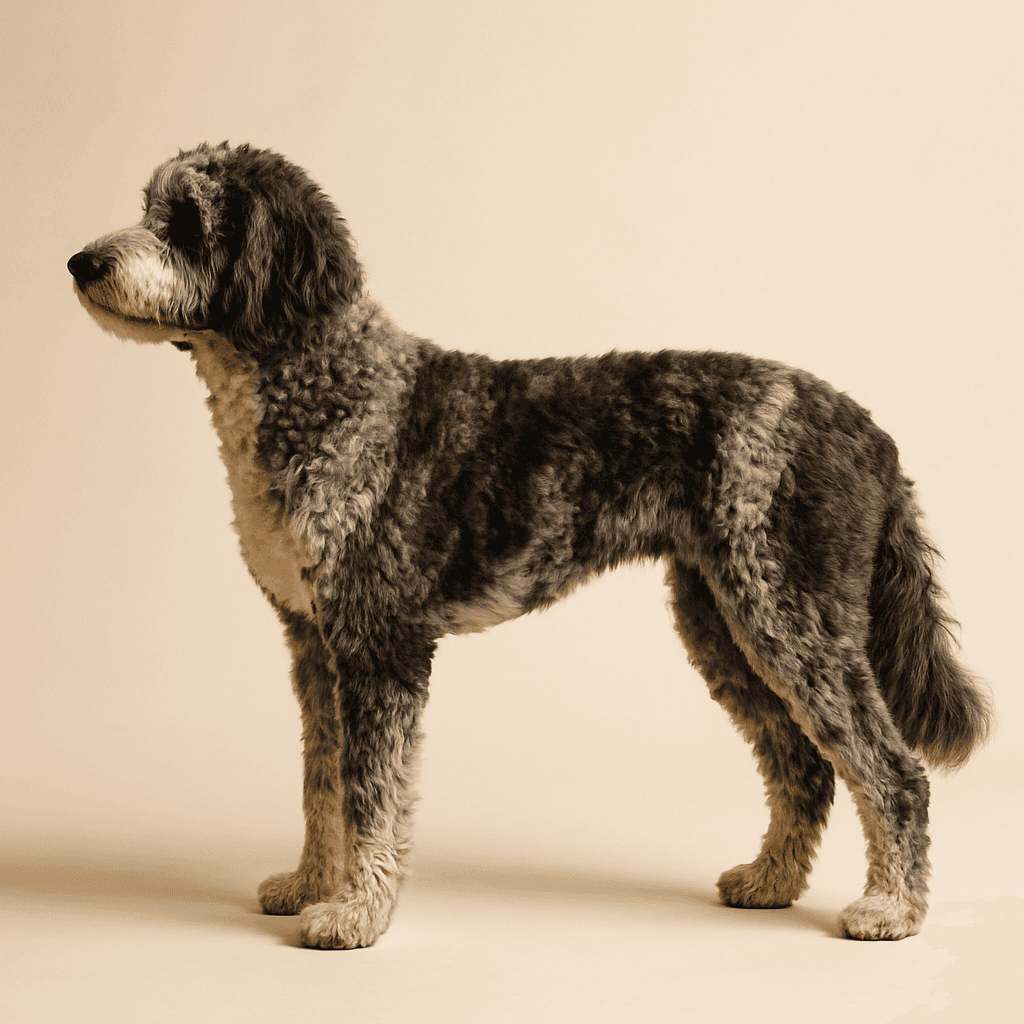
The Bordoodle is a cross between a Border Collie and a Poodle, typically a Standard or Miniature Poodle depending on the size desired. It is not a recognised breed and is not registered by the Kennel Club. Like all crossbreeds, individual dogs vary significantly in size, coat type, temperament and health depending on the parents and the generation of the cross. At its best, the Bordoodle combines two qualities that many owners find genuinely appealing: the Border Collie's exceptional intelligence and athletic capability with the Poodle's lower-shedding coat and sociable nature. For households that want a highly trainable, active and engaging dog without the heavy shedding of a purebred Border Collie, the Bordoodle can be an excellent choice. The challenge is that both parent breeds bring significant demands. The Border Collie is consistently ranked the most intelligent dog breed, and that intelligence comes with an energy level, a herding instinct and a need for mental engagement that is non-negotiable. The Poodle is highly intelligent in its own right and also has strong requirements for mental stimulation and social engagement. The Bordoodle inherits these demands from both sides, and the combination requires an owner who genuinely understands and can meet them. Exercise requirements reflect the working heritage of both parents. An adult Bordoodle needs 1.5 to two hours of vigorous daily exercise, with mental stimulation alongside physical output. Agility, obedience, scent work, herding activities and advanced training all suit the Bordoodle's capability and drive. A Bordoodle with inadequate exercise and mental engagement becomes frustrated and redirects that intelligence and energy into behaviours that owners find considerably less pleasant - destructiveness, obsessive behaviour and incessant barking are all predictable consequences. The herding instinct from the Border Collie parent can express itself in domestic settings as circling, intense staring, nipping at heels and rounding up children, other pets and moving objects. This is not aggression - it is working behaviour without an appropriate outlet. Management through consistent training from puppyhood is the answer. Owners with young children or small pets should be prepared to actively redirect these behaviours. Coat type is one of the most variable aspects of the Bordoodle. F1 (first-generation) crosses can produce anything from a wavy, moderately shedding coat to a tightly curled Poodle-type coat that sheds minimally but requires daily brushing and professional grooming every six to eight weeks. The marketed appeal of a non-shedding Bordoodle is real in some individuals but not guaranteed, and owners who purchase primarily for this characteristic and then discover a wavy shedding coat are a common source of rescue surrenders. Health testing of both parent dogs is essential before purchasing a Bordoodle puppy. The Border Collie parent should be tested for Collie Eye Anomaly and associated conditions, Trapped Neutrophil Syndrome, and hip-scored. The Poodle parent should be hip-scored and DNA tested for Progressive Retinal Atrophy and hereditary cataracts. Addison's disease is an additional risk from the Poodle parent that prospective buyers should ask about. Any reputable breeder should provide test results willingly. Purchase prices range from £800 to £2,000. Monthly running costs average £130 to £220. Insurance of £30 to £60 per month. Lifespan is typically 12 to 15 years. For active owners with experience of high-intelligence dogs who commit to proper exercise, consistent training and health-tested parents, the Bordoodle is a rewarding and capable companion. For households that underestimate the Border Collie component, it is a significant management challenge.
Quick facts
Meet Our Bordoodles
Register your dog on My Dog and it will appear here automatically.
Bordoodle Photos
No photos yet. Be the first to share yours.
Add a photoActivity Feed
How much exercise does your Bordoodle really need each day?
An hour and a half to two hours a day, and the mental component is as important as the physical kilometres. The Border Collie side of this cross brings an intensity and a need for purpose that pure physical exercise does not satisfy on its own. I run mine off lead in secure areas, do retrieve sessions, agility work and regular training sessions. On days where the physical exercise is shorter, a scent work session or a problem-solving training session compensates meaningfully. An under-exercised Bordoodle will not simply be restless, they will start finding their own occupation, and Border Collie intelligence combined with Poodle capability means that occupation is usually creative and destructive in equal measure. Training must be a daily commitment, not an occasional add-on. The intelligence that makes this cross so rewarding to work with is the same intelligence that creates problems when it has no outlet.
30 June 2026
Any health issues to watch for with Bordoodles?
With any crossbreed, the health risk profile is shaped by both parent breeds and that is exactly what to ask about when buying. From the Border Collie side: hip scoring, a CEA DNA test for Collie Eye Anomaly, and a TNS DNA test for Trapped Neutrophil Syndrome are the key ones. From the Poodle side: hip scoring, a PRA DNA test for progressive retinal atrophy and a hereditary cataract test. Addison's disease is reported at elevated rates in Poodle lines and can present in the cross, it is worth being aware of symptoms including lethargy, vomiting and weakness, which can look like several other conditions. A responsible breeder should have all parent testing results available without hesitation. Typical lifespan for the cross is 12 to 15 years. I would take out lifetime insurance from puppyhood while premiums are lower.
30 June 2026
What's the one thing you wish you'd known before getting a Bordoodle?
I wish I had understood upfront that the herding instinct from the Border Collie side would need active management, not passive hope. In puppyhood it looked endearing, this focused, earnest little dog crouching and watching. As mine matured, the stalking behaviour became more directed: towards children moving quickly, towards other small dogs, towards cyclists. It is not aggression, but it is a strong instinctive drive that needs consistent redirection to an appropriate outlet from day one. Fetch, agility, structured chasing games, these give the drive a legal and satisfying outlet. I also had not quite reckoned with how much the Border Collie intelligence would require daily engagement. The Poodle side adds sociability and warmth, which is lovely, but the training and mental stimulation commitment is real and it is every day. This is not a dog that can coast on charm and minimal input.
30 June 2026
What do you feed your Bordoodle, and why?
A high-quality complete dry food calibrated to size and activity level, currently around 380g a day split across two meals. The Poodle lines in this cross can carry weight more readily than the Border Collie side would suggest, so I stay disciplined about portions and check body condition regularly. I measure rather than estimate, I tried estimating for a while and mine crept up in weight without me noticing until a vet appointment flagged it. Two meals a day suits him temperamentally and keeps energy levels more even. I count treat calories as part of the daily total, which is genuinely important because training sessions involve a lot of food rewards and the amounts add up across a day. Fresh water always available. Nothing complicated or exotic, the key is consistency and adjusting when his activity level changes seasonally.
30 June 2026
Bordoodle of the Month
🏆 September 2026 -- Be the first nominee
Could be your dog.
The first dog registered in this community earns the first Dog of the Month nomination automatically.
Register your dogUpcoming Bordoodle Meetups
No meetups planned yet. Be the first to organise one.
Sign in to organise a meetupCommunity Members
Be the first to join and become the Bordoodle Founding Member.
Join Club