Be the first to join. Keep the badge forever.
The first members of this community earn permanent Founding Member status. It shows on your profile and your dog's profile for as long as you're here.
- ✓Founding Member badge on your profile
- ✓Your dog featured first
- ✓First Dog of the Month nomination
- ✓Always free
⭐ Founding Member spots open
First to join gets the badge
🐕 Be the first dog registered
Add your Lab to the community
📷 Add the first photo
Start the photo wall
8
Discussions
0 members
8 discussions
About the Boston Terrier
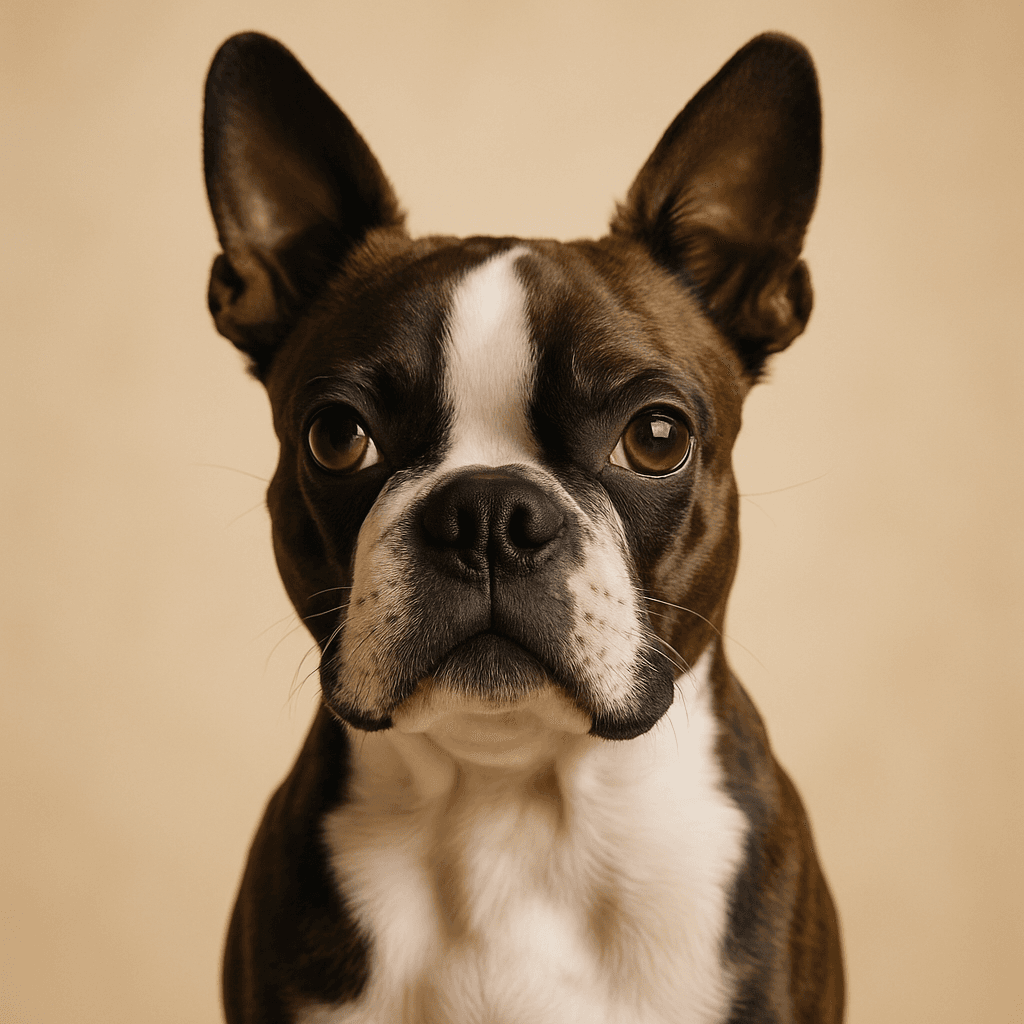
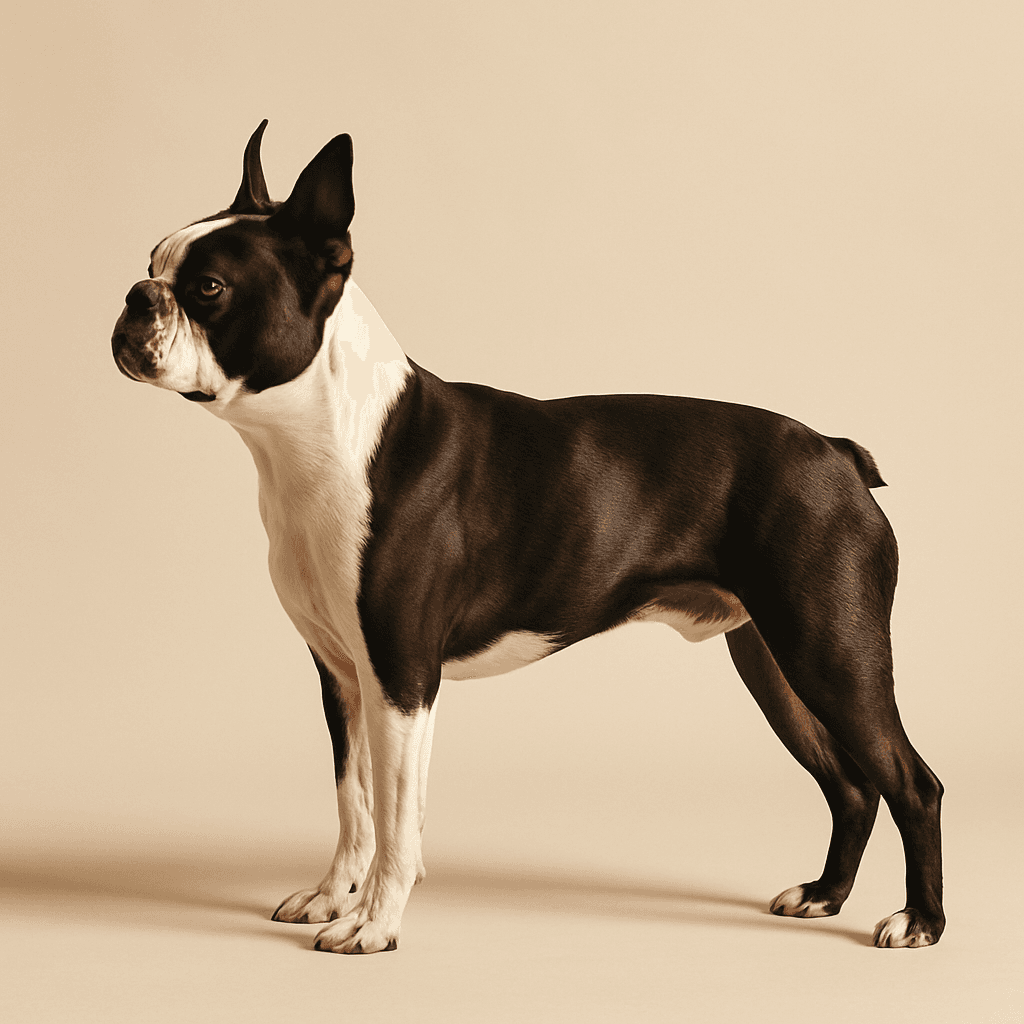
The Boston Terrier is a compact, well-proportioned American breed registered by the Kennel Club in the Utility Group. Developed in Boston in the late 19th century from crosses of English Bulldogs and White English Terriers, it was one of the first breeds developed in the United States and remains one of the most recognisable small breeds in the world. Its tuxedo-like markings - black or brindle with white - give it a distinctive appearance that has contributed to its enduring popularity. In character, the Boston Terrier is genuinely friendly, adaptable and affectionate. They are sociable with people, generally excellent with children and other pets, and suited to a wide range of household types including flats and urban living. Their energy levels are moderate, their grooming needs are minimal, and their personality is engaging without being overwhelming. For the right owner, it is an outstanding companion. The critical starting point for any prospective Boston Terrier owner is an honest understanding of what it means to own a brachycephalic breed. The Boston Terrier's flat-faced skull structure - the characteristic that gives it its distinctive appearance - also creates genuine anatomical constraints. Narrowed nostrils, an elongated soft palate and tracheal narrowing can all restrict airflow in affected individuals. The condition is known as Brachycephalic Obstructive Airway Syndrome, or BOAS. Severity varies: some Boston Terriers breathe normally throughout their lives; others require surgical intervention. Buy only from breeders who have had their breeding stock BOAS-assessed. Heat is a genuine danger for brachycephalic dogs. The Boston Terrier cannot cool itself through panting as effectively as normal-skulled breeds. Exercise must happen during cooler parts of the day - early morning or evening. Direct sun and high ambient temperatures must be avoided. This is a welfare requirement, not a preference. The prominent, shallow-set eyes are another anatomical vulnerability. More exposed than in typical breeds, they are more vulnerable to corneal scratches, dryness and irritation. Any sign of eye discomfort - pawing at the eye, squinting, discharge, cloudiness - requires prompt veterinary attention. Daily cleaning around the eyes and regular monitoring are part of the ownership commitment. Hereditary deafness, hemivertebrae and patellar luxation are additional health considerations. Insurance premiums of £40 to £90 per month reflect the elevated risk profile of brachycephalic breeds. BOAS surgery, if required, typically costs £1,500 to £4,000. Purchase prices from responsible breeders range from £1,000 to £2,500. Training is straightforward for owners who use positive, reward-based methods. Boston Terriers are intelligent, sensitive and keen to engage. They respond poorly to harsh handling and very well to calm, consistent training. Short sessions with food rewards suit their nature. Early socialisation, begun in the first weeks at home, is important for producing well-adjusted adults. Building independence from puppyhood prevents separation anxiety from developing. The Boston Terrier's appeal is real and well-founded. The character is warm, the size is practical, the grooming commitment is minimal. The ownership caveat is also real: this is a breed whose anatomy requires active management, specific veterinary awareness and a commitment to avoiding conditions that normal-skulled breeds handle without difficulty. Go in with clear eyes on the health picture, buy from a responsible BOAS-assessed breeder, and the Boston Terrier is a deeply rewarding companion. Boston Terrier rescue is available through the Boston Terrier Club of Great Britain. Adult rescue dogs typically come with detailed health histories, which is particularly valuable for a brachycephalic breed where prior BOAS assessment and treatment history is important to know from the outset.
Quick facts
Meet Our Boston Terriers
Register your dog on My Dog and it will appear here automatically.
Boston Terrier Photos
No photos yet. Be the first to share yours.
Add a photoActivity Feed
How much exercise does your Boston Terrier really need each day?
About 30 to 45 minutes a day, but I split it into shorter sessions rather than one long outing. The heat management is as important as the duration. Boston Terriers are brachycephalic, which means they cannot cool themselves through panting as effectively as normal-skulled breeds, and overheating happens faster than you might expect. I exercise mine in the early morning or evening during warmer months and I avoid direct sun entirely on hot days. I watch her breathing during and after exercise and if she is working hard to breathe, we stop. Inside the 30 to 45 minutes, I keep the intensity moderate, steady walking, some play, not sustained running. Short training sessions and puzzle games at home supplement the physical exercise and suit the breed well. The intelligence is real and they enjoy mental engagement without the physical demand that could stress the breathing.
30 June 2026
Any health issues to watch for with Boston Terriers?
BOAS is the primary concern, Brachycephalic Obstructive Airway Syndrome affects breathing capacity and varies significantly between individuals. Some Boston Terriers breathe normally throughout their lives; others need surgical intervention. I would only buy from a breeder who has had breeding dogs assessed for BOAS status, and I would see the results before committing. The eyes are the other major ongoing concern. Boston Terriers have prominent, shallow-set eyes that are more exposed than in normal-skulled breeds, and corneal ulcers can develop from minor scratches or dryness. Any sign of eye discomfort, pawing, squinting, discharge, warrants same-day veterinary attention. I am also aware that hereditary deafness is present in the breed and responsible breeders BAER test puppies, so I asked to see those results. Insurance runs £40 to £90 monthly, brachycephalic breeds command a premium across all providers and it is justified.
30 June 2026
What's the one thing you wish you'd known before getting a Boston Terrier?
The separation anxiety risk is real and it builds quickly if you are not intentional from the very beginning. Boston Terriers are affectionate and people-oriented in a way that makes them wonderful company, and it feels natural and kind to let a new puppy follow you everywhere. I did that, and I created a dog who found being alone genuinely distressing. It took months of patient, structured work to help her feel safe without me in the room. If I had built independence gradually from day one, short absences, calm returns, a settled routine, I would have saved us both a great deal of difficulty. The other thing I would flag is the heat sensitivity. I knew about it theoretically but I had not thought through how much it shapes daily life in practice: route planning, timing every walk, never leaving her in a car, monitoring her during summer play. It becomes second nature, but it is a real ongoing management consideration.
30 June 2026
What do you feed your Boston Terrier, and why?
I feed a high-quality complete dry food without excessive cereal fillers, and I measure portions carefully. Boston Terriers will overeat if food is available and excess weight directly worsens breathing difficulties, it is not just a general health concern, it specifically compounds the respiratory problems that brachycephalic breeds face. I weigh the food rather than estimate. Two small meals daily keeps things even and avoids the digestive load of a single large sitting. The flatulence issue is real in this breed and it improved noticeably when I moved to a food with fewer filler ingredients and better-quality protein sources. Treats are used sparingly and counted within the daily calorie total. I spend around £35 to £45 a month on food, which is reasonable for a dog of this size. The diet discipline is genuinely one of the most important things I can do for mine's long-term quality of life.
30 June 2026
Boston Terrier of the Month
🏆 September 2026 -- Be the first nominee
Could be your dog.
The first dog registered in this community earns the first Dog of the Month nomination automatically.
Register your dogUpcoming Boston Terrier Meetups
No meetups planned yet. Be the first to organise one.
Sign in to organise a meetupCommunity Members
Be the first to join and become the Boston Terrier Founding Member.
Join Club