
Be the first to join. Keep the badge forever.
The first members of this community earn permanent Founding Member status. It shows on your profile and your dog's profile for as long as you're here.
- ✓Founding Member badge on your profile
- ✓Your dog featured first
- ✓First Dog of the Month nomination
- ✓Always free
⭐ Founding Member spots open
First to join gets the badge
🐕 Be the first dog registered
Add your Lab to the community
📷 Add the first photo
Start the photo wall
8
Discussions

0 members
8 discussions
About the Bouvier des Flandres
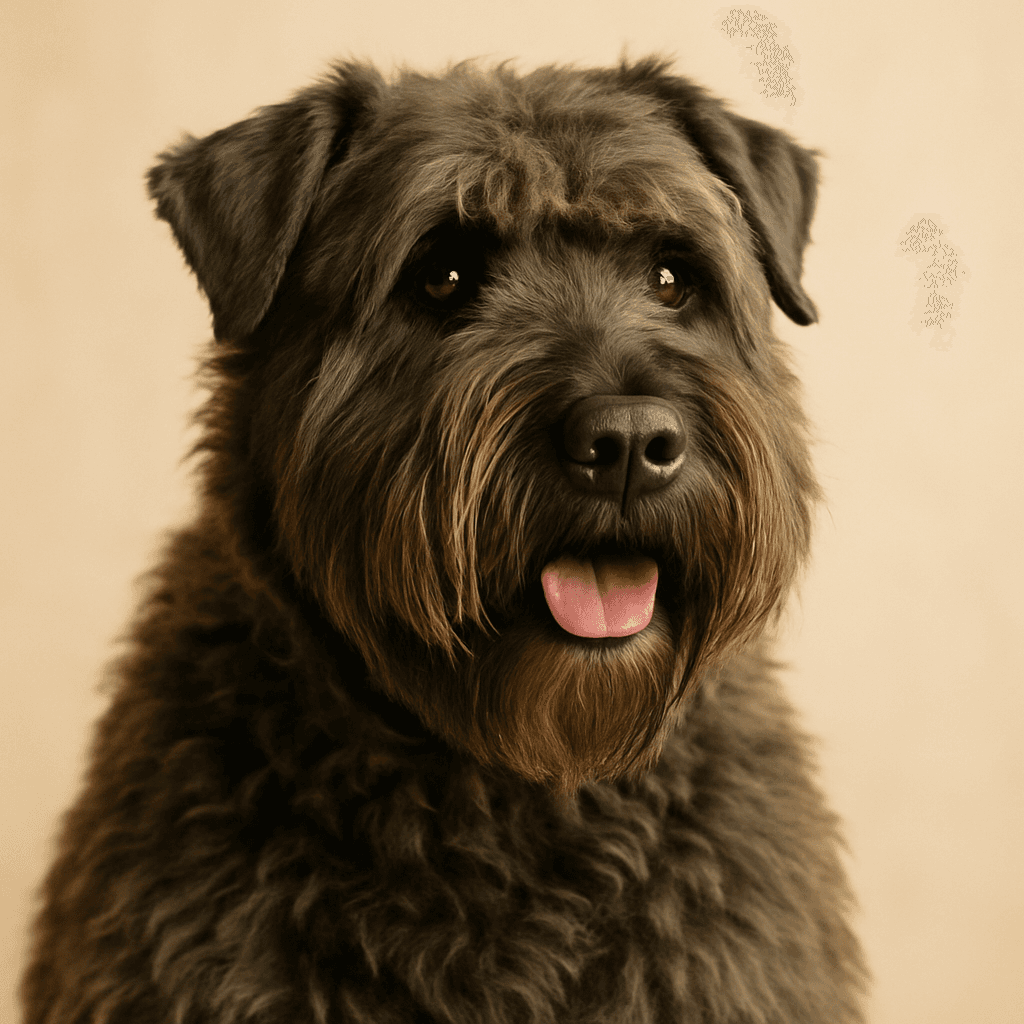
The Bouvier des Flandres is a large, powerfully built Belgian working breed with a history as a versatile farm and herding dog that was later deployed extensively in both World Wars as a messenger, ambulance and search dog. Registered by the Kennel Club in the Working Group, it has since established itself as one of the foremost police, military and protection sport breeds in Europe. It is a breed of considerable capability and considerable demand. The name means "cow herder of Flanders" and reflects its origins as an all-purpose farm dog in the Flemish lowlands. The breed's combination of intelligence, physical capability, endurance and trainability made it invaluable as a working animal, and these same qualities define ownership today. This is emphatically not a breed for passive ownership. In appearance the Bouvier is immediately imposing: a large, compact, muscular dog covered in a rough, dense double coat with a characteristic beard and moustache that contribute to an expression of alert authority. The coat is typically fawn, brindle, grey or black. The combination of size, substance and the rough coat's natural thickness means the breed looks even larger than it measures. In character, the Bouvier is intensely loyal to its family and highly protective. It forms deep bonds with the people it lives with and takes its guarding role seriously. With its own family - adults and children alike - it is typically warm, patient and devoted. With strangers, and particularly with animals or people it perceives as threats to its household, it is watchful and prepared to act. This is the breed's working character and it requires experienced, confident management. Socialisation from puppyhood is the most critical investment in a Bouvier's long-term manageability. Broad, positive exposure to different people, animals, environments and situations must begin from the first weeks in the home and continue consistently. An under-socialised Bouvier becomes suspicious and dominant in ways that are genuinely difficult to address in a large, powerful dog. Exercise requirements are substantial. An adult Bouvier needs a minimum of two hours of vigorous daily exercise, and physical exercise without mental engagement is insufficient for a breed of this intelligence. Herding trials, carting, protection sports, advanced obedience, tracking and scent work all provide the structured challenge that suits the Bouvier's capabilities. A Bouvier with unmet physical and mental needs becomes restless and potentially destructive on a scale that reflects the breed's size. Training requires an experienced handler who understands large working breeds and uses consistent, positive methods. The Bouvier is highly trainable and capable of outstanding performance in multiple disciplines. It does not respond to inconsistency or coercive handling, and an owner who projects anxiety or uncertainty will find the breed takes advantage of that gap. The relationship between handler and Bouvier, built on consistent training, mutual respect and clear communication, is genuinely remarkable when established correctly. Grooming the rough double coat requires three to four brushing sessions per week. The beard and eyebrows trap food and debris and need attention at every grooming session. Professional grooming every eight to twelve weeks maintains coat condition and prevents the deep matting that occurs near the skin in neglected coats. Hip dysplasia is the primary orthopaedic concern and both parents should be hip and elbow scored before breeding. Subaortic stenosis - a cardiac condition affecting blood flow from the heart - occurs at elevated rates in the Bouvier and cardiac testing of breeding stock is specifically recommended. Bloat is a serious risk in deep-chested breeds. Lifespan is typically 10 to 12 years. Purchase prices from KC-registered breeders range from £1,000 to £2,000. Insurance of £45 to £80 per month reflects the breed's working dog profile and elevated health risks. Monthly running costs average £180 to £300. The Bouvier des Flandres Club UK is the primary resource for breed information, responsible breeders, health testing guidance and rescue contact.
Quick facts
Meet Our Bouvier des Flandress
Register your dog on My Dog and it will appear here automatically.
Bouvier des Flandres Photos
No photos yet. Be the first to share yours.
Add a photoActivity Feed
How much exercise does your Bouvier des Flandres really need each day?
A minimum of two hours of vigorous exercise daily, plus structured mental engagement on top of that. The Bouvier is a working breed in the fullest sense and physical output alone does not satisfy them, they need their minds engaged as much as their bodies. Mine thrives on activities that combine both: advanced obedience training, tracking work, carting. On days when the exercise is purely physical, I make sure there is a meaningful training session as well. Access to a large garden for independent movement between structured sessions also helps with overall contentment. I was careful not to push too hard during the puppy and adolescent phases, large working breeds benefit from gradual conditioning rather than intensive early exercise, but the mental stimulation and early training work started from day one. This is a breed that requires genuine daily investment, not just time.
30 June 2026
Any health issues to watch for with Bouvier des Flandres?
Hip and elbow dysplasia are the primary concerns and both parents should be hip and elbow scored before any breeding, I would not buy from a litter where this had not been done and I would ask to see the results. Subaortic stenosis is a heart condition that occurs at elevated rates in the breed, so cardiac testing of breeding stock is recommended and worth asking about specifically. Bloat is a meaningful risk in this deep-chested breed, I feed two meals daily rather than one and keep vigorous exercise well away from feeding times. Insurance runs around £45 to £80 a month for comprehensive lifetime cover, which given the potential joint and cardiac costs is a sound investment. Typical lifespan is 10 to 12 years. The thick double coat also makes visual body condition assessment difficult, I weigh mine regularly rather than relying on what I can see.
30 June 2026
What's the one thing you wish you'd known before getting a Bouvier des Flandres?
How much the socialisation window matters for a breed with strong protective and territorial instincts. The Bouvier is naturally reserved with strangers and can be assertive with other dogs, these are breed characteristics, not problems. But without thorough and deliberate socialisation during puppyhood, those characteristics can become management challenges that follow you for the dog's entire life. I was fortunate to have a breeder who impressed this on me and I spent the first four months in a structured programme of exposures: different people, different environments, different dogs. The calm confidence the Bouvier responds to in an owner is also something I had to consciously develop. This is not a breed that tolerates an anxious or inconsistent handler. They read you clearly and they respond to what they find. Calm, consistent, positive training from day one is not advice, it is a requirement.
30 June 2026
What do you feed your Bouvier des Flandres, and why?
A large-breed complete dry food appropriate to size and activity level, around 500g a day split across two meals. The two-meal routine matters for bloat risk management in a deep-chested dog of this size, so that is a non-negotiable part of the daily structure. The thick double coat makes visual body condition assessment genuinely unreliable, so I weigh mine regularly and run my hands along his ribs to feel the actual body condition underneath the coat. It is easy to miss gradual weight gain with a heavily coated breed. On high-activity days, longer training sessions, more vigorous physical work, I adjust portions upward slightly. On quieter days I pull back. I keep treats minimal and account for them within the daily total. Straightforward feeding with disciplined portions and regular condition checks is what this breed needs.
30 June 2026
Bouvier des Flandres of the Month
🏆 September 2026 -- Be the first nominee
Could be your dog.
The first dog registered in this community earns the first Dog of the Month nomination automatically.
Register your dogUpcoming Bouvier des Flandres Meetups
No meetups planned yet. Be the first to organise one.
Sign in to organise a meetupCommunity Members
Be the first to join and become the Bouvier des Flandres Founding Member.
Join Club