Be the first to join. Keep the badge forever.
The first members of this community earn permanent Founding Member status. It shows on your profile and your dog's profile for as long as you're here.
- ✓Founding Member badge on your profile
- ✓Your dog featured first
- ✓First Dog of the Month nomination
- ✓Always free
⭐ Founding Member spots open
First to join gets the badge
🐕 Be the first dog registered
Add your Lab to the community
📷 Add the first photo
Start the photo wall
8
Discussions
0 members
8 discussions
About the Bull Terrier
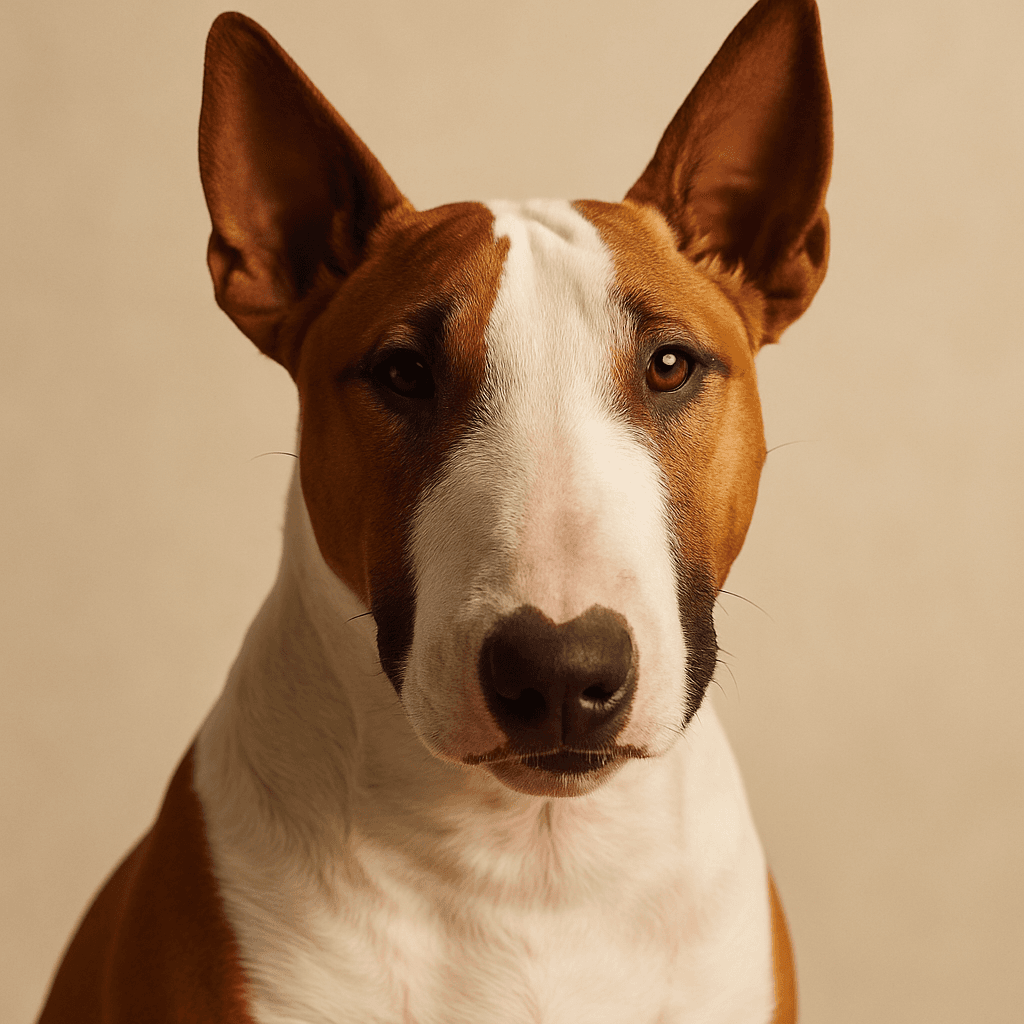
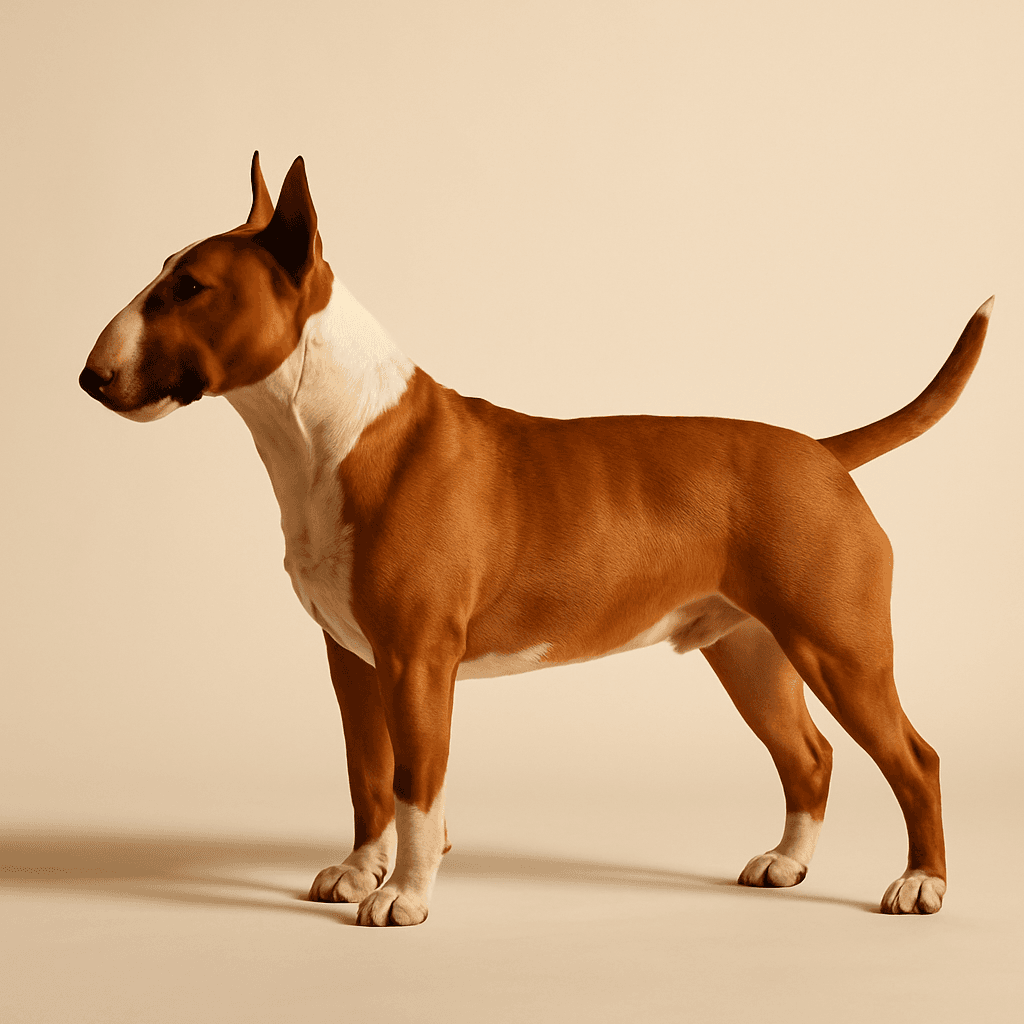
The Bull Terrier is one of the most immediately recognisable breeds in the world, distinguished above all by its unique egg-shaped head - a profile unlike any other breed - combined with a muscular, athletic build and a personality that divides opinion between those who find it irresistible and those who find it challenging. Registered by the Kennel Club in the Terrier Group, it was developed in nineteenth-century England from crosses involving the now-extinct White English Terrier, Bulldog and other terrier types, originally for the bull-baiting and dog-fighting pits that defined working dog culture of the era. The breed exists in two varieties - the standard Bull Terrier and the Miniature Bull Terrier, which is treated as a separate breed by the Kennel Club. Both share the same characteristic head profile, short coat and strong character. In character, the Bull Terrier is one of the more complex and nuanced breeds available. At home with its family it is typically loyal, playful and genuinely entertaining - it has a well-established reputation as the clown of the dog world, with a sense of humour and an enthusiasm for play that is hard to resist. It is devoted to the people it lives with and forms deep, lasting bonds. For the right owners, this devotion and personality make it an outstanding companion. The other side of the coin is the breed's strength, determination and strong character. The Bull Terrier was not developed as a biddable companion breed. It has a genuine will of its own, a high pain tolerance, and the physical capability to back up its instincts. In inexperienced hands, or households where training has been inconsistent from puppyhood, these characteristics become serious management challenges. The Bull Terrier is not a suitable choice for anyone without prior experience of bull breeds or strong terrier types. Dog-dog reactivity is common in the breed, particularly between dogs of the same sex. This is not universal - many Bull Terriers live happily with other dogs - but the potential for inter-dog conflict is genuine and requires management from puppyhood through thorough, positive socialisation. Prey drive makes the breed unsuitable in households with cats, rabbits or other small animals. Training must begin from the first day in the home and be maintained consistently throughout the dog's life. The Bull Terrier responds well to positive, reward-based methods but poorly to coercive or harsh handling, which produces resistance and stubbornness in a breed of this character. Consistency is the key word: a Bull Terrier that is trained reliably and managed confidently is a safe and enjoyable companion. One that has been allowed to set its own boundaries becomes increasingly difficult to manage as it matures. Hereditary Nephritis - a progressive kidney disease - is the most significant breed-specific health concern and a DNA test is available. Both parents should be DNA tested before breeding. White-coloured Bull Terriers are predisposed to congenital deafness and BAER hearing testing is strongly recommended before purchasing a white puppy. Heart conditions including mitral valve disease have been reported, and skin allergies are common in the breed. Lifespan is typically 11 to 14 years. Insurance of £40 to £80 per month reflects an elevated health risk profile. Purchase prices from KC-registered breeders range from £800 to £1,500. Monthly running costs average £140 to £240. The Bull Terrier Club and specialist bull breed rescue organisations are the primary resources for breed information, responsible breeders and rescue contact.
Quick facts
Meet Our Bull Terriers
Register your dog on My Dog and it will appear here automatically.
Bull Terrier Photos
No photos yet. Be the first to share yours.
Add a photoActivity Feed
How much exercise does your Bull Terrier really need each day?
One to one and a half hours of vigorous daily exercise split across two sessions works well for mine. He absolutely loves vigorous play and retrieving and genuinely needs to burn energy properly. The difference from many other breeds is that I do not let him off-lead in open areas where he might encounter unfamiliar dogs. His dog-dog reactivity means that an off-lead run in a mixed park is not safe, so I use secure enclosed fields for proper free running and keep leads on in public spaces. That is a practical adjustment rather than a problem, he gets the same quality of exercise, just in managed environments. Mental stimulation through training is genuinely important alongside the physical side. A Bull Terrier that has been well exercised physically but not mentally is still looking for an outlet, and that outlet is usually something you would rather he left alone.
30 June 2026
Any health issues to watch for with Bull Terriers?
Hereditary Nephritis is the one to address first, it is a breed-specific kidney disease and a DNA test exists. I would not buy a Bull Terrier puppy without proof of clear results on both parents. If you are looking at a white or predominantly white individual, BAER hearing testing is important because deafness is seen in white Bull Terriers. Ask for the certificate. Heart conditions including mitral valve disease have been reported in the breed, so cardiac status on the parents is worth asking about. Skin allergies are common in practice, mine went through a period of itching and skin reactions that needed veterinary dietary management to resolve. The breed tends to react to environmental allergens as well as food ones. Lifespan is 11 to 14 years with good management. Budget £40 to £80 monthly for insurance and make sure it covers hereditary conditions from the start.
30 June 2026
What's the one thing you wish you'd known before getting a Bull Terrier?
How genuinely non-negotiable the early obedience training is. I knew the breed had a strong character going in, but I slightly underestimated what strong-willed actually means in practice when you are managing a dog of this physical strength. Mine is not aggressive, he is loyal, devoted and entertaining at home, but he has real determination when he has decided on a course of action. The training needs to be consistent, patient and positive from the very first day, not as something you get around to once the dog has settled in. Harsh handling gets you absolutely nowhere with a Bull Terrier, he just disengages. But reward-based training applied consistently from puppyhood produces a dog you can genuinely manage and live with safely. The other thing: this breed is not compatible with cats and that is not a trainable preference, it is a prey drive reality you need to plan around.
30 June 2026
What do you feed your Bull Terrier, and why?
I use a high-quality complete dry food appropriate for a medium-sized active dog, split across two meals. His daily portion is around 350 to 400g depending on the week's exercise level. Bull Terriers can be prone to food allergies and mine did develop a reaction to certain protein sources, it showed as skin irritation and digestive upset. A conversation with my vet led to a change to a single-protein limited ingredient formula which resolved things. If you see persistent skin problems or digestive issues, food is worth investigating early rather than assuming it is environmental. Two meals daily suits his digestion and he is much calmer around mealtimes than when I tried once-a-day feeding. Treats are small and counted within the daily calorie total, not added on top. Fresh water is always available and he drinks well after exercise.
30 June 2026
Bull Terrier of the Month
🏆 September 2026 -- Be the first nominee
Could be your dog.
The first dog registered in this community earns the first Dog of the Month nomination automatically.
Register your dogUpcoming Bull Terrier Meetups
No meetups planned yet. Be the first to organise one.
Sign in to organise a meetupCommunity Members
Be the first to join and become the Bull Terrier Founding Member.
Join Club