Be the first to join. Keep the badge forever.
The first members of this community earn permanent Founding Member status. It shows on your profile and your dog's profile for as long as you're here.
- ✓Founding Member badge on your profile
- ✓Your dog featured first
- ✓First Dog of the Month nomination
- ✓Always free
⭐ Founding Member spots open
First to join gets the badge
🐕 Be the first dog registered
Add your Lab to the community
📷 Add the first photo
Start the photo wall
8
Discussions

0 members
8 discussions
About the Canadian Eskimo Dog
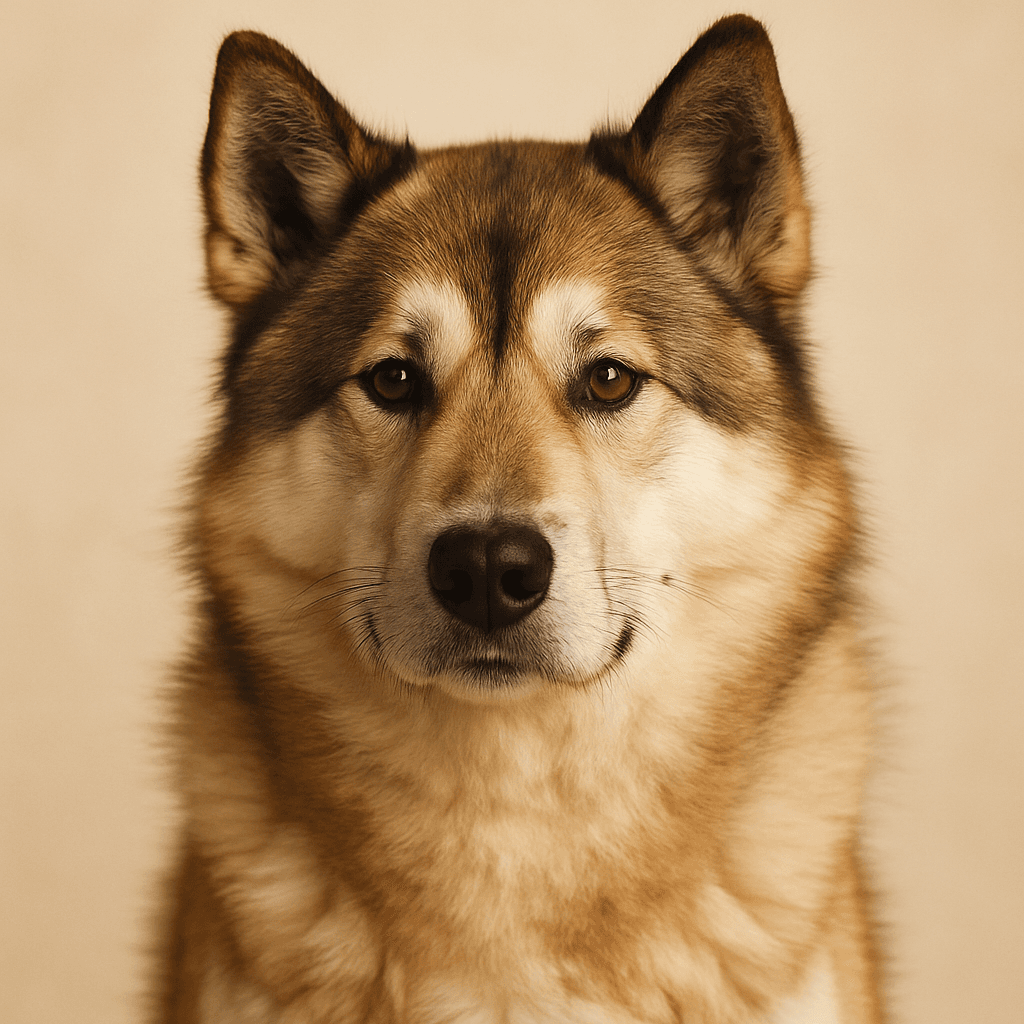
The Canadian Eskimo Dog, also known as the Qimmiq or Canadian Inuit Dog, is one of the oldest and most endangered dog breeds in North America. Developed by the Thule people thousands of years ago as a sled and hunting dog in the Arctic regions of what is now northern Canada and Greenland, it is a breed of genuine historical significance whose population was nearly destroyed in the twentieth century through deliberate government culling and the introduction of snowmobiles that replaced sled dogs in Inuit communities. Registered by the Kennel Club in the Working Group, it is exceptionally rare in the UK and worldwide, and prospective owners face both a significant wait to find a puppy and rigorous screening by responsible breeders. The breed's near-extinction in the late twentieth century - the population dropped from an estimated 20,000 individuals in the 1920s to fewer than 200 in the 1970s - has made conservation breeding an active priority for those involved with the breed. Recovery programmes in Canada have increased numbers, but the Canadian Eskimo Dog remains one of the rarest breeds registered with the Kennel Club. In appearance it is unmistakably a northern spitz type: a large, powerfully built dog with a thick double coat, erect ears, a broad wedge-shaped head, and a tail that curls over the back. It comes in a range of colours including white, black, grey, red and sable, often with a lighter underside. The build is for endurance and cold-weather work - deep-chested, muscular and broad-pawed. The character reflects centuries of work in extreme conditions. The Canadian Eskimo Dog is independent, intelligent and capable of exercising its own judgement - qualities that made it an effective partner in Arctic survival but that create specific management requirements in a domestic setting. It is loyal to its human family and can be affectionate with the people it knows well, but it is not a compliant or biddable breed in the way that retrievers or herding dogs are. Exercise requirements are the most immediate and non-negotiable aspect of Canadian Eskimo Dog ownership. This is a breed built for sustained endurance work across Arctic terrain, and its daily exercise requirements reflect that heritage. An adult Canadian Eskimo Dog needs two or more hours of vigorous daily activity. Canicross, sledding, weight pulling, and long trail runs suit the breed's capability and drive. A Canadian Eskimo Dog with insufficient exercise becomes destructive and frustrated in ways that are difficult to manage given its size and physical capability. The prey drive is strong and persistent. Small animals including cats and smaller dogs are at genuine risk. Recall in open areas is unreliable with strong visual or scent prey stimuli. Dominance with other dogs is common, particularly between intact individuals, and careful management is required in multi-dog households. Grooming the dense double coat requires two to three brushing sessions weekly year-round, increasing to daily during the heavy seasonal shedding periods that occur twice yearly. The breed is generally clean and low-odour. Health is generally robust given the genetic diversity preserved through natural selection. Hip dysplasia can occur and health screening of parents is recommended. Bloat is a risk in deep-chested breeds. Zinc-responsive dermatosis has been documented. Lifespan is typically 10 to 15 years. For the rare individual with the experience, space, time and commitment this breed demands, the Canadian Eskimo Dog is a profound connection to one of humanity's oldest working partnerships.
Quick facts
Meet Our Canadian Eskimo Dogs
Register your dog on My Dog and it will appear here automatically.
Canadian Eskimo Dog Photos
No photos yet. Be the first to share yours.
Add a photoActivity Feed
How much exercise does your Canadian Eskimo Dog really need each day?
Two hours is a minimum, not a target. On good days, my Canadian Eskimo Dog gets closer to three hours, and even then he can still have energy to burn. This is a breed built to haul heavy loads across Arctic terrain for days at a stretch. A couple of park walks will not cut it. I do long off-road hikes, running sessions, and bikejoring when I can. If I ever have a short week due to work or weather, the difference in his behaviour is immediate: restless, vocal, and destructive. I live rurally and that matters enormously. I would not recommend this breed to anyone in a flat or a suburban terrace. The exercise demands are not manageable without serious outdoor access. If you are an ultra-runner or farmer looking for a working companion, that is a different conversation.
30 June 2026
Any health issues to watch for with Canadian Eskimo Dogs?
The honest answer is that the breed's biggest health concern is the tiny global population rather than any single condition. The gene pool is critically small, which creates real genetic risk over time. On a more immediate level, hip dysplasia, elbow dysplasia and eye conditions are all documented. As a deep-chested, large breed, bloat (GDV) is a genuine risk, and I would strongly recommend learning the signs: unproductive retching, distended abdomen, restlessness. It can kill within hours without emergency surgery. The breed is adapted for cold and can genuinely struggle in hot summers, so I exercise early in the morning from May through to September. Ask any breeder what health clearances are in place on both parents. Given the breed's rarity, good breeders take this seriously.
30 June 2026
What's the one thing you wish you'd known before getting a Canadian Eskimo Dog?
I wish I had fully understood what independent decision-making means in practice before bringing one home. I had owned dogs for years and considered myself experienced, and this breed still caught me out. The Canadian Eskimo Dog was bred to navigate Arctic conditions without human direction. That is in the genetics. It is not stubbornness, it is capability. But it means that when you issue a command, the dog is genuinely assessing whether your instruction makes sense in the context. Biddability as you find it in a Labrador or a Border Collie just does not exist here. Positive reinforcement works, but it takes patience and consistency over months, not weeks. The pack instinct is also real. Clear leadership from day one is not a figure of speech, it is essential. Start as you mean to go on.
30 June 2026
What do you feed your Canadian Eskimo Dog, and why?
I feed a high-quality large breed complete dry food, and I feed considerably more than a typical large dog of similar weight because his activity level is very high. On heavy exercise days he gets up to 700g split across two meals. I drop back to around 500g on rest days and watch his body condition closely, because this breed can lose condition quickly when working hard. Two meals a day is the approach I use partly for practical reasons and partly because large deep-chested breeds carry a bloat risk. I avoid exercising him within an hour of feeding. I have looked at raw feeding for him and it has appeal for a breed that would historically have eaten meat and fish, but the logistics and consistency of a quality kibble suits us better right now.
30 June 2026
Canadian Eskimo Dog of the Month
🏆 September 2026 -- Be the first nominee
Could be your dog.
The first dog registered in this community earns the first Dog of the Month nomination automatically.
Register your dogUpcoming Canadian Eskimo Dog Meetups
No meetups planned yet. Be the first to organise one.
Sign in to organise a meetupCommunity Members
Be the first to join and become the Canadian Eskimo Dog Founding Member.
Join Club