Be the first to join. Keep the badge forever.
The first members of this community earn permanent Founding Member status. It shows on your profile and your dog's profile for as long as you're here.
- ✓Founding Member badge on your profile
- ✓Your dog featured first
- ✓First Dog of the Month nomination
- ✓Always free
⭐ Founding Member spots open
First to join gets the badge
🐕 Be the first dog registered
Add your Lab to the community
📷 Add the first photo
Start the photo wall
8
Discussions

0 members
8 discussions
About the Catalonian Sheepdog
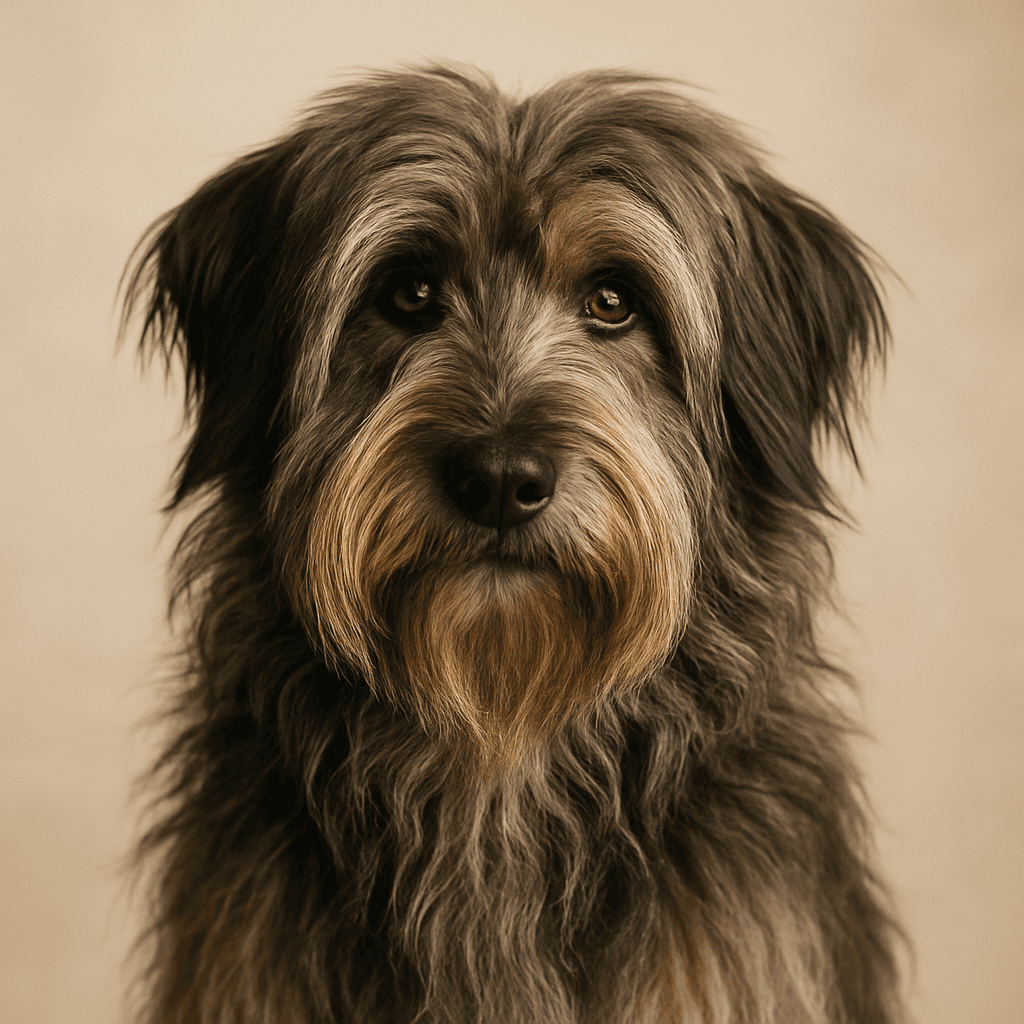
The Catalonian Sheepdog, known in its native Catalonia as the Gos d'Atura Catala, is an ancient herding breed from the Catalonia region of northeast Spain and the adjacent Pyrenean foothills. Used for centuries to herd and guard sheep across demanding mountain terrain, it is one of the lesser-known herding breeds outside its region of origin and is exceptionally rare in the UK. Registered by the Kennel Club in the Pastoral Group, it represents a genuine piece of Catalan rural heritage and is an active conservation concern for breed enthusiasts who want to preserve its working qualities and genetic diversity. The breed's appearance is distinctive. A medium to large dog with a long, wavy or slightly wavy coat in shades of fawn, sable, grey or black - often with lighter markings - the Catalonian Sheepdog has a rustic, practical quality that reflects its mountain working origins. The coat, which is the breed's most immediately recognisable feature, provides insulation against the harsh winters and cool summers of the Pyrenean environment and requires corresponding commitment from an owner. In character, the Catalonian Sheepdog is intelligent, loyal and highly active. It bonds strongly with its own family and is consistently good with children and other dogs when socialised from puppyhood. It is typically reserved rather than fearful with strangers - a watchfulness that reflects the guard function alongside the herding role. It is not an aggressive breed but it is not an indiscriminately sociable one either. The intelligence and activity level that made the Gos d'Atura invaluable as a one-dog shepherd's partner create corresponding demands in domestic settings. An adult Catalonian Sheepdog needs approximately 1.5 hours of vigorous daily exercise, with mental stimulation alongside physical output. Agility, obedience, herding trials and advanced training all suit the breed's combination of athleticism and working intelligence. An under-exercised, under-stimulated Catalonian Sheepdog will find its own outlets for its energy and intelligence, and those outlets will not be the ones its owner would choose. Training is generally a pleasure. The breed responds with enthusiasm to positive, reward-based methods and is capable of high-level performance in multiple disciplines. The herding instincts are strong and can be channelled effectively into herding sport and other structured activities. Grooming the long, wavy coat is a significant ongoing commitment. Brushing three to four times weekly prevents the matting that develops rapidly in the feathered areas, particularly behind the ears and on the legs. Professional grooming every eight to twelve weeks maintains the coat at a manageable level. Health data for the Catalonian Sheepdog is limited given the breed's small population, but hip dysplasia and eye conditions have been documented. Reputable breeders should provide available health testing evidence for both parents. Lifespan is approximately 12 to 14 years. Prospective owners should be prepared for a significant wait and potentially international travel to source a puppy from a reputable breeder. The breed club is the essential first contact for anyone seriously interested.
Quick facts
Meet Our Catalonian Sheepdogs
Register your dog on My Dog and it will appear here automatically.
Catalonian Sheepdog Photos
No photos yet. Be the first to share yours.
Add a photoActivity Feed
How much exercise does your Catalonian Sheepdog really need each day?
Around 90 minutes is my baseline, and quality matters as much as quantity. A Catalonian Sheepdog that just plods along on the same route every day is not really satisfied, it is just enduring. This is a herding breed with real working instincts and it needs purposeful activity. I do agility training twice a week, regular off-lead running in a secure field, and longer weekend hikes. On days when the mental stimulation has been particularly good, I can see the difference in how settled she is at home. Without adequate exercise and engagement, my Catalonian becomes frustrated and starts testing boundaries. She is not destructive exactly, more persistently busy in ways that are wearing. If you want a dog that potters quietly about, this is not the breed. If you want an active, engaged companion who genuinely wants to work with you, she is brilliant.
30 June 2026
Any health issues to watch for with Catalonian Sheepdogs?
The honest situation with this breed is that formal health data is limited. The gene pool is small, the breed is rare outside Spain, and there are no widespread health testing programmes with the body of data you find in more popular breeds. What is recommended is hip evaluation, so check that breeders are screening for this. The breed appears generally healthy for its size, which is partly a product of being a relatively natural working breed without the extreme structural modifications that cause problems in some modern dogs. The small global population is itself a concern over the long term in terms of genetic diversity. My practical advice is to choose a breeder who screens diligently, even where it is not mandated. And take out good lifetime insurance. Lifespan is typically 12 to 14 years.
30 June 2026
What's the one thing you wish you'd known before getting a Catalonian Sheepdog?
I wish I had known how sensitive this breed is to the tone and consistency of my handling. I had owned dogs before, but previous breeds were more forgiving of the odd inconsistent moment or a slightly frustrated tone of voice. My Catalonian picks up on everything. If I am tense, she is tense. If I rush training or use a clipped, impatient voice, she disengages. The herding intelligence is real and it works in your favour when you are calm, patient and clear, but it turns against you if you try to push through frustration. The other thing I did not anticipate was how much she likes to know where everyone is at all times. She is not clingy exactly, but she maintains a constant awareness of her people. Classic shepherd behaviour, actually. Once I understood it, I found it endearing.
30 June 2026
What do you feed your Catalonian Sheepdog, and why?
I feed a medium to large breed complete dry food, split into two meals daily. My Catalonian Sheepdog sits at the larger end of medium, so I use a food that supports active dogs rather than the basic maintenance formulas. She gets around 380g a day, though I adjust across the seasons. She works harder in summer, covering more ground and doing more agility, so I feed a little more. In quieter winter months I pull back slightly and check her condition regularly. She is lean and athletic and I want to keep her that way. I have not noticed any particular digestive sensitivities, which makes feeding straightforward. Fresh water is always available. The main thing I watch is that training treats are small and accounted for within the daily allowance, because training sessions with an intelligent herding dog involve a lot of repetitions.
30 June 2026
Catalonian Sheepdog of the Month
🏆 September 2026 -- Be the first nominee
Could be your dog.
The first dog registered in this community earns the first Dog of the Month nomination automatically.
Register your dogUpcoming Catalonian Sheepdog Meetups
No meetups planned yet. Be the first to organise one.
Sign in to organise a meetupCommunity Members
Be the first to join and become the Catalonian Sheepdog Founding Member.
Join Club