


Be the first to join. Keep the badge forever.
The first members of this community earn permanent Founding Member status. It shows on your profile and your dog's profile for as long as you're here.
- ✓Founding Member badge on your profile
- ✓Your dog featured first
- ✓First Dog of the Month nomination
- ✓Always free
⭐ Founding Member spots open
First to join gets the badge
🐕 Be the first dog registered
Add your Lab to the community
📷 Add the first photo
Start the photo wall
8
Discussions
0 members
8 discussions
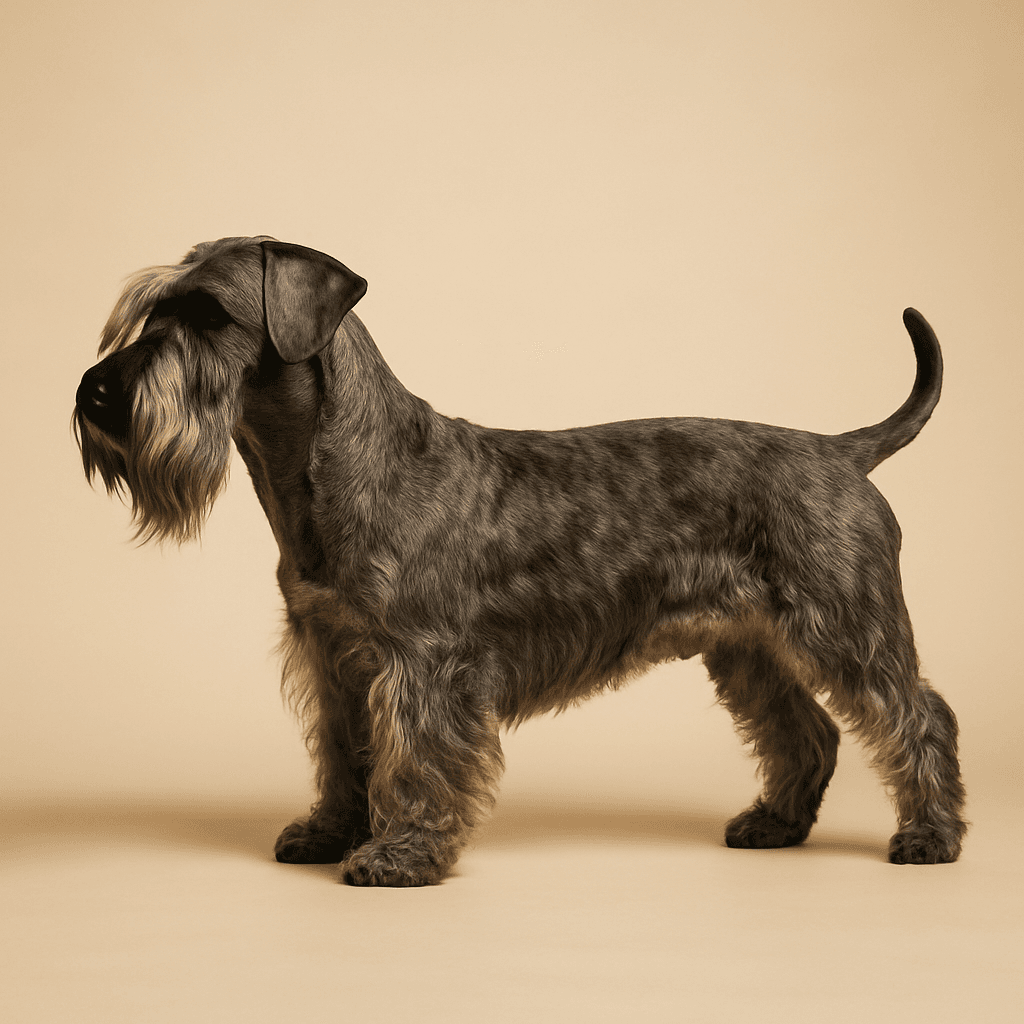
About the Cesky Terrier
The Cesky Terrier is a rare Czech breed with an unusual and well-documented origin: it was deliberately created in the late 1940s by Czech geneticist and dog breeder Frantisek Horak, who crossed the Scottish Terrier with the Sealyham Terrier to produce a terrier with the gameness and earth-working capability of both parent breeds combined with a softer, more tractable temperament and a coat that could be clipped rather than stripped. Registered by the Kennel Club in the Terrier Group, the Cesky Terrier remains rare worldwide and is one of the lesser-known terrier breeds in the UK. Horak's breeding programme produced a dog that successfully combined the best qualities of his two source breeds. The Cesky has the substance, determination and earth-working instinct of the Scottish Terrier and the low-shedding, silky coat of the Sealyham, while being somewhat calmer and more amenable than either parent breed. The result is a terrier that is accessible to a wider range of owners than the more demanding traditional working terrier breeds. In appearance the Cesky Terrier is a long, low dog with short legs, a silky and slightly wavy coat in grey-blue or light coffee shades, and a characteristic facial furnishing of beard and eyebrows that gives it a distinguished expression. The build is somewhat heavier-boned than many small terriers, giving it a sturdy, capable look. The temperament is the Cesky Terrier's most distinctive selling point. While the breed retains the intelligence, curiosity and terrier confidence of its ancestors, it is notably calmer, less reactive and more biddable than the typical working terrier character. It is good with children, sociable with other dogs when properly introduced and socialised, and sufficiently tractable to be an enjoyable companion for owners who want terrier personality without the more demanding aspects of terrier management. Training is more straightforward than with most terrier breeds. The Cesky responds well to positive, reward-based methods and has a genuine interest in working with its handler. It does not have the pronounced independent streak that makes training some terrier breeds an exercise in negotiation. Early socialisation establishes the stable, confident temperament that makes adult ownership pleasant. Exercise needs are moderate. An adult Cesky Terrier needs 45 to 60 minutes of daily activity. This is less than most working terrier breeds and makes the Cesky a realistic companion for owners who want an active but not exhausting daily routine. Grooming the silky coat requires regular brushing to prevent tangling. Unlike most terriers, the Cesky is groomed by clipping rather than hand-stripping, which makes professional grooming maintenance more straightforward. Beard and eyebrows should be kept clean. Scotty Cramp, a muscle cramping condition documented in Scottish Terriers, has been reported in the Cesky Terrier and prospective owners should ask breeders about the history of this condition in their lines. Primary Lens Luxation, a serious eye condition, has a DNA test available and parents should be tested. Lifespan is typically 12 to 15 years. Purchase prices from KC-registered breeders range from £800 to £1,500, and waiting lists are likely given the breed's rarity. Monthly running costs average £90 to £160. The Cesky Terrier Club UK is the primary resource for breed information, responsible breeders and rescue contact.
Quick facts
Meet Our Cesky Terriers
Register your dog on My Dog and it will appear here automatically.
Cesky Terrier Photos
No photos yet. Be the first to share yours.
Add a photoActivity Feed
How much exercise does your Cesky Terrier really need each day?
Mine does well on two walks of around 20 to 30 minutes each, which adds up to about an hour total. What I've found is that this breed is genuinely less demanding than most terriers in the exercise department. A good sniff around the park or a trot through a quiet neighbourhood satisfies him far more than a relentless march. He enjoys off-lead time in a secure area but he's not pulling at the lead demanding more if I keep it to 45 minutes on a wet Tuesday. That said, don't mistake manageable for lazy. He still needs to get out every day. If I skip a proper walk he finds his own entertainment indoors, and I mean that in the worst possible way. Two solid walks, some garden time and he's a happy, settled dog. Honestly one of the more adaptable terriers I've come across.
30 June 2026
Any health issues to watch for with Cesky Terriers?
The main thing I'd flag to anyone considering the breed is the gene pool. It's tiny globally, and that matters because limited genetic diversity concentrates inherited problems. Scottie cramp is worth knowing about specifically: it's a movement disorder that can show up during excitement or exercise and is linked to the Scottish Terrier lines the breed was developed from. It's not usually life-threatening but it is distressing to witness until you know what you're looking at. Eye conditions and cardiac issues have also been documented. I've been diligent about choosing a breeder who health tests both parents thoroughly, and I'd make that non-negotiable for anyone serious about the breed. The good news is that with careful breeding and routine vet checks, Cesky Terriers are generally pretty robust and can live well into their mid-teens.
30 June 2026
What's the one thing you wish you'd known before getting a Cesky Terrier?
I'd heard 'calmer terrier' and assumed easy. That's not quite right. He is calmer than a Wire Fox or a Jack Russell, genuinely. But 'calm for a terrier' still means curious, independent, opinionated and sharp-minded. The independence is real: long, repetitive training sessions bore him and he switches off fast. What works is short, varied, positive sessions where he feels like he's figured something out himself rather than being drilled. His loyalty to me is absolute but it's on his terms, and I had to make my peace with that. Once I started treating him as an intelligent dog with a distinct personality rather than a small dog to be managed, training became genuinely enjoyable. He's not a pushover, but he's not difficult either. He just needs to feel like a partner, not a subject.
30 June 2026
What do you feed your Cesky Terrier, and why?
I feed a high-quality small breed dry complete food split across two meals. He gets somewhere between 150 and 200g a day depending on how active we've been that week. The breed can gain weight more readily than you'd expect for a terrier, so I weigh his food rather than eyeballing it and I run my hands along his ribs regularly to check his condition. I went through a phase of adding wet food as a topper and he started leaving his morning bowl half eaten, clearly holding out for something better. Dropping back to plain kibble sorted that immediately. Consistent mealtimes, measured portions, no table scraps. It's not complicated but it does require actually paying attention rather than just filling the bowl.
30 June 2026
Cesky Terrier of the Month
🏆 September 2026 -- Be the first nominee
Could be your dog.
The first dog registered in this community earns the first Dog of the Month nomination automatically.
Register your dogUpcoming Cesky Terrier Meetups
No meetups planned yet. Be the first to organise one.
Sign in to organise a meetupCommunity Members
Be the first to join and become the Cesky Terrier Founding Member.
Join Club