

Be the first to join. Keep the badge forever.
The first members of this community earn permanent Founding Member status. It shows on your profile and your dog's profile for as long as you're here.
- ✓Founding Member badge on your profile
- ✓Your dog featured first
- ✓First Dog of the Month nomination
- ✓Always free
⭐ Founding Member spots open
First to join gets the badge
🐕 Be the first dog registered
Add your Lab to the community
📷 Add the first photo
Start the photo wall
8
Discussions
0 members
8 discussions
About the Croatian Sheepdog
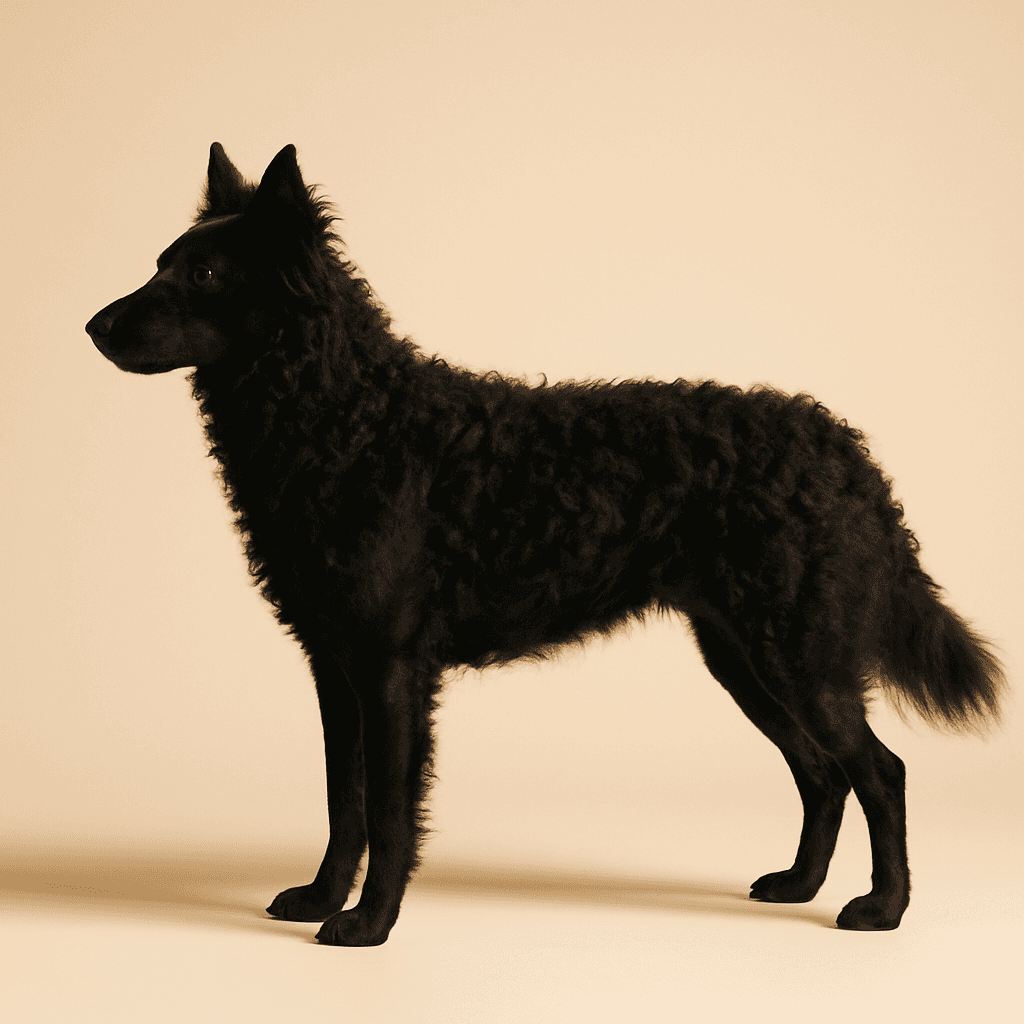
The Croatian Sheepdog is an ancient herding breed from Croatia, where it has been used for centuries to herd and manage sheep and cattle across the varied terrain of the Croatian countryside. One of the oldest Croatian dog breeds, it has been documented in local writings as far back as the fourteenth century, when descriptions matching the modern breed's distinctive black wavy coat and herding behaviour appear in historical records from the region. Today it is recognised by the FCI and registered by the Kennel Club as an imported breed, though it remains exceptionally rare in the UK. The breed's most immediately distinctive feature is its coat: a dense, wavy or slightly curly black or black-and-white coat of medium length, sometimes with small white markings on the chest or feet. This coat, combined with the breed's medium size and athletic build, gives the Croatian Sheepdog a striking appearance that reflects its ancient working origins. The overall impression is of an active, capable working dog built for sustained outdoor work in all weather conditions. The character is defined by the qualities that made it valuable as a single-dog shepherd's partner: high intelligence, intense energy, strong herding instinct, loyalty to its handler and the alertness and responsiveness that allow effective livestock management. These qualities, in a domestic setting, translate to a dog that is highly trainable, deeply engaged with its owner, energetic to a degree that demands a serious commitment to daily exercise and mental stimulation, and sufficiently intelligent to become difficult if its needs are not met. The Croatian Sheepdog is not a breed for passive or inexperienced owners, nor for urban households where the provision of 1.5 to 2 hours of vigorous daily exercise is not realistic. An under-exercised, under-stimulated Croatian Sheepdog will find its own outlets for its considerable energy and intelligence, and those outlets - destructiveness, excessive barking, compulsive herding behaviours - are not the ones its owner would choose. Training is genuinely rewarding with this breed. It is one of the more trainable working dogs available, with a combination of intelligence, focus and handler orientation that makes it capable of high performance in agility, obedience, herding trials and advanced trick training. It engages enthusiastically with training challenges and benefits from ongoing learning throughout its life. Exercise must be vigorous and purposeful. Long walks on lead alone are insufficient - the breed needs to run, and activities that engage its herding instincts alongside physical exercise produce the best results. Agility, herding sport and canine freestyle are all excellent outlets. Socialisation from puppyhood is important to ensure the breed's natural reserve with strangers does not become anxiety or reactivity. Well-socialised individuals are confident and stable; inadequately socialised ones can be nervous and difficult to manage in public. Health is generally robust given the breed's working origins and relatively limited influence from modern selective breeding. Hip dysplasia is the primary documented concern. Lifespan is typically 13 to 14 years. Finding a puppy in the UK requires significant research and patience. Contact through the Kennel Club, the Croatian Sheepdog Society and international breed networks is the most reliable route. Monthly running costs average £100 to £170.
Quick facts
Meet Our Croatian Sheepdogs
Register your dog on My Dog and it will appear here automatically.
Croatian Sheepdog Photos
No photos yet. Be the first to share yours.
Add a photoActivity Feed
What do you feed your Croatian Sheepdog, and why?
A high-quality medium breed complete food across two meals a day, with portions adjusted based on her activity level. Adults typically need 250 to 350 grams of dry food daily, but that figure shifts noticeably when exercise intensity changes. On a heavy training week she needs more; on a quieter week I reduce accordingly. This is a breed that can lose condition quickly when exercise levels are high, which surprised me at first. I monitor her body condition weekly by feel rather than just relying on the scales, because muscle mass can mask weight changes. I do not free-feed: measured meals keep portion control honest. Fresh water available at all times, and I make sure she is drinking adequately after vigorous sessions.
30 June 2026
How much exercise does your Croatian Sheepdog really need each day?
An honest 90 minutes to two hours of vigorous exercise daily, and I stress vigorous. This is a working herding breed built for a full day in the field, and a gentle stroll around the block does nothing useful for it. My Croatian Sheepdog needs purposeful activity: off-lead running in secure areas, agility sessions, scent work, or anything that engages both body and mind simultaneously. Long walks on lead are a starting point but not sufficient on their own. What I noticed quickly is that insufficient exercise does not just produce a bored dog: it produces a destructive one. This breed will find outlets for its energy one way or another, and I would rather those outlets were ones I chose. If your life does not realistically accommodate two hours of meaningful exercise daily, this is the wrong breed for you.
30 June 2026
Any health issues to watch for with Croatian Sheepdogs?
The Croatian Sheepdog is a naturally selected working breed with a generally solid constitution, but it is also rare enough that comprehensive health data is limited, which cuts both ways. Hip dysplasia has been documented and hip evaluation of breeding stock is important: ask any breeder about the hip scores of both parents. Eye conditions have been reported in some lines and are worth asking about specifically. Epilepsy has also appeared in certain bloodlines, which is serious when it occurs and requires ongoing management. Because the breed is rare outside Croatia, finding breeders who screen rigorously is genuinely important: the small gene pool makes careful selection more consequential, not less. Typical lifespan is 13 to 14 years. Get lifetime insurance from a reputable insurer before you need it.
30 June 2026
What's the one thing you wish you'd known before getting a Croatian Sheepdog?
That the intelligence level is extraordinary and demands to be matched. I had kept working breeds before and thought I understood what an intelligent dog required. I was not fully prepared. A Croatian Sheepdog that is physically tired but mentally unchallenged is still not a settled dog. Mine can learn a new command in two or three repetitions, which sounds wonderful until you realise that means she also picks up unwanted behaviours just as fast. Routine repetition bores her visibly: she starts performing variations on the task as if testing whether I am paying attention. The breed needs ongoing training challenges, not just the basics established once and then left. Agility, herding trials, advanced obedience: these are not extras but necessities. If you want a dog that is easy to maintain once trained, choose something else.
30 June 2026
Croatian Sheepdog of the Month
🏆 September 2026 -- Be the first nominee
Could be your dog.
The first dog registered in this community earns the first Dog of the Month nomination automatically.
Register your dogUpcoming Croatian Sheepdog Meetups
No meetups planned yet. Be the first to organise one.
Sign in to organise a meetupCommunity Members
Be the first to join and become the Croatian Sheepdog Founding Member.
Join Club