


Be the first to join. Keep the badge forever.
The first members of this community earn permanent Founding Member status. It shows on your profile and your dog's profile for as long as you're here.
- ✓Founding Member badge on your profile
- ✓Your dog featured first
- ✓First Dog of the Month nomination
- ✓Always free
⭐ Founding Member spots open
First to join gets the badge
🐕 Be the first dog registered
Add your Lab to the community
📷 Add the first photo
Start the photo wall
8
Discussions
0 members
8 discussions
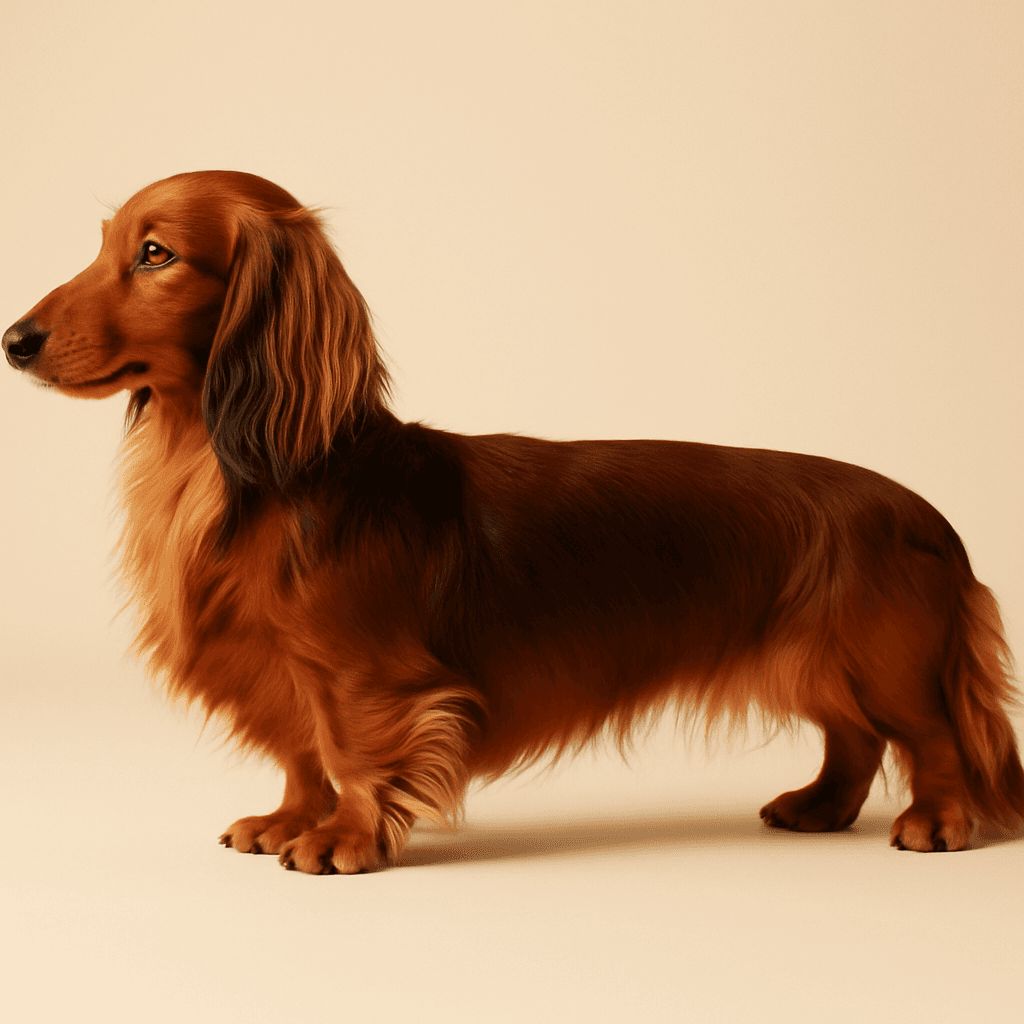
About the Dachshund (Miniature Long Haired)
The Miniature Long-Haired Dachshund is one of six Dachshund varieties recognised by the Kennel Club - distinguished from the others by its small size and long, silky, flowing coat. The Dachshund breed as a whole originated in Germany, where it was developed over several centuries as a scent hound bred specifically to pursue badger, rabbit and other quarry underground, with the distinctive elongated body and shortened legs providing the ability to follow prey into their burrows. Registered by the Kennel Club in the Hound Group, the Dachshund in its various forms is one of the most popular breeds in the UK, and the Miniature Long-Haired variety in particular has a devoted following. The silky, flowing coat of the Long-Haired variety is believed to have resulted from crosses with spaniels early in the breed's development, producing the feathering on the ears, chest, legs and tail that distinguishes this variety from the Smooth-Haired and Wire-Haired Dachshunds. The result is a dog that combines the characterful, bold Dachshund personality with an elegant appearance that many owners find irresistible. The character is quintessentially Dachshund: bold, curious, determined and significantly more assertive than the small body might suggest. The Dachshund was developed to pursue quarry underground without human direction, which means it has independence, persistence and the self-reliance of a genuine working hound bred into it. It is not a naturally compliant or biddable breed. It has opinions and it expresses them. This character - which makes the Dachshund entertaining and characterful - also makes consistent training important from the earliest age, as unchecked stubbornness can become demanding or reactive behaviour in an adult dog. With its own family the Miniature Long-Haired Dachshund is typically devoted and affectionate. It forms strong bonds, is good with older children who respect it and is generally sociable with other dogs and people when properly socialised. It is alert and vocal - it will bark at sounds and strangers, which makes it an enthusiastic watchdog but can be challenging in noise-sensitive environments. The most critical aspect of Miniature Long-Haired Dachshund ownership is spinal health management. Intervertebral disc disease (IVDD) is the breed's defining health challenge. The elongated spine and shortened legs create a structural vulnerability to disc herniation - the disc material protrudes or ruptures, causing spinal cord compression that can range from pain and weakness to complete sudden paralysis of the hindquarters. IVDD can occur in any Dachshund at any age, can develop without warning, and requires emergency veterinary treatment including, in severe cases, costly spinal surgery. The severity and likelihood of IVDD can be reduced through responsible management and breeding. Obesity is the single most modifiable risk factor - every kilogram of excess body weight increases the load on the spinal discs, and strict weight management throughout the dog's life is a direct health intervention. Physical management - providing ramps or steps to allow the dog to access furniture and vehicles without jumping, avoiding stair access without supervision, and preventing activities that involve sustained spine-compressing impacts - reduces cumulative disc stress over the dog's lifetime. Breeders who MRI-test their breeding stock and participate in the Dachshund Health UK IVDD grading scheme are selecting for spines with better disc mineralisation profiles, which correlates with reduced IVDD risk. Choosing a puppy from MRI-tested parents is an important risk reduction measure. Insurance that covers inherited conditions and spinal disease is essential and should be secured before the puppy comes home. IVDD surgery can cost £3,000 to £7,000 or more, and medical management of chronic spinal cases is also expensive. Grooming the silky coat requires regular brushing and ear attention. Purchase prices from tested breeders range from £1,200 to £2,500. Monthly running costs average £100 to £180. The Dachshund Breed Council is the primary resource for breed information, health testing, responsible breeders and rescue contact.
Quick facts
Meet Our Dachshund (Miniature Long Haired)s
Register your dog on My Dog and it will appear here automatically.
Dachshund (Miniature Long Haired) Photos
No photos yet. Be the first to share yours.
Add a photoActivity Feed
How much exercise does your Miniature Long Haired Dachshund need each day?
Around 30 to 45 minutes of gentle daily walking, and gentle is the operative word. The spine is always the consideration with any Dachshund variety, and the miniature does not get a free pass just because of its size. I walk mine on grass and soft surfaces wherever possible, avoid hard pavement pounding, and I have ramps at the sofa, the bed, and the boot of the car. No jumping allowed: that rule was established on day one and I have never relaxed it. Swimming is the best exercise I have found for her: low-impact, genuinely tiring, and she loves it. On days when getting out properly is difficult, scent work indoors keeps her satisfied without any physical risk to the spine. The long coat provides no particular exercise advantage but it does mean checking for mud and debris after every walk.
30 June 2026
Any health issues to watch for with Miniature Long Haired Dachshunds?
IVDD sits above everything else on the health list for any Dachshund variety, and the Miniature Long-Haired is no exception. The elongated spine and the shortened legs create structural vulnerability that is simply a feature of the breed: the MRI health scheme run by Dachshund Health UK tests breeding dogs for early disc calcification and is the most meaningful thing a breeder can do to reduce risk in the offspring. Ask to see those results. Obesity dramatically worsens spinal risk, which is why weight management is non-negotiable. Beyond IVDD, Progressive Retinal Atrophy and eye conditions occur and breeding stock should be tested. Dental disease is common in small breeds and needs active management from puppyhood. Lifespan is typically 12 to 15 years. Lifetime insurance is essential: an IVDD surgery bill can run to £5,000 or more.
30 June 2026
What do you wish you'd known before getting a Miniature Long Haired Dachshund?
That stubbornness in this breed is not a personality flaw but a functional trait, and understanding that completely changed how I train mine. The Dachshund was bred to work underground, following a scent trail and making independent decisions without any handler direction. That autonomy is baked in. When mine decides she is not especially interested in coming when called because she is investigating something more compelling, she is not being defiant: she is being a Dachshund. Recall around scent is genuinely unreliable until you have invested real time building it in low-distraction settings with very high-value rewards. Short training sessions, patience, and food motivation are your tools. Harsh correction shuts this breed down completely and achieves nothing. The long-haired variety is sometimes regarded as slightly calmer than the smooth: that was true of mine, but calm does not mean compliant.
30 June 2026
What do you feed your Miniature Long Haired Dachshund, and why?
A high-quality small breed complete dry food, 100 to 180 grams per day split across two small meals, weighed every time without exception. Weight management in a Miniature Dachshund is a spine health issue first and an aesthetics issue second. Every extra gram that elongated back is carrying increases the load on discs that are already structurally compromised. I check her body condition by feel every week and adjust portions if needed. I count every treat within the daily allowance: training rewards come off the dinner portion. Table scraps are a hard no. Fresh water is always available. I am also careful about the bowl height: eating from too low a surface forces an awkward neck position, so I use a slightly raised feeder. Small adjustments that protect the spine are worth making consistently.
30 June 2026
Dachshund (Miniature Long Haired) of the Month
🏆 September 2026 -- Be the first nominee
Could be your dog.
The first dog registered in this community earns the first Dog of the Month nomination automatically.
Register your dogUpcoming Dachshund (Miniature Long Haired) Meetups
No meetups planned yet. Be the first to organise one.
Sign in to organise a meetupCommunity Members
Be the first to join and become the Dachshund (Miniature Long Haired) Founding Member.
Join Club