
Be the first to join. Keep the badge forever.
The first members of this community earn permanent Founding Member status. It shows on your profile and your dog's profile for as long as you're here.
- ✓Founding Member badge on your profile
- ✓Your dog featured first
- ✓First Dog of the Month nomination
- ✓Always free
⭐ Founding Member spots open
First to join gets the badge
🐕 Be the first dog registered
Add your Lab to the community
📷 Add the first photo
Start the photo wall
8
Discussions
0 members
8 discussions
About the Dachshund (Standard Long Haired)
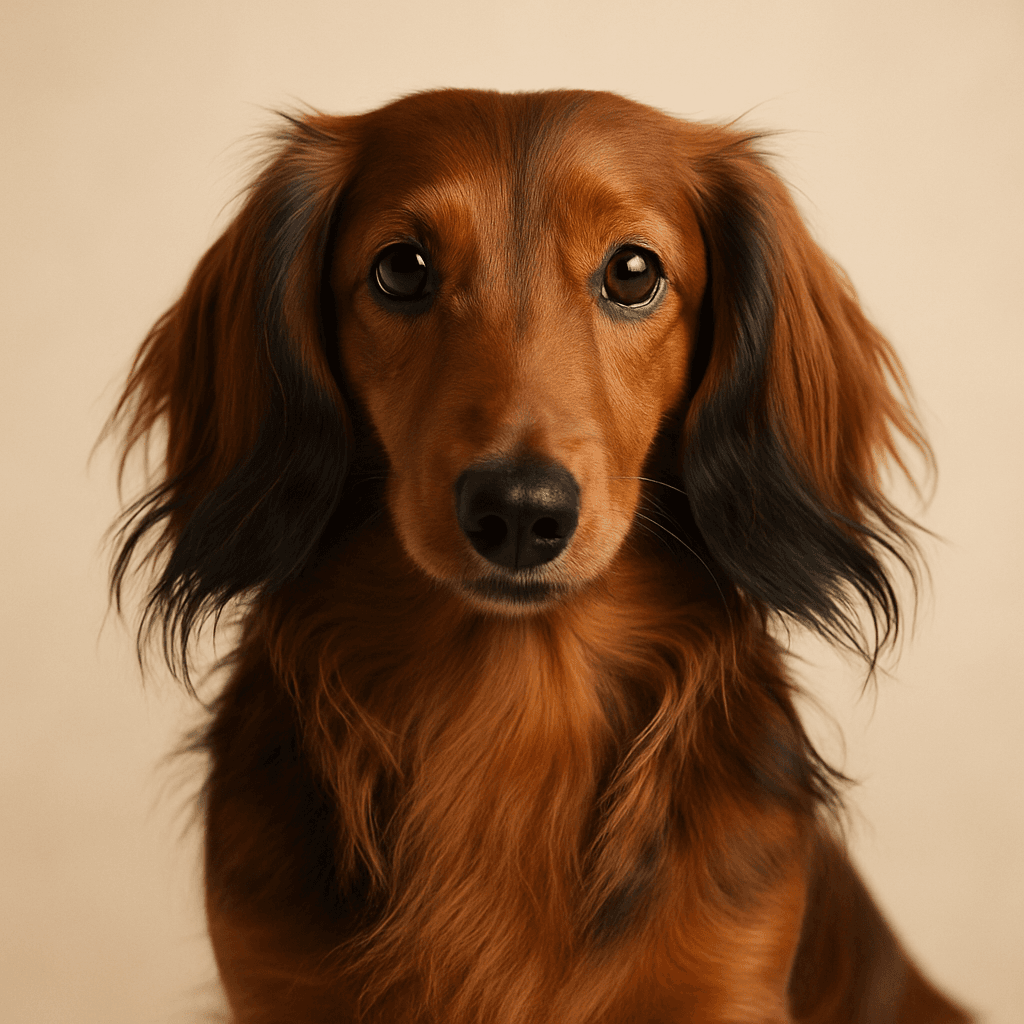
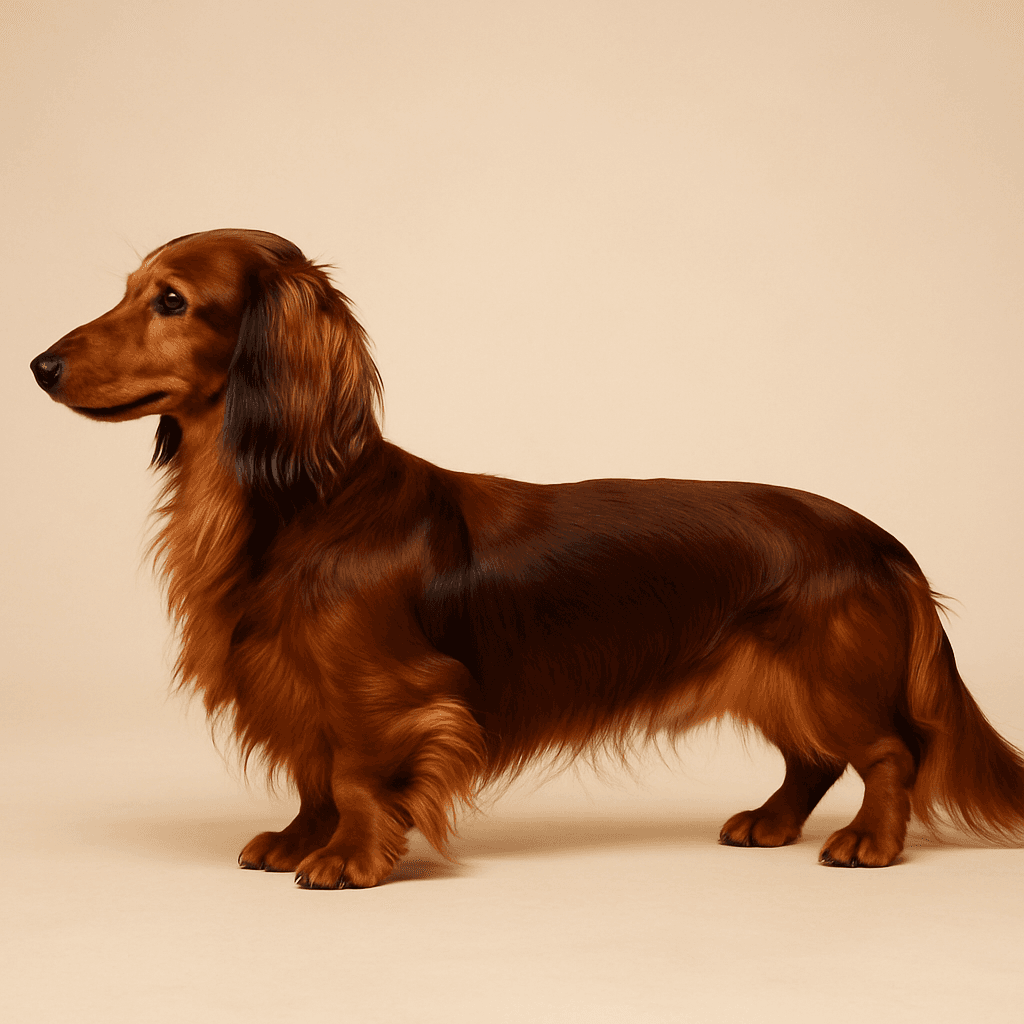
The Standard Long-Haired Dachshund is one of three standard-sized Dachshund varieties, distinguishable from the Miniature Long-Haired by its larger size and from the Smooth and Wire-Haired standard varieties by its distinctive silky, flowing coat with feathering on the ears, chest, legs and tail. The standard-sized Dachshunds are less common in the UK than the miniature varieties but maintain a devoted following among owners who appreciate the breed's character at a larger size. The Dachshund was developed in Germany as a hunting breed specifically adapted to work underground - pursuing badger, rabbit and other quarry through their burrows in terrain that larger breeds could not access. The standard size was the original working size, with the miniature varieties developed later for hunting smaller quarry. Today in Britain both sizes are primarily kept as companions, though working Dachshund activities are maintained by breed enthusiasts. The long-haired coat of this variety is believed to have been developed by introducing spaniel crosses to the early Dachshund lines, producing the soft, silky coat with its characteristic feathering that distinguishes this variety from the smooth and wire coats. The long-haired Dachshund is widely regarded as the most gentle and biddable of the three coat varieties, though individual temperament varies considerably within any breed line. The Standard Long-Haired Dachshund's character is quintessentially Dachshund: bold, independent, affectionate and curious, with the confident self-reliance of a working hound developed to make decisions underground without human guidance. It is devoted to its family, generally patient with older children and sociable with other dogs when properly socialised. It is vocal and alert - characteristic Dachshund watchdog behaviour that should be managed with training from puppyhood. The spinal health management requirements of the Standard Long-Haired Dachshund are the same as for all Dachshund varieties but with additional considerations at the larger size. IVDD - intervertebral disc disease - is the breed's primary health challenge across all varieties and sizes. The elongated spinal structure creates a vulnerability to disc herniation that can cause everything from pain and reluctance to move through to sudden hindlimb paralysis. At standard size, the greater body weight increases disc loading and the surgical complexity of spinal intervention is higher than at miniature size. The management principles are consistent: ramps or steps to eliminate jumping, strict weight maintenance throughout life, restricted stair access without supervision, and avoidance of high-impact activity. MRI testing of breeding stock through the Dachshund Health UK IVDD grading scheme is the most important breeder health measure and should be a non-negotiable requirement from any breeder producing standard-sized Dachshunds. Insurance covering spinal disease and inherited conditions from the first day of ownership is essential. IVDD surgery for a standard-sized Dachshund can cost £3,500 to £8,000 or more. Purchase prices from KC-registered, MRI-tested breeders range from £1,000 to £2,000. Monthly running costs average £100 to £180, reflecting the slightly larger food and veterinary costs of the standard size. The Dachshund Breed Council is the primary resource for breed information, health testing, responsible breeders and rescue contact.
Quick facts
Meet Our Dachshund (Standard Long Haired)s
Register your dog on My Dog and it will appear here automatically.
Dachshund (Standard Long Haired) Photos
No photos yet. Be the first to share yours.
Add a photoActivity Feed
How much exercise does your Standard Long Haired Dachshund really need each day?
Around 45 to 60 minutes of moderate exercise per day, but the approach matters as much as the duration. At standard size, the loads on the Dachshund's spine are greater than in the miniature varieties, so I am even more deliberate about avoiding high-impact activity. Ramps for the sofa, the car and the bed. No jumping. Soft terrain wherever possible. The long coat means post-walk grooming adds time to every outing, which is worth factoring in practically. Swimming has been the most valuable form of exercise I have found: genuinely tiring, completely low-impact, and mine is enthusiastic about it. On wet days when getting out is difficult, scent work and puzzle feeders provide mental exercise without any physical risk to the spine. The standard size and the long coat make this a more maintenance-intensive version of the breed than it might initially appear.
30 June 2026
Any health issues to watch for with Standard Long Haired Dachshunds?
IVDD is the primary health challenge, and at standard size the consequences of disc herniation are more severe and the surgical complexity greater than in miniature varieties. MRI testing of breeding stock is essential and I would not buy a puppy from breeders who do not participate in the Dachshund Health UK scheme. Obesity is the most critical modifiable risk factor and every owner of a Standard Dachshund should treat weight management as a health priority rather than an aesthetic concern. PRA and eye conditions also occur in the standard variety and should be tested for in breeding dogs. The longer, heavier body means joint health more broadly is worth monitoring as the dog ages. Typical lifespan is 12 to 16 years. Lifetime insurance is essential: an IVDD episode at standard size involves significant surgical costs and a long rehabilitation period.
30 June 2026
What do you wish you'd known before getting a Standard Long Haired Dachshund?
That the long-haired variety's reputation for being slightly calmer and more amenable is real but should not be mistaken for straightforward. Mine is indeed more measured in character than the smooth-haired Dachshunds I have spent time with: less reactive, slightly more willing to engage in training on my terms. But the independence is still there. Recall around anything scent-interesting is unreliable until systematically built. Housetraining required more patience than I expected from an intelligent dog. What the calmer temperament does mean is that positive reinforcement training is particularly effective: she is sensitive enough to respond well to calm encouragement and patient enough to work through new exercises without the frustrated energy that can derail a more high-strung dog. The long coat also needs real grooming commitment: tangles behind the ears and around the legs require regular attention.
30 June 2026
What do you feed your Standard Long Haired Dachshund, and why?
A high-quality small to medium breed complete kibble, 200 to 300 grams daily in two measured meals. At standard size, weight management carries even more significance than in the miniature varieties: the longer, heavier body puts more load on those already-vulnerable spinal discs, and every extra kilogram compounds the risk. I weigh food without exception, assess body condition by feel every week, and keep treats within the daily allowance. The long coat makes visual weight assessment unreliable: I run my hands along her sides and over her back regularly rather than relying on what I can see. She eats from a slow feeder because she is an enthusiastic eater who bolts her food when given the opportunity. Fresh water always available, and I make sure the water bowl is positioned so she does not have to crouch awkwardly to reach it.
30 June 2026
Dachshund (Standard Long Haired) of the Month
🏆 September 2026 -- Be the first nominee
Could be your dog.
The first dog registered in this community earns the first Dog of the Month nomination automatically.
Register your dogUpcoming Dachshund (Standard Long Haired) Meetups
No meetups planned yet. Be the first to organise one.
Sign in to organise a meetupCommunity Members
Be the first to join and become the Dachshund (Standard Long Haired) Founding Member.
Join Club