
Be the first to join. Keep the badge forever.
The first members of this community earn permanent Founding Member status. It shows on your profile and your dog's profile for as long as you're here.
- ✓Founding Member badge on your profile
- ✓Your dog featured first
- ✓First Dog of the Month nomination
- ✓Always free
⭐ Founding Member spots open
First to join gets the badge
🐕 Be the first dog registered
Add your Lab to the community
📷 Add the first photo
Start the photo wall
8
Discussions

0 members
8 discussions
About the English Toy Terrier (Black & Tan)
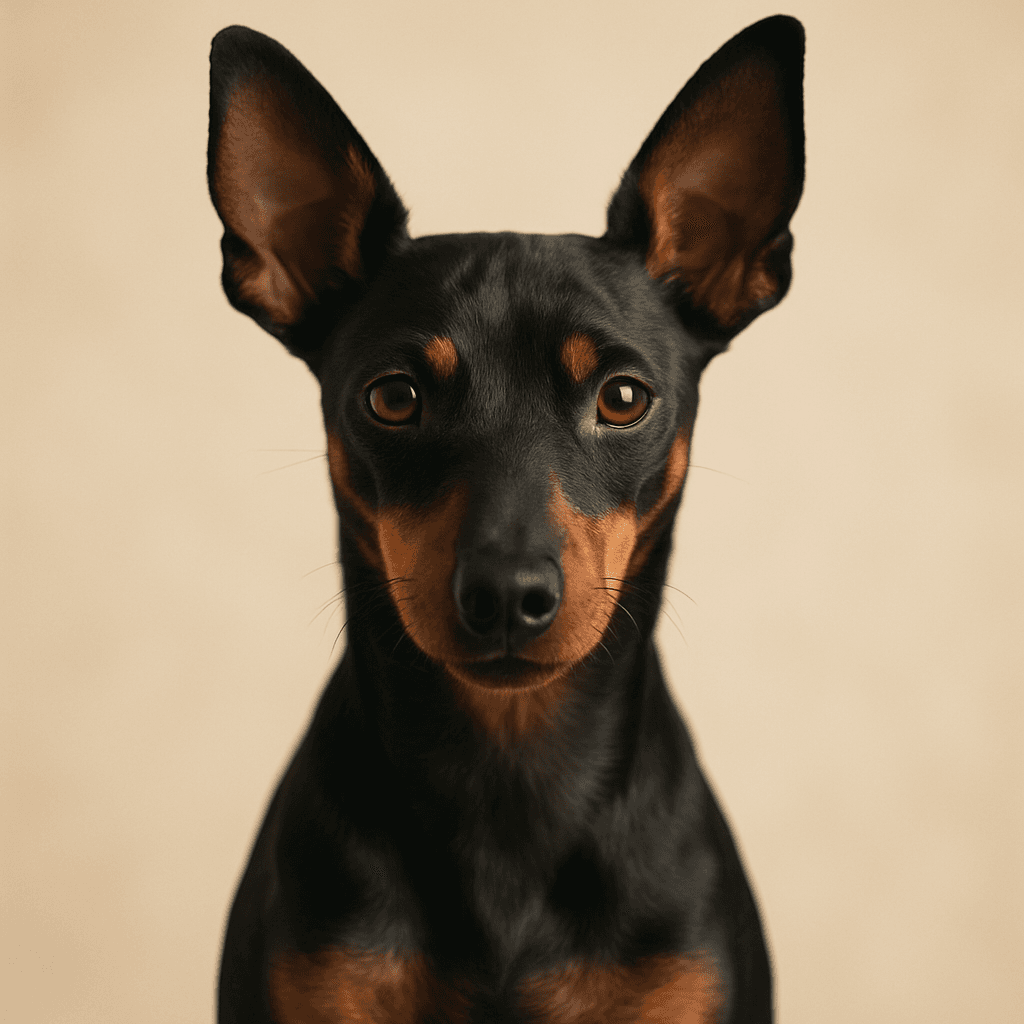
The English Toy Terrier is one of Britain's most historically distinctive and currently most endangered native breeds - a small, elegant dog descended directly from the Manchester Terrier, refined in the nineteenth century for the competitive sport of rat-catching in which small terriers were timed killing rats in a pit. Today it holds the Kennel Club's Vulnerable Native Breed designation, with fewer than 100 puppies registered annually in the UK, making it one of the rarest pedigree breeds in Britain. The breed's origins trace to the Manchester area of northern England in the early to mid nineteenth century, where the sport of rat killing in purpose-built pits was a popular pastime and betting activity. Small, fast, agile Manchester Terriers were particularly prized for this work, and selective breeding toward a smaller, more compact type for the show and sport rings gradually produced what became the English Toy Terrier. The breed was recognised by the Kennel Club in the Toy Group. The appearance is distinctive: a small, elegant dog standing typically 25 to 30 centimetres at the shoulder with a sleek black and tan coat, a wedge-shaped head, erect candle-flame ears and the overall impression of a miniature working terrier with clean, smooth lines. The black and tan colouring is fixed and characteristic - tan markings appear in specific prescribed locations including the muzzle, cheeks, chest, legs and under the tail. Despite its classification in the Toy Group, the English Toy Terrier is not a lapdog and should not be expected to behave as one. It retains the genuine terrier character of its rat-catching ancestry: alert, spirited, independent and possessed of a strong prey drive that can make it unreliable around small animals and birds. It is lively and inquisitive, with the confidence and boldness that terrier character consistently produces regardless of body size. With its own family it is affectionate and loyal. Exercise needs are modest in terms of duration - 30 to 45 minutes daily is sufficient - but should include mental stimulation as well as physical activity. The breed's intelligence and terrier nature means it benefits from training and problem-solving activities. The Vulnerable Native Breed status means finding a puppy requires patience and direct engagement with the breed club and registered breeders. Waiting lists are common and the small number of litters produced annually means prospective owners should prepare for a wait. Health is generally good, with the primary concern being the small gene pool that comes with rare breed status. Responsible breeders work carefully to maintain genetic diversity. Lifespan is typically 12 to 13 years. Purchase prices range from £800 to £1,500. Monthly running costs are modest given the small size, averaging £60 to £100. The English Toy Terrier Club is the primary resource for breed information, responsible breeders and rescue contact.
Quick facts
Meet Our English Toy Terrier (Black & Tan)s
Register your dog on My Dog and it will appear here automatically.
English Toy Terrier (Black & Tan) Photos
No photos yet. Be the first to share yours.
Add a photoActivity Feed
How much exercise does your English Toy Terrier really need each day?
About 30 to 45 minutes of actual walking, plus play sessions throughout the day. Do not let the size fool you into thinking they are a low-effort dog, because they are spirited and active. Mine loves a good sniff around a park but also has short bursts of mad energy in the garden that she seems to need to burn off. The prey drive is very real. She is excellent around dogs but completely unreliable around squirrels, cats and anything small that moves. I do not let her off-lead anywhere that is not fully enclosed because the instinct overrides everything. Mental stimulation matters as much as physical exercise with this breed. Short training sessions, nose work, little puzzles. She is sharp and she needs her brain used. A bored English Toy Terrier will let you know about it.
30 June 2026
Any health issues to watch for with English Toy Terriers?
Cardiomyopathy is the main documented health concern, so cardiac screening of breeding stock is worth asking about. The breed is generally healthy, which is something I appreciate. But the issue I think about most is not a specific condition, it is the gene pool. English Toy Terriers are a Vulnerable Native Breed with very small numbers in the UK, and that has long-term implications for genetic diversity. A responsible breeder will be actively thinking about this, not just breeding the most winning show dogs together. Ask about the relationship between the parents, not just their health certificates. Outside of that, lifespan is good at 12 to 13 years. Mine is nine and perfectly healthy. They are tough little dogs despite appearances.
30 June 2026
What's the one thing you wish you'd known before getting an English Toy Terrier?
That this is a proper terrier in a very small body, not a lapdog. Before I got mine I had this vague idea of a manageable, gentle little companion. And she is loving and loyal and thoroughly good company. But she is also independently minded, has strong opinions, and is not interested in doing things just because I asked. Training her with positive reinforcement from puppyhood helped enormously, but I had to adjust my expectations. She learns fast and she can do a lot, but she will always have a terrier's sense of her own agenda. She is also reserved with strangers in a way that can read as unfriendly if you do not understand the breed. She is not unfriendly. She just does not do performative sociability. Once she decides she likes you, she is warm and engaging.
30 June 2026
What do you feed your English Toy Terrier, and why?
A good quality small breed complete dry food, around 90 to 100g a day split across two meals. Small breed kibble matters because the pieces are sized appropriately for a small jaw and the caloric density accounts for the smaller stomach. I weigh her food rather than scoop it because the margin for error is tiny at this size. An extra 20g a day on a small dog adds up to real weight gain over weeks. I check her ribs regularly and she has stayed at a healthy weight throughout her adult life, which I think is largely about consistency. Fresh water always available. She drinks less than my previous larger dogs but I still make sure it is topped up and fresh daily. Body condition is everything with a small breed.
30 June 2026
English Toy Terrier (Black & Tan) of the Month
🏆 September 2026 -- Be the first nominee
Could be your dog.
The first dog registered in this community earns the first Dog of the Month nomination automatically.
Register your dogUpcoming English Toy Terrier (Black & Tan) Meetups
No meetups planned yet. Be the first to organise one.
Sign in to organise a meetupCommunity Members
Be the first to join and become the English Toy Terrier (Black & Tan) Founding Member.
Join Club