

Be the first to join. Keep the badge forever.
The first members of this community earn permanent Founding Member status. It shows on your profile and your dog's profile for as long as you're here.
- ✓Founding Member badge on your profile
- ✓Your dog featured first
- ✓First Dog of the Month nomination
- ✓Always free
⭐ Founding Member spots open
First to join gets the badge
🐕 Be the first dog registered
Add your Lab to the community
📷 Add the first photo
Start the photo wall
8
Discussions
0 members
8 discussions
About the Finnish Spitz
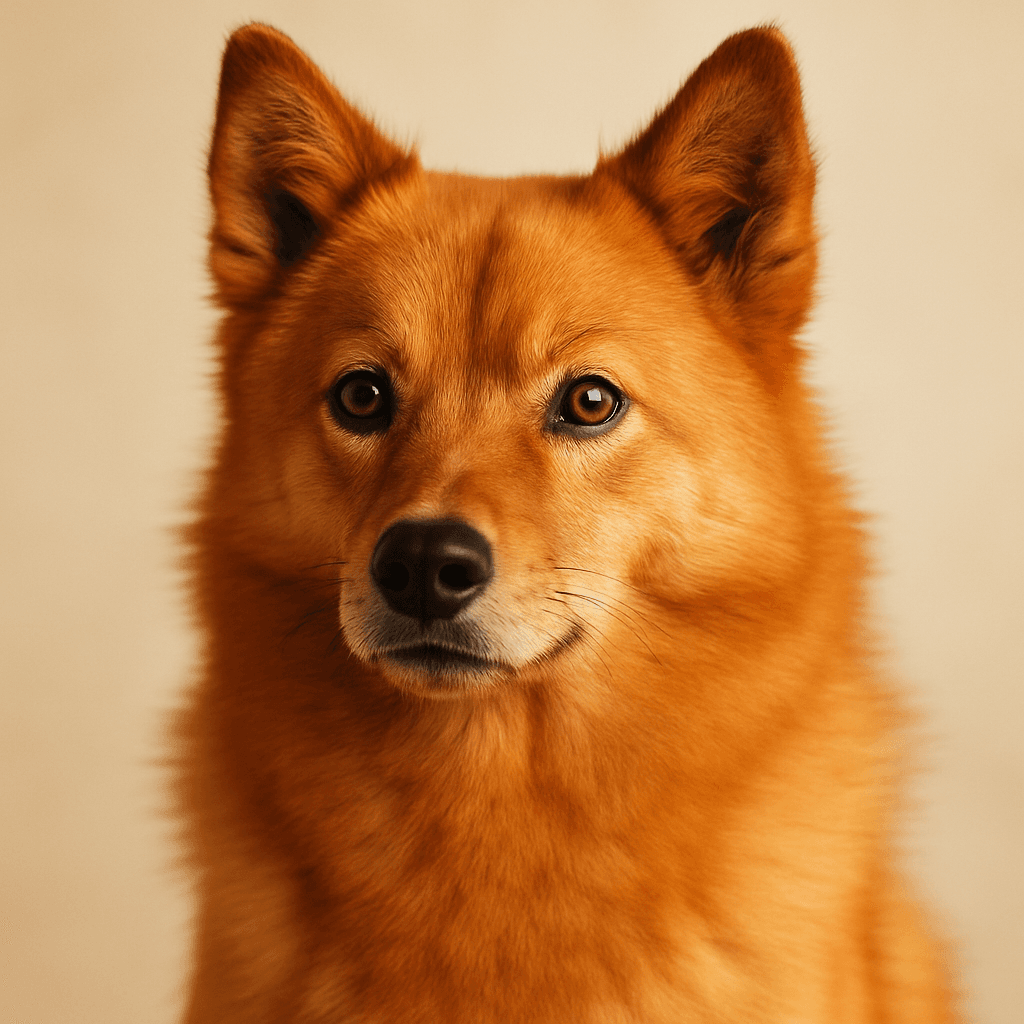
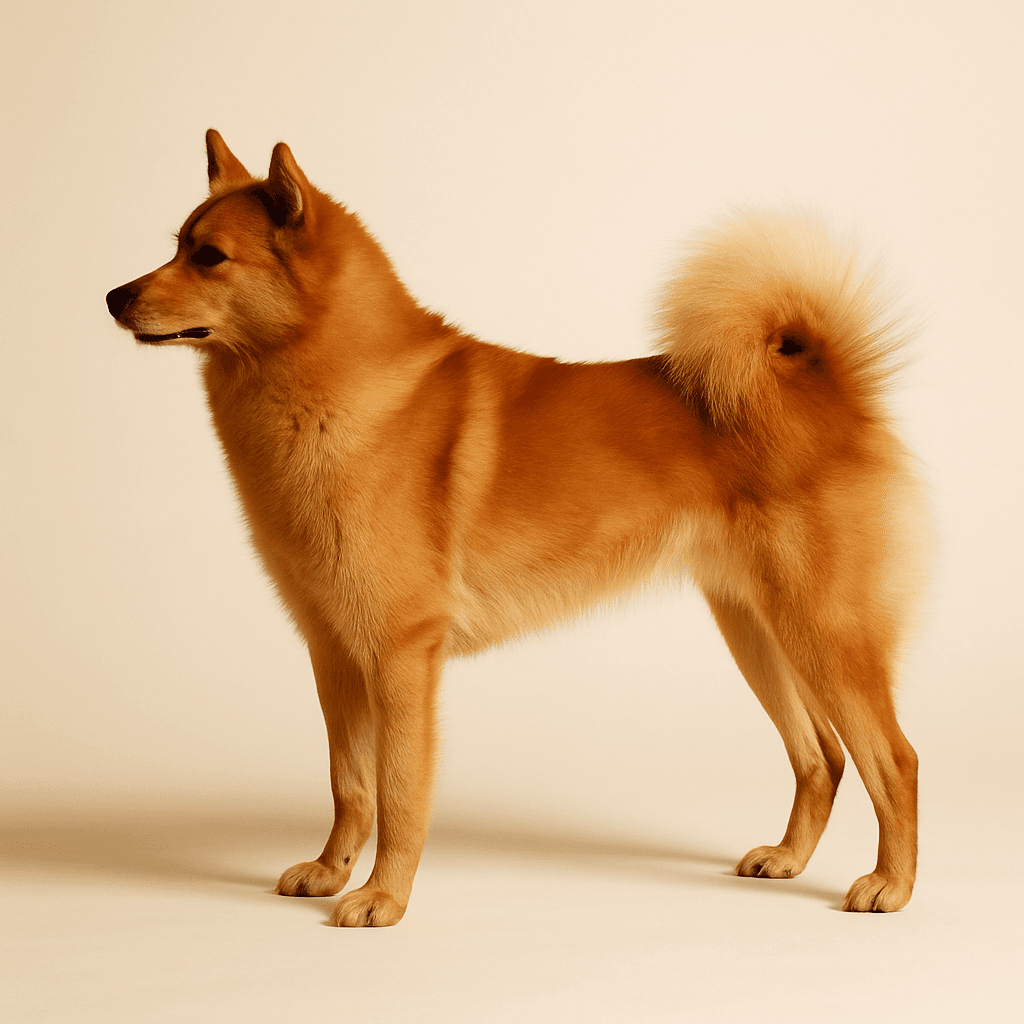
The Finnish Spitz is Finland's national dog, a lively, fox-like hunting breed developed over many centuries by the Finnish people for the specific purpose of hunting birds - particularly capercaillie, black grouse and other forest birds - using a distinctive hunting technique in which the dog locates quarry by scent or sight, marks it by barking persistently at the base of a tree or on the ground, and directs the hunter to the bird's location. This barking hunt, known as the "bark pointing" method, is characteristic and central to the breed's working function, and the Finnish Spitz is specifically selected for the quality and persistence of its bark. Registered by the Kennel Club in the Hound Group, it is exceptionally rare in the United Kingdom but is well established in Finland and Scandinavia. The appearance is immediately striking: a medium-sized, well-proportioned spitz type with a brilliant golden-red to honey-coloured double coat, a foxy, pointed muzzle, erect triangular ears and the characteristic curled tail of the spitz breeds. The overall impression is of a bright, alert, fox-like dog with considerable elegance and animation. Adults typically stand 39 to 50 centimetres at the shoulder and weigh 7 to 13 kilograms. The character reflects the breed's hunting function. The Finnish Spitz is lively, animated, alert and independent. It is devoted to its own family and can be excellent with children in an active household. It is, however, a vocal breed, and this is the single most important characteristic for prospective owners to understand before pursuing the breed. The Finnish Spitz uses its voice readily and extensively - this is not a fault but a core breed characteristic that was specifically selected for over many generations of hunting use. A Finnish Spitz that barks at birds, squirrels, interesting sounds and the arrival of visitors is behaving entirely correctly for its breed type. This makes the breed unsuitable for noise-sensitive environments, apartments or situations where excessive barking would cause problems. The independent hunting nature means recall can be unreliable when the dog's instincts are engaged, and a securely fenced garden is important. Training with positive methods can achieve good manners and a reliable recall in most contexts, but the breed will never have the compliance of a dedicated working dog. Health is generally good, reflecting the Nordic working origins of the breed. Lifespan of 12 to 14 years is typical of the spitz-type breeds. Monthly running costs average £80 to £140. The Finnish Spitz Club of Great Britain and the Finnish Kennel Club are the primary resources for breed information, responsible breeders and contact.
Quick facts
Meet Our Finnish Spitzs
Register your dog on My Dog and it will appear here automatically.
Finnish Spitz Photos
No photos yet. Be the first to share yours.
Add a photoActivity Feed
How much exercise does your Finnish Spitz really need each day?
About an hour to an hour and a half, with a mix of walking and off-lead time in a safe enclosed space. Finnish Spitz are active and agile. Mine loves varied routes and gets noticeably bored on the same walk every day. The hunting instinct means that recall when she picks up a scent is not reliable enough for me to trust her off-lead anywhere unfenced. That is just the reality of the breed, it is not a training failure. I have a good secure garden and we use that for off-lead running when we cannot get to an enclosed field. Mental stimulation matters a lot. She finds nose work genuinely satisfying and short training sessions keep her engaged. A Finnish Spitz that is not mentally occupied will find its own entertainment, usually vocal.
30 June 2026
Any health issues to watch for with Finnish Spitzs?
The breed is generally robust, which is one of the things that attracts people to Nordic working breeds. Hip dysplasia can occur and hip scoring of parents is advisable even though the breed does not have the same prevalence as some larger breeds. Epilepsy has been documented and is worth asking breeders about, particularly regarding any affected dogs in recent generations of the pedigree. The breed is very rare in the UK and that means health data is genuinely limited compared to more popular breeds. The rarity also means the gene pool is small. Ask your breeder specific questions about the relationship between the sire and dam and what they are doing to support genetic diversity. Lifespan of 12 to 14 years is excellent.
30 June 2026
What's the one thing you wish you'd known before getting a Finnish Spitz?
The voice. I knew Finnish Spitz were vocal dogs. What I did not fully appreciate was what that meant in daily life. She uses her bark the way other dogs use body language, frequently and expressively. She has different barks for different things and she deploys them readily. Neighbours have been understanding but I was naive about how much management this requires, particularly in the early years before I had worked on it through training. Early socialisation helped significantly. Understanding the triggers and interrupting the bark-settle cycle before it escalated made a real difference. It is still a vocal breed and it always will be, that is a core characteristic, not a training problem. But I wish I had started working on it more systematically from day one rather than assuming it would resolve naturally.
30 June 2026
What do you feed your Finnish Spitz, and why?
A good quality medium breed complete dry food, around 220 to 250g a day split into two meals. She is active but not enormous, and the portion size reflects that. Nordic breeds tend to be efficient with food, a legacy of working in conditions where food was not always abundant. Mine does not overeat and manages her weight naturally as long as I do not overindulge her with treats. I do not add much beyond her complete food because it genuinely is complete. A good quality kibble has everything she needs and I have not found any benefit to adding extras beyond the occasional piece of carrot or apple as a training reward. Body condition is easy to check on her, she is short-coated enough that you can see as well as feel whether she is carrying the right weight.
30 June 2026
Finnish Spitz of the Month
🏆 September 2026 -- Be the first nominee
Could be your dog.
The first dog registered in this community earns the first Dog of the Month nomination automatically.
Register your dogUpcoming Finnish Spitz Meetups
No meetups planned yet. Be the first to organise one.
Sign in to organise a meetupCommunity Members
Be the first to join and become the Finnish Spitz Founding Member.
Join Club