

Be the first to join. Keep the badge forever.
The first members of this community earn permanent Founding Member status. It shows on your profile and your dog's profile for as long as you're here.
- ✓Founding Member badge on your profile
- ✓Your dog featured first
- ✓First Dog of the Month nomination
- ✓Always free
⭐ Founding Member spots open
First to join gets the badge
🐕 Be the first dog registered
Add your Lab to the community
📷 Add the first photo
Start the photo wall
8
Discussions
0 members
8 discussions
About the German Shorthaired Pointer
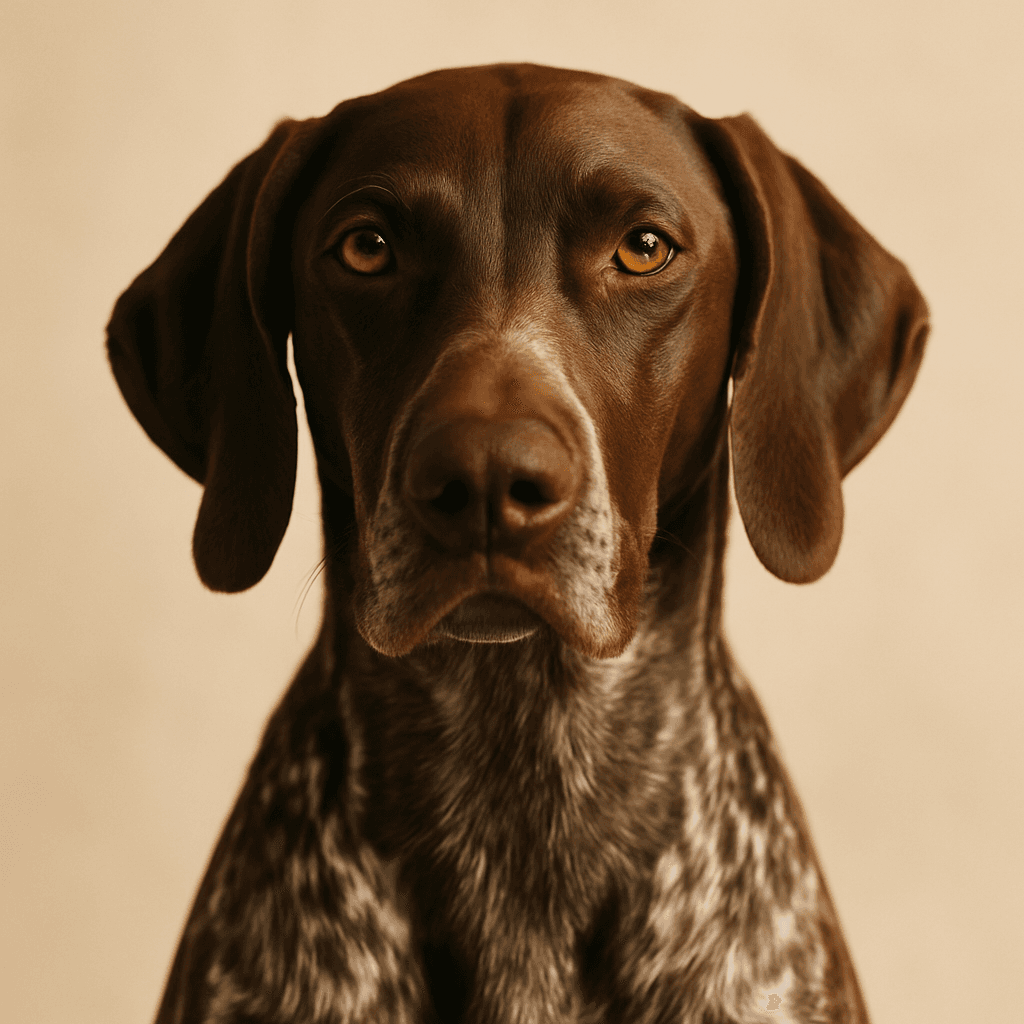
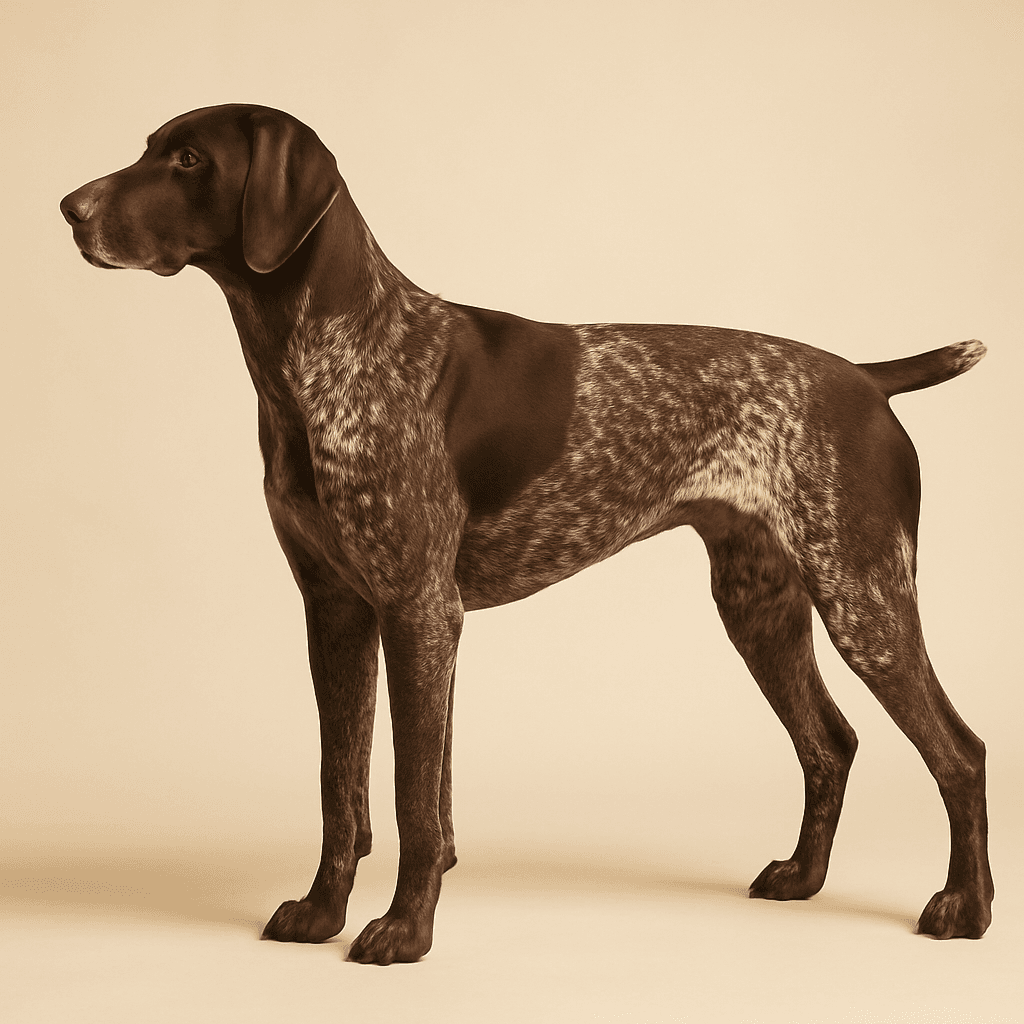
The German Shorthaired Pointer is one of the most capable and versatile of all gundog breeds, a German hunting dog developed in the nineteenth century to perform the full range of hunting functions - pointing game, tracking wounded quarry, retrieving from land and water, and working across every type of terrain - in a single, athletically capable dog. The breed was developed in Germany through crosses of German hunting breeds with English Pointers, producing a dog of exceptional working ability, intelligence and physical versatility. Registered by the Kennel Club in the Gundog Group, the GSP has become one of the most popular gundog breeds in the UK, though it is also one of the breeds most frequently surrendered to rescue when owners discover the true scale of its exercise needs. The appearance is athletic and purposeful: a well-muscled, medium to large dog with a short, dense, water-resistant coat in liver, liver and white, black or black and white. The characteristic liver colouring is perhaps most associated with the breed. Adults typically stand 53 to 64 centimetres at the shoulder and weigh 20 to 32 kilograms. The overall impression is of a capable, energetic, beautifully constructed working dog. The character is defined above all by energy, intelligence and enthusiasm. The German Shorthaired Pointer is one of the highest-energy breeds available as a companion dog and this is the single most important fact for prospective owners to absorb before acquiring one. It needs two or more hours of vigorous, sustained daily exercise - not a gentle stroll but running, swimming, retrieving and other high-intensity activity. A GSP that receives adequate exercise is a devoted, settled and remarkably good-natured family companion. One that does not is a significant management challenge. The breed is enthusiastic and genuinely friendly - it loves its own family deeply, is excellent with children, and is welcoming rather than suspicious of strangers. It is not a guarding breed and its instinct is companionship and activity. It can be exuberant and boisterous when young, which requires management around very small children. Intelligence is high and the GSP is among the more trainable working breeds. It responds extremely well to positive, reward-based training and can excel in gundog work, field trials, agility, obedience, canicross and other active disciplines. Training from puppyhood is strongly recommended and professional guidance is valuable for first-time GSP owners. Hip and elbow dysplasia are the primary health concerns and both parents should be tested before breeding. Purchase prices from KC-registered, health-tested breeders range from £800 to £1,500. Monthly running costs average £120 to £190. The German Shorthaired Pointer Club is the primary resource for breed information, health testing, responsible breeders and rescue contact.
Quick facts
Meet Our German Shorthaired Pointers
Register your dog on My Dog and it will appear here automatically.
German Shorthaired Pointer Photos
No photos yet. Be the first to share yours.
Add a photoActivity Feed
How much exercise does your German Shorthaired Pointer really need each day?
Two hours is where I start and some days we go well beyond that. And I want to be honest about what two hours means for a GSP: it needs to be vigorous. Not a slow walk on lead, but running, swimming, retrieving, or structured gundog work. My GSP has an extraordinary engine and she can keep going long after I want to stop. We do canicross several mornings a week and field work at weekends, and that combination is what keeps her genuinely settled at home. On days when I have only managed a walk, you can see the difference in her by evening. She is not destructive, but she is restless and she cannot quite switch off. The breed has been designed over generations to hunt for hours. That capacity does not disappear because you live in a suburb. If your life cannot realistically accommodate sustained daily high-intensity exercise, please look at a different breed. This is not a breed for casual walkers.
30 June 2026
Any health issues to watch for with German Shorthaired Pointers?
Hip dysplasia is the primary one, and both parents must be hip-scored. I would not buy from a breeder who skipped this. Elbow dysplasia also occurs and should be assessed. As a deep-chested, large breed, GSPs are at real risk of bloat, which is a life-threatening emergency. I learned the signs before I brought my dog home: rapid abdominal bloating, distress, unproductive retching. If you see those, you go to an emergency vet immediately, no waiting to see if it passes. Hereditary eye conditions have been documented in the breed, so asking to see current eye testing on the parents is worth doing. The German Shorthaired Pointer Club maintains the current health testing recommendations and I would go directly to them as a starting point before you approach any breeder. Typical lifespan is 12 to 14 years, and a fit, active GSP with good genetics can absolutely reach that.
30 June 2026
What do you wish you'd known before getting a German Shorthaired Pointer?
That the bounciness and enthusiasm of a young GSP does not calm down quickly, and if you are not actively channelling it, it will channel itself in directions you will not enjoy. My GSP was full-on for the first two years in a way I was not quite prepared for. She is not destructive for its own sake; she is just so full of energy and sociability that she needs management constantly when she is young. The friendliness with strangers and other dogs sounds appealing on paper, and it is, but it also means recall training around distractions required a lot of consistent work before I could trust her off lead in a busy environment. She wants to greet everyone and everything. I also underestimated how much companionship this breed needs. She is deeply devoted to people and does not cope well with long periods of being left. They are wonderful, joyful dogs, but they are emphatically not low-maintenance.
30 June 2026
What do you feed your German Shorthaired Pointer, and why?
A high-quality complete dry food for medium to large breeds, and I adjust the quantity based on how hard she has worked that week. On field work weekends she gets noticeably more than on lower-activity days. My adult GSP gets around 400g daily split across two meals, but I work to body condition rather than the bag guidance as a fixed rule. You should be able to feel the ribs easily and there should be a visible waist. GSPs should be lean and athletic; they are not a breed that carries any extra weight well. Feeding two meals rather than one large meal is something I do deliberately, because of the bloat risk in deep-chested breeds. I also do not exercise her within an hour of eating. I looked into raw feeding and I know several GSP owners who do it successfully, but I wanted the nutritional certainty of a properly formulated complete food, and she has maintained excellent condition and coat quality on it.
30 June 2026
German Shorthaired Pointer of the Month
🏆 September 2026 -- Be the first nominee
Could be your dog.
The first dog registered in this community earns the first Dog of the Month nomination automatically.
Register your dogUpcoming German Shorthaired Pointer Meetups
No meetups planned yet. Be the first to organise one.
Sign in to organise a meetupCommunity Members
Be the first to join and become the German Shorthaired Pointer Founding Member.
Join Club