


Be the first to join. Keep the badge forever.
The first members of this community earn permanent Founding Member status. It shows on your profile and your dog's profile for as long as you're here.
- ✓Founding Member badge on your profile
- ✓Your dog featured first
- ✓First Dog of the Month nomination
- ✓Always free
⭐ Founding Member spots open
First to join gets the badge
🐕 Be the first dog registered
Add your Lab to the community
📷 Add the first photo
Start the photo wall
8
Discussions
0 members
8 discussions
About the Irish Terrier
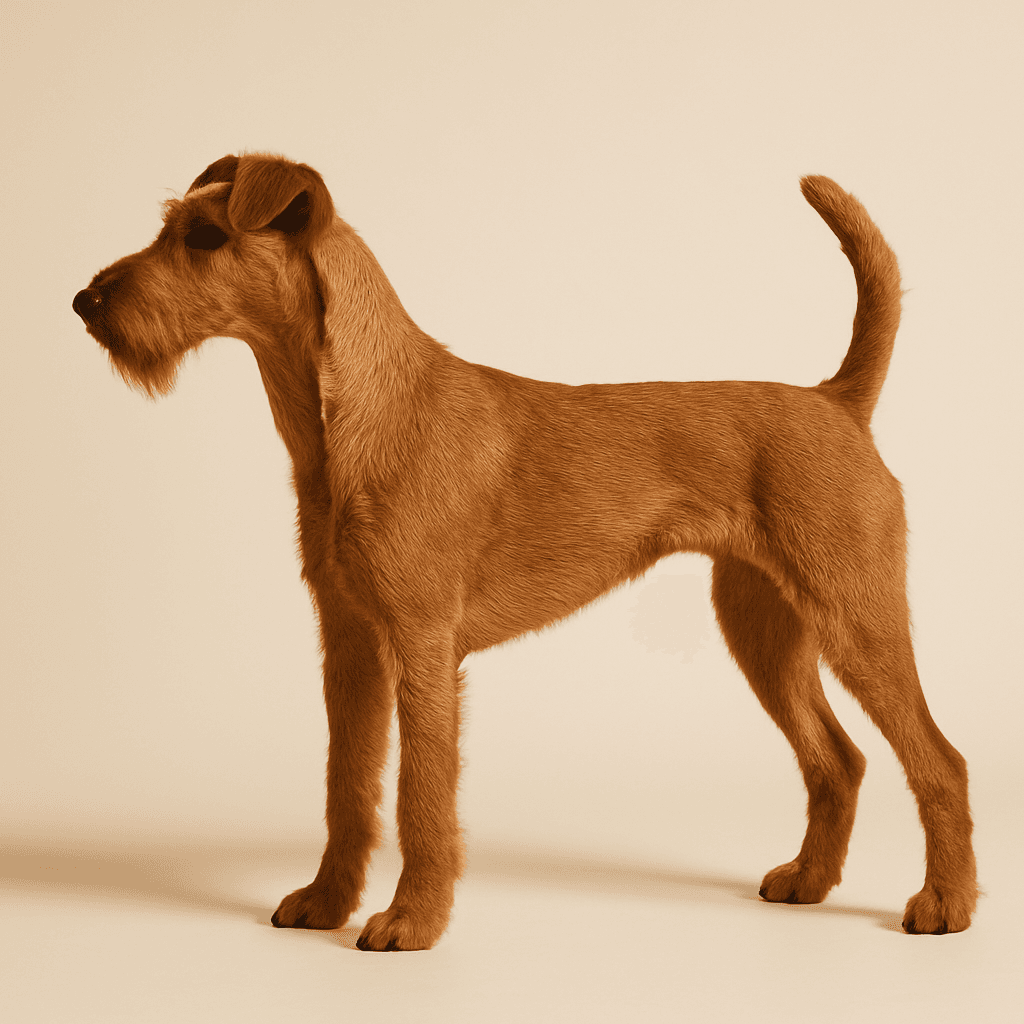
The Irish Terrier is one of the oldest of the Irish breeds and among the most ancient of all recognised terrier types, a fiery, bold and intensely loyal working terrier developed in Ireland for hunting, ratting and farm work that became known as the daredevil of the terrier world for its courage and willingness to take on any challenge regardless of the odds. The breed was formally established and recognised during the 1870s and 1880s and became one of the most popular dogs in Britain during the late Victorian era. It served with particular distinction as messenger dogs and sentinels in the First World War, a role that demonstrated both its intelligence and its remarkable ability to work independently under dangerous conditions. Registered by the Kennel Club in the Terrier Group, it maintains a loyal following among terrier enthusiasts who appreciate its distinctive character. The Irish Terrier is a medium-sized, well-proportioned terrier with a distinctive dense, hard and wiry double coat in solid wheaten, red-wheaten or bright red colouring. The coat has a broken, slightly unkempt appearance that is characteristic of the wire-coated terrier type, and the breed has a distinguished beard and defined eyebrows. Adults typically stand 45 to 48 centimetres at the shoulder and weigh 11 to 12 kilograms. The character is bold, loyal, spirited and intensely devoted. The Irish Terrier forms extremely close bonds with its own family and is genuinely affectionate and playful within the home. Its courage is legendary and somewhat reckless - it will take on challenges far beyond its physical size without apparent hesitation. This bravery extends to its relationship with other dogs: the Irish Terrier can be combative, particularly with dogs of the same sex, and careful management is required in multi-dog households. Prey drive is strong and the breed's terrier determination means secure, escape-proof fencing is essential. Irish Terriers are highly capable escape artists and should never be exercised off-lead in unsecured environments. Trainability is good for an experienced terrier handler. The breed is intelligent, problem-solving and willing with the right approach, but the strong independent will requires consistent, patient and experienced handling. Harsh or heavy-handed methods are counterproductive. The wiry coat requires hand-stripping twice yearly to maintain correct texture and colour. Clipping is a common shortcut but softens and fades the coat over time. Purchase prices from KC-registered breeders range from £800 to £1,500. Monthly running costs average £90 to £150. The Irish Terrier Club is the primary resource for breed information, responsible breeders and rescue contact.
Quick facts
Meet Our Irish Terriers
Register your dog on My Dog and it will appear here automatically.
Irish Terrier Photos
No photos yet. Be the first to share yours.
Add a photoActivity Feed
How much exercise does your Irish Terrier really need each day?
Between an hour and an hour and a quarter every day, and it needs to be purposeful. An Irish Terrier isn't satisfied with a slow amble, they want to move at pace, investigate things and engage their brain. I use games, training sessions and scent work alongside the physical side, because a terrier that's only physically tired is still half a problem. The critical thing is secure exercise areas. Irish Terriers have real prey drive, and the determination to follow it through fences, under hedges and across roads. I don't do off-lead in anything less than a properly enclosed space. They're also built for this level of activity despite being medium-sized, don't let the compact build fool you into thinking 20 minutes will do. It won't. A well-exercised Irish Terrier is a manageable, brilliant dog. An under-exercised one will make your life very difficult.
30 June 2026
Any health issues to watch for with Irish Terriers?
The good news is that the Irish Terrier is one of the healthier pedigree breeds with relatively few hereditary problems compared to many. The condition most specific to the breed is hyperkeratosis of the feet, sometimes called corny feet, where the paw pads develop hard, painful overgrowths. It's manageable but requires attention and can be uncomfortable for the dog if not caught early. Cystinuria, a metabolic condition affecting kidney stone formation, has been reported in the breed too, worth being aware of if you notice any urinary symptoms. Lifespan is strong at 13 to 15 years, which is one of the joys of this breed. The relative absence of a long list of hereditary conditions doesn't mean skipping vet checks, annual health reviews and good lifetime insurance are still sensible.
30 June 2026
What's the one thing you wish you'd known before getting an Irish Terrier?
How seriously to take the dog aggression risk, particularly with dogs of the same sex. I knew Irish Terriers were bold, that's in every breed description. What I underestimated was how quickly that boldness can escalate into a confrontation with another dog, and how little the other dog's size factors into the calculation. My Irish Terrier is brave to the point of recklessness. He doesn't back down. Managing that safely requires constant vigilance on walks, reliable recall, and an honest assessment of the environments you can safely use. On the positive side, the fierce loyalty that comes with that same character is genuinely remarkable. He is deeply bonded to our family in a way I've not experienced with other breeds, watchful, attentive, present. The training challenge is real too: Irish Terriers are intelligent and will test inconsistent owners systematically. You need to be more consistent than they are persistent, which takes some commitment.
30 June 2026
What do you feed your Irish Terrier, and why?
A high-quality medium breed complete dry food, split across two meals a day. Adults typically need somewhere between 200 and 300 grams of dry food daily, but that varies depending on the individual dog's size, age and activity level. I weigh portions rather than guessing, Irish Terriers don't have the same food obsession as some breeds, but it's still easy to creep above their ideal weight without noticing. I keep a close eye on body condition, running my hands along the ribs regularly. Fresh water is always available, and I change it daily. I've found a consistent routine suits this breed, they like predictability in feeding as much as in training. If I'm introducing any new food I do it gradually over a week or so to avoid digestive upset. Nothing complicated, just good quality, weighed correctly and served consistently.
30 June 2026
Irish Terrier of the Month
🏆 September 2026 -- Be the first nominee
Could be your dog.
The first dog registered in this community earns the first Dog of the Month nomination automatically.
Register your dogUpcoming Irish Terrier Meetups
No meetups planned yet. Be the first to organise one.
Sign in to organise a meetupCommunity Members
Be the first to join and become the Irish Terrier Founding Member.
Join Club