

Be the first to join. Keep the badge forever.
The first members of this community earn permanent Founding Member status. It shows on your profile and your dog's profile for as long as you're here.
- ✓Founding Member badge on your profile
- ✓Your dog featured first
- ✓First Dog of the Month nomination
- ✓Always free
⭐ Founding Member spots open
First to join gets the badge
🐕 Be the first dog registered
Add your Lab to the community
📷 Add the first photo
Start the photo wall
8
Discussions
0 members
8 discussions
About the Italian Greyhound
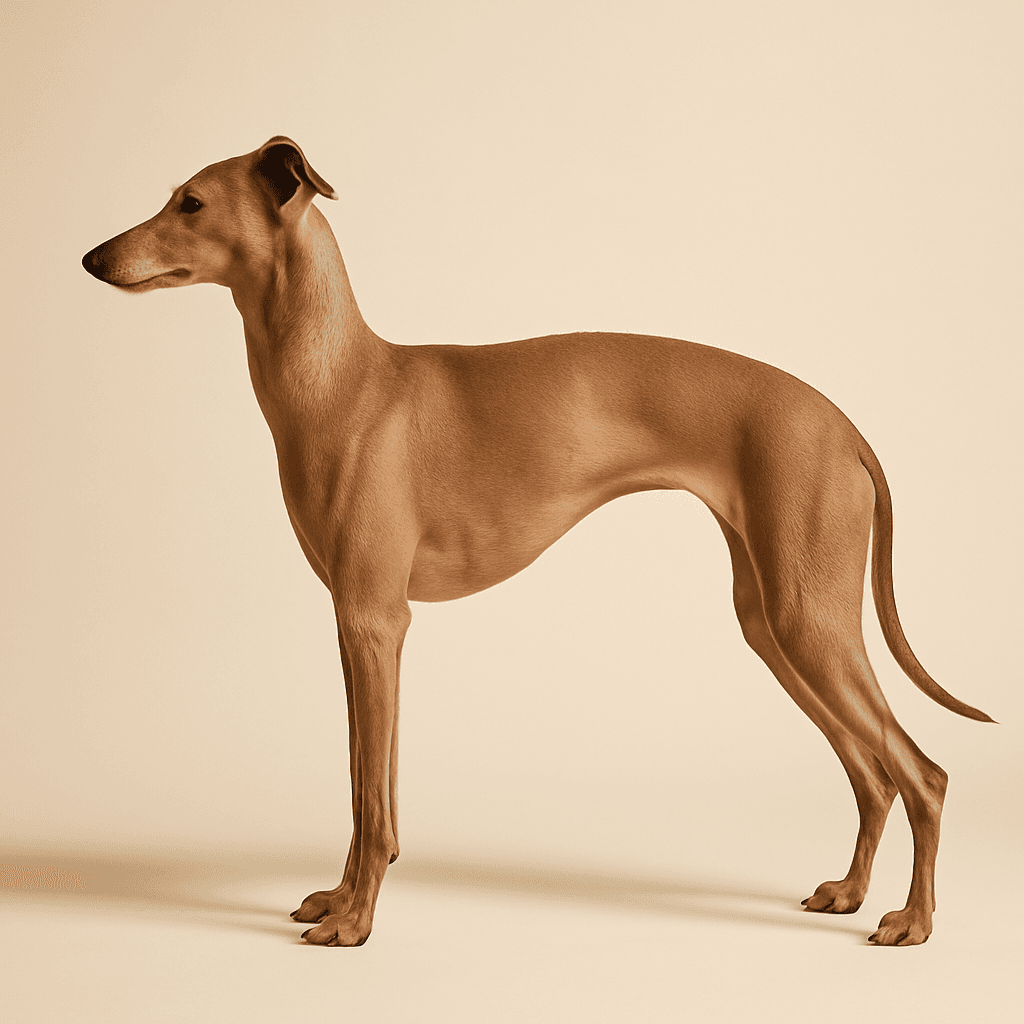
The Italian Greyhound is the smallest of all sighthound breeds, an elegant and ancient miniaturised greyhound type that has been kept as a companion by European royalty and nobility for at least two thousand years. Examples of fine-boned greyhound-type dogs appear in ancient Roman mosaics and artefacts, and the breed became a treasured luxury companion in the courts of Renaissance Italy before spreading across European royal households. Catherine the Great, Frederick the Great and Queen Victoria were among the breed's most prominent admirers, and miniature greyhound types appear in portraits of European nobility throughout the sixteenth, seventeenth and eighteenth centuries. Despite its toy classification and ornamental history, the Italian Greyhound retains the athletic build, speed and hunting instincts of its larger sighthound relatives in miniature form. Registered by the Kennel Club in the Toy Group, it is a popular and well-established companion breed in the United Kingdom. The Italian Greyhound is a slender, finely boned and elegantly proportioned dog with a short, smooth coat, deep chest, tucked abdomen and the characteristic arched back of the sighthound family. Adults typically stand 32 to 38 centimetres at the shoulder and weigh 3.6 to 5 kilograms. Colours include blue, fawn, cream, red, black and various combinations with white markings. The character is intensely devoted and emotionally sensitive. The Italian Greyhound forms extremely deep bonds with its own people and can struggle significantly with separation from them. It is gentle, quiet and refined indoors and playful in quick, athletic bursts outdoors. It is reserved with strangers but becomes comfortable in time. It is highly sensitive to the emotional tone of its household and does not cope well with raised voices, tension or rough handling. The fragile bone structure is a significant practical consideration that owners must take seriously. Leg fractures - particularly in young dogs jumping from furniture or being dropped - are a documented risk, and the domestic environment must be managed to minimise falls. The breed is also highly sensitive to cold and damp conditions, requiring warm bedding, indoor living and protective clothing in cold or wet weather. Dental disease is the most significant long-term health concern. The breed is prone to tartar accumulation and periodontal disease, and daily tooth brushing from puppyhood is strongly recommended to minimise the need for veterinary dental intervention. Purchase prices from KC-registered breeders range from £1,000 to £2,500. Monthly running costs average £70 to £120. The Italian Greyhound Club is the primary resource for breed information, health testing, responsible breeders and rescue contact.
Quick facts
Meet Our Italian Greyhounds
Register your dog on My Dog and it will appear here automatically.
Italian Greyhound Photos
No photos yet. Be the first to share yours.
Add a photoActivity Feed
How much exercise does your Italian Greyhound really need each day?
Thirty to 45 minutes a day, but the type of exercise matters enormously. The sprint opportunity is what they really want, a safely fully enclosed space where they can run at full speed for short bursts. Italian Greyhounds are fast and agile for their size, and that burst exercise satisfies something that a slow walk doesn't. I use securely fenced dog fields as a regular part of the week for exactly this reason. Off-lead in open areas is genuinely not safe with this breed, recall competes with speed and prey instinct, and Italian Greyhounds can disappear at pace in seconds. The weather element is real too: cold and wet conditions require a proper waterproof coat. Mine flatly refuses to exercise in the rain without one, and I don't blame her. Warm, dry bedding is not optional for this breed, they chill quickly and genuinely need to be warm at rest.
30 June 2026
Any health issues to watch for with Italian Greyhounds?
Dental disease is the big one that catches people out. Italian Greyhounds have fine teeth in small jaws and periodontal disease develops quickly without active management. I brush teeth daily, it sounds excessive until you've paid for a dental procedure under general anaesthetic. Start from puppyhood so it becomes routine. Leg fractures are a genuine and regular risk: the fine bone structure means a fall from a sofa or an awkward landing during play can result in a serious break, sometimes requiring orthopaedic surgery. I use ramps rather than letting her jump up and down from furniture. Epilepsy occurs in some lines, know the signs and what to do if a seizure happens. PRA has been documented in the breed so confirm eye testing on parents before buying. Blue and fawn coat individuals can be affected by colour dilution alopecia, causing patchy coat loss. Lifespan of 13 to 15 years is a real positive with this breed.
30 June 2026
What's the one thing you wish you'd known before getting an Italian Greyhound?
How house training genuinely difficult this breed can be. I'd read it mentioned as a quirk. It is more than a quirk. Italian Greyhounds dislike cold, wet and generally unpleasant weather with a conviction that interferes directly with toileting outdoors. On a cold January morning mine will stand at the back door, look at the garden, and simply decline. Patience, consistency, a covered outdoor area if possible, and an acceptance that there will be accidents longer than you'd expect with other breeds, that's the reality. The velcro attachment is the other thing to prepare for: this breed bonds intensely and can develop separation anxiety if not carefully habituated to short absences from puppyhood. Mine follows me from room to room without exception. That closeness is wonderful once you're set up for it, but it requires conscious effort to build independence early.
30 June 2026
What do you feed your Italian Greyhound, and why?
A high-quality small breed complete dry food, split across two small meals a day. Adults typically need between 80 and 140 grams daily, which is not much at all, and the portion discipline really matters, Italian Greyhounds can gain weight without it being immediately obvious under the fine coat, and even small amounts of extra weight stress the delicate bone structure. I weigh food rather than estimating. Treats are a necessary part of training and I count them within the daily calorie allowance rather than treating them as extras. Dental chews are part of my routine for this breed specifically, as a supplement to daily brushing, not a replacement. Fresh water is always available. Nothing complex in the diet, but I'd be wary of anyone suggesting raw for this breed without veterinary nutritionist input, simply because getting the balance right for a very small, lean dog requires care.
30 June 2026
Italian Greyhound of the Month
🏆 September 2026 -- Be the first nominee
Could be your dog.
The first dog registered in this community earns the first Dog of the Month nomination automatically.
Register your dogUpcoming Italian Greyhound Meetups
No meetups planned yet. Be the first to organise one.
Sign in to organise a meetupCommunity Members
Be the first to join and become the Italian Greyhound Founding Member.
Join Club