

Be the first to join. Keep the badge forever.
The first members of this community earn permanent Founding Member status. It shows on your profile and your dog's profile for as long as you're here.
- ✓Founding Member badge on your profile
- ✓Your dog featured first
- ✓First Dog of the Month nomination
- ✓Always free
⭐ Founding Member spots open
First to join gets the badge
🐕 Be the first dog registered
Add your Lab to the community
📷 Add the first photo
Start the photo wall
8
Discussions

0 members
8 discussions
About the Italian Spinone
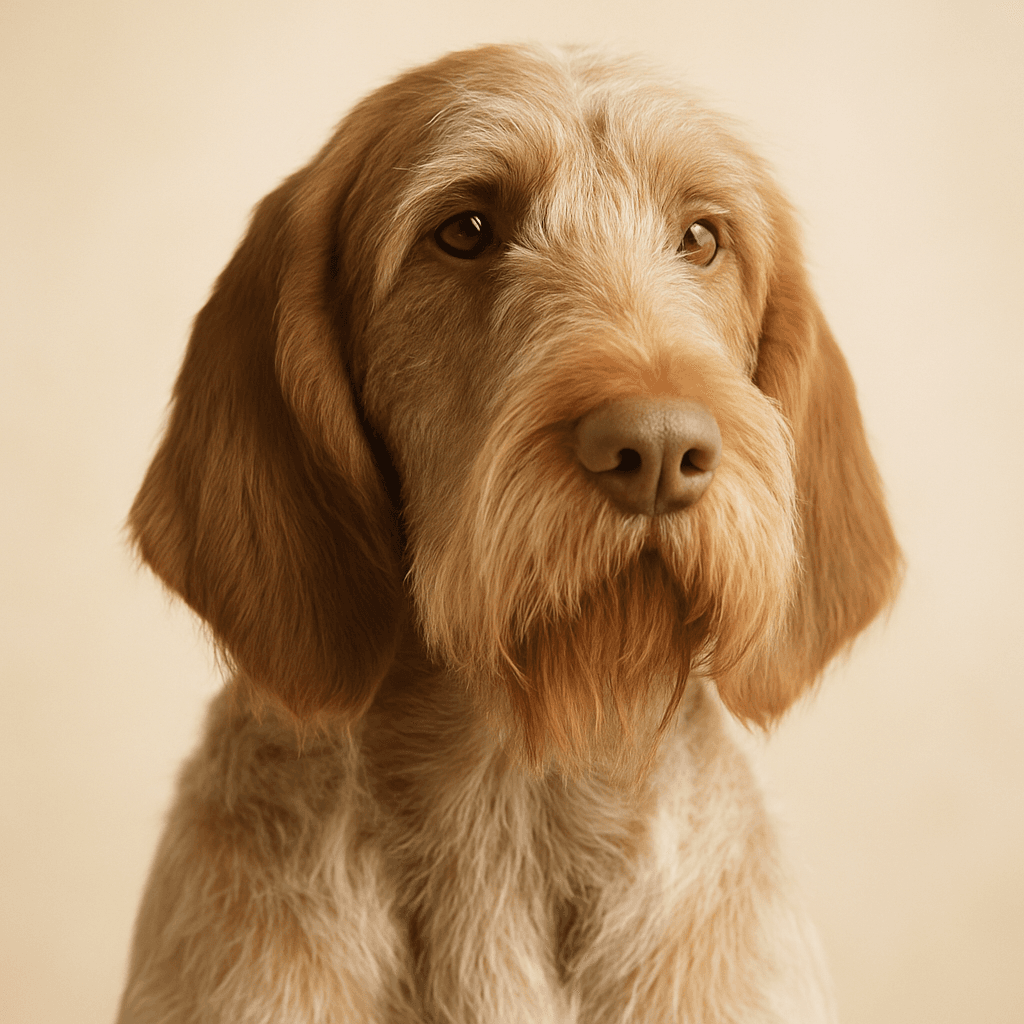
The Italian Spinone is one of the oldest hunting dog breeds in existence, an ancient Italian hunt, point and retrieve gundog whose characteristic wiry-coated pointer type appears in Italian paintings and frescoes from at least the fifteenth century. Developed across the varied terrain of northern and central Italy - from the marshes of the Po Valley to the mountains of Piedmont and the dense cover of the Apennines - to work as a versatile all-terrain hunting dog capable of working in thick vegetation and cold water alike, the Spinone combines a powerful scenting nose with a gentle, soft mouth for retrieving and the steady, methodical working style of a breed built for endurance and reliability rather than speed. Registered by the Kennel Club in the Gundog Group, it has developed a loyal following in the United Kingdom. The Italian Spinone is a large, robust and powerfully built HPR gundog with a distinctive dense, wiry or hard coat. The permissible colours include white, white and orange, orange roan, white and brown, and brown roan. The large, drooping ears, expressive amber or ochre eyes and prominent beard give the breed a gentle and somewhat melancholic expression that is immediately endearing to those who encounter it. Adults typically stand 58 to 70 centimetres at the shoulder and weigh 29 to 39 kilograms. The character is genuinely exceptional in its gentleness and patience. The Spinone is among the most even-tempered and calm of all gundog breeds - devoted to its family, reliable with children, generally good with other dogs and welcoming rather than suspicious with strangers. It is not boisterous or excitable by gundog standards and has a steady, quiet dignity that is a distinctive characteristic. Owners consistently describe the breed as having a particularly deep and loyal bond with its immediate family. The droopy jowls and long beard are breed characteristics but practical owners need to understand the associated realities. The Spinone drools readily, particularly in anticipation of food, and the beard requires thorough cleaning after every meal and drink to remain sanitary. Hip and elbow dysplasia are the primary musculoskeletal health concerns and both parents must be scored through the BVA/KC scheme. Cerebellar Ataxia, a progressive neurological condition that is specific to the Italian Spinone breed, requires DNA testing of both parents - affected dogs should never be bred from and no responsible breeder will produce puppies without providing clear certificates. Purchase prices from KC-registered, health-tested breeders range from £1,000 to £1,800. Monthly running costs average £120 to £190. The Italian Spinone Club of Great Britain is the primary resource for breed information, health testing, responsible breeders and rescue contact.
Quick facts
Meet Our Italian Spinones
Register your dog on My Dog and it will appear here automatically.
Italian Spinone Photos
No photos yet. Be the first to share yours.
Add a photoActivity Feed
How much exercise does your Italian Spinone really need each day?
Around 90 minutes a day works well for mine, though the breed is pleasingly flexible about what that looks like. Italian Spinoni have steady endurance rather than explosive speed, they're built for a long day in the field at a measured pace, not for sprinting. Long country walks, swimming where available, and gundog training all suit them very well. The nose work side of exercise is something I've found genuinely useful: Spinoni are scent-driven dogs and activities that engage that instinct tire them in a way that pure physical exercise doesn't replicate. What I appreciate is that this breed is more adaptable than many HPR breeds, if one day is shorter due to circumstances, it doesn't result in a dog bouncing off the walls. That said, consistent daily exercise is still important. An under-exercised Italian Spinone isn't destructive in a terrier way, but they do become restless and a bit unfocused.
30 June 2026
Any health issues to watch for with Italian Spinones?
The two priorities before buying a puppy are hip and elbow scores for both parents, and Cerebellar Ataxia DNA testing. The hip and elbow scoring is standard for any large breed, but Cerebellar Ataxia is specific to Italian Spinoni and important to understand, it's a progressive neurological condition and DNA testing identifies carriers and affected dogs clearly. Responsible breeders will have tested both parents and should share the results without hesitation. Bloat is a risk in this breed as with other deep-chested dogs, feed twice daily, avoid vigorous exercise around mealtimes, and know the signs: unproductive retching, distended belly, restlessness. Treat bloat as an emergency and get to a vet immediately. The Italian Spinone Club of Great Britain maintains health testing requirements and is a useful reference. Lifespan is 10 to 12 years, which is typical for a large working breed.
30 June 2026
What's the one thing you wish you'd known before getting an Italian Spinone?
The drooling. It is mentioned in breed descriptions and I mentally filed it as a minor thing. It is not a minor thing. Italian Spinoni drool considerably, particularly after drinking, after exercise, and when food is being prepared. There are damp patches on my kitchen floor after every water bowl visit. I keep a dedicated towel by the back door and several around the house. It is absolutely not a dealbreaker for a breed this wonderful, but knowing it practically, not just in the abstract, before you commit is useful. The other thing I'd highlight is how unexpectedly gentle this breed is. I'd read gentle giant descriptions but assumed they were romanticised. They're not. My Spinone is the most patient, calm and genuinely good-natured dog I've owned. With children especially, the temperament is remarkable, unhurried, tolerant, steady. The breed's dignity combined with its evident affection is something you really have to experience.
30 June 2026
What do you feed your Italian Spinone, and why?
A quality large breed complete dry food, around 450 to 500 grams per day split across two meals. The twice-daily feeding is partly preference and partly practical given the bloat risk in deep-chested breeds, one large daily meal increases that risk compared to two smaller ones. I'm consistent about not exercising within an hour of feeding in either direction. Body condition monitoring matters with this breed: I check ribs and waist regularly, and adjust portions if needed. Spinoni can carry a bit of weight without it being immediately visible under that wiry coat, so hands-on assessment beats visual inspection. Fresh water always available, worth noting this breed drinks enthusiastically, so the bowl needs regular topping up. If I'm ever unsure about dietary needs, particularly during puppyhood or at senior age, I ask my vet rather than guessing. Getting the large breed growth phase right nutritionally sets them up for life.
30 June 2026
Italian Spinone of the Month
🏆 September 2026 -- Be the first nominee
Could be your dog.
The first dog registered in this community earns the first Dog of the Month nomination automatically.
Register your dogUpcoming Italian Spinone Meetups
No meetups planned yet. Be the first to organise one.
Sign in to organise a meetupCommunity Members
Be the first to join and become the Italian Spinone Founding Member.
Join Club