
Be the first to join. Keep the badge forever.
The first members of this community earn permanent Founding Member status. It shows on your profile and your dog's profile for as long as you're here.
- ✓Founding Member badge on your profile
- ✓Your dog featured first
- ✓First Dog of the Month nomination
- ✓Always free
⭐ Founding Member spots open
First to join gets the badge
🐕 Be the first dog registered
Add your Lab to the community
📷 Add the first photo
Start the photo wall
8
Discussions
0 members
8 discussions
About the Komondor
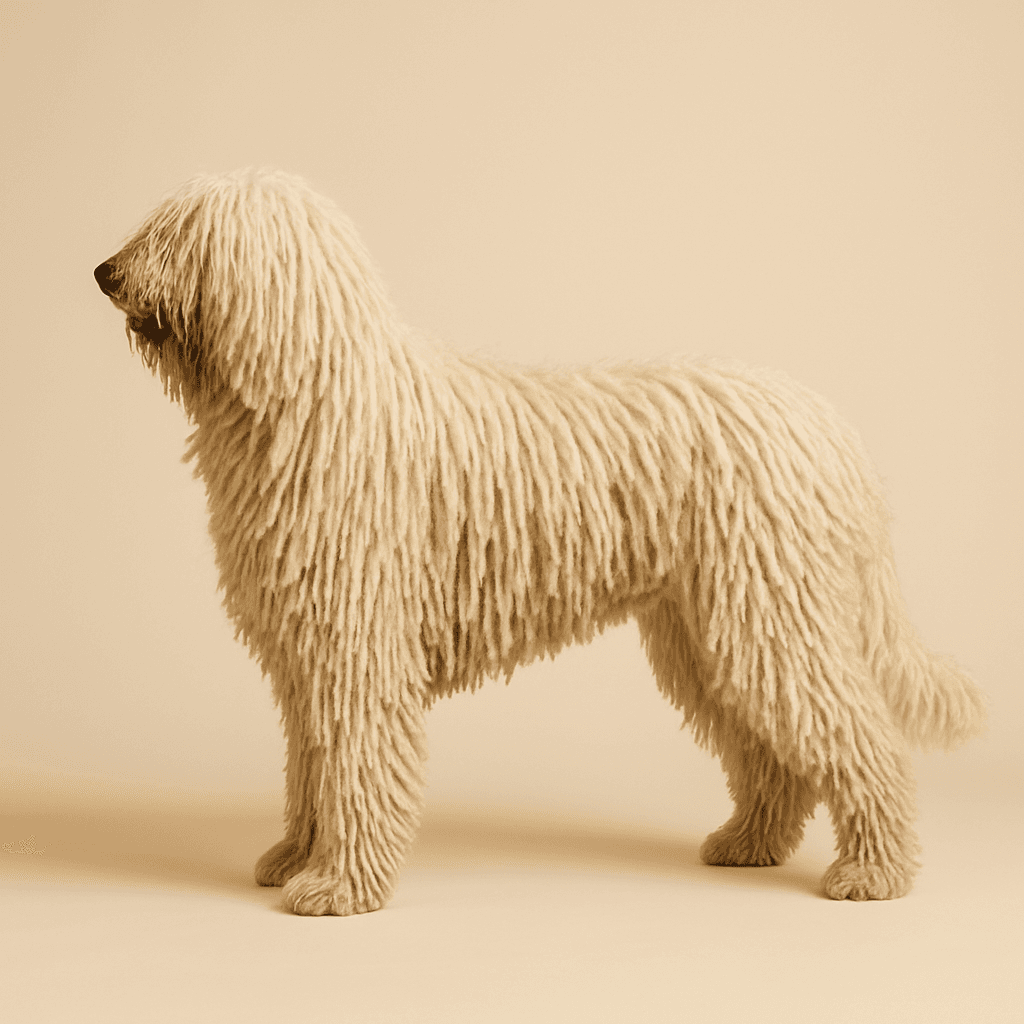
The Komondor is one of the most ancient and visually distinctive of all dog breeds, a large Hungarian livestock guardian whose extraordinary corded white coat serves as both weatherproofing and protection against the elements and the predators it was bred to deter. The breed has guarded flocks on the Hungarian plains, known as the Puszta, for at least a thousand years and is considered a national treasure in Hungary, where its history is documented from the sixteenth century. The breed arrived in the United Kingdom in the latter twentieth century and is registered by the Kennel Club in the Pastoral Group, where it remains rare and is found almost exclusively with specialist breed enthusiasts. The Komondor is large, powerfully built and immediately unmistakable. The white coat forms long, felt-like cords that cover the entire body, head included, and can reach the ground in mature adults. The cords develop naturally from the puppy's soft curly coat from around nine months of age, requiring considerable owner effort to separate and maintain correctly to prevent matting. Adults typically stand 65 centimetres and above at the shoulder and weigh 36 to 61 kilograms, making this one of the largest breeds registered with the KC. The character reflects the livestock guardian role. The Komondor is calm, deliberate, self-reliant and deeply loyal to its own family and flock. It is naturally suspicious of strangers and will guard its territory with considerable authority. This is not an exuberant or playful breed in the conventional sense - it is purposeful, watchful and independent, assessing situations and making its own judgements in the manner of all livestock guardian breeds. Socialisation from puppyhood is critical. Training requires understanding of the livestock guardian mindset. The Komondor does not respond to the same methods effective with working or companion breeds. It was bred to work autonomously without human direction and will resist repetitive obedience-style training. Patient, respectful and consistent handling from an experienced owner achieves far better results than conventional obedience approaches. This is emphatically not a suitable breed for a first-time dog owner. Hip Dysplasia is a primary health concern in large breeds and hip scoring is essential. Bloat and other large-breed health considerations apply. Eye conditions and skin health under the cords require attention. Purchase prices from KC-registered breeders typically range from £1,500 to £2,500. Monthly running costs average £120 to £200. The Komondor breed community in the UK is small and specialist - contact via the KC breed club is the appropriate starting point for any enquiry.
Quick facts
Meet Our Komondors
Register your dog on My Dog and it will appear here automatically.
Komondor Photos
No photos yet. Be the first to share yours.
Add a photoActivity Feed
How much exercise does your Komondor really need each day?
Around 60 to 90 minutes daily, which surprises people who expect a big, powerful dog to be relentlessly energetic. The Komondor is a livestock guardian, not a sporting dog, and their natural rhythm is calm patrolling and alert watching rather than sustained athletic output. Mine settles well once the guardian instincts are satisfied, which means exercise plus space plus something purposeful to oversee. Secure fencing is absolutely non-negotiable. The territorial instinct is strong and mine will patrol boundaries systematically. The exercise itself doesn't need to be intense, but it does need to be consistent. A day without adequate activity and outdoor time leaves mine restless in a way that's difficult to manage indoors. Access to space, ideally a secure large garden or a rural environment, suits the breed far better than urban living with limited outdoor time.
30 June 2026
Any health issues to watch for with Komondors?
Hip dysplasia is the primary concern. Both parents must be hip-scored. With a large, heavy breed like the Komondor, hip problems are serious and expensive to manage, and buying from untested parents is a real risk. Bloat, or gastric dilatation volvulus, is a life-threatening emergency in large deep-chested breeds. I feed mine from two meals rather than one, avoid vigorous exercise around feeding times and know the signs to watch for. This is not overcautiousness. Bloat kills dogs quickly. Knowing the signs, having your vet's emergency number saved and acting fast is essential. Entropion, where the eyelids roll inward, has been documented in the breed. The Komondor Club monitors breed health and is a good starting point for health information. Lifespan is 10 to 12 years. Not long for such a significant dog, which makes buying well and insuring properly even more important.
30 June 2026
What's the one thing you wish you'd known before getting a Komondor?
That training is fundamentally different from almost every other breed. The Komondor was developed to guard livestock autonomously, making independent decisions without human instruction. That is not a trainable-out behaviour, it's the core of what the breed is. Mine is highly intelligent but not naturally biddable. Positive reinforcement with patient, experienced handling works. What does not work is repetition, pressure or any attempt to enforce compliance through dominance. Early and extensive socialisation is critical because the guardian instinct is strong and a poorly socialised Komondor becomes a liability. Mine is deeply loyal to me and to our property. He is calm and dignified when not provoked. But he is not a people-pleaser, not a social butterfly and not competitive obedience material. Understanding that before you acquire one shapes everything about how you approach the relationship.
30 June 2026
What do you feed your Komondor, and why?
A high-quality large breed complete dry food, around 500g a day across two meals. The two-meal structure is non-negotiable for bloat risk management. I also time meals so there's at least an hour before or after any exercise. Mine is a large, powerful dog and the food needs to support that frame without encouraging excess weight, which would worsen any joint loading. I weigh portions rather than estimating. Body condition in a breed with this coat is harder to assess visually, so I run my hands along his ribs weekly. I've avoided once-daily feeding since learning about the bloat statistics in large deep-chested breeds. Fresh water is always down and he drinks a lot, particularly in warmer months. I'd encourage anyone with a large breed to discuss bloat risk management and feeding approach with their vet specifically.
30 June 2026
Komondor of the Month
🏆 September 2026 -- Be the first nominee
Could be your dog.
The first dog registered in this community earns the first Dog of the Month nomination automatically.
Register your dogUpcoming Komondor Meetups
No meetups planned yet. Be the first to organise one.
Sign in to organise a meetupCommunity Members
Be the first to join and become the Komondor Founding Member.
Join Club