

Be the first to join. Keep the badge forever.
The first members of this community earn permanent Founding Member status. It shows on your profile and your dog's profile for as long as you're here.
- ✓Founding Member badge on your profile
- ✓Your dog featured first
- ✓First Dog of the Month nomination
- ✓Always free
⭐ Founding Member spots open
First to join gets the badge
🐕 Be the first dog registered
Add your Lab to the community
📷 Add the first photo
Start the photo wall
8
Discussions
0 members
8 discussions
About the Labradoodle
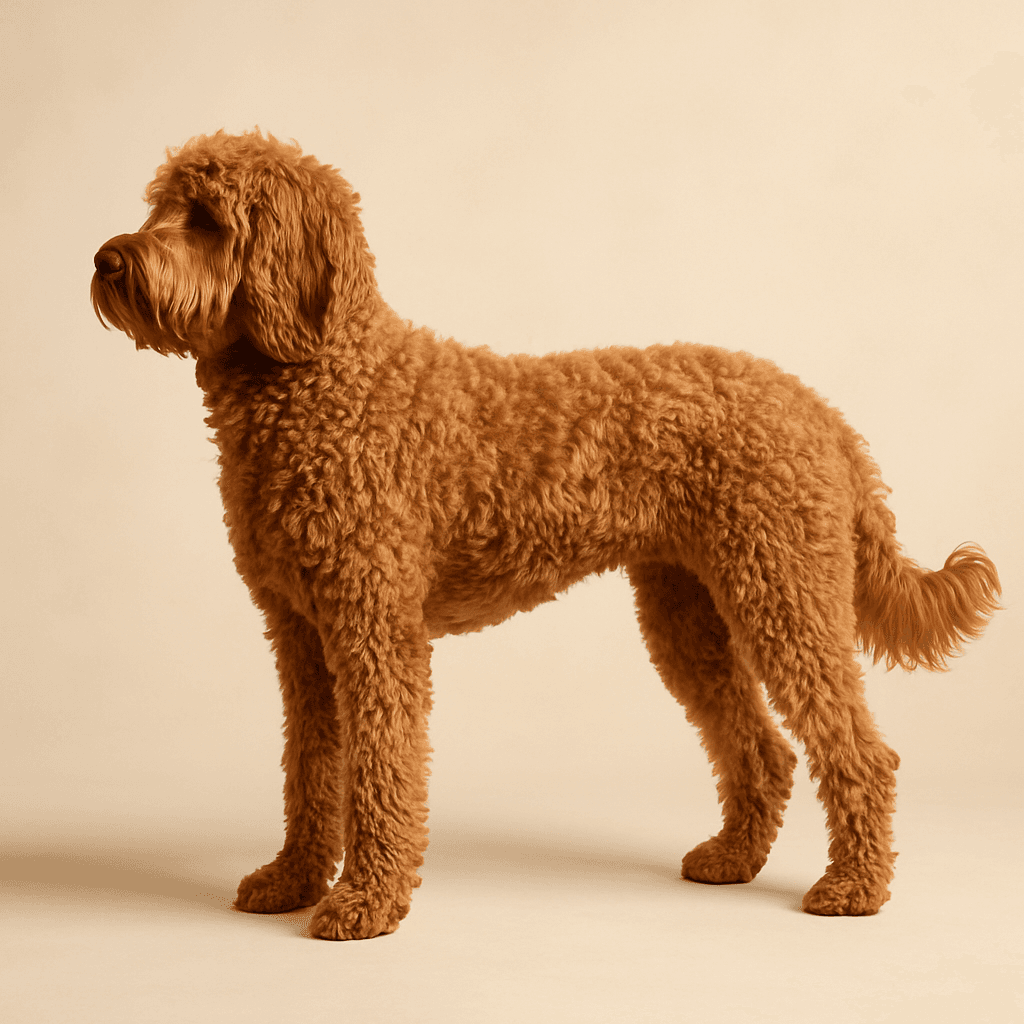
The Labradoodle is a cross between a Labrador Retriever and a Poodle and is one of the original and most popular crossbreeds in the UK. It is not a Kennel Club recognised breed and is not eligible for KC registration. The cross was first deliberately developed in Australia in the 1980s with the intention of creating a guide dog with a lower-shedding coat, and its popularity has grown significantly since then. Coat type and size vary considerably between individuals, depending on generation and which Poodle type was used as the parent. Standard Labradoodles (Standard Poodle parent) are large dogs, 25 to 40kg. Medium Labradoodles are smaller, and Miniature Labradoodles use a Miniature Poodle parent. An F1 Labradoodle (first-generation cross) may have a wide range of coat types. F1b dogs (backcrossed to Poodle) are typically wavier or curlier and lower-shedding. No Labradoodle is truly hypoallergenic. Allergens are present in dander and saliva, not only in coat, and no cross can guarantee not to trigger allergies. F1b dogs shed less than F1 dogs in most cases, but this is not a guarantee for allergy sufferers. Read our full guide to [F1, F2 and F1b generations explained](/breeds/crossbreeds/f1-f2-generations) and [are doodles and crossbreeds really hypoallergenic?](/breeds/crossbreeds/are-doodles-hypoallergenic) for more detail. Health testing is the most critical factor when buying a Labradoodle. The Labrador parent carries a significant hereditary health burden including hip and elbow dysplasia, Exercise-Induced Collapse (EIC) and Progressive Retinal Atrophy (PRA). The Poodle parent also carries PRA and hip dysplasia risk. Responsible breeders should test both parents for all relevant conditions and provide results. The unregulated nature of the crossbreed market means many Labradoodle breeders do not test: ask to see documentation and walk away from anyone who cannot provide it. Purchase prices from reputable health-tested breeders typically range from £1,500 to £3,500. Lifespan is typically 12 to 14 years. For owners who do their research, verify health testing and choose a well-bred dog from a responsible breeder, the Labradoodle can be an excellent family companion: sociable, trainable, active and affectionate. The single most important variable in a Labradoodle's long-term health is the quality of its parents' health screening. This is the decision that determines more about your future dog's wellbeing than any other. Invest the time to find a breeder who tests properly and you will have a rewarding companion for the next 12 to 14 years. The unregulated crossbreed market means that Labradoodle quality varies enormously. A well-bred Labradoodle from health-tested parents is a genuinely excellent dog. One from an untested, irresponsible breeder carries significant hidden health risk at a very high purchase price.
Quick facts
Meet Our Labradoodles
Register your dog on My Dog and it will appear here automatically.
Labradoodle Photos
No photos yet. Be the first to share yours.
Add a photoActivity Feed
What do you feed your Labradoodle, and why?
A quality large breed complete dry food, and I am quite disciplined about quantity. Labradoodles share the Labrador's food motivation and tendency to gain weight, and carrying excess weight on a dog with hip and elbow dysplasia risk is genuinely damaging. Mine would eat until he was ill if I let him. I measure every meal rather than estimating. Treats come out of his daily calorie allowance. I do not free-feed. During the growth phase I used a large breed puppy food specifically, to support controlled growth rather than fast gains. His current portion is around 400g a day split into two meals, adjusted slightly up or down based on weekly body condition checks. I run my hands along his ribs to assess condition because the coat makes visual assessment unreliable. Fresh water always available. He is food-obsessed, healthy and lean, and the discipline in feeding is what keeps it that way.
30 June 2026
How much exercise does your Labradoodle really need each day?
Mine is a Standard Labradoodle and genuinely needs around 90 minutes to two hours a day. That's not a marketing exaggeration. When he gets that consistently, he's a pleasure to live with. When life gets busy and it drops to 45 minutes, everyone in the house feels the difference. He's boisterous, restless and inventive in the worst ways. Retrieving games are the most efficient tool I have. Fifteen minutes of focused fetch tires him more effectively than 40 minutes of walking. He inherited the Labrador love of water and will enter any pond, river or puddle enthusiastically, which adds good physical exertion in shorter bursts. The important caveat for puppies: I stuck strictly to the five minutes per month of age guideline twice daily until he was 18 months old. Given the hip and elbow dysplasia risk from the Labrador side, protecting developing joints matters. It felt conservative. It was the right call.
30 June 2026
Any health issues to watch for with Labradoodles?
Hip and elbow dysplasia from the Labrador side is the biggest risk and the first thing to check in any puppy's parents. The Labrador parent should have a KC/BVA Hip Score and Elbow Grade. I wouldn't buy without seeing documented results. PRA, the progressive eye condition, can come from both parent breeds, and DNA tests are available for the relevant forms in both Labradors and Poodles. Both parents should be tested. Exercise-Induced Collapse is Labrador-specific with a DNA test available. Centronuclear Myopathy is another Labrador condition worth asking about. My biggest practical health issue has been ear infections. Mine has a dense, hairy ear canal from the Poodle side and a hanging ear flap from the Labrador side, which creates a perfect environment for moisture and infection. Weekly ear checks and cleaning is now part of my non-negotiable routine. Insurance for a Standard Labradoodle runs £50 to £90 a month.
30 June 2026
What's the one thing you wish you'd known before getting a Labradoodle?
How quickly puppy habits become adult habits. Mine was a large, boisterous puppy who jumped up on everyone and found it hilarious. Every visitor thought it was adorable. I did not address it consistently enough in those first months because it seemed manageable. A large adult Labradoodle jumping up on guests, children and elderly relatives is not adorable. It's a serious problem and one that sets in fast and is genuinely hard to fix once established. Same with lead pulling. The Labrador strength combined with the Poodle enthusiasm means a young Labradoodle that learns it can pull will pull with conviction as an adult. I wish I'd been far more proactive about four paws on the floor and loose-lead walking from day one with every single person in the household operating the same rules. The temperament is wonderful: warm, sociable, smart, great with children. But the training foundation has to be right from the start.
30 June 2026
Labradoodle of the Month
🏆 September 2026 -- Be the first nominee
Could be your dog.
The first dog registered in this community earns the first Dog of the Month nomination automatically.
Register your dogUpcoming Labradoodle Meetups
No meetups planned yet. Be the first to organise one.
Sign in to organise a meetupCommunity Members
Be the first to join and become the Labradoodle Founding Member.
Join Club