
Be the first to join. Keep the badge forever.
The first members of this community earn permanent Founding Member status. It shows on your profile and your dog's profile for as long as you're here.
- ✓Founding Member badge on your profile
- ✓Your dog featured first
- ✓First Dog of the Month nomination
- ✓Always free
⭐ Founding Member spots open
First to join gets the badge
🐕 Be the first dog registered
Add your Lab to the community
📷 Add the first photo
Start the photo wall
8
Discussions
0 members
8 discussions
About the Leonberger
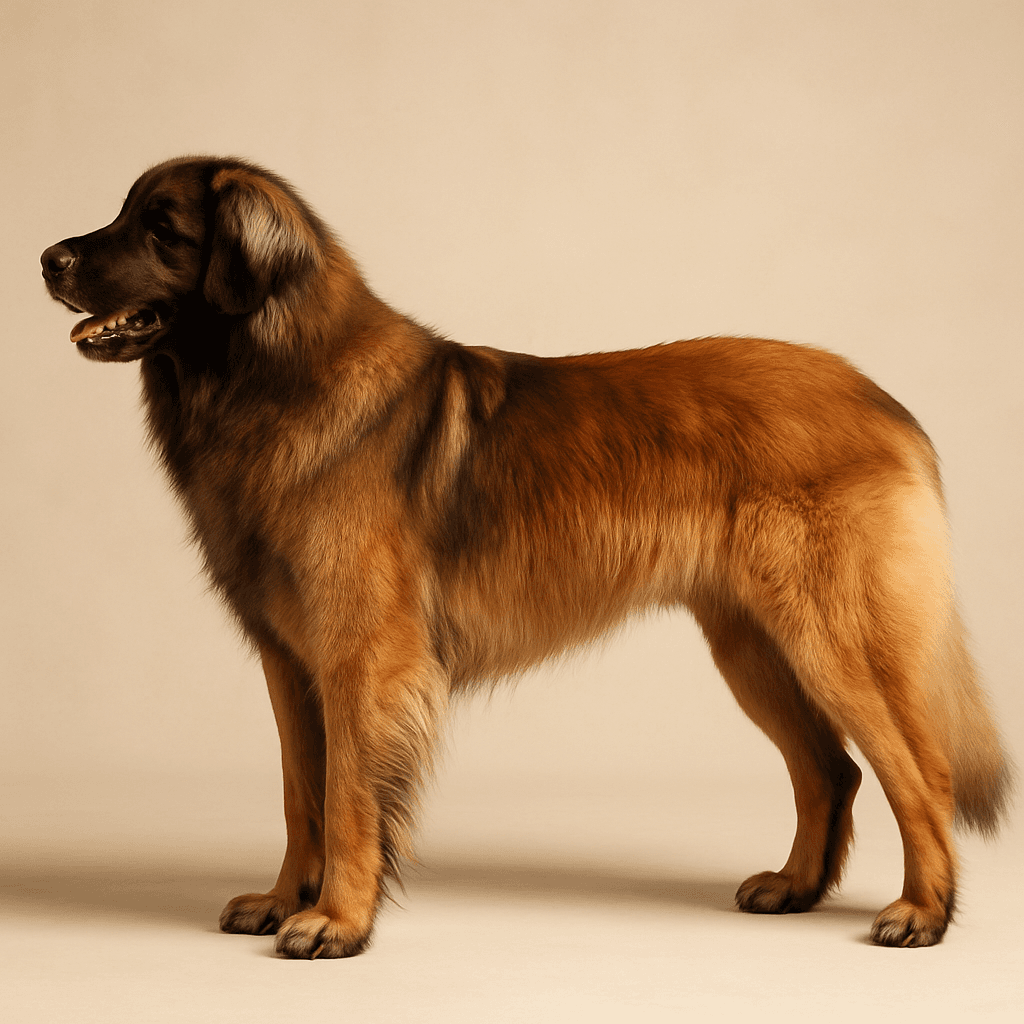
The Leonberger is one of the most striking and genuinely majestic of all dog breeds, a German giant created in the nineteenth century by Heinrich Essig, the mayor of Leonberg in the Kingdom of Wurttemberg, with the stated ambition of producing a dog that resembled the lion in the crest of his home town. Essig worked from the 1830s onwards, crossing Saint Bernards from the hospice at the Great St Bernard Pass with Newfoundlands and subsequently incorporating Great Pyrenees bloodlines, selectively breeding for the desired leonine appearance - the massive, dignified build, the thick lion-mane of longer coat around the neck and chest, and the characteristic black facial masking. The breed was publicly established by the 1840s and Essig presented dogs to several European royals. The Leonberger was recognised by the Kennel Club in the Working Group. The breed is very large, powerfully built and impressively handsome. The coat is long, thick and flowing, lion-yellow to red-brown in colour with a pronounced black mask and a substantial mane of longer darker fur around the neck and shoulders. Adults typically stand 65 to 80 centimetres at the shoulder and weigh 41 to 75 kilograms - females are smaller than males but both sexes are genuinely large dogs. The character lives up to the promise of the physical impression. The Leonberger is calm, gentle, confident and deeply devoted to its family. It is patient with children, sociable and generally good with other dogs, and has a steady, tolerant quality that makes it one of the more reliably gentle of all giant breeds. It is alert and will notice the arrival of strangers but is not aggressive or sharp. The breed is affectionate and people-oriented and does not thrive in isolation or kennelling. Despite the gentle character, the sheer size of the Leonberger demands early and thorough training in basic manners. A Leonberger that has not learned loose-lead walking, impulse control around food and basic obedience is a genuinely challenging animal for any owner to manage, regardless of its good-natured intentions. Training from puppyhood with positive reward-based methods, combined with wide and varied socialisation, is the foundation of a well-mannered adult. Health considerations are significant and require careful attention. Leonberger Polyneuropathy (LPN1 and LPN2) is a debilitating hereditary neurological condition for which DNA tests are available - no responsible breeder should produce puppies without clear DNA test results for both conditions in both parents. Hip and Elbow Dysplasia scoring is standard for KC Assured Breeders. Osteosarcoma and heart conditions are also documented. The Leonberger is a short-lived breed relative to smaller dogs - average lifespan is 8 to 9 years - and prospective owners should approach this honestly. Purchase prices from KC-registered, health-tested breeders range from £1,500 to £3,000. Monthly running costs are substantial given the size: £150 to £250. The Leonberger Club of Great Britain and the British Leonberger Club are the primary resources for breed information, health testing, responsible breeders and rescue contact.
Quick facts
Meet Our Leonbergers
Register your dog on My Dog and it will appear here automatically.
Leonberger Photos
No photos yet. Be the first to share yours.
Add a photoActivity Feed
How much exercise does your Leonberger really need each day?
Around 60 to 90 minutes for an adult, but with important caveats. The biggest mistake you can make with a Leonberger is over-exercising them as puppies. Until the skeleton matures at around two years, no sustained jogging, no stair repetition, no forced exercise. I stuck strictly to short, unforced play sessions and age-appropriate walks until he was fully grown. Now he's adult he loves long walks, swimming, and hiking in cooler weather. Hot days we stay out of the midday heat completely because the heavy coat and giant build make overheating a real risk. He's surprisingly moderate in his exercise needs given his size. He's not a dog that needs to sprint for two hours. What he needs is steady, purposeful exercise with us, done at his pace.
30 June 2026
Any health issues to watch for with Leonbergers?
Leonberger Polyneuropathy is the one every prospective owner needs to know about. LPN1 and LPN2 are both serious hereditary neurological conditions and DNA tests exist for both. No responsible breeder should be producing puppies without clear results for both conditions from both parents. Ask to see the certificates. It's not negotiable. Beyond that, hip and elbow dysplasia scoring is standard in the breed given the giant build. Osteosarcoma and heart conditions are also documented. The average lifespan is eight to nine years, which is something you need to sit with before you decide on this breed. That's a short time for a dog that becomes so central to family life. Insurance is essential. The costs associated with a giant breed's health care, if problems arise, are substantial.
30 June 2026
What's the one thing you wish you'd known before getting a Leonberger?
That early training is not optional for a giant breed, it's genuinely essential for everyone's safety and quality of life. He's gentle and patient and wonderful in character, but when he's fully grown he weighs over 60kg and if he hasn't been trained to walk nicely on a lead, to sit before going through doors, to stay when asked, you have a problem that's very hard to manage. I was perhaps a little relaxed in the early months because he was so biddable and sweet-natured as a puppy. That sweetness doesn't go anywhere, but the size arrives regardless of whether the training has kept pace with it. Leash manners and impulse control from the very beginning are the things I'd prioritise above everything else. A well-mannered adult Leonberger is an absolute joy in the world. One that isn't is a genuine challenge.
30 June 2026
What do you feed your Leonberger, and why?
A high-quality large or giant breed complete food, with careful attention to controlled growth during puppyhood. Giant breed puppies must not be pushed to grow quickly. High-protein puppy foods that accelerate growth are actively harmful for joint development, so I used a giant breed-specific puppy food that moderates growth rate. Now he's adult I feed two or three smaller meals rather than one large one to reduce the bloat risk that comes with a deep chest. I monitor his weight carefully because extra weight on a giant frame means extra stress on joints that are already working hard. Fresh water always available. I also add a joint supplement as a matter of course. The investment in quality food for a dog this size is real, but cutting corners on nutrition in a giant breed tends to show up in health costs later.
30 June 2026
Leonberger of the Month
🏆 September 2026 -- Be the first nominee
Could be your dog.
The first dog registered in this community earns the first Dog of the Month nomination automatically.
Register your dogUpcoming Leonberger Meetups
No meetups planned yet. Be the first to organise one.
Sign in to organise a meetupCommunity Members
Be the first to join and become the Leonberger Founding Member.
Join Club