
Be the first to join. Keep the badge forever.
The first members of this community earn permanent Founding Member status. It shows on your profile and your dog's profile for as long as you're here.
- ✓Founding Member badge on your profile
- ✓Your dog featured first
- ✓First Dog of the Month nomination
- ✓Always free
⭐ Founding Member spots open
First to join gets the badge
🐕 Be the first dog registered
Add your Lab to the community
📷 Add the first photo
Start the photo wall
8
Discussions
0 members
8 discussions
About the Lhasapoo
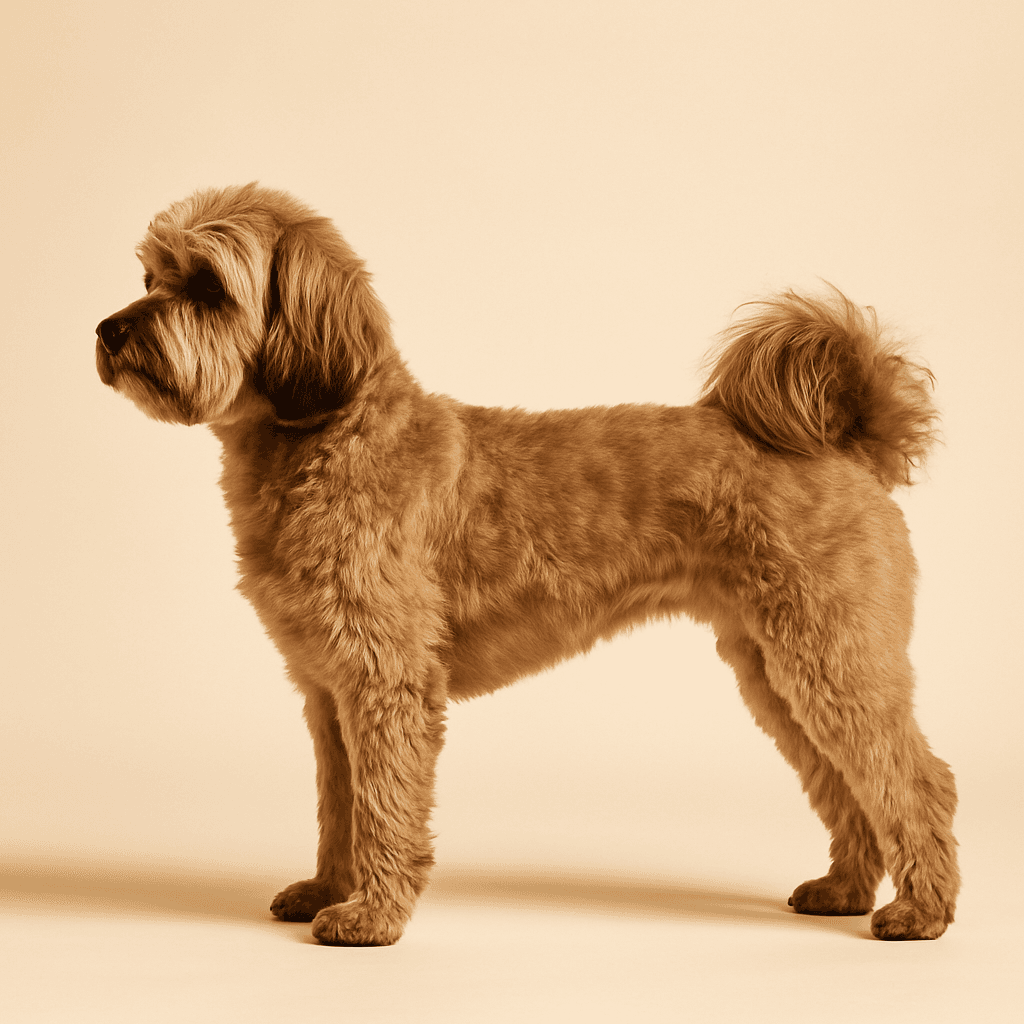
The Lhasapoo is a crossbreed produced from a Lhasa Apso and a Poodle - typically a Miniature Poodle but sometimes a Toy - combining two breeds of very different origin and character into a small and often appealing companion. The cross emerged as part of the broader doodle crossbreeding trend of the early twenty-first century, with the primary stated goals of producing a low-shedding companion and introducing the Poodle's intelligence and trainability to the more measured and watchful Lhasa character. The crossbreed is not recognised by the Kennel Club and has no formal breed standard, breed club or mandatory health testing programme. The Lhasa Apso is a Tibetan breed with origins as a palace and monastery watchdog, bred for thousands of years to be alert, independent and discriminating in its responses - qualities markedly different from the sociable, biddable Poodle. The result of this cross is variable but commonly produces a small, moderately active dog with a watchful, composed character that is affectionate with its own household but can be reserved or cautious with strangers. Appearance varies between individuals. Coat type ranges from the straight, silky, flat coat of a more Lhasa-influenced puppy to the wavy or tight curls of a more Poodle-influenced one. The claimed low-shedding characteristic is not guaranteed in every individual. Adults typically weigh 5 to 10 kilograms depending on the Poodle parent used. The character blends the Lhasa's independent watchfulness with the Poodle's sociability and trainability. The resulting personality is typically calmer and less demanding than many doodle crossbreeds, better suited to quieter households and less exuberant environments. The breed is generally good with older children and adults but may not suit households with very young children or chaotic activity levels. Training benefits from the Poodle's intelligence and responsiveness. The Lhasa influence introduces a degree of independence that requires patient, consistent positive reinforcement. Early socialisation is particularly important given the Lhasa's historical tendency toward wariness with strangers - a trait that, without careful socialisation, can develop into excessive caution or inappropriate guarding behaviour. Health testing is a genuine concern with this cross. Progressive Retinal Atrophy is a significant hereditary condition in the Lhasa Apso parent and DNA testing of the Lhasa parent is essential before breeding. Patellar Luxation, a common issue in small breeds, should be assessed in both parents. No formal crossbreed testing scheme exists and buyer diligence is the only safeguard. Purchase prices range from £600 to £1,500. Monthly running costs average £55 to £100. There is no breed club or specialist rescue - Lhasa Apso rescue, Doodle Trust and general rescue organisations including Dogs Trust are the most useful contacts for those considering rehoming rather than purchasing a puppy. Meeting a prospective puppy's parents and reviewing health test documentation should be non-negotiable for any responsible buyer.
Quick facts
Meet Our Lhasapoos
Register your dog on My Dog and it will appear here automatically.
Lhasapoo Photos
No photos yet. Be the first to share yours.
Add a photoActivity Feed
How much exercise does your Lhasapoo really need each day?
Around 30 to 45 minutes daily, though I've found mine sits toward the more active end of that range because the Poodle influence is quite strong in him. Some days he's happy with a 20-minute walk and a game in the garden. Other days he's restless until he's had a proper run. The Poodle intelligence means mental stimulation is as important as physical exercise. Training sessions, nose games, and puzzle feeders make a real difference to how settled he is on lower-exercise days. I'd say he's more adaptable than a purebred Poodle but more engaged than a purebred Lhasa. His exercise needs land somewhere between the two parent breeds, which is genuinely convenient. Not a demanding dog by any measure, but not a complete couch companion either.
30 June 2026
Any health issues to watch for with Lhasapoos?
Progressive Retinal Atrophy is the main hereditary condition to ask about on the Lhasa Apso side of the cross, and DNA testing of the Lhasa parent is essential. PRA causes progressive vision loss and there's no treatment. Patellar Luxation is a concern with small breeds generally and both parents should have been assessed before breeding. Hereditary Cataract testing is also recommended given the eye conditions that appear in both parent breeds. The complication with crossbreeds is that there's no formal health testing scheme, so the responsibility for researching individual breeder testing falls entirely on the buyer. Don't assume that because it's a cross the health risks disappear. They don't. Ask which tests have been done, on which parents, and ask to see documentation. Reputable breeders of any cross will have this information readily available.
30 June 2026
What's the one thing you wish you'd known before getting a Lhasapoo?
That the Lhasa's wariness of strangers can surface quite strongly even in the cross. Mine is warm and affectionate with his own household and familiar people, but he was noticeably reserved with strangers as a puppy and that needed deliberate socialisation work rather than assuming it would resolve itself. The Poodle influence definitely makes him more trainable than a purebred Lhasa, which is a genuine advantage. He picks things up quickly and enjoys short training sessions. But the Lhasa character is still there: he assesses situations rather than rushing in, he's watchful with unfamiliar people, and he expects his household to be consistent. He also picks up on household tension quickly, which I've read is characteristic of the Lhasa parent. Once you understand his character rather than working against it, he's a very rewarding and engaging companion.
30 June 2026
What do you feed your Lhasapoo, and why?
A high-quality complete food for small breeds, two small meals a day. The Lhasa Apso side of the cross can carry a decent appetite paired with a tendency to gain weight when under-exercised, so I measure portions and keep treats counted rather than casual. Dental health matters for small breeds generally and I use a dry food with decent kibble size that provides some mechanical cleaning action, alongside regular toothbrushing. I haven't found the crossbreed has any particular dietary fussiness or sensitivity, which keeps things simple. Body condition rather than bag guidance drives my portion decisions. He's compact and I can tell quickly if weight is creeping up. Fresh water always available. Two meals, consistent brand, measured amounts. Nothing complicated.
30 June 2026
Lhasapoo of the Month
🏆 September 2026 -- Be the first nominee
Could be your dog.
The first dog registered in this community earns the first Dog of the Month nomination automatically.
Register your dogUpcoming Lhasapoo Meetups
No meetups planned yet. Be the first to organise one.
Sign in to organise a meetupCommunity Members
Be the first to join and become the Lhasapoo Founding Member.
Join Club