
Be the first to join. Keep the badge forever.
The first members of this community earn permanent Founding Member status. It shows on your profile and your dog's profile for as long as you're here.
- ✓Founding Member badge on your profile
- ✓Your dog featured first
- ✓First Dog of the Month nomination
- ✓Always free
⭐ Founding Member spots open
First to join gets the badge
🐕 Be the first dog registered
Add your Lab to the community
📷 Add the first photo
Start the photo wall
8
Discussions

0 members
8 discussions
About the Miniature Pinscher
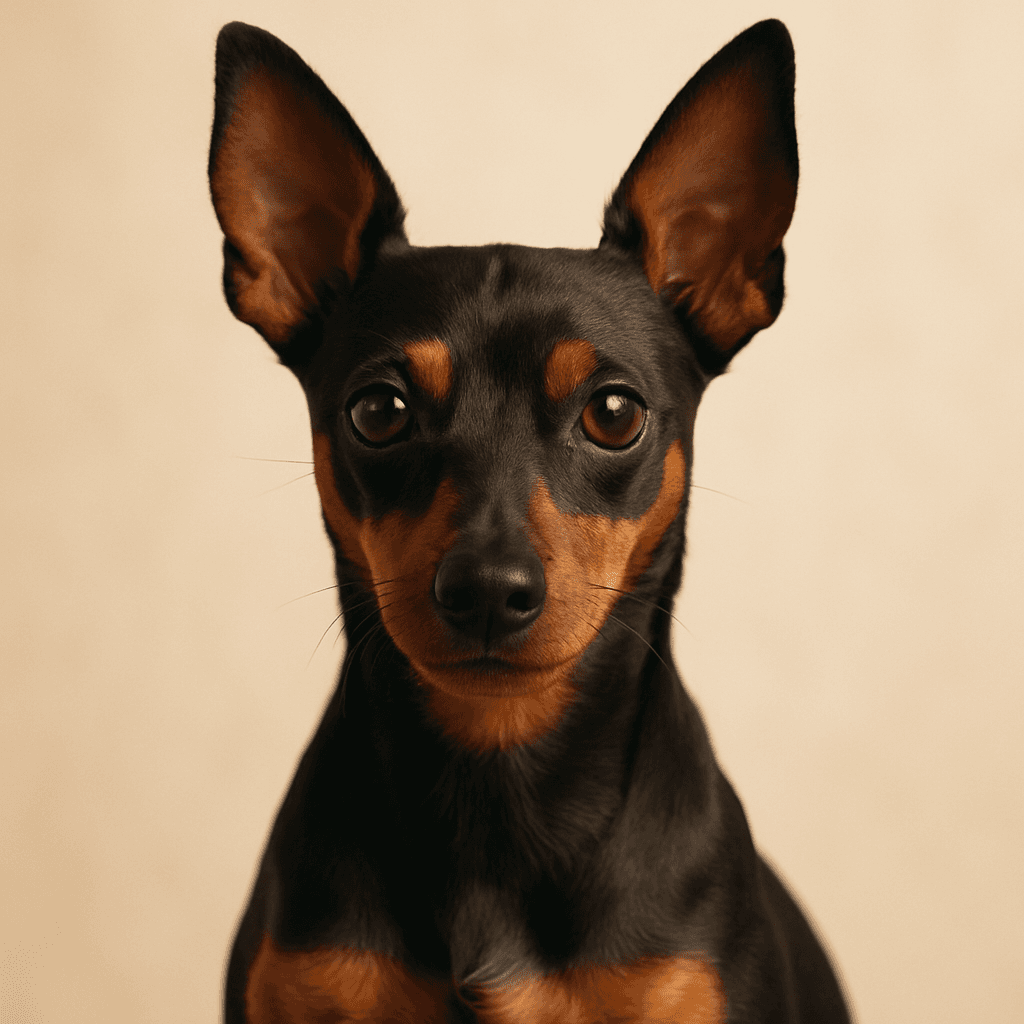
The Miniature Pinscher is a German toy breed of considerable antiquity, developed in Germany over several centuries from small terrier and spitz-type dogs, possibly including the German Pinscher and Italian Greyhound, to produce a compact, fearless and dynamic small dog used primarily for ratting in stables and homes. Despite a superficial physical similarity, the Miniature Pinscher is entirely unrelated to the Dobermann, which was developed in the late nineteenth century - the Min Pin existed centuries before the Dobermann was created, and the two breeds share no direct breeding connection. The Miniature Pinscher was first shown in Germany in the 1880s and is registered by the Kennel Club in the Toy Group. The breed is small, compact and elegantly built with a short, hard, smooth coat, erect ears and the distinctive high-stepping hackney gait that is unique to the breed and one of its most immediately recognisable characteristics. The hackney gait - a high lift of the forelegs in movement - is a breed hallmark and a distinct feature in the show ring. Coat colours include red, black and rust, and chocolate and rust. Adults typically stand 25 to 30 centimetres at the shoulder and weigh 4 to 5 kilograms. The character is bold, fearless, assertive and energetic - earning the breed its self-styled title of King of Toys. The Miniature Pinscher does not behave as a small dog in any conventional sense; it is confident, curious, determined and possessed of a self-assurance that can surprise owners accustomed to more deferential toy breeds. It is devoted and affectionate with its own family but can be reserved with strangers, alert and vocal as a watchdog, and persistent in pursuing whatever it has decided to investigate. The prey drive is genuine and the breed is an accomplished escape artist - small enough to fit through gaps that larger dogs cannot and motivated enough to find them. Secure fencing and vigilance in the environment are essential. Off-lead recall requires dedicated training as the hunting instinct can override commands when the Min Pin is engaged with something interesting. Training is entertaining but requires patience and consistency. The breed is intelligent and learns quickly but is not naturally biddable - it thinks for itself and finds repetitive training tedious. Short, positive, varied sessions with high-value rewards produce far better results than formal drill. Health considerations include Legg-Calve-Perthes Disease, a condition affecting the hip joint documented in the breed. Patellar Luxation is a concern in all toy breeds and assessment of both parents is advisable. Progressive Retinal Atrophy has been documented. Purchase prices from KC-registered, health-tested breeders range from £800 to £1,500. Monthly running costs average £55 to £100. The Miniature Pinscher Club is the primary resource for breed information, health testing guidance, responsible breeders and rescue contact.
Quick facts
Meet Our Miniature Pinschers
Register your dog on My Dog and it will appear here automatically.
Miniature Pinscher Photos
No photos yet. Be the first to share yours.
Add a photoActivity Feed
How much exercise does your Miniature Pinscher really need each day?
A lot more than the small size leads people to believe. My Min Pin needs at least 45 to 60 minutes of vigorous activity daily, and vigorous is the key word. A gentle stroll is not going to cut it. He is explosive, fast and intensely curious about everything, and an under-exercised Min Pin will channel all that energy into barking, destruction and general chaos indoors. The prey drive is the significant practical issue around off-lead exercise: his recall is decent because I worked hard on it, but I am very selective about where I let him off. Anywhere near traffic or unfenced ground is off the table. Secure dog fields are excellent for him because he genuinely needs to run. Mental stimulation through training and games counts too, and short training sessions in the evening take the edge off on days when the weather limits the walk.
30 June 2026
Any health issues to watch for with Miniature Pinschers?
Legg-Calve-Perthes Disease is the one to ask breeders about specifically: it affects the femoral head and radiographic assessment of both parents is recommended. Patellar luxation is also common in toy breeds, so ask whether the parents have been assessed and watch for any skipping or intermittent lameness on a back leg in the dog itself. PRA has been documented in the breed so eye testing is worth asking about. The Miniature Pinscher Club maintains health testing guidance and is worth consulting before you look for a puppy, because knowing what questions to ask a breeder before you visit is far more useful than finding out about it afterwards. Dental care is important in small breeds generally, so start toothbrushing early. Insurance is worthwhile because orthopaedic issues in small dogs, while less expensive than in giant breeds, are not trivial.
30 June 2026
What's the one thing you wish you'd known before getting a Miniature Pinscher?
That the boldness and the stubbornness are features of the breed, not problems to be fixed, and you will be much happier if you approach training with that understanding from the start. My Min Pin is genuinely funny and entertaining and I adore him, but he has opinions and he is not afraid to act on them. Recall specifically took far more consistent work than I expected because when something interesting moves he wants to chase it and my voice comes a distant second in that moment. I built recall in boring environments with very high-value treats before I even thought about trying it anywhere distracting. The other thing is socialisation: he can be reserved with strangers and alert-barks persistently if he decides something is suspicious. Early positive exposure to a wide range of people and environments makes an enormous difference to how manageable that watchdog instinct is in daily life.
30 June 2026
What do you feed your Miniature Pinscher, and why?
A good quality small active breed complete food, in measured portions twice a day. He is energetic and needs appropriate calories to match, but the temptation to let a small dog free-feed or have lots of extras is real and I resist it. Dental health is a genuine consideration in this breed so I lean towards dry kibble rather than wet and I brush his teeth a few times a week. He has a healthy appetite and would happily eat far more than he should, so the portions are weighed rather than guessed. I check his body condition by feel every week or so: he should be lean with an obvious waist and ribs easy to feel. Extra weight on a small dog with any joint susceptibility is not a neutral outcome. He gets a few small training treats during sessions but I account for those in his daily food allowance.
30 June 2026
Miniature Pinscher of the Month
🏆 September 2026 -- Be the first nominee
Could be your dog.
The first dog registered in this community earns the first Dog of the Month nomination automatically.
Register your dogUpcoming Miniature Pinscher Meetups
No meetups planned yet. Be the first to organise one.
Sign in to organise a meetupCommunity Members
Be the first to join and become the Miniature Pinscher Founding Member.
Join Club