

Be the first to join. Keep the badge forever.
The first members of this community earn permanent Founding Member status. It shows on your profile and your dog's profile for as long as you're here.
- ✓Founding Member badge on your profile
- ✓Your dog featured first
- ✓First Dog of the Month nomination
- ✓Always free
⭐ Founding Member spots open
First to join gets the badge
🐕 Be the first dog registered
Add your Lab to the community
📷 Add the first photo
Start the photo wall
8
Discussions
0 members
8 discussions
About the Miniature Schnauzer
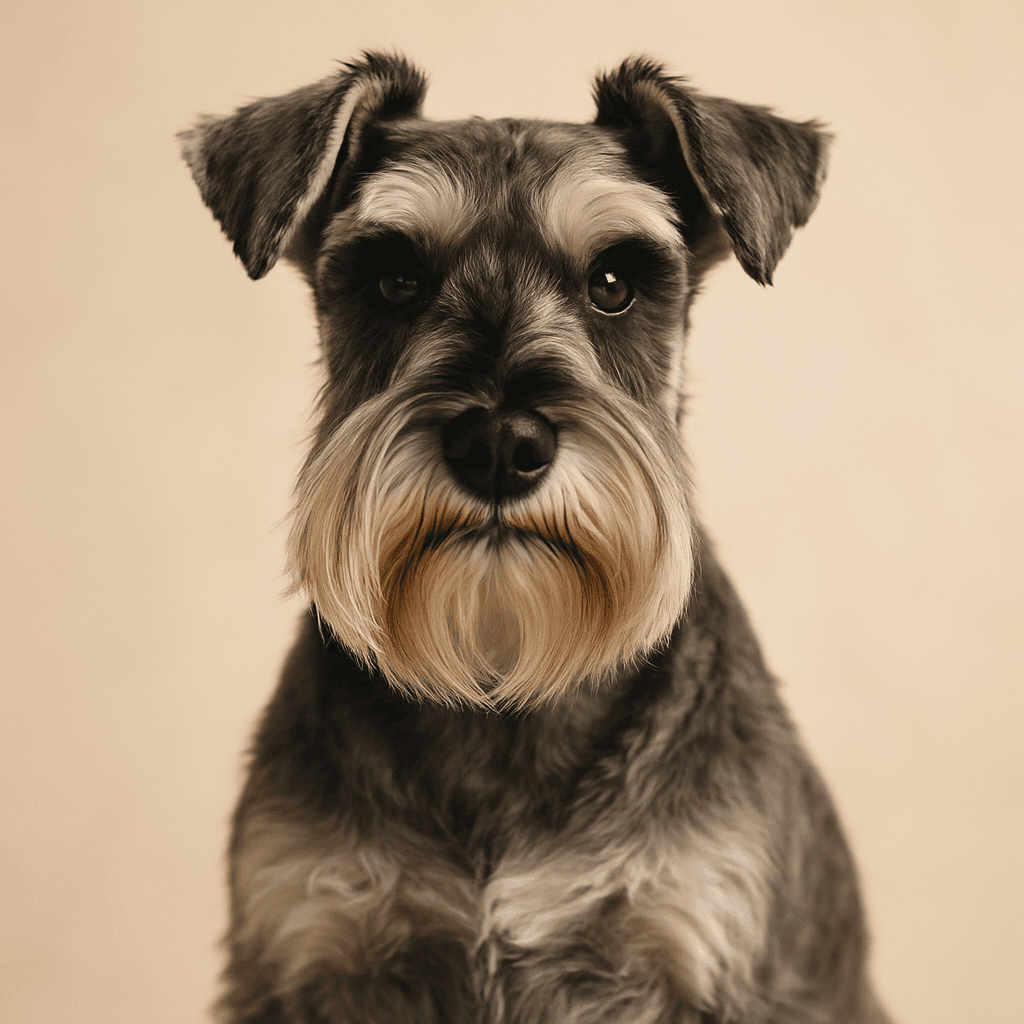
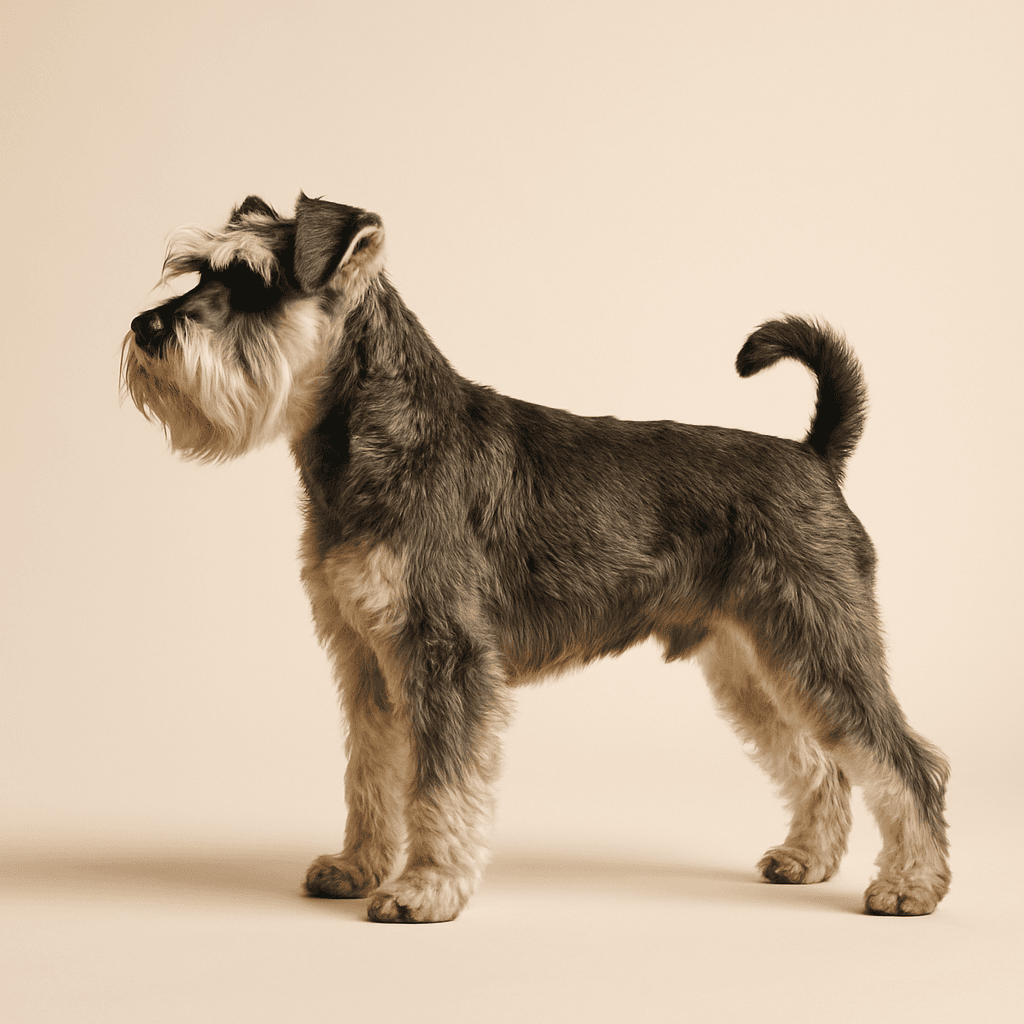
The Miniature Schnauzer is a spirited, alert and highly intelligent dog registered by the Kennel Club in the Utility Group. Despite its compact size, it has a distinctly terrier-like character: bold, independent and opinionated. It was originally developed in Germany as a small working dog and ratter, and that heritage is still evident in the breed's sharp alertness and confident nature. Miniature Schnauzers are one of the more adaptable breeds, suiting urban and flat living provided their exercise and mental stimulation needs are met. They are sociable with their family, generally good with children and reasonably sociable with other dogs when well socialised. Their non-shedding coat makes them popular with owners who prefer a lower-shedding dog, though they require regular professional grooming every six to eight weeks. Health-wise, the breed has some notable predispositions. Hyperlipidemia, an abnormally high level of fats in the blood, is common in the breed and can cause pancreatitis and other complications. Diet management is important for affected dogs. Urolithiasis (bladder and kidney stones) occurs at higher rates than in many other breeds, and hereditary cataracts are monitored through the KC Eye Scheme. These conditions are manageable but require owner awareness and veterinary monitoring. The Miniature Schnauzer is one of the longer-lived small breeds, with a typical lifespan of 12 to 15 years. They are highly food-motivated, which makes training effective, though their independent character means consistency and patience are required. Purchase prices from KC-registered, health-tested breeders typically range from £800 to £1,500. Their characteristic beard, eyebrows and wiry double coat are defining features requiring hand-stripping to maintain correct texture, though most pet owners choose clipping. Both approaches are valid depending on your preference and your groomer's skills. A hand-stripped coat has better texture and colour; a clipped coat is softer but perfectly manageable for a pet. For owners who appreciate a characterful, intelligent companion that fits comfortably into urban living and adapts well to a range of household setups, the Miniature Schnauzer is an excellent choice. The dietary awareness required around pancreatitis is manageable once established as a routine, and the grooming commitment, while real, produces a distinctive and attractive dog. Enrol in a puppy class early, establish the dietary ground rules from day one, and you will have a lively, devoted companion for the next 12 to 15 years. Their adaptability to urban living, non-shedding coat and long lifespan make them consistently popular. Research the diet requirements before you buy, speak to Miniature Schnauzer owners, and buy from a breeder who provides eye test results and KC registration.
Quick facts
Meet Our Miniature Schnauzers
Register your dog on My Dog and it will appear here automatically.
Miniature Schnauzer Photos
No photos yet. Be the first to share yours.
Add a photoActivity Feed
How much exercise does your Miniature Schnauzer really need each day?
Somewhere between one and two hours a day, and do not be misled by the compact size into thinking they are low-energy. They are not. My Miniature Schnauzer gets a proper morning walk and a shorter evening walk, plus I do scent work and training games at home on top of that. The mental exercise is genuinely as important as the physical: a Schnauzer that has been walked but not mentally engaged is still a restless dog. The barking goes up noticeably when she is under-stimulated. In terms of off-lead exercise, I worked hard on recall before trusting her in open spaces because the terrier tendency to follow interesting things is real. She is adaptable to flat living as long as the commitment is actually there. People sometimes choose her breed thinking small equals easy. Small just means the package is compact, not the requirement.
30 June 2026
Any health issues to watch for with Miniature Schnauzers?
Pancreatitis is the big one and it sneaks up on you. The breed has a genuine predisposition to hyperlipidemia, elevated blood fats, which makes them significantly more prone to pancreatitis than most other breeds. I did not know this before I got mine. Now I feed a low-fat complete food, I give no table scraps at all, and her annual bloods include a lipid check. A pancreatitis episode is painful, distressing and expensive: treatment can run to several thousand pounds in a severe case. Urinary stones are the other one to know about: blood in the urine, straining, frequent urination are the signs to act on quickly. The KC Eye Scheme exists for hereditary cataracts and breeding dogs should be tested. Comedo Syndrome, the blocked follicle condition along the spine, is manageable with good grooming but needs to be caught early. Insurance from day one.
30 June 2026
What's the one thing you wish you'd known before getting a Miniature Schnauzer?
That the alert barking is a genuine breed characteristic and not something that will train away entirely, and you are far better off accepting that and managing it actively from puppyhood than expecting it to disappear. My Schnauzer announces the postman, delivery drivers, dogs outside, and anything else she deems significant. I taught a quiet cue early and it works reliably now, but I had to be consistent from the start. The other thing that caught me off-guard was how selectively she applies what she has learned. She is genuinely intelligent and picks up training quickly, but if she cannot see the point of something or the session has become repetitive she simply opts out. Harsh handling is useless: she just disengages and you lose the cooperation entirely. Positive reinforcement, short sessions, and keeping things interesting is the formula. Patience works. Pressure does not.
30 June 2026
What do you feed your Miniature Schnauzer, and why?
A low-fat complete dry food, specifically chosen with pancreatitis risk in mind. This is not optional for the breed: the hyperlipidemia predisposition is well established and diet is the primary management tool. I read labels and choose formulas with lower fat content rather than just picking a premium food and assuming it is fine. She gets two meals a day at set times, weighed rather than estimated, and I am strict about no fatty extras. No table scraps, no rich treats, nothing that could spike her blood lipids. Annual blood tests that include lipid levels are on my calendar every year. When her coat or skin shows any signs of irritation I discuss diet with the vet rather than guessing. Fresh water is always available. It sounds restrictive but it is genuinely just how you manage this breed responsibly, and a Schnauzer on the right diet is a healthy, lively dog for many years.
30 June 2026
Miniature Schnauzer of the Month
🏆 September 2026 -- Be the first nominee
Could be your dog.
The first dog registered in this community earns the first Dog of the Month nomination automatically.
Register your dogUpcoming Miniature Schnauzer Meetups
No meetups planned yet. Be the first to organise one.
Sign in to organise a meetupCommunity Members
Be the first to join and become the Miniature Schnauzer Founding Member.
Join Club