

Be the first to join. Keep the badge forever.
The first members of this community earn permanent Founding Member status. It shows on your profile and your dog's profile for as long as you're here.
- ✓Founding Member badge on your profile
- ✓Your dog featured first
- ✓First Dog of the Month nomination
- ✓Always free
⭐ Founding Member spots open
First to join gets the badge
🐕 Be the first dog registered
Add your Lab to the community
📷 Add the first photo
Start the photo wall
8
Discussions
0 members
8 discussions
About the Norwegian Elkhound
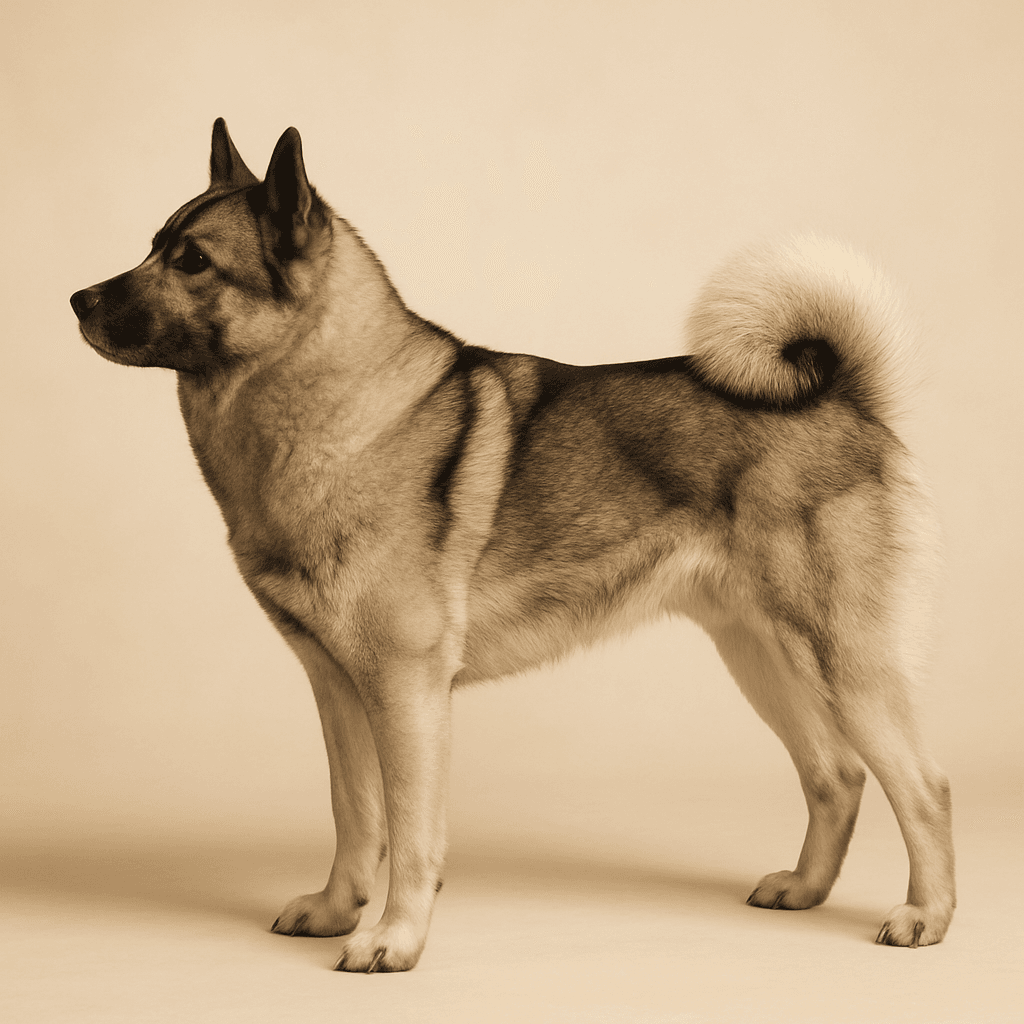
The Norwegian Elkhound is one of the oldest and most historically significant dog breeds in the world, a Scandinavian hunting spitz whose ancestors have been working alongside humans in the Norse lands for at least six thousand years - skeletal remains of dogs closely resembling the modern Elkhound have been found in Norwegian archaeological sites dating to 4000 BC. The breed was developed and refined over millennia to track, hunt and hold elk, bear and other large game in the challenging terrain of Scandinavian forests, working at close quarters with large and dangerous quarry by locating prey with its exceptional nose, following trails across rough country and then holding the quarry at bay with a characteristic quick-darting bark until the hunter could close in. The breed was first presented to the outside world at a show in Denmark in 1877 and was registered by the Kennel Club in the Hound Group, reflecting its hunting heritage. The Norwegian Elkhound is a compact, strongly built and well-balanced spitz of medium size. The coat is the breed's most immediately striking feature - a thick, hard, self-cleaning double coat in silver-grey with characteristic black tips on the outer coat. The undercoat is soft, dense and white. The tail curls tightly over the back in typical spitz fashion. Adults typically stand 49 to 52 centimetres at the shoulder and weigh 20 to 23 kilograms. The character is bold, loyal and deeply devoted to its own family - combining the affectionate loyalty of a companion dog with the vigour, independence and self-reliance of a working hunter. The breed is good with children and families it has been raised with, energetic and playful in daily life, and steady and confident in new situations. The hunting background instils a degree of independent judgement that is always present and must be understood and managed rather than overridden. The prey drive is genuine and the breed's tracking instinct is strong. Recall must be thoroughly trained before off-lead work in open terrain is attempted. The breed is vocal and will bark to announce arrivals and when engaged outdoors. Training requires positive reinforcement and an understanding of the breed's independent character. Harsh methods produce resistance and resentment. The Elkhound responds to owners who earn its respect through calm, consistent handling. Health considerations include Progressive Retinal Atrophy, for which DNA testing of breeding stock is essential. Fanconi Syndrome and Hip Dysplasia have also been documented. Purchase prices from KC-registered, health-tested breeders range from £1,000 to £2,000. Monthly running costs average £90 to £150. The Norwegian Elkhound Association of Great Britain is the primary resource for breed information, health testing, responsible breeders and rescue contact.
Quick facts
Meet Our Norwegian Elkhounds
Register your dog on My Dog and it will appear here automatically.
Norwegian Elkhound Photos
No photos yet. Be the first to share yours.
Add a photoActivity Feed
How much exercise does your Norwegian Elkhound really need each day?
At least 90 minutes of vigorous daily exercise and this breed will remind you if you fall short. The Elkhound was developed for endurance hunting over long distances in terrain that would finish most dogs, and that history shows up every day. Casual walks are not what this dog was made for. I do longer off-lead sessions in a secure area where possible, and I have put real work into recall because the prey drive means a squirrel or a deer scent can end a walk unilaterally if the foundation is not solid. Sustained vigorous exercise is what the breed needs, not just time outdoors. I have found that the Elkhound who gets this is genuinely calm and steady indoors. The one who does not gets creative about entertainment and you generally do not enjoy the results.
30 June 2026
Any health issues to watch for with Norwegian Elkhounds?
Progressive Retinal Atrophy is the most significant inherited condition in the breed and DNA testing is essential, not optional. I would not buy from any breeder who could not produce clear PRA certificates for both parents. This is one of those conditions where responsible breeding genuinely prevents suffering, so the absence of testing is a meaningful red flag. Beyond PRA, Fanconi Syndrome, which is a kidney condition, has been documented in the breed and is worth being aware of. Hip Dysplasia testing is also recommended. My Elkhound has been healthy but I spent considerable time verifying the health testing on his parents before I committed. The breed is robust and active, but these hereditary conditions are real and the due diligence on health testing is non-negotiable when choosing a puppy.
30 June 2026
What's the one thing you wish you'd known before getting a Norwegian Elkhound?
That the independent hunting mind is not something you work around, it is the whole dog. My Elkhound is devoted to me and I would not swap him, but he operates on a model where he respects people who have earned that respect through calm, consistent handling. Punitive or heavy-handed methods produce flat resistance, not compliance. Positive reinforcement works well, but you have to be consistent and patient because he does not simply defer to authority. In the field, historically, this dog made its own decisions without instruction, and traces of that remain. Recall took real dedicated work and early training was important. The reward is a dog who is remarkably steady indoors when his exercise needs are met, calm, loyal, and genuinely impressive company. But you earn that rather than assuming it.
30 June 2026
What do you feed your Norwegian Elkhound, and why?
A high-quality complete food for an active medium-to-large breed, two meals a day. The Elkhound has a robust appetite and I weigh portions rather than estimating, because this breed will eat more than it needs if offered the opportunity and excess weight on a dog this size has real long-term joint implications. Body condition checking is part of my routine, once a week I run my hands along his ribcage. He should not feel padded. The dense double coat makes visual assessment unreliable, which is an important point for all Elkhound owners. I have not needed to do anything complicated with his diet. The basics done consistently, high-quality food, measured portions, two meals, fresh water, have kept him in excellent condition.
30 June 2026
Norwegian Elkhound of the Month
🏆 September 2026 -- Be the first nominee
Could be your dog.
The first dog registered in this community earns the first Dog of the Month nomination automatically.
Register your dogUpcoming Norwegian Elkhound Meetups
No meetups planned yet. Be the first to organise one.
Sign in to organise a meetupCommunity Members
Be the first to join and become the Norwegian Elkhound Founding Member.
Join Club