
Be the first to join. Keep the badge forever.
The first members of this community earn permanent Founding Member status. It shows on your profile and your dog's profile for as long as you're here.
- ✓Founding Member badge on your profile
- ✓Your dog featured first
- ✓First Dog of the Month nomination
- ✓Always free
⭐ Founding Member spots open
First to join gets the badge
🐕 Be the first dog registered
Add your Lab to the community
📷 Add the first photo
Start the photo wall
8
Discussions
0 members
8 discussions
About the Norwich Terrier
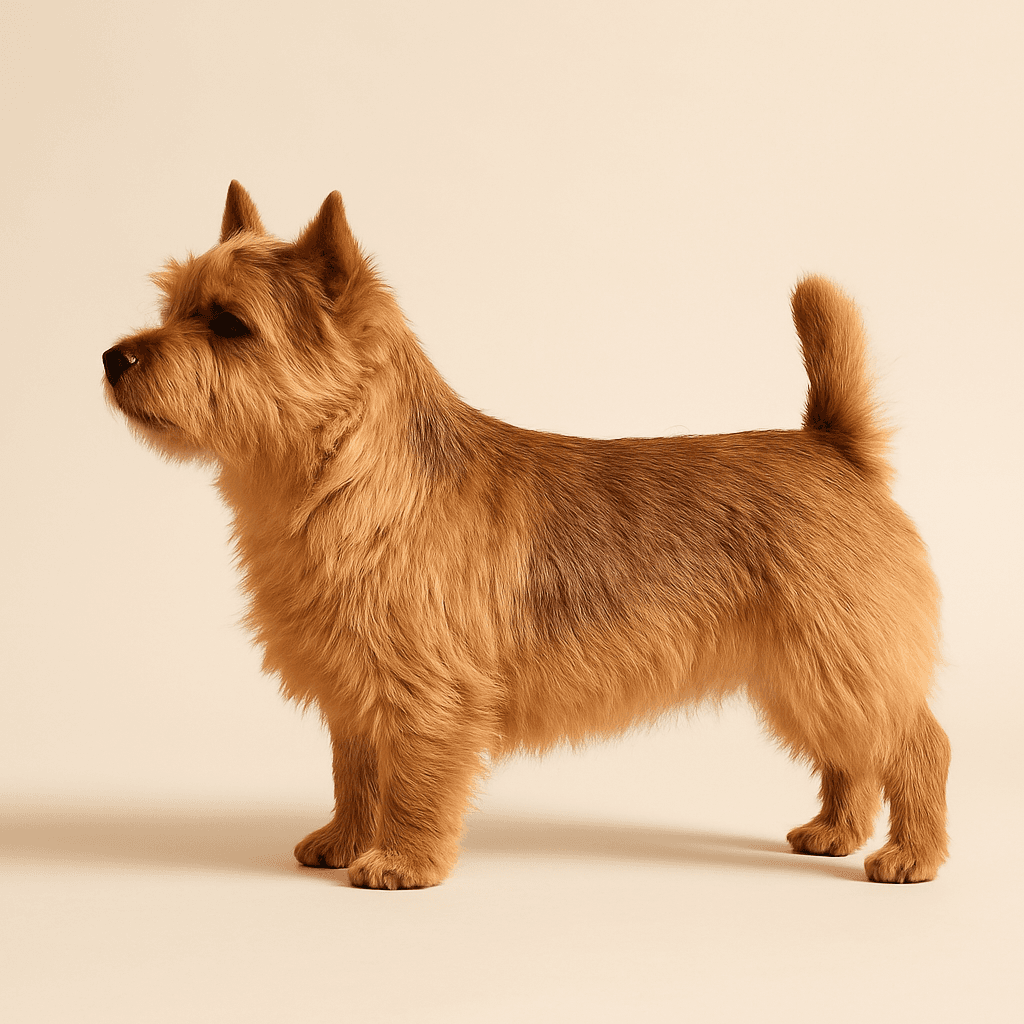
The Norwich Terrier is one of the world's smallest working terriers, a compact, hardy and spirited British breed originating in East Anglia in the nineteenth and early twentieth centuries alongside its close relative, the Norfolk Terrier. The two breeds share a common origin and were shown together under the Norwich Terrier name until 1964, when the Kennel Club granted them separate breed status on the basis of ear type: the Norwich Terrier has fully erect prick ears, while the Norfolk Terrier has dropped ears that fold forward against the head. The Norwich Terrier is registered by the Kennel Club in the Terrier Group. The Norwich Terrier is a compact, low-set and sturdy small terrier with a hard, wiry double coat in red, red grizzle, black and tan, or grizzle and tan. The prick ears give the face a bright, alert and somewhat foxy expression that is immediately characteristic of the breed. Adults typically stand around 25 to 26 centimetres at the shoulder and weigh 5 to 5.5 kilograms - small in stature but substantial in character. The character is lively, bold and affectionate, with the happy and outgoing quality that the East Anglian terrier breeds share. The Norwich is devoted to its own family, good with children who handle dogs respectfully, and - unusually for the terrier group - generally sociable and tolerant with other dogs. It is alert and vocal, a natural watchdog in a very small body, and playful and energetic in daily life. The working terrier heritage is present in the prey drive and the fundamental self-reliance of the breed, but these qualities are expressed in a warm and sociable package. Training is enjoyable with the Norwich Terrier. The breed is intelligent and responsive to positive reinforcement, benefiting from short, engaging sessions rather than repetitive drill. Early socialisation is straightforward given the naturally outgoing character. Recall requires careful training given the prey drive - small pets in the household also need careful management given the ratting instinct. A significant health consideration specific to the Norwich Terrier is Upper Airway Syndrome, a condition affecting the upper respiratory tract that has been identified as a breed health priority. The Norwich Terrier Club and its health committee actively monitor and research this condition, and prospective buyers should enquire about the respiratory health of both parents. Mitral Valve Disease and eye conditions are also documented. Purchase prices from KC-registered, health-tested breeders range from £800 to £1,500. Monthly running costs average £55 to £95. The Norwich Terrier Club is the primary resource for breed information, health testing guidance, responsible breeders and rescue contact.
Quick facts
Meet Our Norwich Terriers
Register your dog on My Dog and it will appear here automatically.
Norwich Terrier Photos
No photos yet. Be the first to share yours.
Add a photoActivity Feed
How much exercise does your Norwich Terrier really need each day?
Around 45 to 60 minutes daily, and this is a dog that will find its own entertainment if that is not provided, which is rarely entertaining for anyone else in the house. My Norwich is energetic in a way that catches people off guard given the size. She runs properly, investigates thoroughly and takes full advantage of any secure off-lead time. Mental stimulation matters enormously, a good sniff walk or a short training session adds as much value as additional mileage. The hunting instinct is present and recall around anything that moves in a hedge requires investment early on. She is a proper working terrier in a very small body and she does not particularly care about the size discrepancy. Managing that energy through daily exercise keeps her settled and good-natured at home.
30 June 2026
Any health issues to watch for with Norwich Terriers?
Upper Airway Syndrome is actively monitored by the Norwich Terrier Club and it is a genuine breed health priority, not a minor footnote. Breeding animals should be assessed, and this is something worth asking any breeder about directly. Beyond that, Mitral Valve Disease is a concern in small breeds as they age, and heart testing of breeding stock is recommended. Eye conditions have also been documented. The Norwich Terrier Club maintains health testing guidance and is the right reference point for what responsible breeders should be doing. When I was finding my dog I treated these health questions as basic due diligence, any breeder who was vague or dismissive about health testing was not a breeder I would deal with. The breed is generally hardy but these conditions are worth understanding before you commit.
30 June 2026
What's the one thing you wish you'd known before getting a Norwich Terrier?
That the warmth and sociability of this breed is genuine and consistent in a way that is not always true of terriers. My Norwich is bold and energetic and has all the terrier spirit you would expect, but she expresses it with a happiness and friendliness that makes her genuinely easy to live with. What I had not fully anticipated was how vocal she would be as a watchdog. She announces things. Arrivals, departures, foxes in the garden, pigeons on the roof. It is not aggressive, it is just very enthusiastic reporting. The training side is more manageable than I expected because she is genuinely responsive and engaged, more so than harder terrier types I have met. Early socialisation was straightforward because the naturally outgoing disposition works in your favour. Recall around prey is the one area that needs real dedicated early work.
30 June 2026
What do you feed your Norwich Terrier, and why?
A high-quality complete food designed for small active breeds, measured and given in two meals a day. The Norwich has a robust appetite that is disproportionate to the size of the dog, and I mean that as a gentle warning. She would eat more than is good for her without any sign of protest. I weigh her food rather than estimating because even small overfeeding accumulates quickly in a dog this small, and maintaining a healthy weight matters for joint health over a lifetime. Two meals rather than one suits her better and keeps her more settled through the day. Nothing complicated with the diet because there is no need for anything complicated. Good quality food, correct portions, consistent routine.
30 June 2026
Norwich Terrier of the Month
🏆 September 2026 -- Be the first nominee
Could be your dog.
The first dog registered in this community earns the first Dog of the Month nomination automatically.
Register your dogUpcoming Norwich Terrier Meetups
No meetups planned yet. Be the first to organise one.
Sign in to organise a meetupCommunity Members
Be the first to join and become the Norwich Terrier Founding Member.
Join Club