
Be the first to join. Keep the badge forever.
The first members of this community earn permanent Founding Member status. It shows on your profile and your dog's profile for as long as you're here.
- ✓Founding Member badge on your profile
- ✓Your dog featured first
- ✓First Dog of the Month nomination
- ✓Always free
⭐ Founding Member spots open
First to join gets the badge
🐕 Be the first dog registered
Add your Lab to the community
📷 Add the first photo
Start the photo wall
8
Discussions

0 members
8 discussions
About the Nova Scotia Duck Tolling Retriever
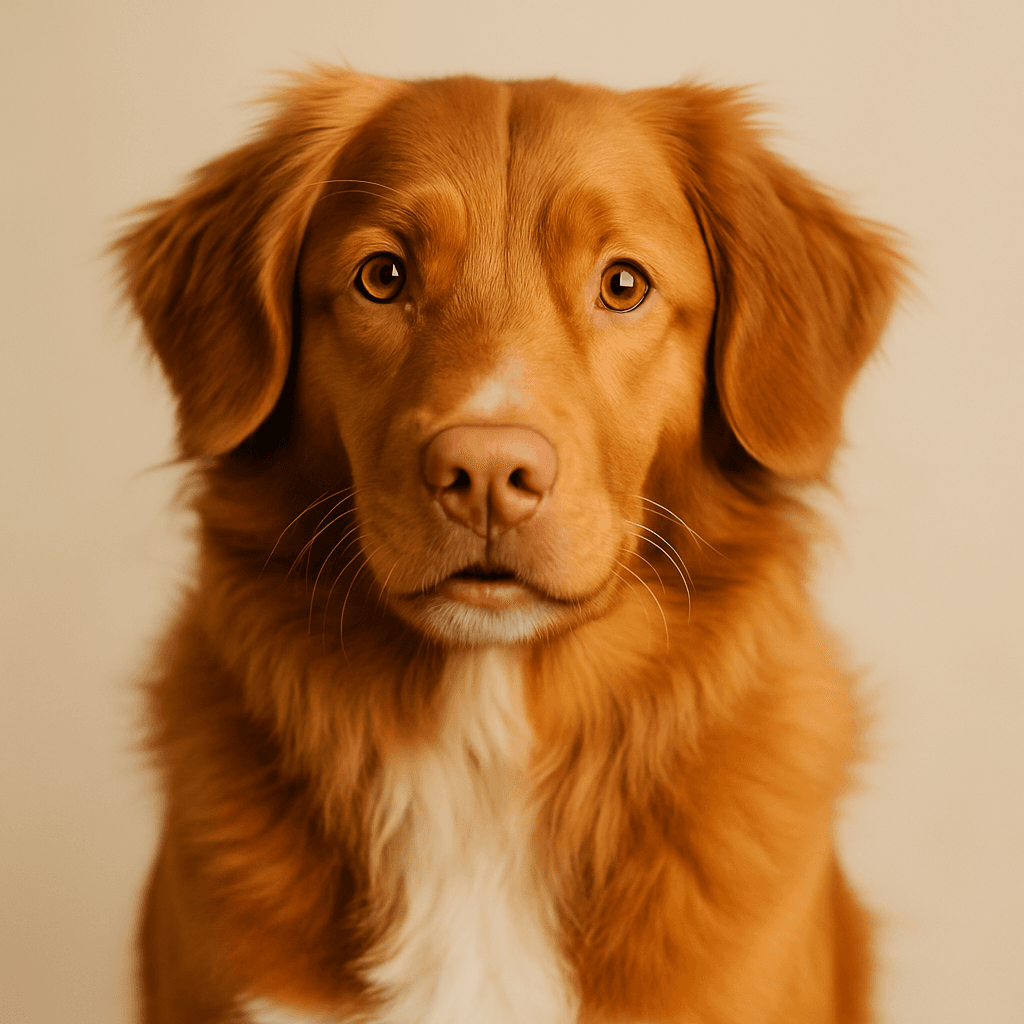
The Nova Scotia Duck Tolling Retriever, universally known as the Toller, is the smallest of the recognised retriever breeds and one of the most intelligent and versatile working gundogs in existence, developed over several centuries in the Little River district of Yarmouth County, Nova Scotia, Canada, to assist hunters by exploiting a natural hunting technique known as tolling. Tolling describes the behaviour of certain foxes and other predators that would play conspicuously at the water's edge, attracting curious wildfowl close enough to be shot - by training and selectively breeding dogs to replicate this playful, animated behaviour at the water's margin, hunters could lure birds within range before sending the same dog to retrieve the shot quarry. The breed was recognised by the Canadian Kennel Club in 1945 and has subsequently been recognised internationally. In the United Kingdom it is registered by the Kennel Club in the Gundog Group. The Toller is a medium-sized, athletic and elegant retriever with a beautiful, dense, water-resistant double coat in shades of golden red to copper red, typically with white markings on the feet, chest, blaze and tail tip. The expression is alert and intelligent. The tail is heavily feathered and carried with a high curve when the dog is excited or working - the characteristic white tail tip acting as the visual lure during tolling activity. Adults typically stand 45 to 51 centimetres at the shoulder and weigh 17 to 23 kilograms. The character is alert, energetic and intensely engaged - more demanding and intense in temperament than the more familiar Labrador or Golden Retriever, and considerably more suited to active working or sporting households than to a purely domestic companion role. The Toller is affectionate and devoted to its family, good with children and generally sociable with other dogs, but it has a working drive and energy level that requires genuine daily management through vigorous exercise and mental stimulation. The breed is among the most trainable of all gundogs. It responds with exceptional enthusiasm to positive reward-based training and has excelled in competitive obedience, agility, field trials and nose work. The intelligence that makes it a pleasure to train also means that boredom is genuinely problematic - an under-stimulated Toller will find its own outlets, rarely to the owner's satisfaction. Health considerations are important. Progressive Retinal Atrophy (prcd-PRA) requires DNA testing of both parents. Collie Eye Anomaly is documented. Hip Dysplasia testing is strongly recommended. Addison's Disease has a higher documented incidence in the breed than the general dog population and owners should be aware of the signs. Purchase prices from KC-registered, health-tested breeders range from £1,200 to £2,500. Monthly running costs average £90 to £150. The Nova Scotia Duck Tolling Retriever Club UK is the primary resource for breed information, health testing requirements, responsible breeders and rescue contact.
Quick facts
Meet Our Nova Scotia Duck Tolling Retrievers
Register your dog on My Dog and it will appear here automatically.
Nova Scotia Duck Tolling Retriever Photos
No photos yet. Be the first to share yours.
Add a photoActivity Feed
How much exercise does your Nova Scotia Duck Tolling Retriever need each day?
At least 90 minutes of vigorous, purposeful exercise daily, and I emphasise purposeful because a Toller doing a slow amble is not the same as a Toller who has actually done something. My dog was bred for demanding fieldwork and he has the stamina to match. Swimming is his favourite and a brilliant way to work him hard without stressing his joints. We also do nose work and retrieving sessions, both of which engage the working instinct in a way that leaves him genuinely satisfied rather than just tired. If the exercise is adequate and mentally engaging, he is outstanding company at home: calm, attentive and happy. If it is not, the restlessness is obvious and the problem behaviour follows quickly. This is not a dog for people who want a gentle, low-maintenance retriever.
30 June 2026
Any health issues to watch for with Nova Scotia Duck Tolling Retrievers?
Progressive Retinal Atrophy (prcd-PRA) is the non-negotiable one. DNA testing of both parents is mandatory for responsible breeding and I would not consider a puppy from untested parents, full stop. Collie Eye Anomaly has also been documented. Hip Dysplasia testing is strongly recommended. The one that people are sometimes less aware of is Addison's Disease, which has a higher incidence in Tollers than in the general dog population. Addison's can be difficult to diagnose because the symptoms are vague and variable, so it is worth knowing it is a breed predisposition and mentioning it to your vet if your dog is showing unexplained lethargy or digestive upset. The Nova Scotia Duck Tolling Retriever Club UK maintains current health testing requirements and is a good reference for what breeders should be doing.
30 June 2026
What do you wish you knew before getting a Nova Scotia Duck Tolling Retriever?
That the intensity of this dog is a constant feature, not something that switches off. My Toller is exceptional at training, genuinely one of the most capable dogs I have encountered, and he loves it. The responsiveness to positive reward-based methods is remarkable. But that same intelligence means he is always on, always engaged, always noticing things and anticipating what happens next. He is not a dog who quietly rests in the background while you get on with your day. He is interested in everything you do and he has expectations about when things happen. The tolling behaviour, that exuberant, playful, almost theatrical quality, surfaces in all sorts of contexts and it is delightful once you understand it. He is more intense in character than a Labrador or Golden and people who come to him expecting that kind of easy-going companion are sometimes surprised.
30 June 2026
What do you feed your Nova Scotia Duck Tolling Retriever, and why?
A high-quality complete food for an active medium breed, fed in two meals daily. My Toller is lean and athletic and I feed to support that. I adjust portions based on what we have been doing. Training-heavy weeks with a lot of swimming get slightly more than quieter weeks, and I monitor his condition by feel rather than just by eye. The goal is a dog who is in proper working condition: visible waist, ribs palpable without pressing, good muscle. He is not a breed prone to obesity but the athletic condition is worth actively maintaining rather than just assuming. Fresh water always available. Nothing complicated required and I have not found any reason to do anything specialist with his diet.
30 June 2026
Nova Scotia Duck Tolling Retriever of the Month
🏆 September 2026 -- Be the first nominee
Could be your dog.
The first dog registered in this community earns the first Dog of the Month nomination automatically.
Register your dogUpcoming Nova Scotia Duck Tolling Retriever Meetups
No meetups planned yet. Be the first to organise one.
Sign in to organise a meetupCommunity Members
Be the first to join and become the Nova Scotia Duck Tolling Retriever Founding Member.
Join Club