

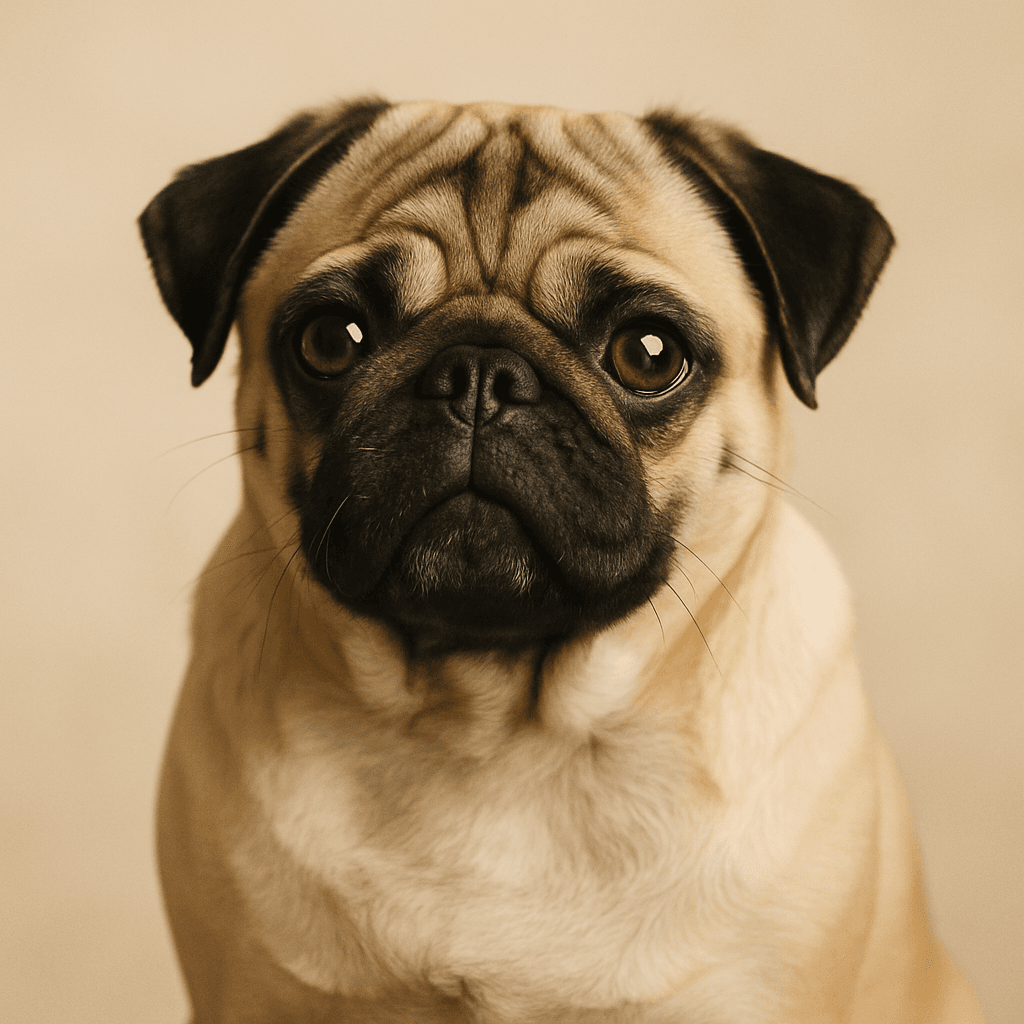
Be the first to join. Keep the badge forever.
The first members of this community earn permanent Founding Member status. It shows on your profile and your dog's profile for as long as you're here.
- ✓Founding Member badge on your profile
- ✓Your dog featured first
- ✓First Dog of the Month nomination
- ✓Always free
⭐ Founding Member spots open
First to join gets the badge
🐕 Be the first dog registered
Add your Lab to the community
📷 Add the first photo
Start the photo wall
8
Discussions
0 members
8 discussions
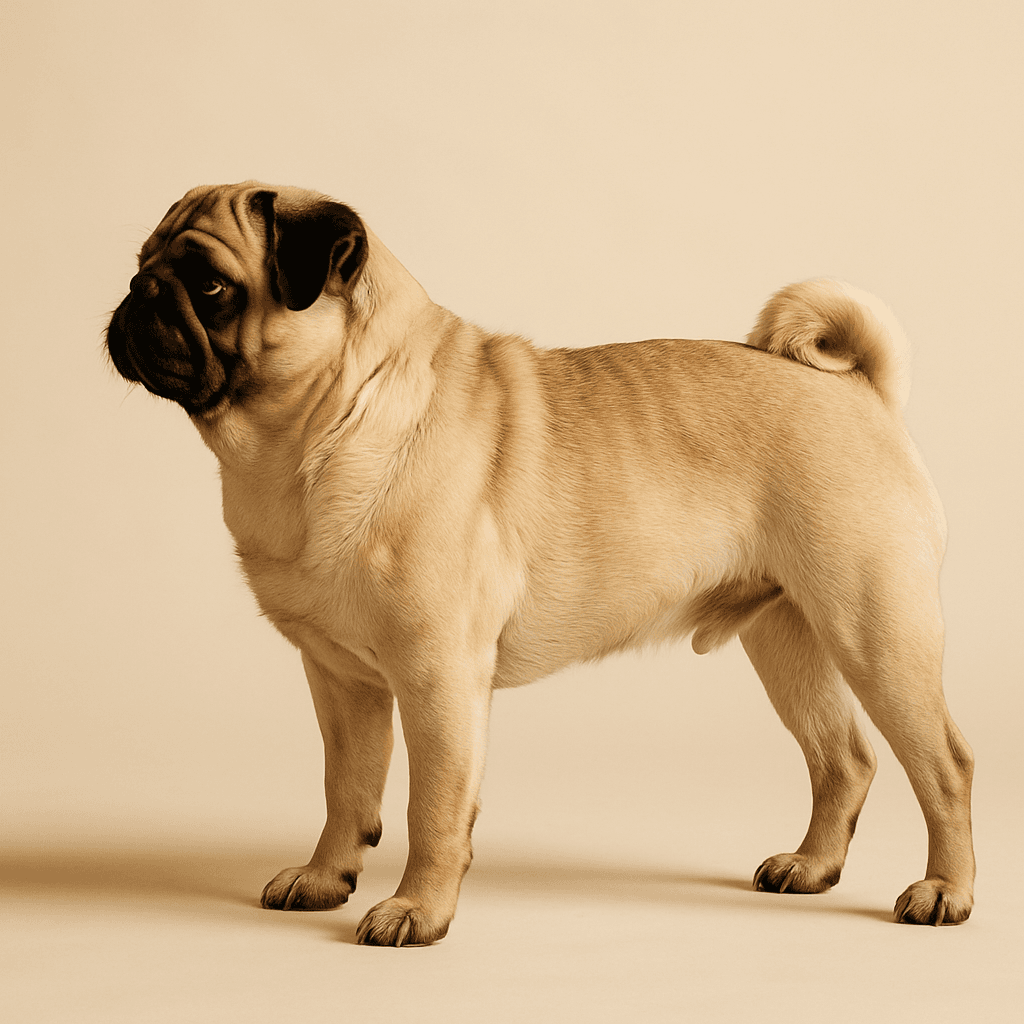
About the Pug
Pugs are charming, comical and deeply affectionate dogs that have been companion animals for centuries, originally bred for Chinese emperors before becoming popular across European courts and eventually throughout the UK. Registered with the Kennel Club in the Toy Group, they are compact, sociable dogs with an enormous personality and a face that makes them instantly recognisable. They are also a brachycephalic breed, and this shapes everything about their care, their health costs, and the life expectancy of an owner's veterinary bills. Brachycephalic Obstructive Airway Syndrome, or BOAS, is the defining health challenge for Pugs: their flat-faced conformation produces narrowed nostrils, an elongated soft palate and a restricted airway. The KC Respiratory Function Grading Scheme exists specifically to help breeders assess and reduce the severity of BOAS in their breeding dogs. Any reputable Pug breeder should be testing their dogs under this scheme. Beyond BOAS, prospective Pug owners must be aware of Pug Dog Encephalitis, known as PDE. This is a fatal, breed-specific inflammatory brain condition that affects approximately one to two per cent of Pugs, typically presenting in young adults between the ages of two and three years. There is no cure and no DNA test currently available. It is a factual reality of the breed that owners should understand, not to discourage ownership, but to ensure awareness. Pugs are also at significant risk of eye injuries and conditions due to their prominent, shallow-set eyes. Proptosis, in which the eye partially or fully prolapses from the socket, is a genuine risk with this breed and constitutes a veterinary emergency requiring immediate treatment. Corneal ulcers, entropion and other eye conditions are also common. All of this makes the Pug one of the more expensive breeds to own on a lifetime basis. Insurance costs of £80 to £150 per month are typical, and owners should expect to need that insurance at some point during the dog's life. A Pug bought without comprehensive lifetime cover is a significant financial risk. In terms of character, Pugs are warm, playful and sociable dogs that rarely show aggression and adapt well to many living situations, including flats. They do not need large amounts of exercise and are poor candidates for vigorous activity due to their respiratory limitations. They thrive on human company and are happiest close to their people. Lifespan is typically 12 to 15 years. The Pug's popularity remains high in the UK, but it has increasingly attracted scrutiny from welfare organisations and veterinary bodies who note that the conformation itself causes suffering in many individuals. The responsible approach is to buy from breeders who are actively working within the KC health schemes to improve respiratory function, and to be honest about whether you are prepared for the health management this breed requires.
Quick facts
Meet Our Pugs
Register your dog on My Dog and it will appear here automatically.
Pug Photos
No photos yet. Be the first to share yours.
Add a photoWhat Pug Owners Need to Know About Health
Pugs carry a significant health burden that every prospective owner must understand clearly. **Brachycephalic Obstructive Airway Syndrome (BOAS)** is the most important health consideration. Narrowed nostrils, an elongated soft palate, a narrow trachea and sometimes everted laryngeal saccules all restrict airflow and make breathing harder for the dog in all conditions and impossible in heat or with exertion. The KC Respiratory Function Grading Scheme assesses breeding dogs from 0 (unaffected) to 3 (severely affected): only dogs graded 0 or 1 should be bred from. Surgical correction for severe BOAS costs £1,500 to £4,000. The PDSA consistently identifies brachycephalic breeds among the highest lifetime vet cost dogs in the UK. **Pug Dog Encephalitis (PDE)** is a fatal, breed-specific inflammatory brain condition affecting approximately one to two per cent of Pugs. It typically presents in dogs aged two to three years, causing seizures, behavioural changes, blindness and eventually death. There is no cure and no DNA screening test currently available. It is mentioned here factually so owners are aware it exists, not to create disproportionate alarm. **Eye conditions** are a serious and practical concern. Pugs have prominent, shallow-set eyes with very little protective bone structure around the orbit. Proptosis (prolapse of the eyeball from the socket) can occur with relatively minor trauma and is a veterinary emergency requiring immediate treatment to save the eye. Corneal ulcers are common due to the exposed position of the eyes. Entropion (inward-rolling eyelid) causes corneal irritation and requires surgical correction costing £300 to £800 per eye. **Skin fold dermatitis** develops in the prominent facial wrinkles if not cleaned and dried daily. Treatment costs £80 to £200 per episode. Monthly insurance typically costs £80 to £150. Comprehensive lifetime cover is essential. Typical lifespan is 12 to 15 years, though dogs with severe BOAS or other significant health conditions may have shorter, more medically intensive lives.
Pugs are one of the breeds where pet insurance is strongly recommended from day one. Compare Pug insurance
Activity Feed
How much exercise does your Pug really need each day?
Twenty to 30 minutes of walking daily, in cool conditions, is the honest safe limit for most adult Pugs. Not 45 minutes. Not a long summer afternoon walk. I plan every outing around the temperature and time of day: early morning or evening in summer, never in direct sun or on warm afternoons. Pugs cannot cool themselves effectively through panting and heatstroke can develop very quickly. I keep a cooling mat at home during warm months and I have genuinely cancelled walks when it felt too warm, regardless of what the forecast said. Swimming is not appropriate for this breed: their body shape and respiratory limitations make them poor swimmers and I would never leave my Pug unsupervised near water. The respiratory limitations shape every activity decision. If my Pug is breathing heavily, we stop. He will push through discomfort to stay engaged with me and that means the responsibility for reading when enough is enough sits entirely with me, not with him.
30 June 2026
Any health issues to watch for with Pugs?
I am going to be direct because I think prospective Pug owners deserve honesty. BOAS (Brachycephalic Obstructive Airway Syndrome) is the most significant ongoing health consideration. The narrow nostrils, elongated soft palate and narrow trachea restrict airflow in all conditions. Surgical correction for severe cases costs £1,500 to £4,000. Only buy from breeders whose dogs are graded 0 or 1 under the KC Respiratory Function Grading Scheme. Eye health is a daily practical concern: the prominent, shallow-set eyes are vulnerable to proptosis (the eyeball prolapsing from the socket) and corneal ulcers. Any suspected proptosis is an immediate emergency requiring same-day treatment. Skin fold dermatitis develops in the facial wrinkles without daily cleaning and drying. Pug Dog Encephalitis is a breed-specific inflammatory brain condition affecting around one to two per cent of Pugs, typically at two to three years old, with no cure currently available. Budget £80 to £150 monthly for comprehensive lifetime insurance. It is not optional.
30 June 2026
What's the one thing you wish you'd known before getting a Pug?
That the Pug's enthusiasm for being with you will override his own discomfort, and that makes you responsible for knowing when to stop in a way that is more active than with most breeds. He is genuinely joyful, sociable and endearing, all of that is real. But I have had to learn to read the subtle signs that he is struggling, slightly heavier breathing, a change in pace, a particular quality of panting, because he will keep going to stay close to me even when he should stop. The other thing I wish I had fully understood is the eye care. Keeping a close eye on those prominent, exposed eyes is just part of life with this breed. I know what a healthy eye looks like versus one that needs attention: squinting, excessive tearing, pawing at the face, any cloudiness. Quick action with eye issues matters much more than with a breed with more orbital protection. None of this diminishes how wonderful he is. But go in with clear eyes.
30 June 2026
What do you feed your Pug, and why?
A high-quality complete food for small breeds, in two measured meals daily with no free feeding. Weight management is more important in Pugs than in almost any other breed I can think of, because excess weight directly worsens respiratory function in a dog already compromised by its conformation. A lean Pug breathes more easily and lives more comfortably. I use a slow feeder bowl because he eats fast, which causes digestive upset, and the shallow design suits his flat face. Treats are counted within his daily calorie allowance, never added on top. I check his body condition regularly: visible waist, ribs feelable without pressing. If anything, I err slightly on the lean side within the healthy range. Some Pugs have food sensitivities that show up as digestive issues or skin irritation. If that persists, a vet or veterinary nutritionist is the right person to advise on diet rather than cycling through products on your own.
30 June 2026
Pug of the Month
🏆 September 2026 -- Be the first nominee
Could be your dog.
The first dog registered in this community earns the first Dog of the Month nomination automatically.
Register your dogUpcoming Pug Meetups
No meetups planned yet. Be the first to organise one.
Sign in to organise a meetupCommunity Members
Be the first to join and become the Pug Founding Member.
Join Club