
Be the first to join. Keep the badge forever.
The first members of this community earn permanent Founding Member status. It shows on your profile and your dog's profile for as long as you're here.
- ✓Founding Member badge on your profile
- ✓Your dog featured first
- ✓First Dog of the Month nomination
- ✓Always free
⭐ Founding Member spots open
First to join gets the badge
🐕 Be the first dog registered
Add your Lab to the community
📷 Add the first photo
Start the photo wall
8
Discussions
0 members
8 discussions
About the Puggle
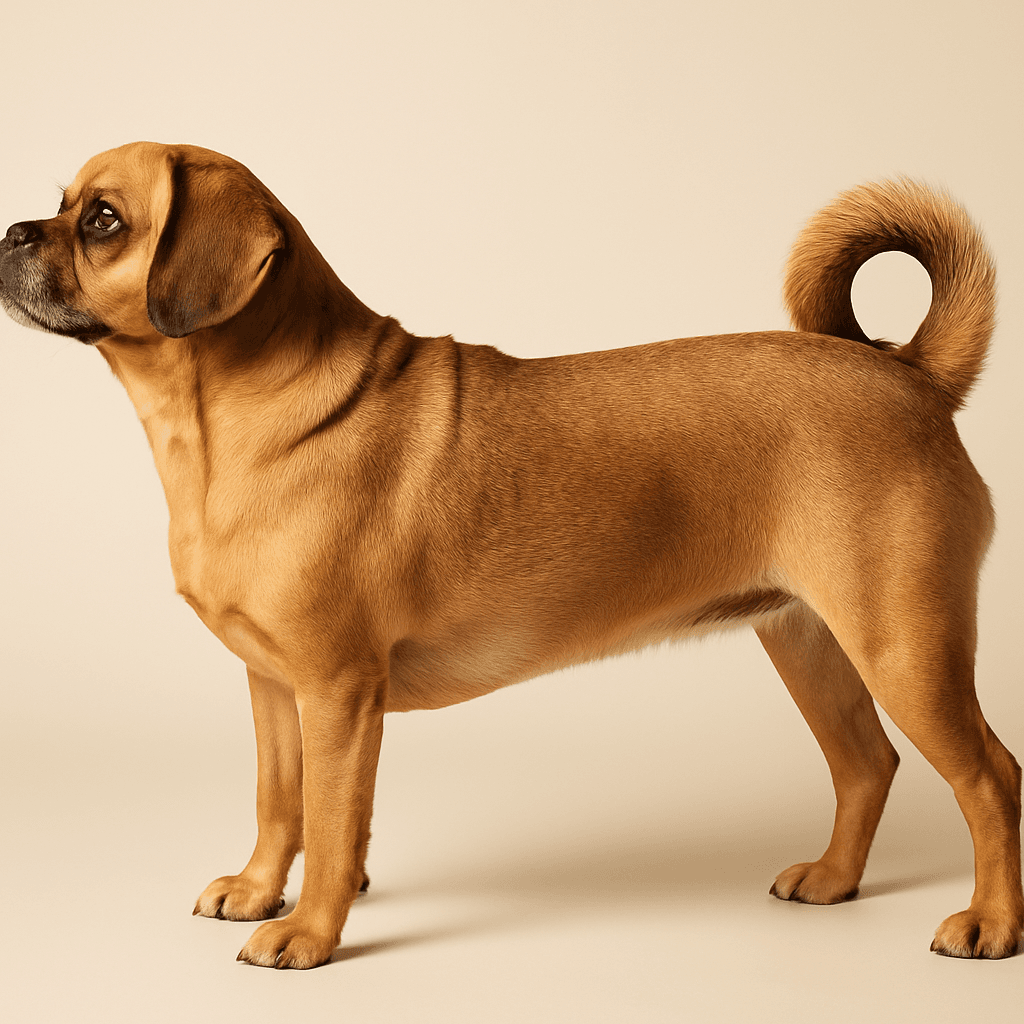
The Puggle is a crossbreed produced from a Pug and a Beagle, two breeds with very different characters and conformation, combining the Pug's affectionate, sociable and good-natured companion personality with the Beagle's curiosity, scenting ability and slightly more active and athletic build to produce a small to medium companion that has been notably popular, particularly in the United States where the cross became widely fashionable in the early 2000s. The cross is not recognised by the Kennel Club and has no formal breed standard, breed club or mandatory health testing programme. The Pug is an ancient brachycephalic toy breed of Chinese origin with a flat face, compact and cobby body, deeply devoted character and well-documented respiratory and health concerns associated with its extreme conformation. The Beagle is a medium-sized scent hound of ancient British origin used for rabbit and hare hunting, with a merry, sociable character, an extraordinary nose and a more athletic and functional conformation. The combination produces a variable result but typically a dog of more moderate conformation than the purebred Pug, with a somewhat extended muzzle, a compact but less cobby build and a friendly, sociable character. The critical health consideration with this cross is the extent to which brachycephalic features are inherited from the Pug parent. In many Puggles the Beagle muzzle provides a genuine improvement in respiratory function compared to a purebred Pug. However, this reduction in severity is not guaranteed and is highly variable between individuals. Some Puggles retain a significantly flat face and the associated breathing implications. BOAS grading of the Pug parent is essential, and prospective buyers should observe any puppy carefully for signs of breathing difficulty before committing to purchase. The Beagle's hunting instinct introduces the characteristic hound nose and the inclination to follow interesting scents with considerable determination. This makes reliable recall more challenging than with many companion breeds and means that off-lead exercise in unsecured areas carries genuine risk. The Puggle tends to be more active and inquisitive than a purebred Pug, which can be a positive for owners wanting a small companion with more energy and engagement. Both Pugs and Beagles are strongly food-motivated and prone to weight gain. Portion control throughout life is important. Purchase prices range from £500 to £1,000. Monthly running costs average £65 to £110. Pug rescue, Beagle rescue and general rescue organisations are the most useful contacts for those considering rehoming.
Quick facts
Meet Our Puggles
Register your dog on My Dog and it will appear here automatically.
Puggle Photos
No photos yet. Be the first to share yours.
Add a photoActivity Feed
How much exercise does your Puggle really need each day?
Mine needs 45 to 60 minutes daily, which is more than you might expect from a small dog. The Beagle side brings genuine energy and curiosity, and my Puggle has considerably more stamina than a purebred Pug. The important practical point is that off-lead exercise only happens in fully secure enclosed areas. The Beagle nose is a powerful thing and once it has locked onto an interesting scent, the recall becomes very much optional. I learned that lesson early and I do not rely on recall when there is anything interesting around, which is always. Exercise needs to be moderated in warm weather if your Puggle has inherited noticeable flat-faced features from the Pug side. I check his breathing during exercise and keep things shorter and slower on warm days, early morning or evening only in summer. The Beagle influence does generally reduce the severity of the brachycephalic features, but you cannot assume that for any individual dog.
30 June 2026
Any health issues to watch for with Puggles?
Brachycephalic Obstructive Airway Syndrome from the Pug parent is the primary concern, and the extended Beagle muzzle can reduce the severity but cannot eliminate it. Before buying any Puggle puppy, I would look carefully at the Pug parent specifically, asking about the KC Respiratory Function Grade if available. Any dog with laboured breathing, noisy sleep, or obvious respiratory effort in normal conditions is showing signs that should not be ignored or minimised. Hip dysplasia is documented in both parent breeds and worth asking about. Eye conditions are a concern inherited from the Pug side: the exposed, prominent eyes that are less protected than in most breeds. Given the mixed-breed nature, specific DNA tests and schemes are harder to apply consistently, which means being particularly thorough about assessing the parents in person, not just from photos. Comprehensive insurance from day one, because you simply do not know which direction this individual dog's health will go.
30 June 2026
What's the one thing you wish you'd known before getting a Puggle?
The Beagle nose is not a characteristic that gets diluted by mixing breeds. It is fully present in my Puggle and it shapes every off-lead moment. He is not being disobedient when he follows a scent with total commitment. He is doing what centuries of selective breeding have hardwired into him. The Pug's sociable good nature and the Beagle's curiosity and food motivation make for genuinely engaging training: he responds well to positive reinforcement and particularly well to food reward. But the hound independence sets a ceiling on what recall looks like in interesting environments and I adjusted my expectations accordingly rather than treating it as a problem to be solved. The other thing I wish I had appreciated earlier is the weight management requirement. Both Pugs and Beagles are breeds where obesity is a real and common issue. He would eat continuously if I let him and the consequences for a dog that may already have some respiratory compromise would be serious.
30 June 2026
What do you feed your Puggle, and why?
A high-quality complete food for small to medium breeds, in two measured meals daily. Portion control is the single most important nutritional decision I make with this dog, and I make it every day. Both Pugs and Beagles are breeds where obesity is a common and serious issue and the Puggle inherits that tendency fully. He is food-motivated to a degree that means he will signal hunger regardless of whether he is actually hungry, and I do not use that as a guide to how much he should eat. I go by body condition: visible waist, ribs feelable without pressing, no fat pads around the neck or at the base of the tail. Treats come out of his daily allowance, not on top of it. Two meals rather than one helps manage the Beagle side's tendency towards digestive upset and the Pug side's tendency to bolt food. Fresh water always available.
30 June 2026
Puggle of the Month
🏆 September 2026 -- Be the first nominee
Could be your dog.
The first dog registered in this community earns the first Dog of the Month nomination automatically.
Register your dogUpcoming Puggle Meetups
No meetups planned yet. Be the first to organise one.
Sign in to organise a meetupCommunity Members
Be the first to join and become the Puggle Founding Member.
Join Club