


Be the first to join. Keep the badge forever.
The first members of this community earn permanent Founding Member status. It shows on your profile and your dog's profile for as long as you're here.
- ✓Founding Member badge on your profile
- ✓Your dog featured first
- ✓First Dog of the Month nomination
- ✓Always free
⭐ Founding Member spots open
First to join gets the badge
🐕 Be the first dog registered
Add your Lab to the community
📷 Add the first photo
Start the photo wall
8
Discussions
0 members
8 discussions
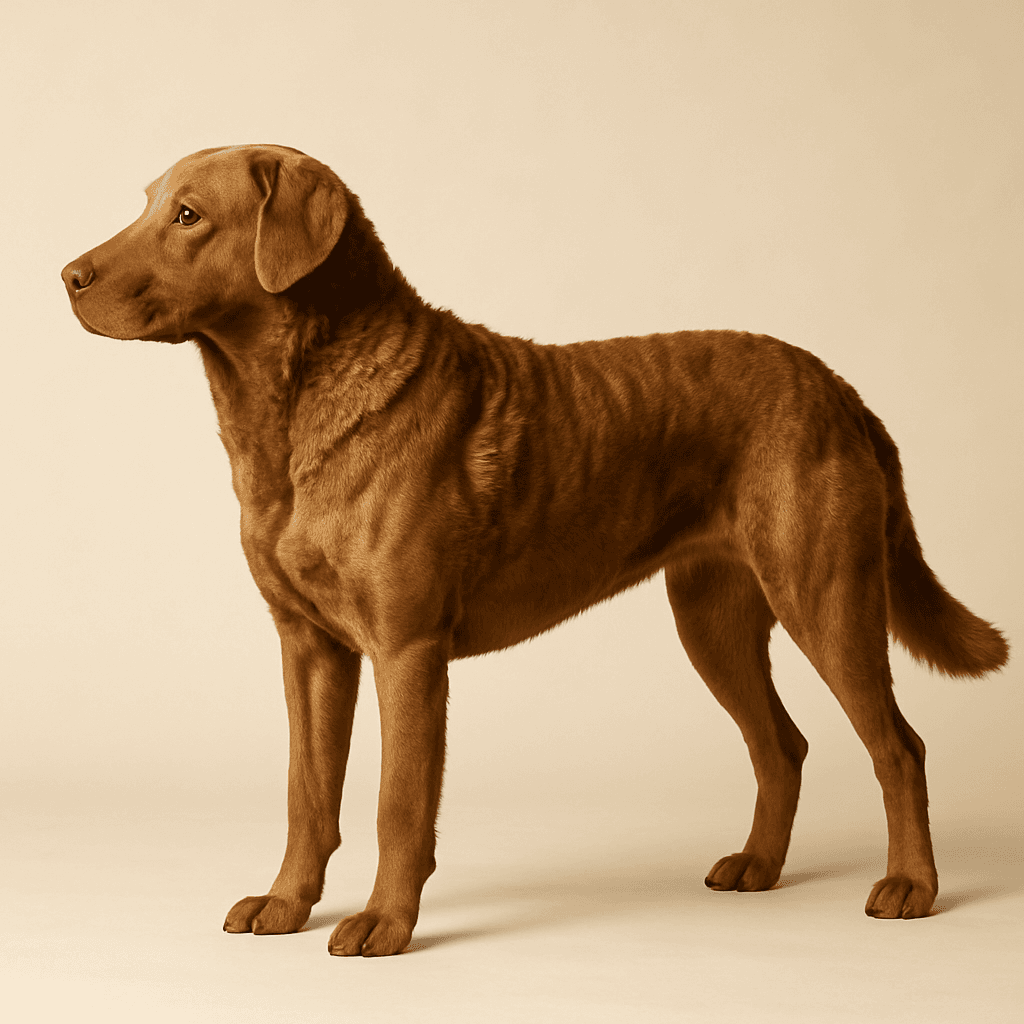
About the Retriever (Chesapeake Bay)
The Chesapeake Bay Retriever is a powerful, athletic and tenacious American gundog breed developed in the nineteenth century along the shores of Chesapeake Bay on the mid-Atlantic coast of the United States, specifically to retrieve waterfowl - principally ducks and geese - from the icy, rough and demanding waters of the Bay under challenging hunting conditions that would defeat less robust breeds. The development of the Chesapeake Bay Retriever involved local dogs crossed with dogs rescued from a shipwrecked English brig in 1807 - two Newfoundland-type dogs named Sailor and Canton - and subsequently with various local retriever and hound types to produce a dog of extraordinary waterproof coat, powerful physique and tenacious working character ideally suited to the demanding conditions of the Bay. The breed is the state dog of Maryland and is registered by the Kennel Club in the Gundog Group. The Chesapeake Bay Retriever is a large, powerfully built and muscular dog with one of the most distinctive coats in the retriever family. The coat is short, wavy and dense, with a thick, woolly, oil-producing undercoat that gives the outer coat its characteristic oily feel and provides exceptional waterproofing and insulation during sustained water work. The colour ranges from dark brown to sedge (straw or deadgrass colour), specifically designed to blend with the waterfowl hunting environment. Adults typically stand 53 to 66 centimetres at the shoulder and weigh 25 to 36 kilograms. The character is loyal, tenacious and deeply devoted to its own family, but it differs notably from the Labrador Retriever or Golden Retriever in its temperament and approach to training. The Chesapeake Bay Retriever is more independent, more assertive and more self-reliant - a working dog that was developed to make decisions in challenging field conditions without constant handler guidance. It can be reserved or selective with strangers rather than instantly sociable, has a protective instinct that surfaces with its own household, and requires confident, experienced handling from an early age to develop into a reliable companion. Training rewards consistent positive reinforcement combined with clear, early-established boundaries. The breed responds well to capable, patient handling and is highly capable in the field, in obedience and in dog sports when properly trained. It will, however, test unclear leadership and an inexperienced owner may find the assertive character challenging. Health considerations include Hip and Elbow Dysplasia testing. Progressive Retinal Atrophy and Exercise-Induced Collapse (EIC) DNA testing of parents are recommended. Purchase prices from KC-registered, health-tested breeders range from £800 to £1,800. Monthly running costs average £90 to £160. The Chesapeake Bay Retriever Club of Great Britain is the primary resource for breed information, health testing requirements, responsible breeders and rescue contact.
Quick facts
Meet Our Retriever (Chesapeake Bay)s
Register your dog on My Dog and it will appear here automatically.
Retriever (Chesapeake Bay) Photos
No photos yet. Be the first to share yours.
Add a photoActivity Feed
How much exercise does your Chesapeake Bay Retriever really need each day?
Mine needs a solid 90 minutes minimum, and honestly 2 hours on most days or she starts getting restless. What I've found is that swimming is where the Chesapeake really comes into its own. These dogs were bred for sustained water retrieval work in punishing conditions, and you can see that stamina when they hit water. A long off-lead run in the park covers the physical side, but it doesn't satisfy them the same way. I try to combine a decent walk with a swim or a proper retrieve session most days. The working background means you can't shortcut this with a quick potter round the block and a bit of garden play. If the exercise isn't vigorous and purposeful, you'll know about it by the evening.
30 June 2026
Any health issues to watch for with Chesapeake Bay Retrievers?
The main things to ask any breeder about are hip and elbow dysplasia scores, Progressive Retinal Atrophy DNA results, and Exercise-Induced Collapse testing. EIC is worth knowing about before you buy because it can catch you off guard. Affected dogs can collapse after intense activity, which is frightening if you don't know what you're looking at. The Chesapeake Bay Retriever Club of Great Britain maintains health testing requirements, so any reputable breeder should be able to show you results for both parents without hesitation. I'd be wary of anyone who dismisses these tests as unnecessary. These aren't rare edge-case conditions in the breed and the testing exists precisely because they're documented.
30 June 2026
What do you wish you'd known before getting a Chesapeake Bay Retriever?
I wish someone had told me clearly that this is not a Labrador in a different coat. The Chesapeake is genuinely more independent and more strong-willed, and if you come in expecting the same easy-going, people-pleasing retriever temperament, you'll be surprised. They are deeply loyal to their own family, but that devotion is earned and it's selective. Strangers don't automatically get the friendly greeting you see from a Lab. The training requires consistent, confident handling from the start, because they will test boundaries if they sense any inconsistency. They're not difficult dogs, but they do need an owner who understands what they're getting. I've found mine to be one of the most rewarding dogs I've owned, but the early months required patience and real clarity.
30 June 2026
What do you feed your Chesapeake Bay Retriever, and why?
I feed a high-quality large breed complete dry food, split across two meals. The two-meal approach is partly about reducing bloat risk, which is worth taking seriously in large active breeds. One thing I was specifically told by my breeder was not to over-supplement or use heavy conditioning products on the coat. The Chesapeake's oily, wavy coat is genuinely waterproof and that's one of the breed's most functional traits. Certain supplements or excessive bathing can disrupt the coat's natural oil balance and you lose that water-resistance. So I keep things simple: quality complete food, two meals, weight monitored regularly. At their activity level they need good fuel, but you can overfeed an active dog just as easily as an inactive one.
30 June 2026
Retriever (Chesapeake Bay) of the Month
🏆 September 2026 -- Be the first nominee
Could be your dog.
The first dog registered in this community earns the first Dog of the Month nomination automatically.
Register your dogUpcoming Retriever (Chesapeake Bay) Meetups
No meetups planned yet. Be the first to organise one.
Sign in to organise a meetupCommunity Members
Be the first to join and become the Retriever (Chesapeake Bay) Founding Member.
Join Club