


Be the first to join. Keep the badge forever.
The first members of this community earn permanent Founding Member status. It shows on your profile and your dog's profile for as long as you're here.
- ✓Founding Member badge on your profile
- ✓Your dog featured first
- ✓First Dog of the Month nomination
- ✓Always free
⭐ Founding Member spots open
First to join gets the badge
🐕 Be the first dog registered
Add your Lab to the community
📷 Add the first photo
Start the photo wall
8
Discussions
0 members
8 discussions
About the Retriever (Flat Coated)
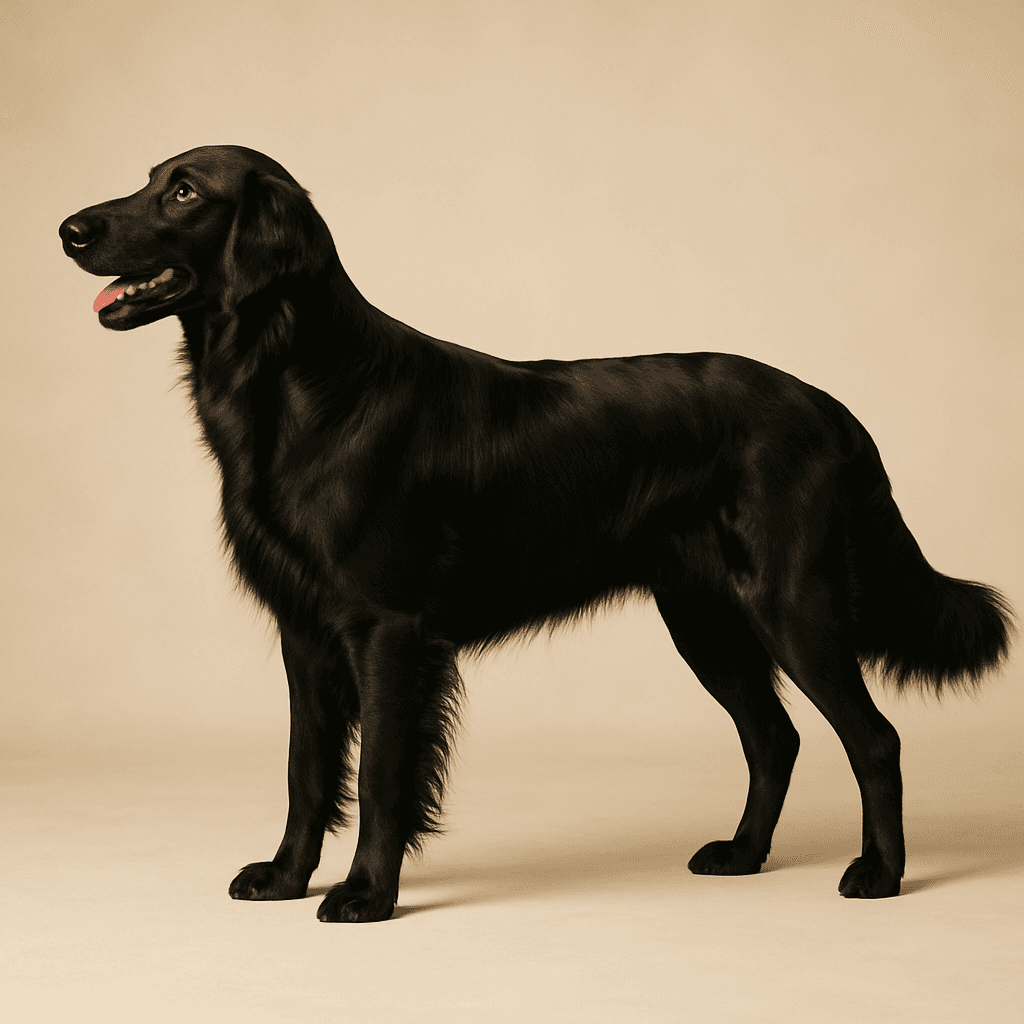
The Flat Coated Retriever is one of Britain's most beloved gundog breeds, a large, exuberant and joyfully sociable retriever developed in England in the mid-nineteenth century from crosses involving the St John's Water Dog of Newfoundland, the Labrador, various setter and spaniel types, and possibly the Collie, to produce a versatile, enthusiastic and highly trainable working retriever for both land and water. The breed was extremely popular as a working gundog and show dog in the late Victorian and Edwardian eras but declined sharply in numbers after the First World War as the Labrador Retriever became dominant in the field. Dedicated breeders preserved the Flat Coated Retriever through the mid-twentieth century and it now has a healthy and devoted following. It is registered by the Kennel Club in the Gundog Group. The Flat Coated Retriever is a large, elegant and well-proportioned dog with the characteristic flat, dense and glossy coat in black or liver that gives the breed its name. The coat lies close to the body with feathering on the ears, back of the legs, chest and tail. The head is long and well-proportioned, with a kindly, intelligent expression. The overall impression is of an athletic, elegant and friendly dog. Adults typically stand 56 to 61 centimetres at the shoulder and weigh 25 to 36 kilograms. The character is one of the breed's most celebrated features. The Flat Coated Retriever is famously described as the Peter Pan of the dog world - exuberant, playful, joyful and sociable to a degree that persists well into adult life, long after most breeds have settled into a more sedate maturity. This enduring youthfulness is endearing and exhausting in roughly equal measure, and families who choose the breed knowing this find it an exceptionally rewarding and engaging companion. The breed is universally sociable - good with children, other dogs, strangers and virtually everyone it meets - and deeply devoted to its own family. Training is a genuine pleasure. The breed is highly intelligent, willing and responsive to positive reinforcement, capable of considerable achievement in field work, obedience and agility, and engages with learning activities with the same enthusiastic commitment it brings to everything else. The primary health concern unique to the breed is histiocytic sarcoma - a form of cancer with a documented higher incidence in Flat Coated Retrievers than in the general dog population. Prospective owners should research this condition and discuss it openly with any breeder. Hip and Elbow Dysplasia testing are recommended. Purchase prices from KC-registered, health-tested breeders range from £800 to £1,800. Monthly running costs average £90 to £160. The Flat Coated Retriever Society is the primary resource for breed information, health testing, responsible breeders and rescue contact.
Quick facts
Meet Our Retriever (Flat Coated)s
Register your dog on My Dog and it will appear here automatically.
Retriever (Flat Coated) Photos
No photos yet. Be the first to share yours.
Add a photoActivity Feed
How much exercise does your Flat Coated Retriever really need each day?
At least 90 minutes, and mine would gladly take more. Swimming, retrieving, ranging over open ground, these are the things the Flat Coated Retriever was built for and you can see it in how they move when given real space. What I've learned is that physical exercise alone isn't quite enough. Mental stimulation through retrieving games, nose work and training makes a real difference to how settled she is in the evenings. A long beach session with retrieves beats a long pavement walk every time. The breed has a famous forever-young quality, which is delightful but it does mean the energy doesn't reduce much as they age the way it might with other large breeds. You're signing up for consistent, vigorous daily exercise for the dog's lifetime.
30 June 2026
Any health issues to watch for with Flat Coated Retrievers?
The one that every prospective Flat Coat owner needs to know about is Histiocytic Sarcoma. This form of cancer occurs at a higher rate in Flat Coated Retrievers than in the general dog population and it's the primary health concern for the breed. The Flat Coated Retriever Society actively monitors it and any reputable breeder will talk about it openly. I'd be cautious about anyone who glosses over this. It doesn't mean you shouldn't get a Flat Coat. It means you go in informed and you have a good vet relationship and appropriate insurance. Beyond that, hip and elbow dysplasia testing of both parents is strongly recommended, and Progressive Retinal Atrophy and Hereditary Cataract have also been documented. Ask for all the health screening paperwork before you commit.
30 June 2026
What do you wish you'd known before getting a Flat Coated Retriever?
That the puppyish exuberance doesn't really pass. The Flat Coat has a genuine forever-young quality and it's one of the things I love most about the breed now, but I hadn't quite anticipated it going into puppyhood. Mine is five and still throws herself at life with the same unbridled enthusiasm she had at eight months. That's a joy in so many ways, but it did mean that the boisterous, bouncy phase I expected to last a year or so just became her permanent personality. Training sessions are enormous fun because she engages enthusiastically with everything, but patience is required in the early months because the exuberance can override the focus. She's also sociable with absolutely everyone, strangers included, which is lovely but meant I had to work on calm greetings.
30 June 2026
What do you feed your Flat Coated Retriever, and why?
A high-quality complete food for large active breeds, split into two meals to manage bloat risk. One thing I've found genuinely useful is puzzle feeders. The Flat Coat's character is so engaged and enthusiastic that enrichment feeding gives an extra mental outlet, particularly on days when outdoor exercise is cut short by weather. It's a small thing but it makes a difference to how settled she is. I keep a close eye on weight because the activity level can be misleading. An active dog can still be overfed if you're not adjusting portions to actual daily output. She's lean and muscular and I want her to stay that way. I've avoided anything too elaborate in terms of supplementation and stuck with a quality complete food that covers all the nutritional bases.
30 June 2026
Retriever (Flat Coated) of the Month
🏆 September 2026 -- Be the first nominee
Could be your dog.
The first dog registered in this community earns the first Dog of the Month nomination automatically.
Register your dogUpcoming Retriever (Flat Coated) Meetups
No meetups planned yet. Be the first to organise one.
Sign in to organise a meetupCommunity Members
Be the first to join and become the Retriever (Flat Coated) Founding Member.
Join Club