
Be the first to join. Keep the badge forever.
The first members of this community earn permanent Founding Member status. It shows on your profile and your dog's profile for as long as you're here.
- ✓Founding Member badge on your profile
- ✓Your dog featured first
- ✓First Dog of the Month nomination
- ✓Always free
⭐ Founding Member spots open
First to join gets the badge
🐕 Be the first dog registered
Add your Lab to the community
📷 Add the first photo
Start the photo wall
8
Discussions
0 members
8 discussions
About the Russian Toy
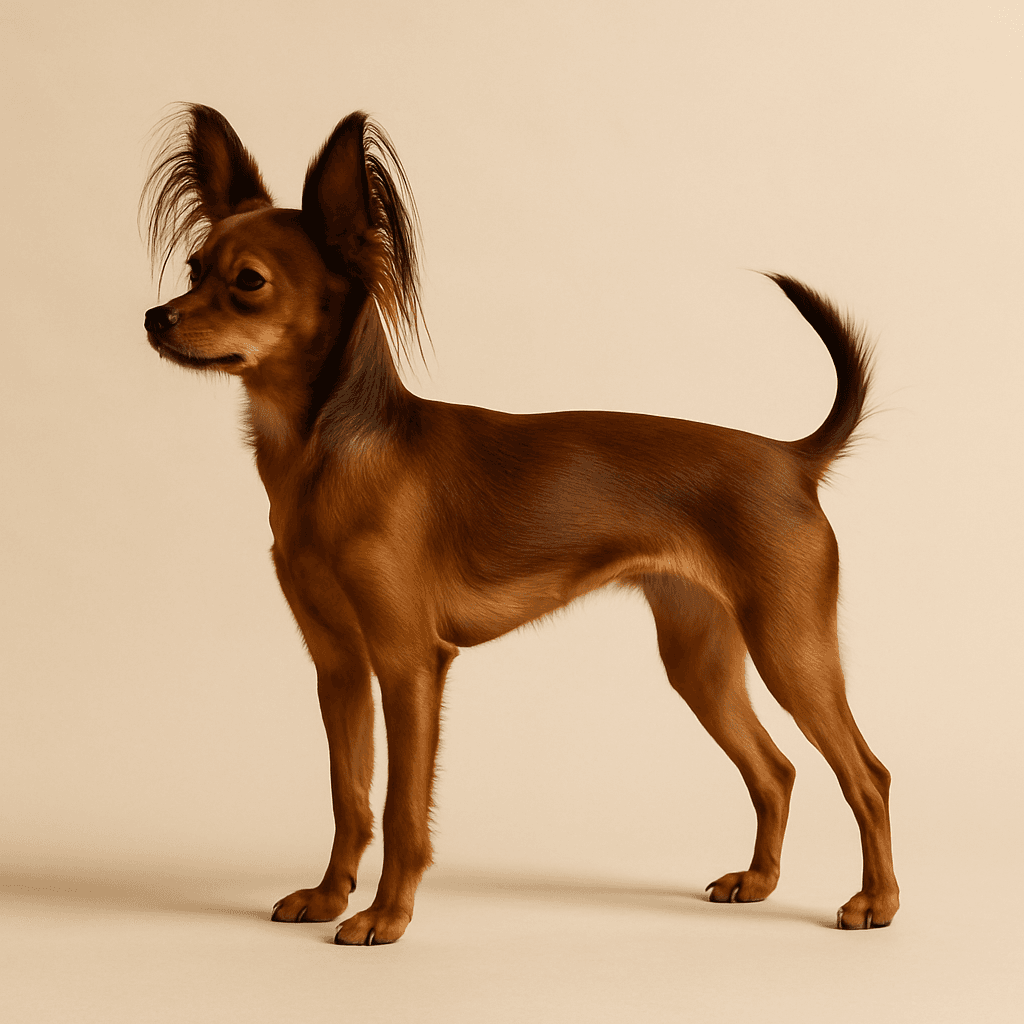
The Russian Toy, known in Russia as the Russkiy Toy, is one of the world's smallest dog breeds, a tiny, elegant and spirited companion developed in Russia over several centuries as an aristocratic lapdog and companion, achieving considerable popularity in the Russian imperial court before the Revolution of 1917 nearly exterminated the breed as a symbol of the old aristocratic order. The breed survived in small numbers within Russia but was essentially unknown outside the country until the end of the Soviet era, when it was gradually exported to other European countries and eventually received international recognition from the FCI and subsequently registration with the Kennel Club in the Toy Group. The Russian Toy comes in two coat varieties - the smooth-coated (gladkosherstny) and the long-coated (dlinnoshresty) - both of which occur in the same litters. The Russian Toy is a very small, lightly built and graceful dog of considerable elegance. The smooth variety has a short, close coat; the long variety has a flat, silky coat with distinctive fringing on the long, mobile ears and light feathering on the back of the legs and tail. Both varieties come in black and tan, brown and tan, blue and tan, sable, or red in various shades. The large, expressive eyes and large, upright ears give the face a bright, alert and very characterful expression. Adults typically stand 20 to 28 centimetres at the shoulder and weigh 1 to 3 kilograms - genuinely tiny. The character is lively, alert and deeply devoted to its own person or household - a classic small companion breed with a spirited personality and considerable personal attachment to its people. The Russian Toy forms very close bonds with its household, is active and playful for its size, and carries the alert, watchful quality typical of the toy breeds developed as companions and small guards for aristocratic households. It can be reserved with strangers and this tendency is managed most effectively through early and thorough socialisation. The very small size is both part of the breed's appeal and its primary management challenge. The Russian Toy is genuinely fragile and requires a living environment where the risk of accidental injury from rough play, dropping or clumsy handling is actively managed. Harnesses rather than collars are standard management in all very small dogs. Health considerations include Patellar Luxation, Leg Perthes Disease and dental disease. Hypoglycaemia is a management concern in very small individuals. Purchase prices from KC-registered breeders range from £1,000 to £2,500. Monthly running costs average £50 to £90. The KC and Russian breed clubs are the primary resources for breed information, health testing guidance, responsible breeders and rescue contact.
Quick facts
Meet Our Russian Toys
Register your dog on My Dog and it will appear here automatically.
Russian Toy Photos
No photos yet. Be the first to share yours.
Add a photoActivity Feed
How much exercise does your Russian Toy really need each day?
Twenty to thirty minutes a day is genuinely sufficient, which makes the Russian Toy a very practical choice for people with smaller homes or less active lifestyles. Mine is lively and energetic for her size but her little body doesn't need or want extended hard exercise. Short walks, play sessions in the garden and indoor games cover the physical requirement well. Mental stimulation through training matters just as much as the physical side. Russian Toys are quick-minded and respond well to short positive training sessions. One thing I'd flag is that I use a harness rather than a collar for walks. The neck on a very small dog is fragile and a collar with any pulling risk isn't worth it. Keep sessions short, keep them fun, and don't underestimate how much a small dog with a lively mind enjoys having something to think about.
30 June 2026
Any health issues to watch for with Russian Toys?
Patellar luxation is the primary concern in very small breeds and assessment of the parents is strongly recommended before buying. Legg-Perthes Disease has also been documented and is worth asking about. Dental disease is a significant management issue in very small breeds where the teeth are often crowded into a tiny jaw. I brush mine's teeth regularly and my vet checks dental condition at every appointment. It's one of those things that's easy to neglect but can become a welfare and cost issue if ignored. Fragility is also a genuine practical consideration. A very small dog is physically vulnerable in ways a larger dog simply isn't. Falls from furniture, accidental collisions, encounters with larger dogs: these carry a different risk level than they would for a bigger breed. The KC and breed clubs maintain health testing guidance for current recommendations.
30 June 2026
What's the one thing you wish you'd known before getting a Russian Toy?
That being reserved with strangers is a genuine breed characteristic rather than a training failure. Mine is deeply devoted to me and our household but she is watchful and cautious with people she doesn't know. When I first got her I worried I was doing something wrong in the socialisation. It turns out this is simply the Russian Toy's character. She's not unfriendly, she's selective. Early socialisation is still important and I'd recommend starting immediately, but don't expect the open, friendly-with-everyone temperament of some other small breeds. The close bond she forms with her own people is genuinely lovely. She's spirited, engaged and characterful in a way that larger breeds sometimes aren't, which is part of what makes the breed so appealing. Just go in understanding that warmth is reserved for the people she trusts.
30 June 2026
What do you feed your Russian Toy, and why?
A high-quality complete food formulated specifically for very small or toy breeds. Toy breed formulations are designed with appropriately sized kibble and calorie density calibrated for a tiny dog's metabolism. Dental health is a priority so I chose a food that supports dental condition and I supplement with regular tooth brushing. Two small meals daily rather than one, partly because hypoglycaemia is a genuine risk in very small dogs, particularly puppies. Small dogs can drop blood sugar more quickly than larger breeds and maintaining regular small meals helps manage that. Portions are tiny by any measure but I still weigh everything rather than estimating, because it is remarkably easy to overfeed a small dog when the daily allowance is already so small. A quality food, appropriate portion control and consistent dental care covers the main bases.
30 June 2026
Russian Toy of the Month
🏆 September 2026 -- Be the first nominee
Could be your dog.
The first dog registered in this community earns the first Dog of the Month nomination automatically.
Register your dogUpcoming Russian Toy Meetups
No meetups planned yet. Be the first to organise one.
Sign in to organise a meetupCommunity Members
Be the first to join and become the Russian Toy Founding Member.
Join Club