

Be the first to join. Keep the badge forever.
The first members of this community earn permanent Founding Member status. It shows on your profile and your dog's profile for as long as you're here.
- ✓Founding Member badge on your profile
- ✓Your dog featured first
- ✓First Dog of the Month nomination
- ✓Always free
⭐ Founding Member spots open
First to join gets the badge
🐕 Be the first dog registered
Add your Lab to the community
📷 Add the first photo
Start the photo wall
8
Discussions
0 members
8 discussions
About the Saint Bernard
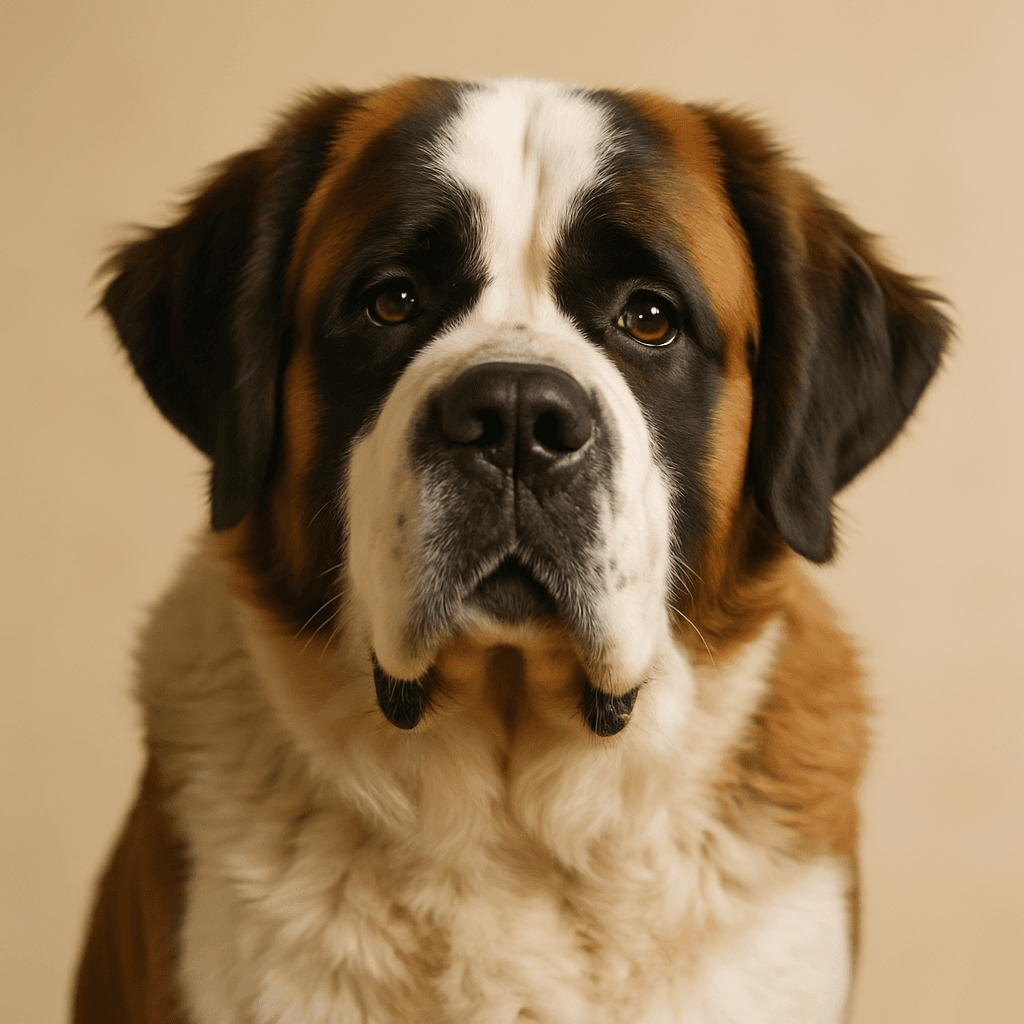
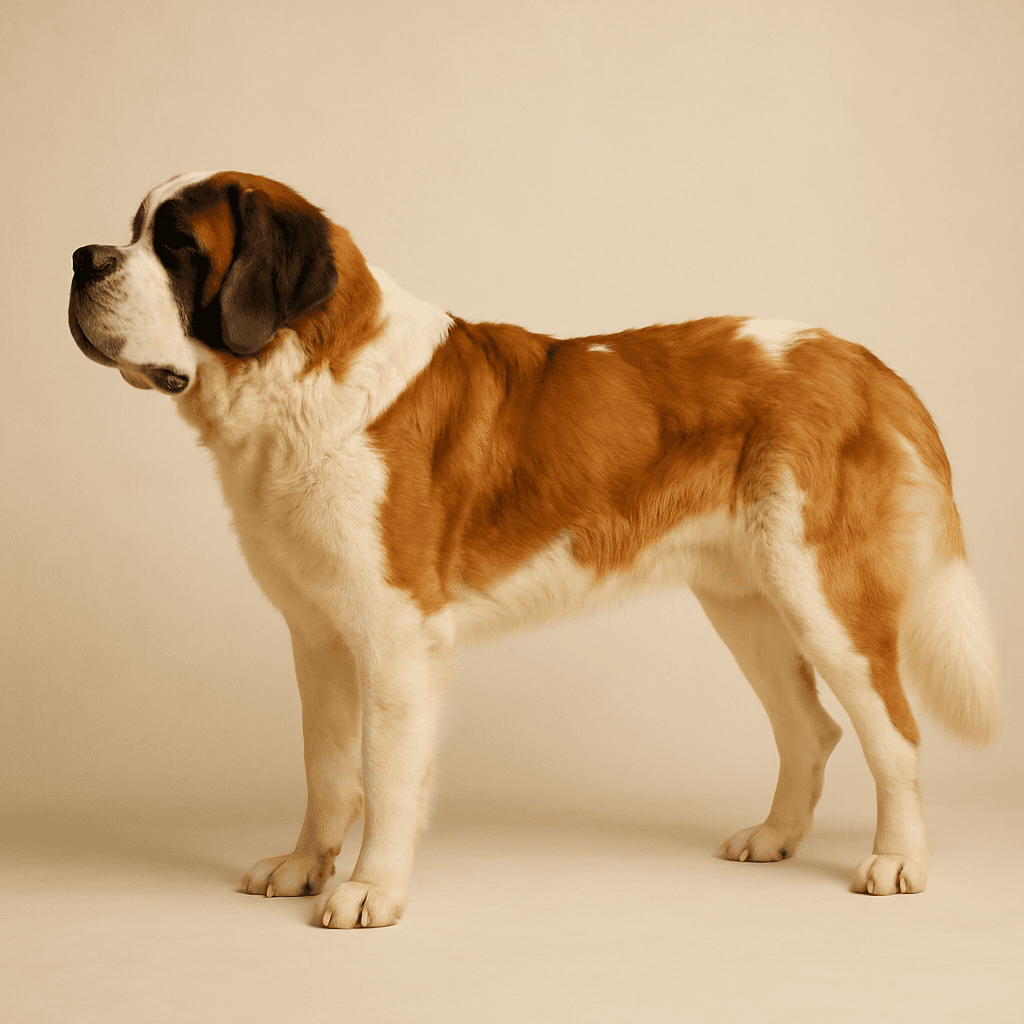
The Saint Bernard is one of the world's most instantly recognisable and beloved dog breeds, a giant, powerfully built and magnificently gentle Swiss dog developed by the Augustinian monks of the Great St Bernard Hospice, a monastery and refuge located at the Great St Bernard Pass in the Swiss Alps at an altitude of 2,469 metres, over several centuries as a mountain rescue dog to locate and save travellers lost or buried in the snow on the perilous alpine passes. The breed's heroic history of alpine rescue - the legendary individual Barry (1800-1814) is credited with saving more than forty lives - made it one of the most famous dogs in the world by the nineteenth century. The breed was formally standardised and registered with the Swiss Kennel Club in the 1880s and subsequently registered by the Kennel Club in the Working Group. The Saint Bernard exists in two coat varieties: the rough-coated, with a long, thick and slightly wavy outer coat, and the smooth-coated, with a short, dense and close-lying coat. Both varieties are white with red or brown and white markings. The head is massive, broad and expressive, with the kindly, intelligent and slightly concerned expression that has made it one of the most universally recognised of all dog faces. Adults typically stand 65 to 90 centimetres at the shoulder and weigh 54 to 82 kilograms - one of the largest of all recognised breeds. The character entirely justifies the breed's legendary reputation for gentleness. The Saint Bernard is calm, patient, affectionate and deeply devoted to its own family, with a particular and well-documented affinity for children - tolerant, protective and genuinely fond of the young in a way that is entirely characteristic of the breed. It is good-natured with other dogs and generally open and pleasant with people it meets. The practical realities of Saint Bernard ownership should not be minimised. The drool is substantial, unavoidable and is an inseparable feature of the breed's brachycephalic tendencies and pendulous lips. The food requirements of a giant breed are significant in both volume and cost. The grooming commitment of the rough-coated variety is real. Space requirements are considerable. Health considerations are serious. Bloat is a life-threatening risk that must be managed actively. Hip and Elbow Dysplasia testing is essential. Osteosarcoma has a higher documented incidence in giant breeds. Purchase prices from KC-registered, health-tested breeders range from £1,000 to £2,500. Monthly running costs average £150 to £250. The Saint Bernard Club of Great Britain is the primary resource for breed information, health testing requirements, responsible breeders and rescue contact.
Quick facts
Meet Our Saint Bernards
Register your dog on My Dog and it will appear here automatically.
Saint Bernard Photos
No photos yet. Be the first to share yours.
Add a photoActivity Feed
How much exercise does your Saint Bernard really need each day?
Around 45 to 60 minutes daily for an adult is what works for mine, which is perhaps less than people expect from a dog of this size. Saint Bernards are steady and calm rather than high-drive, and they don't have the working stamina requirement of breeds like retrievers or herding dogs. What I'd stress strongly is the puppy exercise rules. Giant breed puppies have an extended growth phase and over-exercising during that period causes real joint damage. I was very conservative with mine: no forced road walking, no jumping, no sustained running until the growth plates had closed. It felt like I was being overly cautious at the time but giant breed joint health is too important to gamble with. Swimming is good exercise for them. Heat management also matters. A large dog with a heavy coat can overheat more quickly than you'd expect.
30 June 2026
Any health issues to watch for with Saint Bernards?
Several, and owning a giant breed means taking health screening very seriously. Hip and elbow dysplasia testing is essential given the size and weight loads on those joints. Testing of both parents through the KC/BVA schemes is non-negotiable. Bloat is a very significant risk in giant deep-chested breeds and it can be life-threatening within hours. I feed two meals daily, avoid vigorous exercise around meal times, and know the signs. Osteosarcoma has a higher incidence in giant breeds than in smaller dogs, which is worth understanding going in. Entropion and ectropion are documented eyelid conditions in the breed. The Saint Bernard Club of Great Britain has comprehensive health testing guidance. Insurance for a dog of this size with this health profile is a significant monthly cost but not optional. Get lifetime cover in place before the puppy comes home.
30 June 2026
What's the one thing you wish you'd known before getting a Saint Bernard?
The practical reality of the size, and specifically how much the early lead training matters. Mine was relatively small and manageable as a puppy, which made it easy to let things slide. By the time he was 18 months he was enormous, and a Saint Bernard that pulls on the lead or jumps up is a physical management problem for most adults. I wish I had been more rigorous about loose lead training from the very start rather than assuming I had time to address it later. They're gentle, patient and devoted, which is everything the breed reputation promises. But the training in those early months shapes habits that will be very hard to change at full size. The slow maturity also requires patience in training: they respond well to positive reinforcement but they're not snapping into reliable obedience quickly. Steady, consistent work over time is what works.
30 June 2026
What do you feed your Saint Bernard, and why?
A high-quality complete food formulated for giant breeds, two meals a day, and food costs are genuinely substantial at this size. Giant breed puppy food during the growth phase is essential. The formulation controls energy density and calcium-phosphorus ratios to support appropriate skeletal development. Rapid growth in giant breeds is a risk factor for musculoskeletal problems, so I didn't rush through the puppy formula. Weight monitoring is something I take very seriously. Excess weight on a giant breed's joints, which may already be under hereditary pressure, is genuinely harmful. I adjust portions if activity level drops for any reason. Two meals daily is standard bloat management practice and I keep exercise away from mealtimes. Fresh water always available. There's nothing complicated in the feeding approach but the portions are large and the costs reflect that.
30 June 2026
Saint Bernard of the Month
🏆 September 2026 -- Be the first nominee
Could be your dog.
The first dog registered in this community earns the first Dog of the Month nomination automatically.
Register your dogUpcoming Saint Bernard Meetups
No meetups planned yet. Be the first to organise one.
Sign in to organise a meetupCommunity Members
Be the first to join and become the Saint Bernard Founding Member.
Join Club