


Be the first to join. Keep the badge forever.
The first members of this community earn permanent Founding Member status. It shows on your profile and your dog's profile for as long as you're here.
- ✓Founding Member badge on your profile
- ✓Your dog featured first
- ✓First Dog of the Month nomination
- ✓Always free
⭐ Founding Member spots open
First to join gets the badge
🐕 Be the first dog registered
Add your Lab to the community
📷 Add the first photo
Start the photo wall
8
Discussions
0 members
8 discussions
About the Saluki
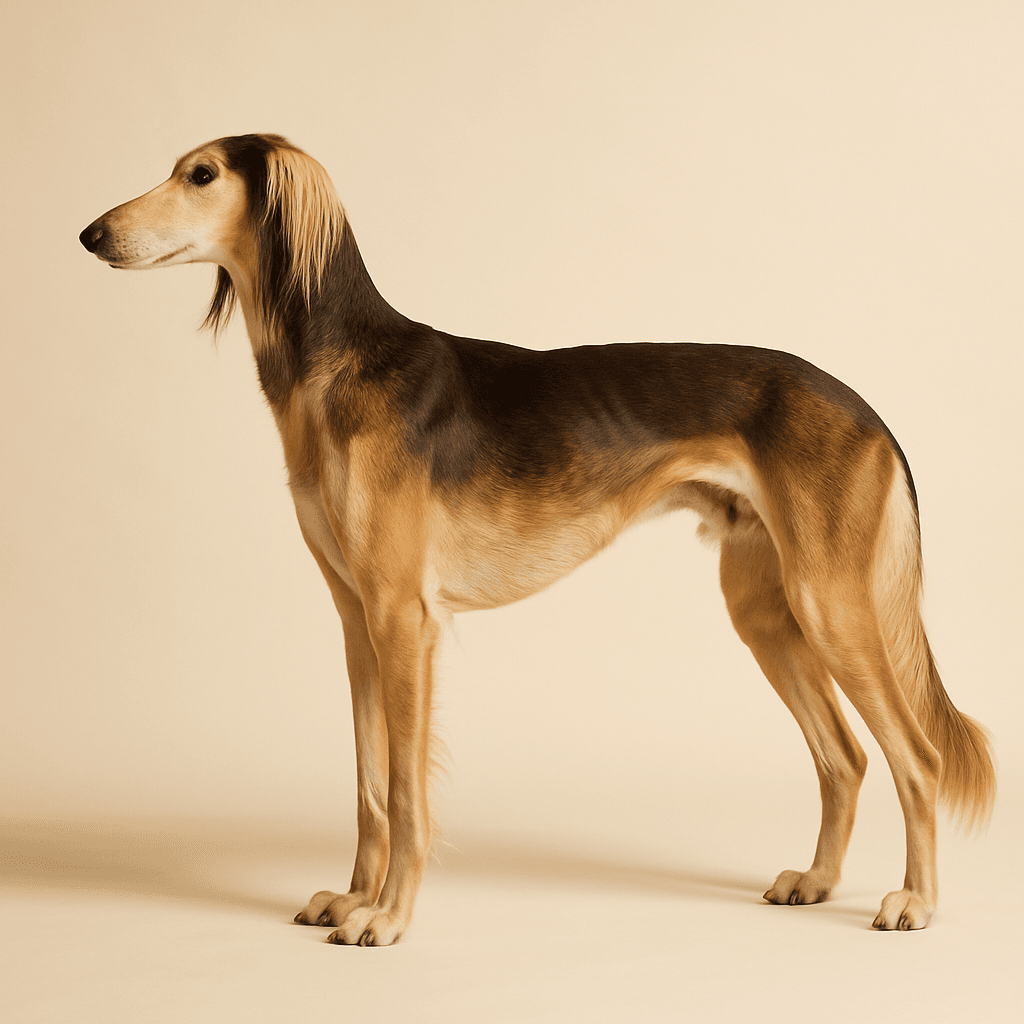
The Saluki is one of the oldest dog breeds in existence, a slender, elegant and extraordinarily fast sighthound developed over many thousands of years across the Middle East - from the Arabian Peninsula through Persia, Egypt and Central Asia - to hunt gazelle, hare and other swift prey across open desert and steppe terrain. Archaeological evidence suggests dogs of the Saluki type were present in ancient Egypt and Mesopotamia, with images resembling the modern breed found in Egyptian tomb paintings dating to around 2100 BC and Sumerian artefacts from even earlier periods. The breed is sometimes described as the Royal Dog of Egypt, though its origins span a much wider geographical area than Egypt alone. The Saluki is registered by the Kennel Club in the Hound Group. The Saluki is a medium-sized, lightly built and extremely graceful dog of remarkable visual elegance. Two coat varieties exist within the breed: the smooth variety, in which the coat is short and fine throughout, and the feathered variety, in which the ears, tail and backs of the legs carry longer, silky, slightly wavy hair. Both varieties occur in a wide range of colours including white, cream, fawn, red, grizzle, black and tan, and various combinations. The build is unmistakably that of a sighthound - deep-chested, long-legged, narrow-waisted and built for explosive speed. Adults typically stand 58 to 71 centimetres at the shoulder and weigh 13 to 30 kilograms. The character is gentle, aloof and deeply loyal to its own household while remaining reserved with strangers and unfamiliar people. This aloofness is a consistent breed characteristic - the Saluki was bred to hunt independently over large distances and was not required to be demonstratively sociable in the way of many more recently developed companion breeds. It is sensitive, perceptive and can form very close bonds with its own people while appearing indifferent to others. The combination of gentleness in the home and explosive capability outside it is one of the breed's most distinctive qualities. The prey drive is strong and reliable containment is a non-negotiable requirement of Saluki ownership. The breed should not be exercised off-lead in any area that is not securely fenced. In full flight, a Saluki is capable of speeds approaching 70 kilometres per hour and can disappear across open ground in seconds. Recall is unreliable in the presence of prey animals. Health is generally good. Heart conditions and hypothyroidism have been documented. Purchase prices from KC-registered, health-tested breeders range from £700 to £1,500. Monthly running costs average £70 to £120. The Saluki or Gazelle Hound Club is the primary resource for breed information, health guidance, responsible breeders and rescue contact.
Quick facts
Meet Our Salukis
Register your dog on My Dog and it will appear here automatically.
Saluki Photos
No photos yet. Be the first to share yours.
Add a photoActivity Feed
How much exercise does your Saluki really need each day?
Mine needs between 75 and 90 minutes daily, but the type matters as much as the duration. Salukis are sprinters, not marathon runners. What my boy really craves is the chance to open up at full speed in a safely enclosed field, a good 20-minute blast where he can genuinely stretch out. Without that, the lead walks alone don't cut it, however long they are. When he's under-exercised, he gets restless and starts pacing the house and chewing things he shouldn't. I'd never let him off lead in an unenclosed space, the prey drive combined with that speed means he's simply gone. I use a local hire field a few times a week, which has been an absolute game-changer. The rest of the day he's perfectly happy sleeping in a patch of sunlight.
30 June 2026
Any health issues to watch for with Salukis?
Salukis are actually one of the healthier breeds when you look at the hereditary condition lists, thousands of years of natural selection has done them real favours. That said, there are a couple of things worth knowing. Dilated cardiomyopathy has been documented in the breed, so cardiac health is worth keeping an eye on, particularly as they age. Hypothyroidism has also been reported in some lines. I'd recommend getting in touch with the Saluki or Gazelle Hound Club if you're researching the breed, they maintain solid health information and can point you toward breeders doing the right screening. My vet wasn't especially familiar with Saluki-specific health quirks, so going in with your own knowledge is useful. All in all, not a breed with a long worry list, but worth being informed.
30 June 2026
What's the one thing you wish you'd known before getting a Saluki?
I wish someone had been really honest with me about recall. I came from Border Collies, where solid recall felt almost natural with enough work. With a Saluki, it's a fundamentally different situation. These dogs hunted completely independently of human direction for thousands of years, that independence isn't a training failure, it's baked in at a deep level. My Saluki is bright, learns quickly, and is beautifully biddable in the garden. But near anything that moves, he's simply not available. I've accepted that off-lead freedom requires a genuinely enclosed space, full stop. That shift in expectation was the most important one I made. If you want a dog you can reliably call off a rabbit in an open field, a Saluki isn't your breed. If you're at peace with that, they are extraordinary companions, gentle, devoted and deeply charming.
30 June 2026
What do you feed your Saluki, and why?
I feed a high-quality complete dry food designed for active medium breeds. The main thing to understand with Salukis is that they are naturally lean, mine has a degree of visible ribbing and that's completely correct for the breed. First time I noticed it I panicked and booked a vet appointment, only to be reassured it's entirely normal. Overfeeding is actually the bigger risk here. I give two meals a day and keep a close eye on condition, but I don't try to fatten him up to look more substantial. Weight in either direction causes problems, so I aim for the lean, athletic look the breed was built to carry. Nothing fancy in terms of supplements, just a good quality food and consistent monitoring. Don't let anyone guilt you into overfeeding a Saluki because they look slender.
30 June 2026
Saluki of the Month
🏆 September 2026 -- Be the first nominee
Could be your dog.
The first dog registered in this community earns the first Dog of the Month nomination automatically.
Register your dogUpcoming Saluki Meetups
No meetups planned yet. Be the first to organise one.
Sign in to organise a meetupCommunity Members
Be the first to join and become the Saluki Founding Member.
Join Club