

Be the first to join. Keep the badge forever.
The first members of this community earn permanent Founding Member status. It shows on your profile and your dog's profile for as long as you're here.
- ✓Founding Member badge on your profile
- ✓Your dog featured first
- ✓First Dog of the Month nomination
- ✓Always free
⭐ Founding Member spots open
First to join gets the badge
🐕 Be the first dog registered
Add your Lab to the community
📷 Add the first photo
Start the photo wall
8
Discussions
0 members
8 discussions
About the Shar Pei
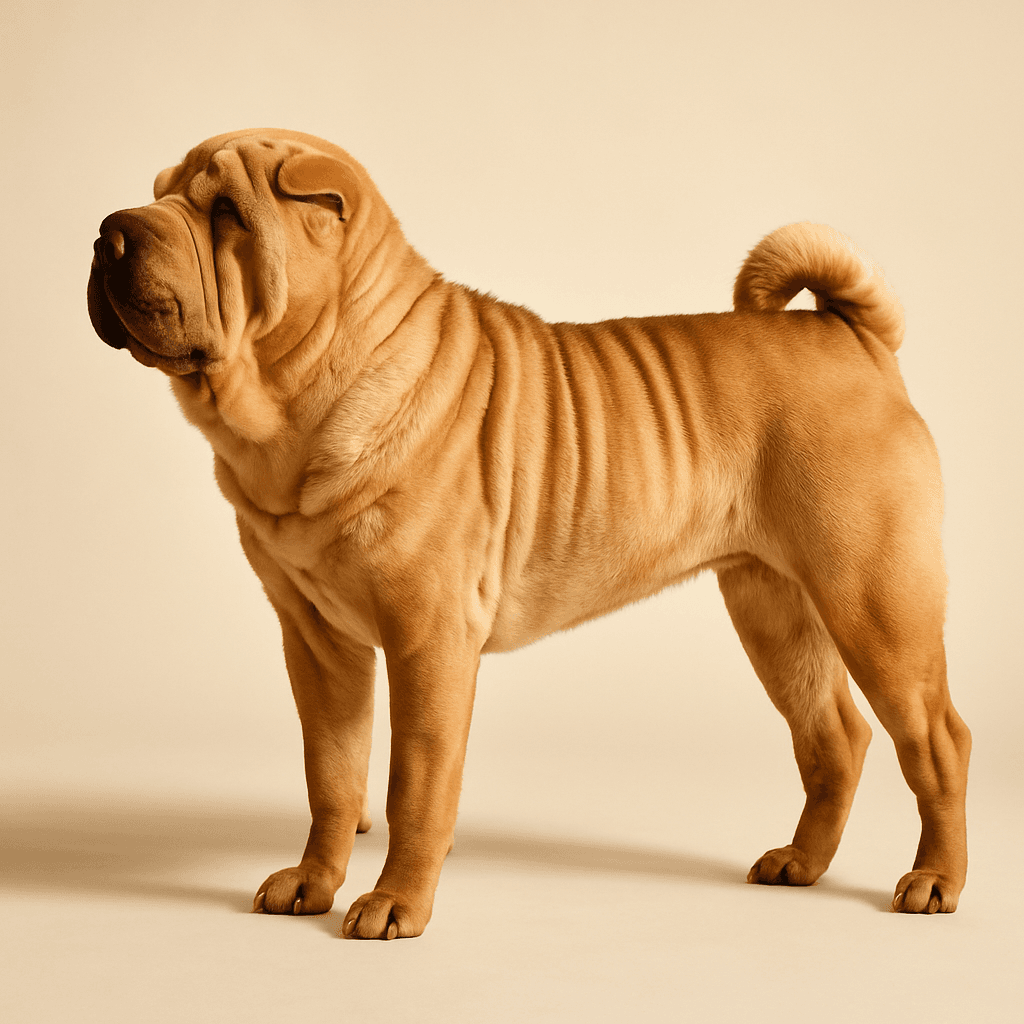
The Shar Pei is one of China's most ancient and visually distinctive dog breeds, a medium-sized, powerfully built and uniquely wrinkled dog developed in the Guangdong province of southern China over many centuries in a variety of roles including farm dog, hunting dog and dog fighting - the deeply wrinkled, loose skin that is the breed's most immediately striking feature is thought to have served a purpose in fighting by allowing the dog to twist within its own skin when gripped by an opponent. The breed is also distinguished by its blue-black tongue and gums, a characteristic shared with the Chow Chow, and its harsh, prickly coat - the name Shar Pei translates approximately as sand skin or sand paper skin, describing the distinctive texture of the coat. The Shar Pei declined sharply in numbers in mainland China during the twentieth century and was at one point considered one of the rarest breeds in the world before being preserved and developed by breeders in Hong Kong and subsequently the United States and Europe. It is registered by the Kennel Club in the Utility Group. The Shar Pei presents in two forms: the traditional or bone-mouth type, with moderate wrinkling, and the more exaggerated meat-mouth type with heavy wrinkling across the entire body. Both types carry the characteristic blue-black tongue, small, folded ears and broad, flat head. The coat is short and very harsh to the touch. Adults typically stand 44 to 51 centimetres at the shoulder and weigh 18 to 29 kilograms. The character is calm, loyal and deeply devoted to its own family while remaining aloof and self-possessed with strangers - the guard and working dog heritage of centuries produces a dog of quiet authority and independent confidence that is not given to demonstrative sociability. The Shar Pei forms strong, loyal bonds with its own household and is typically gentle with children it knows, but the independent character makes experienced handling and early socialisation essential. The health challenges of the breed are significant and must be understood before purchase. Shar Pei Fever and the associated risk of Amyloidosis and kidney failure are serious inherited conditions. Skin fold management is a lifetime commitment. Entropion is common. Purchase prices from KC-registered, health-tested breeders range from £1,000 to £2,500. Monthly running costs average £90 to £180. The British Shar Pei Club is the primary resource for breed information, health testing requirements, responsible breeders and rescue contact.
Quick facts
Meet Our Shar Peis
Register your dog on My Dog and it will appear here automatically.
Shar Pei Photos
No photos yet. Be the first to share yours.
Add a photoActivity Feed
How much exercise does your Shar Pei really need each day?
Around 45 to 60 minutes of daily exercise is the right amount for most Shar Peis, though the data puts the minimum at 20 to 30 minutes. Mine is content with a solid morning walk and a shorter evening one, totalling about an hour. Moderate rather than intense is the right approach, partly because of the brachycephalic tendencies present in some breed lines, vigorous exercise in warm weather is something I avoid carefully. The British climate helps, but on hot days I walk early morning or late evening only. Obesity is also worth guarding against because excess weight puts pressure on the skin folds and exacerbates related health issues. Regular exercise to maintain good condition is genuinely important for this breed, not just a nice-to-have. Mine has a calm temperament and doesn't push for more, you have to be disciplined on his behalf.
30 June 2026
Any health issues to watch for with Shar Peis?
Anyone researching Shar Peis needs to understand Familial Shar Pei Fever properly before they buy. It's a periodic fever syndrome directly linked to the same genetic mutations that produce the characteristic wrinkles, and it can lead to Amyloidosis, amyloid protein accumulating in the kidneys, potentially causing kidney failure. This is a serious hereditary condition, not a minor inconvenience. Beyond that, skin fold dermatitis is an ongoing management task throughout the dog's life, the folds need regular cleaning and monitoring. Entropion, where the eyelids roll inward, is common and often requires surgical correction; I'd budget for this as a likely cost. Primary Open Angle Glaucoma has been documented too. The British Shar Pei Club maintains health testing guidance and is an essential resource before you commit to the breed.
30 June 2026
What's the one thing you wish you'd known before getting a Shar Pei?
The health complexity. I knew the breed had some health considerations, I don't think I understood the depth of them until I was already committed. The skin fold management is a genuine ongoing task, not something you do once and tick off. The Shar Pei Fever situation is something I felt inadequately prepared for. And the reserved, aloof character with strangers, which I find genuinely appealing, means that socialisation has to start early and be thorough, because it doesn't come naturally. What I didn't expect was how deeply devoted and quietly affectionate this breed is with its own family. Mine is calm, gentle and bonded to us in a way that's quite profound. The guarding heritage produces a watchful, self-possessed dog rather than a boisterous one. If you go in fully informed on the health side, the temperament rewards are real.
30 June 2026
What do you feed your Shar Pei, and why?
A high-quality complete food for medium active breeds, twice a day. The main nutritional consideration for my boy is that he has skin sensitivities, which is something the breed is known for, some Shar Peis do much better on a limited-ingredient or hypoallergenic diet, and it took some trial and error to find what suited him. I'd recommend keeping a close eye on skin and digestive condition in the first few months and being prepared to adjust. Weight management is genuinely important for this breed, excess weight worsens skin fold issues and compounds the health challenges the breed already faces. I check condition hands-on regularly rather than relying on visual assessment, because the wrinkles and coat can make weight harder to gauge by eye. Two structured meals, appropriate portion sizes, and a food that suits the individual dog's digestion. That's the formula that works for us.
30 June 2026
Shar Pei of the Month
🏆 September 2026 -- Be the first nominee
Could be your dog.
The first dog registered in this community earns the first Dog of the Month nomination automatically.
Register your dogUpcoming Shar Pei Meetups
No meetups planned yet. Be the first to organise one.
Sign in to organise a meetupCommunity Members
Be the first to join and become the Shar Pei Founding Member.
Join Club