Be the first to join. Keep the badge forever.
The first members of this community earn permanent Founding Member status. It shows on your profile and your dog's profile for as long as you're here.
- ✓Founding Member badge on your profile
- ✓Your dog featured first
- ✓First Dog of the Month nomination
- ✓Always free
⭐ Founding Member spots open
First to join gets the badge
🐕 Be the first dog registered
Add your Lab to the community
📷 Add the first photo
Start the photo wall
8
Discussions
0 members
8 discussions
About the Sheepadoodle
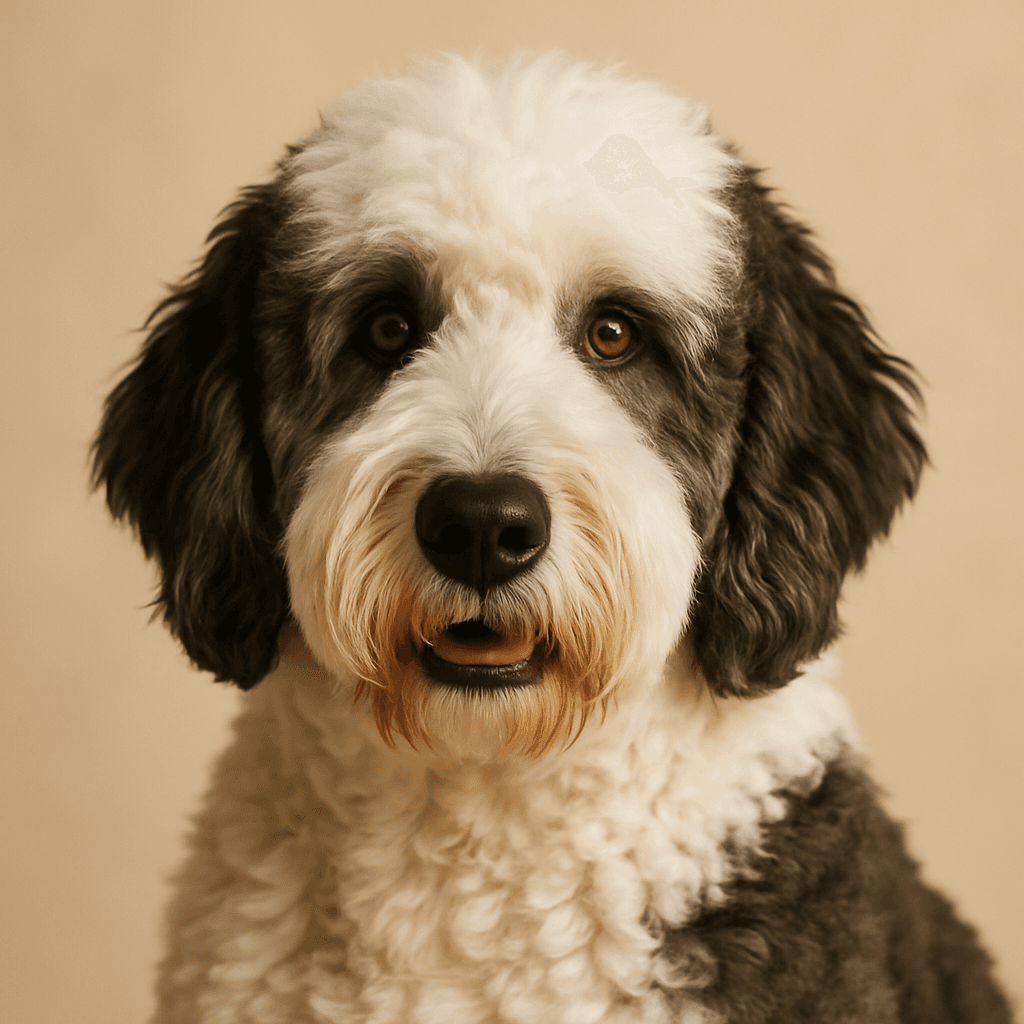
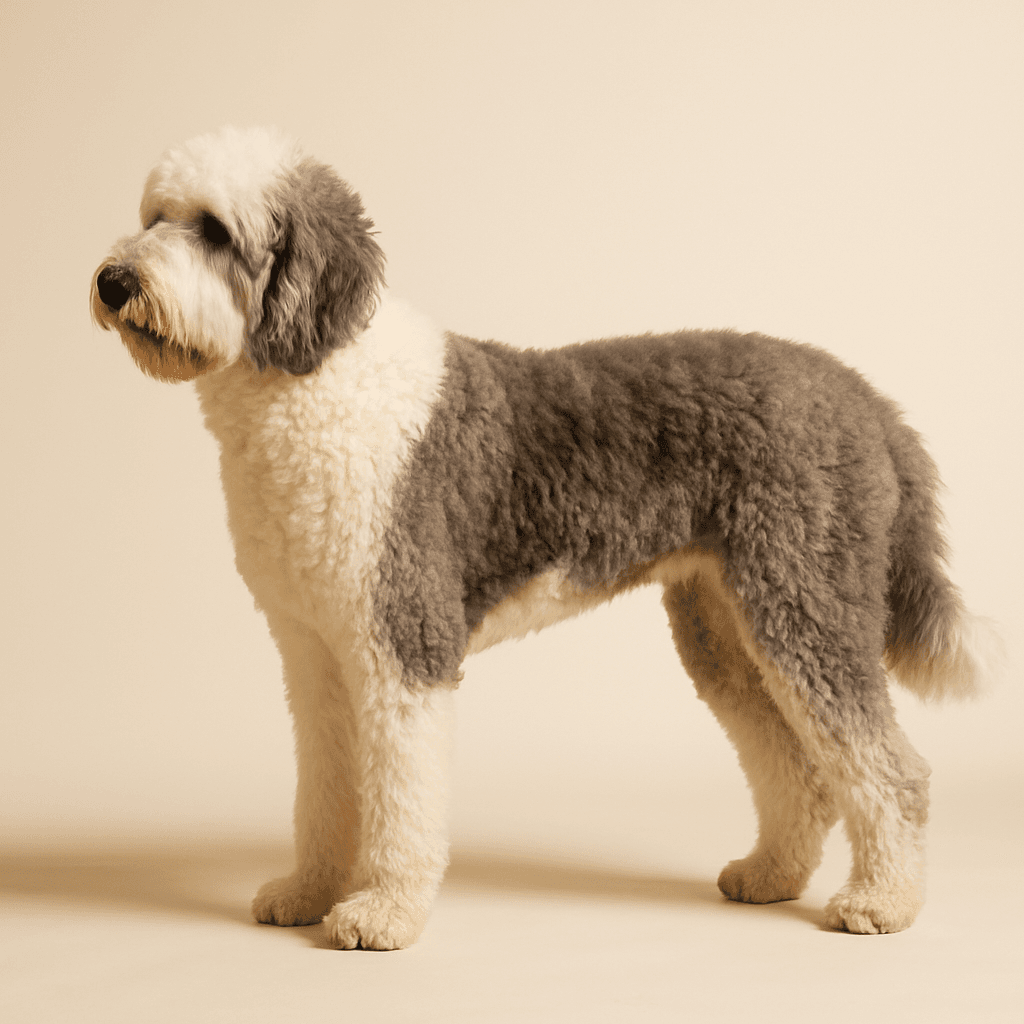
The Sheepadoodle is a hybrid dog produced by crossing an Old English Sheepdog with a Standard Poodle, combining the warmth, sociability and shaggy-coated character of the Old English Sheepdog with the Poodle's intelligence, trainability and lower-shedding coat qualities to produce a large, affectionate and capable companion that has attracted considerable interest from families seeking a large dog with reduced shedding and high trainability. The Sheepadoodle is not a registered breed with the Kennel Club and does not have a formal breed standard, meaning appearance and character can vary between individuals depending on which parent's traits dominate in a given litter. The typical Sheepadoodle is a large, well-built and fluffy dog with a wavy to curly coat that inherits elements of both parent breeds, usually in black and white markings reflecting the Old English Sheepdog colouring, though other colours are possible. The coat is typically lower-shedding than that of the Old English Sheepdog parent but is not truly non-shedding, and it requires significant grooming commitment to prevent matting in the dense, soft texture. Adults typically stand 53 to 66 centimetres at the shoulder and weigh 27 to 40 kilograms. The character is sociable, affectionate and gentle, reflecting the warmth of the Old English Sheepdog and the intellectual capability of the Poodle. The Sheepadoodle is typically very good with children, sociable with other dogs and enthusiastic about engagement and activity. Both parent breeds are working dogs - the Old English Sheepdog as a drover's dog and the Poodle as a water retriever - and the cross inherits real drive, energy and intelligence that must be met with adequate daily exercise and mental stimulation. Training is a genuine strength. The cross is highly intelligent and responds brilliantly to positive, consistent training from an early age. Health testing of both parents is essential. Hip Dysplasia, eye conditions and Bloat are the primary concerns. As with all large hybrid dogs, buyers should not purchase from breeders who cannot produce evidence of health testing for both parent animals. The coat type in Sheepadoodles is not fully predictable in F1 crosses - some individuals inherit a coat closer to the Old English Sheepdog parent, which sheds significantly more than the Poodle-type coat. Breeders with experience of multi-generational lines can give better guidance on coat outcome probability, and meeting both parent dogs before purchase gives useful information about the likely character and coat of the litter. Purchase prices from health-tested breeders range from £1,500 to £3,000. Monthly running costs average £120 to £200. No breed-specific club exists - general hybrid dog resources and the Doodle Trust are the primary rescue contacts.
Quick facts
Meet Our Sheepadoodles
Register your dog on My Dog and it will appear here automatically.
Sheepadoodle Photos
No photos yet. Be the first to share yours.
Add a photoActivity Feed
What do you feed your Sheepadoodle, and why?
I feed a high-quality complete kibble formulated for large active breeds, split into two meals morning and evening. The two-meal split is deliberate: deep-chested dogs like Sheepadoodles carry a genuine bloat risk, and feeding one large meal a day is one of the factors thought to increase it. I weigh her portions rather than estimate. It's easy to drift with a big dog where the food amounts feel small relative to their size, and before you know it they're carrying more weight than they should. During her growth phase I was careful to use large breed puppy food, which controls the rate of growth more carefully than standard puppy food. Getting that right in the first year matters for joint health later.
30 June 2026
How much exercise does your Sheepadoodle really need each day?
Honestly, 90 minutes is the floor, not the ceiling. My Sheepadoodle would happily do more if I let her. Both the Old English Sheepdog and Standard Poodle sides bring genuine working dog energy, and that combination means she arrives at a walk already buzzing with enthusiasm. I do at least one proper off-lead run and one structured on-lead walk every day. What I didn't appreciate before I got her is how much mental stimulation matters alongside the physical side. On days when we do nose work or a training session indoors, she's noticeably calmer in the evening than on days when she's only had a run. If you're thinking about a Sheepadoodle and your life doesn't currently accommodate 90 minutes of vigorous daily activity, I'd be honest with yourself about that before committing.
30 June 2026
Any health issues to watch for with Sheepadoodles?
Health testing is non-negotiable with this cross, and I'd walk away from any breeder who can't produce evidence for both parents. On the Old English Sheepdog side, you're looking for hip scores, eye testing, and Hereditary Cataract DNA test results. On the Standard Poodle side, it's hip scores again, a Sebaceous Adenitis assessment, Progressive Retinal Atrophy DNA test, and Neonatal Encephalopathy assessment. If a breeder can't produce all of those, they're cutting corners. The other thing I keep an eye on is bloat. Large, deep-chested dogs are at real risk, so I feed two meals a day rather than one, avoid exercising immediately after eating, and know the signs to watch for. It's one of those conditions where speed of response genuinely matters.
30 June 2026
What's the one thing you wish you'd known before getting a Sheepadoodle?
How quickly they learn everything, including the things you didn't intend to teach. Sheepadoodles are genuinely clever dogs. The Poodle intelligence and the Old English Sheepdog warmth combine into a dog that watches you constantly, picks up patterns fast, and figures out how the household works within weeks. That's brilliant when you're training recall or settle. It's less brilliant when they've worked out that nudging your elbow gets your attention and have been practicing it for three months before you notice. Positive training from day one is essential, not just for basic obedience but because you're shaping a highly capable mind from the start. Early socialisation is also important given how big they get. A large dog that hasn't been well socialised is a much harder problem to solve than a small one.
30 June 2026
Sheepadoodle of the Month
🏆 September 2026 -- Be the first nominee
Could be your dog.
The first dog registered in this community earns the first Dog of the Month nomination automatically.
Register your dogUpcoming Sheepadoodle Meetups
No meetups planned yet. Be the first to organise one.
Sign in to organise a meetupCommunity Members
Be the first to join and become the Sheepadoodle Founding Member.
Join Club