


Be the first to join. Keep the badge forever.
The first members of this community earn permanent Founding Member status. It shows on your profile and your dog's profile for as long as you're here.
- ✓Founding Member badge on your profile
- ✓Your dog featured first
- ✓First Dog of the Month nomination
- ✓Always free
⭐ Founding Member spots open
First to join gets the badge
🐕 Be the first dog registered
Add your Lab to the community
📷 Add the first photo
Start the photo wall
8
Discussions
0 members
8 discussions
About the Shepadoodle
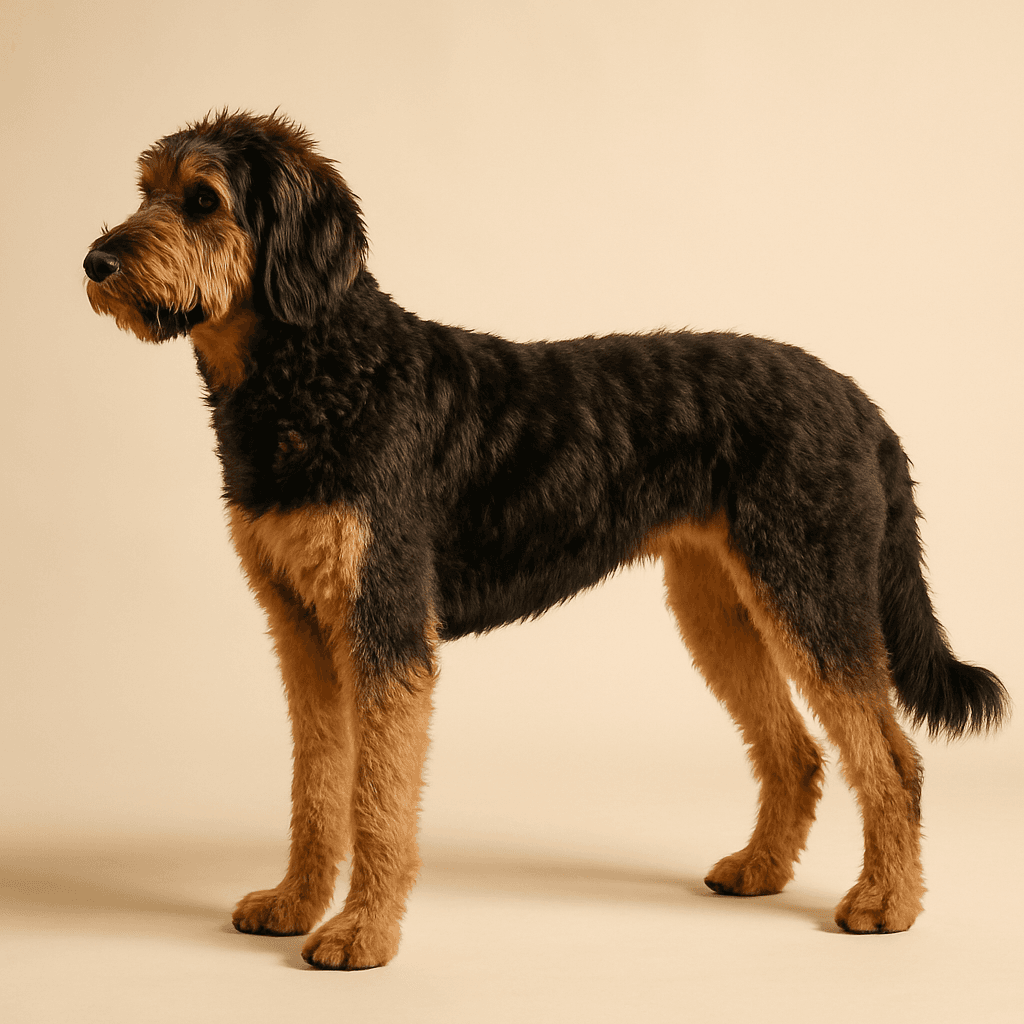
The Shepadoodle is a hybrid dog produced by crossing a German Shepherd with a Standard Poodle, combining two of the most widely respected and capable working breeds in the world to produce a large, intelligent and typically lower-shedding companion that inherits the German Shepherd's loyalty, protectiveness and trainability alongside the Poodle's sociability, intelligence and reduced-shedding coat qualities. The cross has attracted interest from owners who admire the German Shepherd's character and capability but find the heavy shedding of the purebred difficult to manage. The Shepadoodle is not a registered breed with the Kennel Club and does not have a formal breed standard, meaning appearance, character and coat type can vary considerably between individuals. The typical Shepadoodle is a large, well-built dog with a wavy to curly coat that is usually lower-shedding than the German Shepherd parent alone, though full non-shedding cannot be guaranteed and coat type varies between litters and individuals depending on which parent's coat genes dominate. Colour varies widely - black and tan, sable, black, cream and various combinations all occur. Adults typically stand 55 to 65 centimetres at the shoulder and weigh 25 to 40 kilograms. The character reflects the working heritage of both parents. The Shepadoodle is typically loyal, intelligent and protective - more alert and watchful than many other doodle crosses, with a clear German Shepherd guardian instinct that can manifest in wariness with strangers and territorial behaviour if not managed with thorough early socialisation. This protective character is a strength in the right hands but requires experienced ownership and consistent training from puppyhood. Both parent breeds are among the most trainable dogs in existence and the cross inherits that capability. The Shepadoodle responds brilliantly to positive reinforcement and is capable of high-level performance in obedience, agility and working dog sports. The training investment required for a large, protective hybrid should not be underestimated. Health testing of both parents is essential. Hip Dysplasia, Degenerative Myelopathy and Bloat are the primary concerns. Purchase prices from health-tested breeders range from £1,000 to £2,500. Monthly running costs average £100 to £180. No breed-specific club exists - German Shepherd and Poodle rescue organisations are the primary contacts for rescue animals. The combination of two exceptional working breeds makes the Shepadoodle one of the most capable and trainable hybrid dogs available, but it demands an experienced, committed owner who will invest seriously in training and socialisation from the earliest weeks.
Quick facts
Meet Our Shepadoodles
Register your dog on My Dog and it will appear here automatically.
Shepadoodle Photos
No photos yet. Be the first to share yours.
Add a photoActivity Feed
How much exercise does your Shepadoodle really need each day?
Ninety minutes is the minimum I'd suggest, and on days when we hit that properly, with real vigour and not just a potter round the block, he's a genuinely lovely dog to live with. On days when life gets in the way and we fall short, he tells me about it by finding something to chew or pacing. Both German Shepherd and Poodle are serious working breeds with real drive, and the Shepadoodle inherits that fully. Physical exercise alone isn't enough either. Scent work, training sessions, and problem-solving games make a visible difference to how settled he is. He's not a dog I'd recommend to anyone who travels a lot for work or can't reliably commit two hours a day. The energy is real and consistent.
30 June 2026
Any health issues to watch for with Shepadoodles?
Both parent breeds need thorough health testing and you should see evidence of it before committing to a puppy. From the German Shepherd side: hip scores, elbow scores, and a Degenerative Myelopathy DNA test. From the Poodle side: hip scores, Progressive Retinal Atrophy DNA test, and Von Willebrand's Disease testing. A breeder who says their dogs are healthy without paperwork to back it up isn't good enough for a cross with this level of inherited risk. Bloat is the other thing I take seriously day to day. He eats twice a day, never immediately before or after vigorous exercise, and I know the symptoms. A dog showing signs of bloat needs emergency veterinary care immediately, not a wait-and-see approach.
30 June 2026
What's the one thing you wish you'd known before getting a Shepadoodle?
That the German Shepherd guardian instinct comes through quite strongly. I expected the sociable Poodle side and I got that, but I also got a dog who is noticeably reserved with people he doesn't know and who has a clear sense of who belongs in the house and who doesn't. That's not a problem if you expect it and socialise well from the start. But if you assume you're getting a universally friendly, easygoing dog, you might be surprised. The training commitment is also higher than I anticipated. Both parent breeds are among the best working dogs in the world, and this cross has that capacity, but it needs channelling properly with consistent positive training from puppyhood. The size and the protective instinct together make early training essential, not optional.
30 June 2026
What do you feed your Shepadoodle, and why?
A large breed active dog complete kibble, fed in two meals. The two-meal routine is mostly about bloat risk, which is real for large deep-chested dogs. I don't exercise him in the hour before or after eating. I track his weight monthly because he's big enough that a kilogram or two creeping on is easy to miss unless you're looking for it. During puppyhood I was careful to use a large breed puppy formula, which moderates growth rate more carefully than a standard puppy food. Getting the nutrition right in the first year reduces joint problems later, and a dog this size can put a lot of stress on developing joints if growth is too rapid. I'd always recommend discussing portion sizes with your vet once you know the adult weight you're heading for.
30 June 2026
Shepadoodle of the Month
🏆 September 2026 -- Be the first nominee
Could be your dog.
The first dog registered in this community earns the first Dog of the Month nomination automatically.
Register your dogUpcoming Shepadoodle Meetups
No meetups planned yet. Be the first to organise one.
Sign in to organise a meetupCommunity Members
Be the first to join and become the Shepadoodle Founding Member.
Join Club