
Be the first to join. Keep the badge forever.
The first members of this community earn permanent Founding Member status. It shows on your profile and your dog's profile for as long as you're here.
- ✓Founding Member badge on your profile
- ✓Your dog featured first
- ✓First Dog of the Month nomination
- ✓Always free
⭐ Founding Member spots open
First to join gets the badge
🐕 Be the first dog registered
Add your Lab to the community
📷 Add the first photo
Start the photo wall
8
Discussions
0 members
8 discussions
About the Small Munsterlander
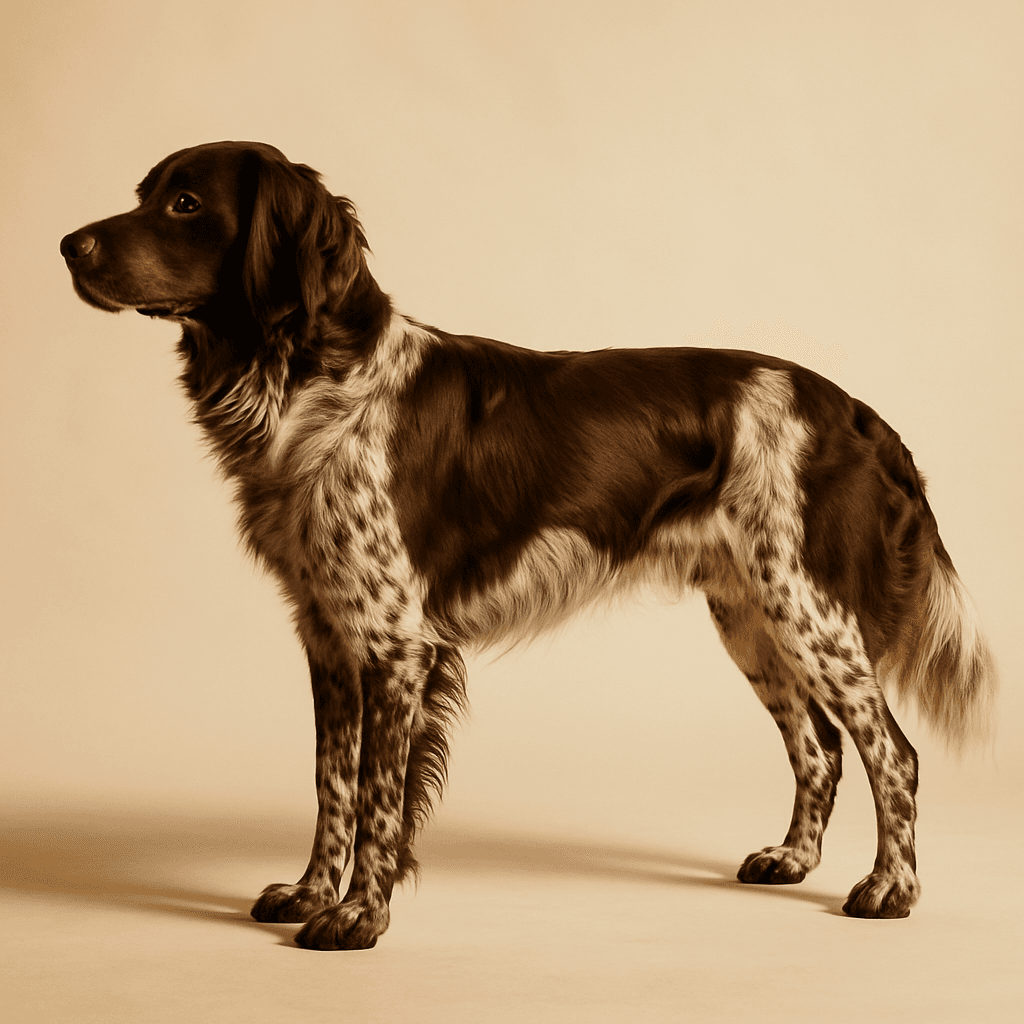
The Small Munsterlander is a versatile and highly capable German hunt, point and retrieve (HPR) gundog developed in the Munster region of north-western Germany, primarily in the late nineteenth and early twentieth centuries, as an all-purpose bird dog capable of hunting, pointing and retrieving game in a wide variety of terrain including field, woodland and water. Despite the name, the Small Munsterlander is not simply a smaller version of the Large Munsterlander - the two breeds have separate origins and were developed independently, though they share the general HPR type and the liver and white colouring that is characteristic of both. The breed was formally standardised in Germany in the early twentieth century and has been registered by the Kennel Club in the Gundog Group, maintaining an active following in the United Kingdom both as a working gundog and as an active family companion. The Small Munsterlander is a medium-sized, well-built and athletic dog with a distinguished and handsome appearance. The coat is medium-length, silky and flat, with characteristic feathering on the ears, chest, back of the legs and tail, and the distinctive liver and white colouring that can appear as roan, patched or ticked patterns. The expression is intelligent, alert and eager - entirely in keeping with a breed developed for demanding field work. Adults typically stand 50 to 56 centimetres at the shoulder and weigh 18 to 30 kilograms. The character is friendly, intelligent and enthusiastic - a working gundog that retains the drive and capability of a serious field dog while also being genuinely sociable and good-natured in the home. The Small Munsterlander is good with children, sociable with other dogs and open with strangers in a way that distinguishes it from some of the more aloof continental HPR breeds. The working drive is real, however, and the breed needs regular exercise and preferably some form of structured activity or gundog training to remain content. Training is a genuine pleasure with this breed. The Small Munsterlander is highly intelligent, eager and responsive to positive reinforcement, capable of excellent field performance and equally capable in competitive obedience, tracking and agility. Health is generally good. Hip Dysplasia testing and eye testing of parents are the primary recommendations. Purchase prices from KC-registered, health-tested breeders range from £800 to £1,500. Monthly running costs average £80 to £140. The Small Munsterlander Club UK is the primary resource for breed information, health testing, responsible breeders and rescue contact.
Quick facts
Meet Our Small Munsterlanders
Register your dog on My Dog and it will appear here automatically.
Small Munsterlander Photos
No photos yet. Be the first to share yours.
Add a photoActivity Feed
How much exercise does your Small Munsterlander really need each day?
Ninety minutes of vigorous exercise is the realistic minimum, and I don't mean ninety minutes of gentle ambling. The HPR gundog background means there's real stamina and working drive in this breed. My Small Munsterlander hunts the hedgerows on every walk, covering significantly more ground than I do. Field work, nose work, and tracking all suit the breed exceptionally well and provide the kind of mental engagement that settles a working dog far more effectively than the equivalent time in pure physical exercise. Agility is another excellent outlet. An under-exercised Small Munsterlander becomes frustrated and expresses it destructively. I know of people who've underestimated this and ended up with a dog that had redesigned their garden. The drive and energy are consistent and daily, not something you can bank exercise against.
30 June 2026
Any health issues to watch for with Small Munsterlanders?
Hip Dysplasia testing of both parents is strongly recommended before purchasing a puppy, and I wouldn't buy from a breeder who couldn't produce hip scores. Eye testing is also recommended. Beyond that, the Small Munsterlander is generally considered a healthy breed with relatively few documented hereditary conditions, which is one of the things I find reassuring about the breed compared to some more popular options. The Small Munsterlander Club UK is the right place to go for current, breed-specific health testing guidance rather than relying on general advice. Because the breed is less common in the UK than some HPR breeds, it's important to go to the club directly and speak to breeders who are actively involved in health monitoring within the breed. Don't assume that a lower profile means fewer health concerns: it can also mean less data.
30 June 2026
What's the one thing you wish you'd known before getting a Small Munsterlander?
How much they thrive with a job and how quickly that energy finds other outlets when they don't have one. The working gundog drive in this breed is not a background hum: it's an active, daily presence. My Small Munsterlander is a genuinely lovely companion in every way, affectionate, great with the kids, sociable with other dogs. But that pleasantness comes with an implicit requirement to meet the working dog need. Tracking sessions, regular training activity, nose work, and access to rough ground to hunt all make a visible difference to how settled and content he is at home. I'd also say that the training responsiveness is genuinely one of the pleasures of the breed. They learn quickly and engage enthusiastically with positive work. If you're willing to put the training time in, the breed rewards it fully.
30 June 2026
What do you feed your Small Munsterlander, and why?
A good quality complete food for a medium active breed, in two meals per day. During the shooting season when he's doing more structured fieldwork I increase portions based on his body condition rather than a fixed amount, because the energy expenditure varies significantly between a working week and a rest day. I check his weight and waist regularly. Working dogs can drop condition quickly if you're not keeping track, and equally they can gain weight in periods of lower activity if you don't adjust accordingly. Two meals suits him better than one: it keeps his energy more consistent through the day and reduces any digestive discomfort after eating. I keep the diet simple and consistent rather than rotating between products, which seems to agree with his digestion well.
30 June 2026
Small Munsterlander of the Month
🏆 September 2026 -- Be the first nominee
Could be your dog.
The first dog registered in this community earns the first Dog of the Month nomination automatically.
Register your dogUpcoming Small Munsterlander Meetups
No meetups planned yet. Be the first to organise one.
Sign in to organise a meetupCommunity Members
Be the first to join and become the Small Munsterlander Founding Member.
Join Club