

Be the first to join. Keep the badge forever.
The first members of this community earn permanent Founding Member status. It shows on your profile and your dog's profile for as long as you're here.
- ✓Founding Member badge on your profile
- ✓Your dog featured first
- ✓First Dog of the Month nomination
- ✓Always free
⭐ Founding Member spots open
First to join gets the badge
🐕 Be the first dog registered
Add your Lab to the community
📷 Add the first photo
Start the photo wall
8
Discussions
0 members
8 discussions
About the Welsh Corgi (Cardigan)
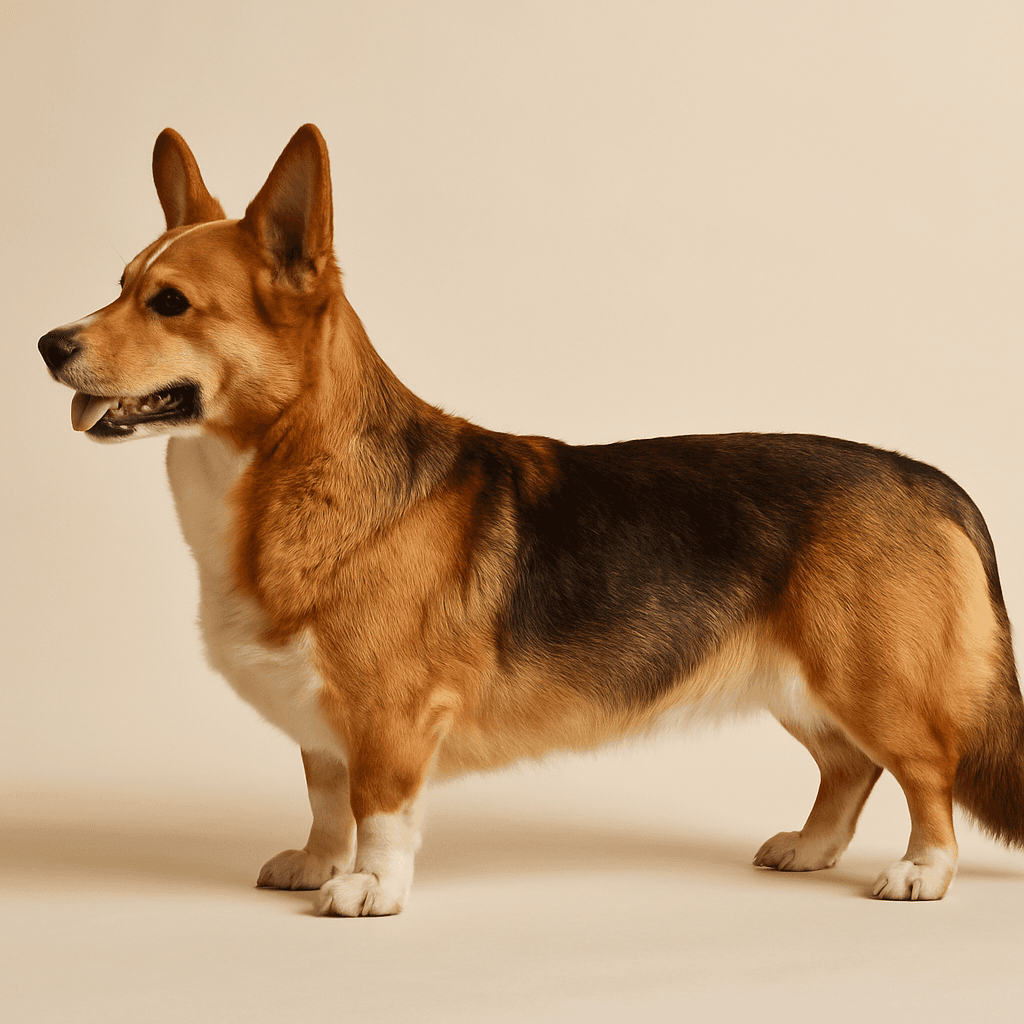
The Cardigan Welsh Corgi is one of the oldest herding breeds in the British Isles, with a history in Wales that is thought by some authorities to stretch back over three thousand years, possibly introduced to Wales by Celtic peoples migrating from central Europe. The Cardigan is the older of the two Corgi varieties, predating the Pembroke Welsh Corgi, and was developed in the county of Cardiganshire in south-west Wales as a cattle herding dog that worked by nipping at the heels of cattle to drive them forward - the low-slung build that allows it to duck under the kick of an irritated cow being a functional adaptation to this specific working role. The Cardigan and Pembroke were crossed at various points in history and were shown together as a single breed until the Kennel Club separated them in 1934. The Cardigan is registered by the Kennel Club in the Pastoral Group. The Cardigan Welsh Corgi is a low-set, powerfully built herding dog that is somewhat larger and heavier-boned than the Pembroke, with a long, fox-like tail - retained where the Pembroke is traditionally docked - and a longer, more substantial body. The coat is a weather-resistant double coat of medium length in a wide variety of colours including red, sable, brindle, black and tan, blue merle and various tri-colour combinations. The large, rounded ears are upright. The expression is alert, intelligent and slightly foxy. Adults typically stand 27 to 32 centimetres at the shoulder and weigh 11 to 17 kilograms. The character is loyal, intelligent and alert - a genuine working herding dog of considerable capability and personality. The Cardigan is devoted to its own family, good with children and typically sociable with other dogs. It is somewhat more reserved with strangers than the Pembroke, which reflects the watchful, territorial quality of a dog bred to manage and protect livestock. The herding instinct is active and may manifest in rounding up behaviour with children or other animals. The breed is active and enthusiastic about engagement and does not thrive in very sedentary households. Training is genuinely rewarding. The Cardigan is highly intelligent and responds well to positive, consistent training. It has natural aptitude for agility, obedience and herding activities, and the combination of intelligence and working drive makes it a rewarding competition dog. Health considerations include Hip Dysplasia assessment, Progressive Retinal Atrophy DNA testing and awareness of IVDD risk in this long-backed breed. Maintaining healthy weight is the single most important preventive measure for spinal health. Purchase prices from KC-registered breeders range from £700 to £1,500. Monthly running costs average £65 to £110. The Cardigan Welsh Corgi Association is the primary resource for breed information, health testing requirements, responsible breeders and rescue contact.
Quick facts
Meet Our Welsh Corgi (Cardigan)s
Register your dog on My Dog and it will appear here automatically.
Welsh Corgi (Cardigan) Photos
No photos yet. Be the first to share yours.
Add a photoActivity Feed
How much exercise does your Cardigan Welsh Corgi really need each day?
Forty-five to sixty minutes a day, and my Cardigan makes it clear when he's not getting enough. He's deceptively energetic for his size and he genuinely benefits from off-lead running when I can arrange it. He has strong herding instinct and a working dog's drive in a very compact package. The mental stimulation side is equally important. He does agility and finds it genuinely satisfying in a way that a straightforward walk doesn't quite match. What I've been consistent about is not letting him jump repeatedly from heights. The long back and the short legs of the Corgi type mean the IVDD risk is real, and I manage that by using ramps for the car and discouraging leaping off furniture. His exercise is varied and regular, but it's ground-level exercise.
1 July 2026
Any health issues to watch for with Cardigan Welsh Corgis?
IVDD, intervertebral disc disease, is the one I worry about most with a long-backed breed. The structure that makes them look so appealing is also what creates spinal vulnerability. I keep him lean, I use ramps, I discourage jumping from height. Extra weight makes the risk worse, which is another reason weight management matters beyond the usual health reasons. Hip dysplasia testing is important and both parents should be hip scored. PRA DNA testing is equally important for eye health, and I'd ask specifically for those results before committing to any litter. The Cardigan is generally a healthy breed but these are not hypothetical risks. They're well-documented in the type. Ask the breeder what tests have been done and verify the results rather than accepting verbal reassurance.
1 July 2026
What's the one thing you wish you'd known before getting a Cardigan Welsh Corgi?
How independent and self-possessed they are compared to some other herding breeds. My Cardigan is intelligent and trainable but he approaches training as a negotiation rather than a given. He responds beautifully to positive reinforcement and he's done well in obedience and agility, but he is not the sort of dog who complies automatically. He's reserved with strangers in a way that took some visitors by surprise. They expected a sociable, immediately friendly small dog and instead met a dog who watched them carefully and made his own assessment before deciding they were acceptable. That watchful quality is part of the breed and I find it endearing, but it's worth knowing. Early socialisation shapes how that wariness expresses, but it doesn't eliminate the underlying character.
1 July 2026
What do you feed your Cardigan Welsh Corgi, and why?
A complete dry kibble twice a day, weighed precisely, because both Corgi breeds are genuinely prone to obesity and carrying extra weight on a long back is a compounding problem. Mine gets around 160g a day and I adjust downwards on quieter weeks. He would happily eat twice that and look at me with complete sincerity as if he'd been given nothing. Treats are counted within his daily allowance rather than added on top. I keep him lean enough to see a waist and feel ribs easily. That body condition is one of the best things I can do for his spinal health long-term. A lean Cardigan is a healthier Cardigan, and keeping him that way is a daily discipline, not a seasonal one.
1 July 2026
Welsh Corgi (Cardigan) of the Month
🏆 September 2026 -- Be the first nominee
Could be your dog.
The first dog registered in this community earns the first Dog of the Month nomination automatically.
Register your dogUpcoming Welsh Corgi (Cardigan) Meetups
No meetups planned yet. Be the first to organise one.
Sign in to organise a meetupCommunity Members
Be the first to join and become the Welsh Corgi (Cardigan) Founding Member.
Join Club