

Be the first to join. Keep the badge forever.
The first members of this community earn permanent Founding Member status. It shows on your profile and your dog's profile for as long as you're here.
- ✓Founding Member badge on your profile
- ✓Your dog featured first
- ✓First Dog of the Month nomination
- ✓Always free
⭐ Founding Member spots open
First to join gets the badge
🐕 Be the first dog registered
Add your Lab to the community
📷 Add the first photo
Start the photo wall
8
Discussions

0 members
8 discussions
About the Aussiedoodle
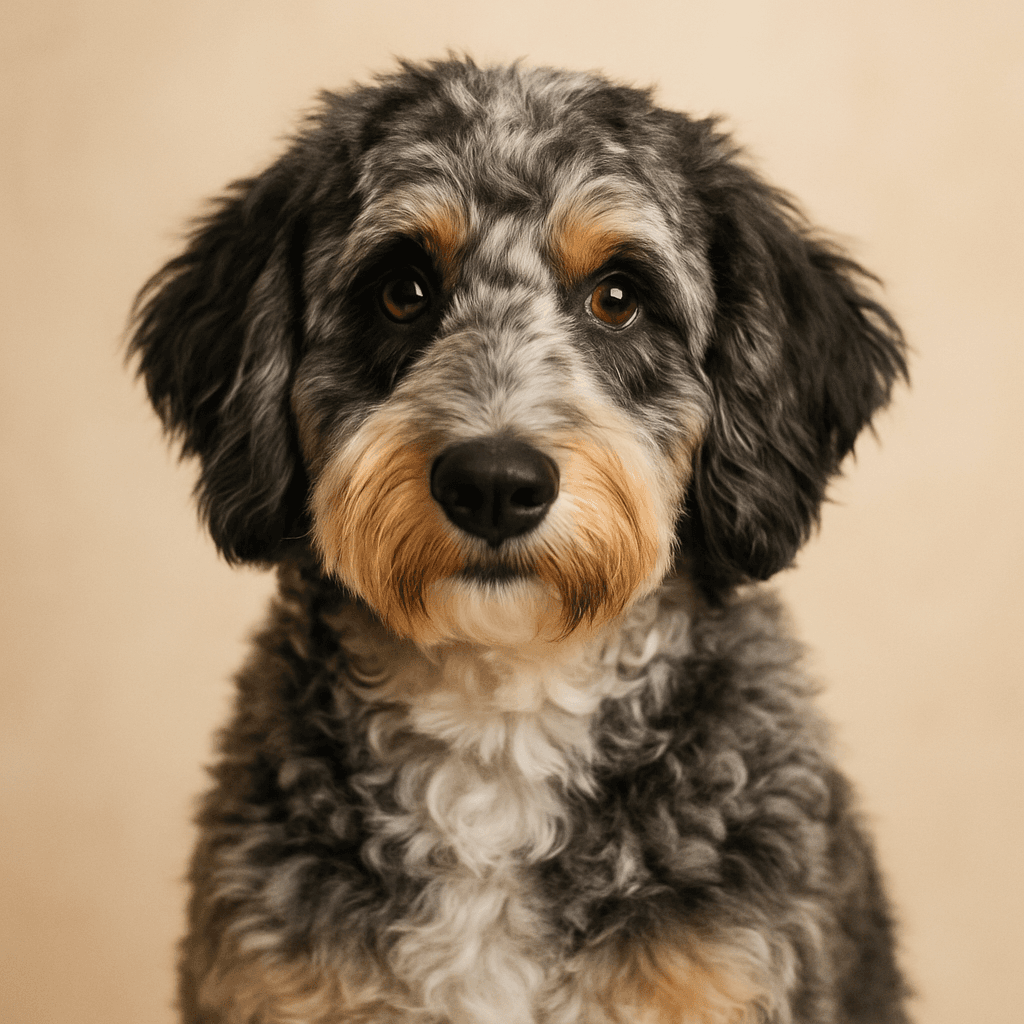
The Aussiedoodle is a cross between an Australian Shepherd and a Poodle, producing a highly intelligent, active and typically low-to-moderate-shedding dog that has grown significantly in popularity in the UK. It is not recognised by the Kennel Club and cannot be KC-registered. Like all Poodle crosses, it is often marketed with emphasis on the low-shedding coat, but the most important characteristics of this cross are the very high intelligence and exercise demands inherited from both parent breeds. Both parent breeds are working dogs of considerable ability. The Australian Shepherd is a herding breed bred for sustained activity, quick problem-solving and intense responsiveness to human direction. The Poodle, despite its often-mischaracterised image, was developed as a working retriever and retains exceptional intelligence, trainability and energy. When these two breeds cross, the result is a dog that is bright, active, eager and demanding. This is the central truth of Aussiedoodle ownership that prospective buyers should internalise before acquiring one. The exercise requirement is substantial: a minimum of 1.5 to 2 hours per day of vigorous activity, supplemented with significant mental stimulation through training, puzzle feeding, agility or scent work. Physical exercise alone is not sufficient for a dog of this intelligence. A well-exercised but mentally under-stimulated Aussiedoodle will channel its considerable brainpower into behaviour that owners typically do not welcome. This is not a fault: it is a predictable outcome of failing to meet the dog's needs. Coat type varies considerably and is not predictable at purchase. The spectrum runs from wavy to tightly curled, with shedding levels that reflect which parent's coat genetics dominate. The consistently low-shedding coat is not guaranteed. Whatever the coat type, professional grooming every 6 to 8 weeks and regular home brushing are required. The most important health consideration specific to this cross is the MDR1 gene mutation inherited from the Australian Shepherd parent. Affected dogs have dangerous sensitivity to certain medications that are routinely used in veterinary practice. DNA testing before any medication is administered is essential, and the dog's MDR1 status should be communicated to every vet the dog sees throughout its life. Breeders should have both parents tested. Hip dysplasia, Progressive Retinal Atrophy and epilepsy are additional concerns from both parent lines. Health testing of both parents is the critical differentiator between responsible breeders and those producing puppies for demand. Ask for hip scores on both parents, PRA DNA test results for the Poodle parent, MDR1 test results for the Australian Shepherd parent and current eye certificates. Breeders who cannot provide this should be avoided regardless of price. Purchase prices range from £1,000 to £2,500. Monthly running costs of £130 to £230 reflect a moderately expensive cross to maintain. Lifespan is 10 to 13 years. For active families who genuinely engage with their dog's intelligence, commit to the exercise and mental stimulation requirements and verify health testing before buying, the Aussiedoodle is a warm, capable and rewarding companion. For those attracted primarily by the coat or the aesthetic, it is frequently too much dog.
Quick facts
Meet Our Aussiedoodles
Register your dog on My Dog and it will appear here automatically.
Aussiedoodle Photos
No photos yet. Be the first to share yours.
Add a photoActivity Feed
How much exercise does your Aussiedoodle really need each day?
One and a half to two hours a day, and the mental stimulation is honestly as important as the miles. Both parent breeds are working dogs with serious intelligence, and a physically exercised but mentally under-engaged Aussiedoodle will find its own entertainment pretty quickly. Mine does agility once a week and a scent work session mid-week, and those two things do more for her behaviour at home than an extra long walk would. The herding instinct from the Australian Shepherd side can surface as circling or chasing. I redirect it consistently into structured activities rather than letting it land on the children or the cat. Recall is generally good when trained properly from day one, but the herding drive means I stay aware around moving targets.
30 June 2026
Any health issues to watch for with Aussiedoodles?
The single most important thing any Australian Shepherd crossbreed owner needs to know is the MDR1 gene mutation. It causes affected dogs to have life-threatening sensitivity to certain medications including common parasite treatments and some anaesthetics. Get your Aussiedoodle DNA tested for MDR1 status and tell every vet, every time. A responsible breeder should test both parents, but get your own dog tested regardless. Beyond MDR1: hip dysplasia is a risk from both sides of the cross and KC/BVA Hip Scores on both parents are the expectation. The Poodle parent should have prcd-PRA DNA testing. Epilepsy can be inherited from the Australian Shepherd line. Collie Eye Anomaly and cataracts can also come through from the Shepherd side. Monthly insurance typically runs £30 to £65.
30 June 2026
What's the one thing you wish you'd known before getting an Aussiedoodle?
How non-negotiable the mental stimulation requirement is. I knew they were intelligent and I'd read the breed guides, but I underestimated what two working-breed parents actually means in day-to-day terms. A bored Aussiedoodle doesn't just sleep it off. She'd redecorate the house given half an opportunity. The other thing I didn't fully prepare for was the attachment. Both parent breeds bond strongly with their people, and my Aussiedoodle found separation genuinely distressing in those first months. Building independence from the very first week at home matters more than I appreciated. And the MDR1 gene mutation: test for it early, communicate the result to every vet, and never assume a medication is safe without checking against MDR1 status first. That's a life-critical piece of information for Australian Shepherd crosses.
30 June 2026
What do you feed your Aussiedoodle, and why?
Two meals a day on a quality complete food appropriate for an active medium-sized dog. I weigh portions because it's easy to overfeed a dog that's always enthusiastic about mealtimes and makes it look like they need more. Monthly food cost runs around £45 to £60 for mine. Weight management isn't usually a problem when the exercise needs are properly met, but portion discipline still matters. Neither Poodles nor Australian Shepherds are particularly prone to pancreatitis the way some breeds are, but I still feed a balanced diet with sensible fat content. The MDR1 note from the health side applies here too: any supplements or treatments given alongside food need to be checked against MDR1 status if the dog hasn't been tested.
30 June 2026
Aussiedoodle of the Month
🏆 September 2026 -- Be the first nominee
Could be your dog.
The first dog registered in this community earns the first Dog of the Month nomination automatically.
Register your dogUpcoming Aussiedoodle Meetups
No meetups planned yet. Be the first to organise one.
Sign in to organise a meetupCommunity Members
Be the first to join and become the Aussiedoodle Founding Member.
Join Club