

Be the first to join. Keep the badge forever.
The first members of this community earn permanent Founding Member status. It shows on your profile and your dog's profile for as long as you're here.
- ✓Founding Member badge on your profile
- ✓Your dog featured first
- ✓First Dog of the Month nomination
- ✓Always free
⭐ Founding Member spots open
First to join gets the badge
🐕 Be the first dog registered
Add your Lab to the community
📷 Add the first photo
Start the photo wall
8
Discussions
0 members
8 discussions
About the Basenji
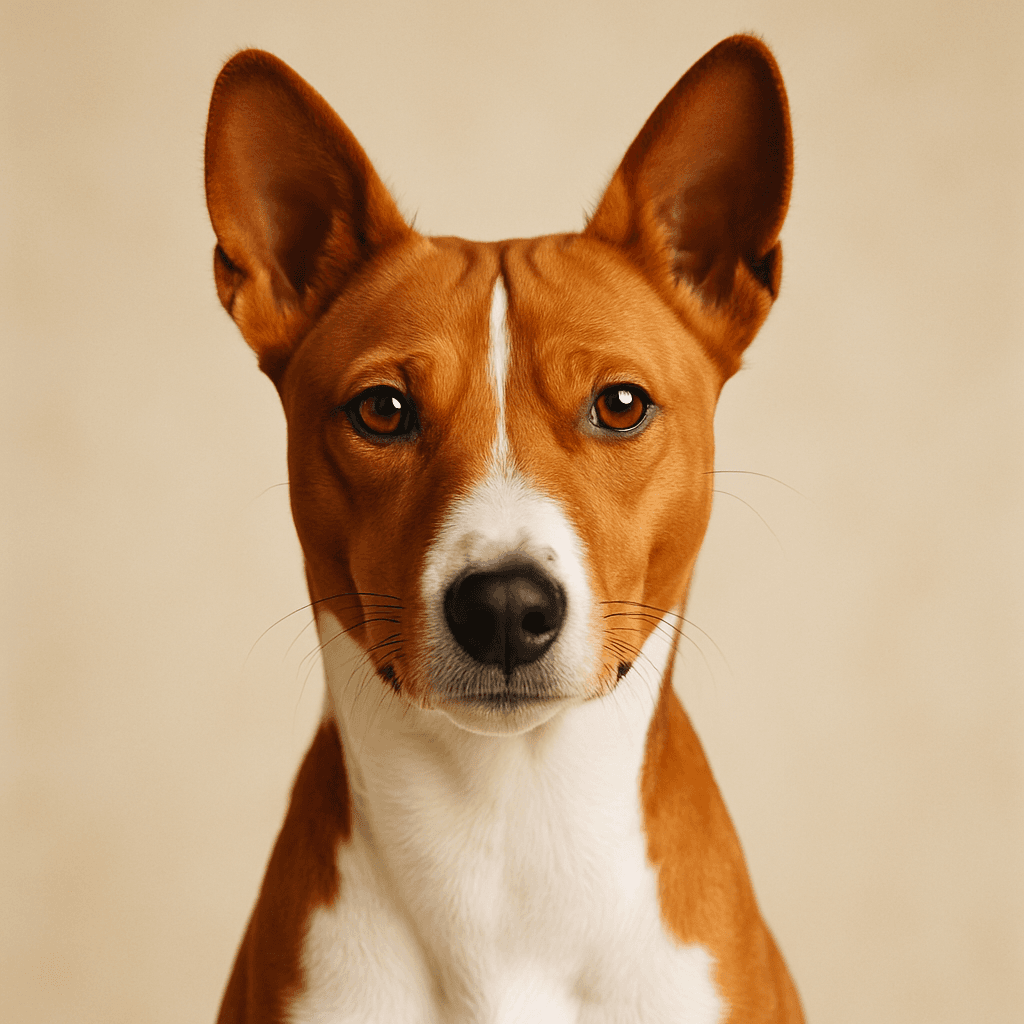
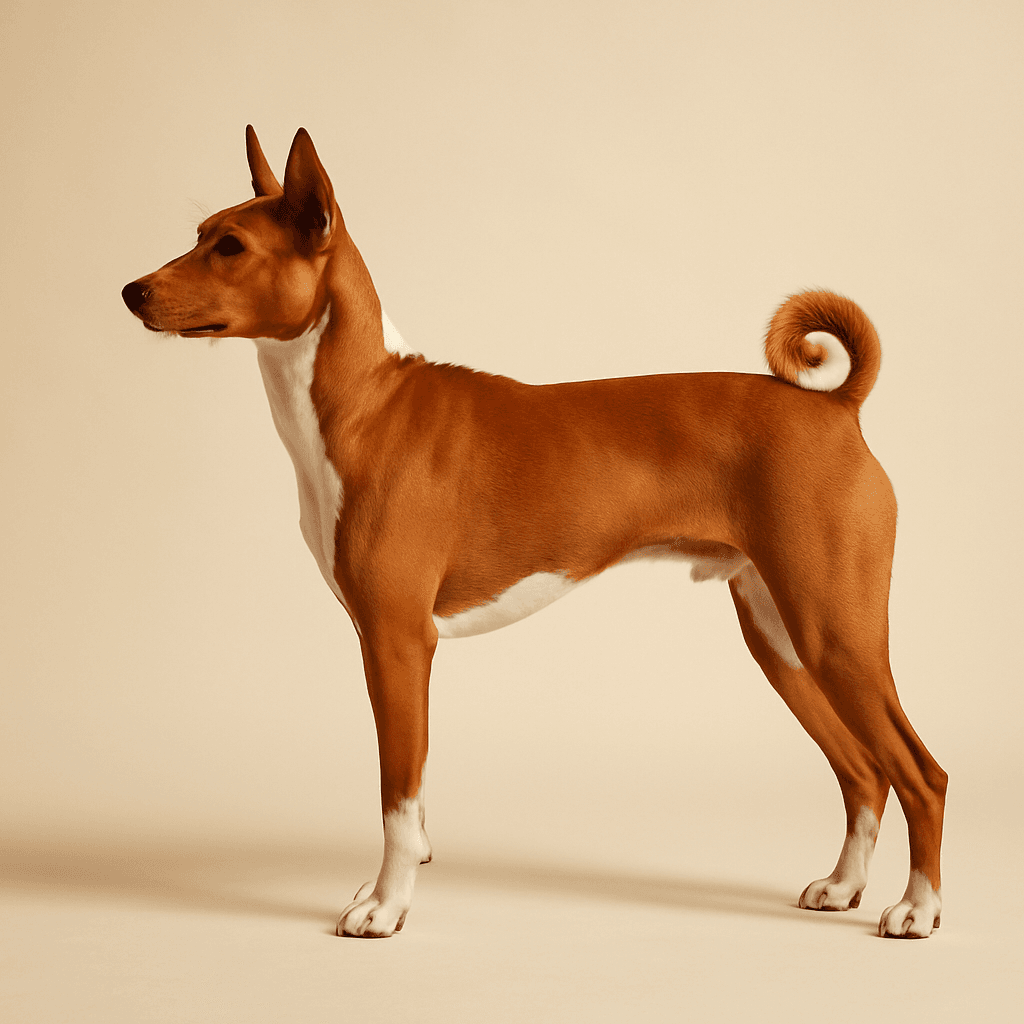
The Basenji is one of the most ancient and distinctive breeds in the world. Originating in Central Africa - where it was used by indigenous hunters to drive game into nets and alert their owners to prey - it is registered by the Kennel Club in the Hound Group and remains one of the most unusual dogs available in the UK. It does not bark. Instead it produces a distinctive sound variously described as a yodel, a chortle or a howl, quite unlike anything a conventional dog produces. The Basenji's appearance is striking: a compact, athletic build, a wrinkled forehead that gives it a permanently quizzical expression, almond-shaped eyes and erect ears that enhance its air of alert intelligence. The coat is short, fine and easy to maintain, and the breed is exceptionally clean with minimal dog odour - a quality that appeals strongly to owners who are particular about hygiene in the home. The character is not for everyone. The Basenji is what is sometimes called a primitive breed: its instincts and independence have been shaped by thousands of years of self-sufficient hunting rather than close human partnership. It is highly intelligent, but that intelligence is applied to its own interests rather than the owner's wishes. Owners who have previously kept retrievers, spaniels or herding dogs and expect similar compliance will find the Basenji a genuinely humbling experience. The relationship a Basenji forms with its family is real and affectionate, but it is a relationship on the dog's terms. It can be reserved with strangers, intensely loyal to its household, and will typically bond most deeply with one or two individuals. It is cat-like in its self-containment and cleanliness, and many owners find this quality genuinely appealing. It is also extremely inquisitive, agile and persistent - a combination that makes it a capable escapologist if given any opportunity. Prey drive is the critical management consideration. The Basenji is a sighthound-type hunter with the instincts to match. It will chase anything that moves with a single-mindedness that overrides trained responses. Off-lead exercise must only happen in fully secure, enclosed areas. Standard park fencing is often inadequate. Households with cats, rabbits, guinea pigs or other small pets face a permanent and serious management challenge that should not be underestimated. Fanconi Syndrome is the non-negotiable health concern for anyone purchasing a Basenji puppy. This hereditary kidney condition - which impairs the kidneys' ability to reabsorb important nutrients - can be life-threatening if not managed. A DNA test is available and both parents must be tested clear or carrier before breeding. Purchasing a puppy from untested parents exposes you to a serious, potentially fatal and expensive health condition that could have been avoided entirely. Progressive Retinal Atrophy also occurs in the breed and DNA testing is available. Basenji Enteropathy, a form of inflammatory bowel disease, is an additional documented breed concern worth discussing with any breeder. Exercise needs are moderate in volume but specific in management. Around one hour of vigorous daily activity is appropriate for an adult Basenji. The challenge is providing it safely given the prey drive and escape artistry. Lure coursing and scent work are excellent outlets that engage both the physical and mental needs of a dog built for hunting. Training requires patience, creativity and a genuine acceptance of the breed's nature. Recall is not reliably trainable in the way it is with a gundog. The most reliable strategy is environmental management: secure fencing, long lines in open spaces and realistic expectations. The Basenji responds to positive reinforcement and will learn what benefits it. Purchase prices from reputable breeders range from £800 to £1,500. Monthly running costs average £80 to £150. Insurance costs £25 to £50 per month. Lifespan is typically 13 to 14 years. The Basenji Club of Great Britain supports breed rescue and can direct prospective owners to reputable breeders with DNA-tested stock. For the right owner - experienced, patient, with secure housing and realistic expectations - the Basenji is a deeply rewarding companion unlike any other breed.
Quick facts
Meet Our Basenjis
Register your dog on My Dog and it will appear here automatically.
Basenji Photos
No photos yet. Be the first to share yours.
Add a photoActivity Feed
How much exercise does your Basenji really need each day?
Around an hour of vigorous exercise daily is the baseline, but the more important point is where and how that exercise happens. The Basenji has exceptional athleticism and a prey drive that will override everything else the moment something interesting moves. Off-lead exercise must only happen in genuinely secure enclosures. I do not mean areas with reasonable fencing. I mean fencing a Basenji cannot scale, dig under or squeeze through. I learned this quickly and now plan every walk around that requirement. What the Basenji genuinely thrives on is lure coursing. Watching mine do coursing for the first time was like seeing a different dog, completely in her element. Scent work also satisfies that hunting instinct in a more accessible way. The physical hour is important, but getting the exercise right for a breed with these instincts matters far more than the minutes.
30 June 2026
Any health issues to watch for with Basenjis?
Fanconi Syndrome is the one that matters most and every prospective owner needs to understand it before getting a Basenji. It is a hereditary kidney condition that impairs tubular reabsorption and can be life-threatening if unmanaged. A DNA test is available and I would not purchase a Basenji puppy without seeing clear test results on both parents. This is genuinely non-negotiable. Progressive Retinal Atrophy also occurs in the breed and DNA testing is available for this too, so ask breeders for those results as well. Basenji Enteropathy, a form of inflammatory bowel disease specific to the breed, is something I was not aware of before getting mine. It is a documented breed condition worth knowing about because the symptoms can be subtle at first. Hip dysplasia is less common than in many breeds, which is a relative positive. Lifespan is typically 13 to 14 years.
30 June 2026
What's the one thing you wish you'd known before getting a Basenji?
That recall is not a training problem to be solved. It is a breed characteristic to be managed. I spent a lot of time in the early months feeling like I was failing because my Basenji would not reliably come back in open spaces. I tried different methods, higher-value rewards, more practice. What I eventually understood is that in high-drive situations the Basenji's intelligence is entirely applied to its own agenda, not mine. Managing the environment reliably, using secure enclosures and a long line, is genuinely more effective than hoping for compliance when prey drive is activated. The cat-like independence that makes the Basenji so fascinating to live with is the same quality that makes conventional obedience training a limited tool. Once I stopped fighting that and started working with it, our relationship improved significantly. This breed rewards owners who understand it on its own terms.
30 June 2026
What do you feed your Basenji, and why?
A complete, balanced adult food appropriate for a medium-sized active breed, and I am careful about portions because the Basenji is naturally lean and I want to keep it that way. Overfeeding is easy to do with a dog that looks relatively slight, but the breed does best at a proper athletic weight rather than carrying extra condition. If your Basenji has Fanconi Syndrome, that changes things considerably because the condition affects nutritional absorption and veterinary dietary guidance becomes important. Mine is clear, so I follow general good practice for an active medium breed. Two meals daily, measured portions, decent quality ingredients. Nothing especially complicated for an unaffected dog. The main thing is keeping the body condition right, and checking against a condition scoring chart regularly rather than just going by eye.
30 June 2026
Basenji of the Month
🏆 September 2026 -- Be the first nominee
Could be your dog.
The first dog registered in this community earns the first Dog of the Month nomination automatically.
Register your dogUpcoming Basenji Meetups
No meetups planned yet. Be the first to organise one.
Sign in to organise a meetupCommunity Members
Be the first to join and become the Basenji Founding Member.
Join Club