

Be the first to join. Keep the badge forever.
The first members of this community earn permanent Founding Member status. It shows on your profile and your dog's profile for as long as you're here.
- ✓Founding Member badge on your profile
- ✓Your dog featured first
- ✓First Dog of the Month nomination
- ✓Always free
⭐ Founding Member spots open
First to join gets the badge
🐕 Be the first dog registered
Add your Lab to the community
📷 Add the first photo
Start the photo wall
8
Discussions
0 members
8 discussions
About the Beagle
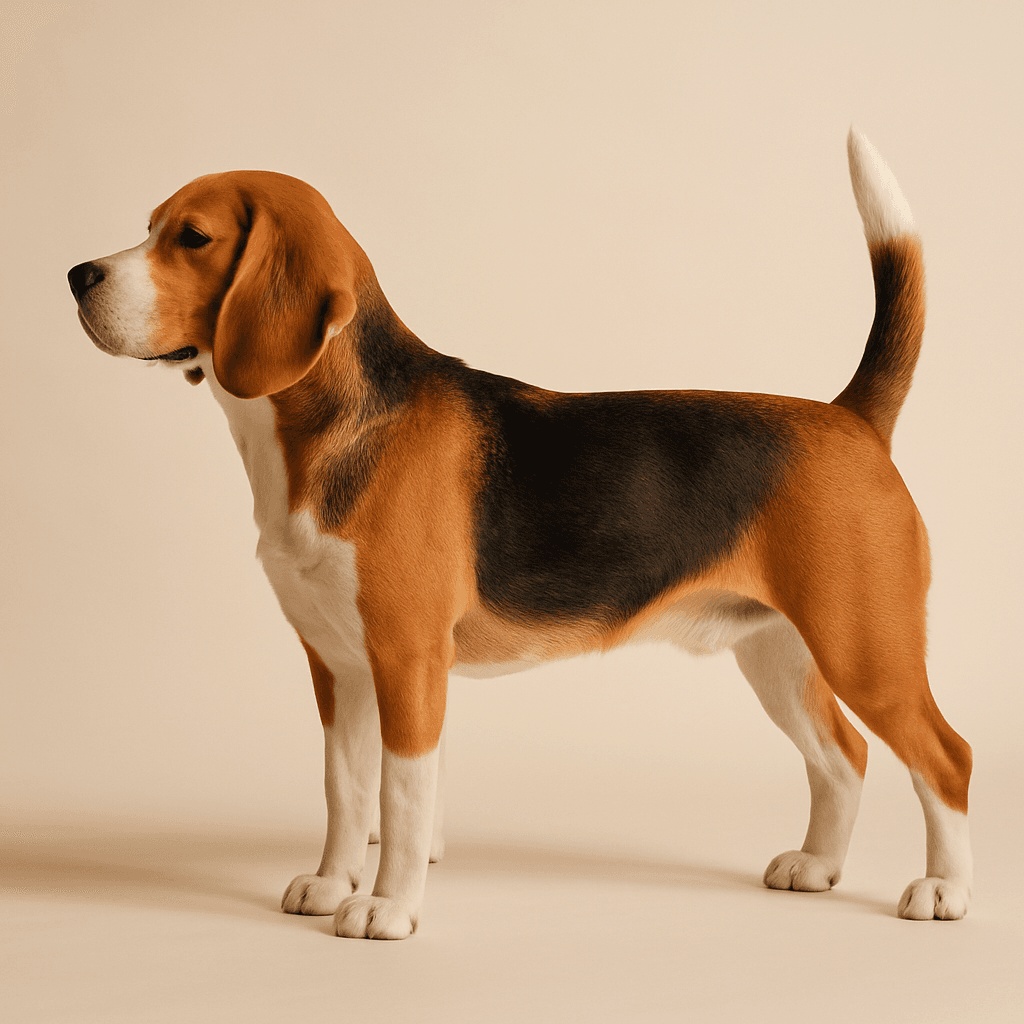
The Beagle is one of the oldest and most recognisable hound breeds, registered by the Kennel Club in the Hound Group. Originally bred to hunt hares by scent in packs, the modern Beagle is one of the most popular family dogs in the UK: sociable, affectionate, sturdy and merry. They are medium-small dogs with a robust constitution and a genuine enthusiasm for life. The Beagle's most defining characteristic, the one that most shapes ownership, is its nose. A Beagle that picks up an interesting scent will follow it with single-minded determination, frequently overriding other commands in the process. Recall training is important but should never be relied upon near roads or livestock when the dog is on a trail. Off-lead exercise should only happen in fully enclosed, secure areas or on a long line. They are also a vocal breed. The Beagle's bay, a deep, melodious howl, is one of the breed's most characteristic features and a genuine consideration in residential areas. They will bay when they pick up a scent, when excited, when left alone and sometimes simply when they feel like it. This can be managed to a degree with training but is fundamentally a breed trait. Socially, Beagles are excellent. They are pack dogs by nature and typically love other dogs. They are good with children, patient and playful, and generally sociable with people. They dislike being alone and can become destructive or vocal when isolated. Health testing matters when buying a Beagle. Musladin-Lueke Syndrome (MLS) is a breed-specific connective tissue disorder with a DNA test available. Responsible breeders should test for this. Purchase prices from KC-registered, health-tested breeders typically range from £600 to £1,200. Lifespan is typically 12 to 15 years. For owners who accept the scenthound's nose-driven nature and plan exercise and recall management accordingly, the Beagle is one of the most rewarding family dogs in the UK. They are sociable, merry and genuinely easy to like. Enrol in a puppy class using positive reinforcement methods, establish a solid recall routine in safe enclosed spaces, and you will have a joyful, affectionate companion for the next 12 to 15 years. The key is to work with the breed's nature rather than fighting it. Scent work classes are available across the UK through organisations such as the Canine Scent Work Association and provide exactly the kind of structured nose activity that a Beagle genuinely enjoys. They are a brilliant breed for owners who want a sociable, merry and characterful companion.
Quick facts
Meet Our Beagles
Register your dog on My Dog and it will appear here automatically.
Beagle Photos
No photos yet. Be the first to share yours.
Add a photoActivity Feed
How much exercise does your Beagle really need each day?
Around one and a half to two hours per day, but the how matters as much as the how much. All off-lead exercise happens in securely fenced areas. A Beagle on a scent trail near a road is a genuinely dangerous situation, and I do not make exceptions on this regardless of how reliable the recall seems in other contexts. The nose is what changes everything. What I have found is that 15 minutes of structured scent work often tires mine more thoroughly than an hour of physical walking. Scatter feeding in long grass, nose-work classes, tracking games. These activities engage the Beagle properly and produce a tired, content dog in a way that pure mileage does not. I use a long line in open areas so there is safe semi-free exercise when we are not near a secure enclosure. Puppies follow the five minutes per month of age guideline twice daily. Adults need the full time, managed carefully.
30 June 2026
Any health issues to watch for with Beagles?
Musladin-Lueke Syndrome is the breed-specific condition every prospective Beagle owner needs to understand. It is a hereditary connective tissue disorder that affects development, causing tight skin, shortened outer toes and a stiff gait. Severity varies considerably between affected dogs. A DNA test is available and responsible breeders test both parents. I would not purchase a Beagle puppy without seeing clear test results. Epilepsy occurs in Beagles and can be hereditary, so asking about seizure history in a breeder's lines is a reasonable question. Hip dysplasia is assessed through the KC/BVA Hip Scoring scheme and I would ask to see scores on both parents. Hypothyroidism occurs in some lines and is manageable with daily medication once diagnosed. IVDD is seen at higher rates in Beagles than some other medium breeds. Monthly insurance for mine runs £35 to £65. Lifespan is 12 to 15 years, which is genuinely good for a medium breed.
30 June 2026
What's the one thing you wish you'd known before getting a Beagle?
That the Beagle's need for company is real and serious, not a personality preference. Beagles are pack dogs. They were bred to work in groups and they carry that social need into domestic life. Mine is genuinely distressed when left alone for more than a couple of hours and my second dog has made an enormous difference to her wellbeing on days when I cannot be home. I wish I had thought about that more carefully before getting her as my only dog. On the recall front, I wish someone had told me earlier that the problem is not fixable through training alone, only managed through environment. A Beagle on a strong scent trail will not respond to recall. This is not failure. It is the dog doing exactly what it was bred to do. Accepting that and planning around secure exercise areas rather than fighting it has made our lives together much better. Once you work with the nose rather than against it, the Beagle is endlessly rewarding.
30 June 2026
What do you feed your Beagle, and why?
A complete, high-quality food for medium breeds, measured precisely and fed twice daily. Free-feeding is completely out. Beagles will eat whatever is available and they will access food they have identified by scent with impressive determination. My kitchen bins are secured, worktops kept clear and food storage is in cupboards the dog cannot open. This is just part of Beagle ownership. The food motivation that makes them brilliant to train with also makes weight management an active responsibility. I count training treats within the daily calorie allowance rather than adding them on top, which matters because I train regularly and the treat volume would otherwise be significant. I keep the body lean because the IVDD risk in the breed makes healthy weight genuinely important for long-term wellbeing, not just aesthetics. Fresh water always available. Monthly food costs are modest for a medium breed but the discipline around portions is permanent.
30 June 2026
Beagle of the Month
🏆 September 2026 -- Be the first nominee
Could be your dog.
The first dog registered in this community earns the first Dog of the Month nomination automatically.
Register your dogUpcoming Beagle Meetups
No meetups planned yet. Be the first to organise one.
Sign in to organise a meetupCommunity Members
Be the first to join and become the Beagle Founding Member.
Join Club