


Be the first to join. Keep the badge forever.
The first members of this community earn permanent Founding Member status. It shows on your profile and your dog's profile for as long as you're here.
- ✓Founding Member badge on your profile
- ✓Your dog featured first
- ✓First Dog of the Month nomination
- ✓Always free
⭐ Founding Member spots open
First to join gets the badge
🐕 Be the first dog registered
Add your Lab to the community
📷 Add the first photo
Start the photo wall
8
Discussions
0 members
8 discussions
About the Boxer
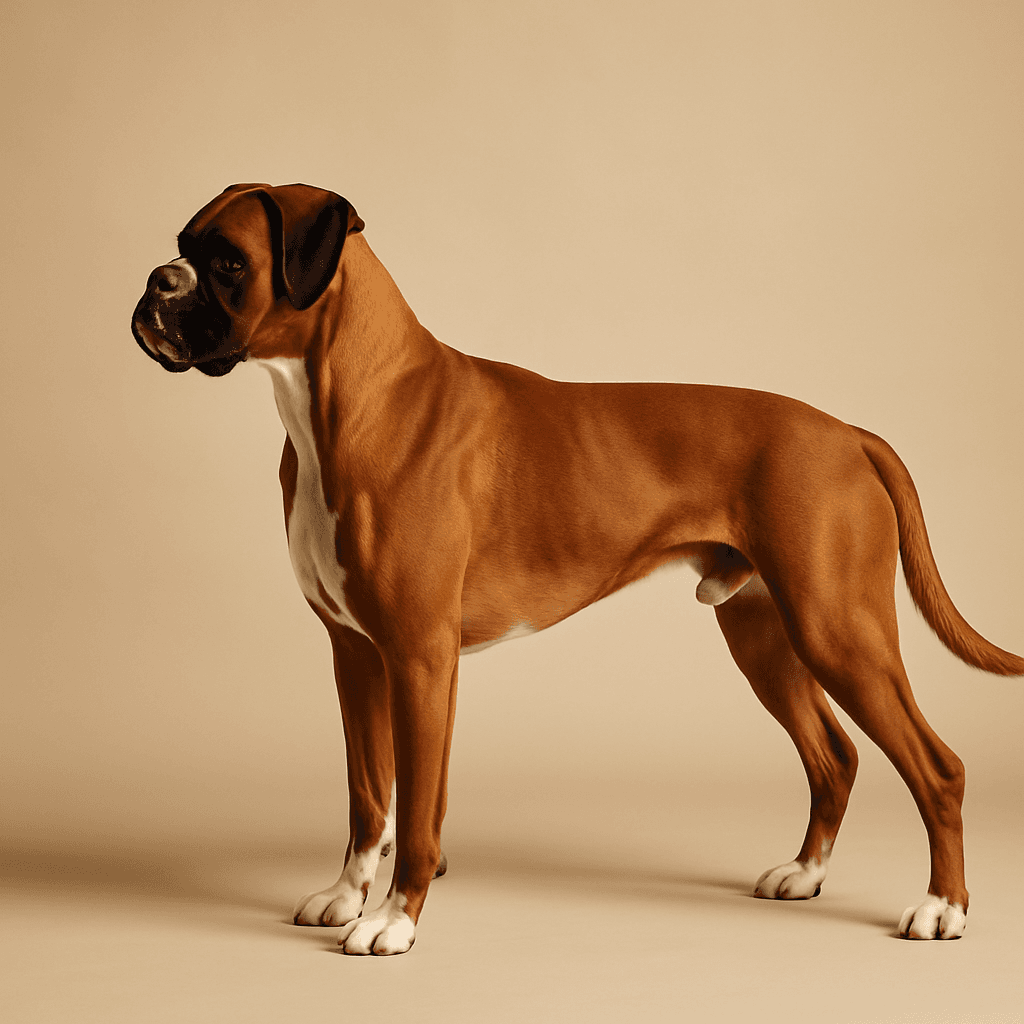
Boxers are playful, loyal and exuberantly affectionate dogs that consistently rank among the UK's most popular large breeds. Registered with the Kennel Club in the Working Group, they were originally developed in Germany as working and guard dogs, and while the modern Boxer is overwhelmingly a family companion, the intelligence, energy and physical capability of the breed are still very much present. In terms of character, few breeds are quite as entertaining. Boxers are clownish, joyful and deeply attached to their families. They are excellent with children, patient enough to tolerate a great deal, and enthusiastic enough to match a child's energy. They also remain puppy-like in their exuberance well into adulthood, which is endearing but means consistent training from the start is essential. Prospective owners should understand two health realities before choosing a Boxer. The first is cardiac disease. Arrhythmogenic Right Ventricular Cardiomyopathy (ARVC) is a breed-specific heart condition for which a DNA test is now available. It can cause sudden cardiac death in young dogs, and responsible breeders test their breeding stock. Subaortic Stenosis (SAS) is also seen in the breed. The second is cancer. Boxers have an above-average incidence of several cancer types, including mast cell tumours and brain tumours, and owners should be vigilant for any unusual lumps, swellings or behavioural changes. Boxers are moderately brachycephalic: their pushed-in face is less extreme than that of a French Bulldog or Pug, but it does mean they are sensitive to heat and should not be exercised in hot weather. They are also not strong swimmers due to their physical conformation. Insurance costs of £50 to £90 per month are typical. Purchase prices from KC-registered, health-tested breeders range from £900 to £1,800. Lifespan is typically 10 to 12 years. For active families who can meet the exercise commitment and are prepared for the health realities, the Boxer is a wonderful companion: loyal, playful, and deeply family-oriented. The Boxer's moderately brachycephalic conformation is worth understanding specifically in the context of heat. Unlike French Bulldogs or Pugs, Boxers can exercise relatively freely in cool conditions without significant respiratory concern, but in warm weather the same caution applies. Building awareness of your individual dog's respiratory comfort during exercise is part of responsible Boxer ownership, and any apparent increase in respiratory effort warrants a veterinary assessment. The Boxer is a deeply rewarding family dog for owners who commit to training, understand the health monitoring needs and meet the exercise requirements. Their loyalty, playfulness and affection make them among the most popular large breeds in the UK, and for good reason.
Quick facts
Meet Our Boxers
Register your dog on My Dog and it will appear here automatically.
Boxer Photos
No photos yet. Be the first to share yours.
Add a photoActivity Feed
How much exercise does your Boxer really need each day?
Two hours a day is the honest answer, and it needs to be vigorous rather than just a gentle amble. My Boxer wants to run, chase, play fetch and generally be in constant motion. She has stamina that surprises people who assume flat-faced breeds are lazy. The non-negotiable for me is heat. She cannot manage her own temperature the way an open-faced dog can, so I never take her out in direct sunshine or on a warm afternoon. June through August it is early morning before eight and evening walks only, no exceptions. I also waited until she was 18 months before doing any sustained road running with her, because her skeleton needed time to develop properly. Puppies should follow five minutes per month of age twice daily, which feels frustratingly little but protects them long-term. Mental stimulation through training fills the gap well.
30 June 2026
Any health issues to watch for with Boxers?
The two I would flag immediately to any prospective Boxer owner are ARVC and cancer. ARVC is a breed-specific inherited heart condition that affects the right ventricle and in serious cases can cause sudden death in apparently healthy young dogs. A DNA test exists and responsible breeders test all breeding stock, I asked for the certificate before putting a deposit down. Any cardiac assessment by a specialist vet should also be part of the health scheme check. Cancer rates in Boxers are above average and mast cell tumours are particularly common. I do a physical check of my girl every month and anything new gets seen by my vet promptly rather than being monitored. Hip scoring, SAS screening and a DM DNA test should all be in the breeder's paperwork. Budget £50 to £90 monthly for insurance and make sure it is comprehensive lifetime cover.
30 June 2026
What's the one thing you wish you'd known before getting a Boxer?
How slowly they mature. I expected a puppy to be a puppy, but I genuinely did not anticipate that the boisterous, bouncy, slightly chaotic Boxer behaviour would carry on well past her first birthday. She was still behaving like an excitable eight-month-old at nearly two years. That would have been completely fine if I had been prepared for it, but I kept expecting her to settle and grow out of things on a normal dog timeline. She did not. The jumping up in particular, I started taking it seriously immediately which was the right call, because a 30kg dog launching at visitors is not charming. The food motivation is genuinely fantastic for training and she learned commands quickly. But the consistent patience required, especially around lead walking and settling on command, needed to be sustained for much longer than I anticipated.
30 June 2026
What do you feed your Boxer, and why?
I feed a high-quality large breed complete food split across two meals a day. The two-meal split is deliberate, Boxers are deep-chested and at risk of bloat, and I don't take that lightly. I also leave at least an hour either side of a meal before any exercise. When she was a puppy I used a large breed puppy formula specifically to support controlled growth rather than rushing it. Some Boxers can have food sensitivities showing as skin irritation or loose stools, and mine did go through a patch of this. A conversation with my vet pointed us toward a single-protein formula which settled things. Fresh water is always available, which matters particularly given the heat sensitivity. I avoid exercising close to meal times year-round, but I am especially careful about this in summer when her temperature regulation is already working hard.
30 June 2026
Boxer of the Month
🏆 September 2026 -- Be the first nominee
Could be your dog.
The first dog registered in this community earns the first Dog of the Month nomination automatically.
Register your dogUpcoming Boxer Meetups
No meetups planned yet. Be the first to organise one.
Sign in to organise a meetupCommunity Members
Be the first to join and become the Boxer Founding Member.
Join Club