


Be the first to join. Keep the badge forever.
The first members of this community earn permanent Founding Member status. It shows on your profile and your dog's profile for as long as you're here.
- ✓Founding Member badge on your profile
- ✓Your dog featured first
- ✓First Dog of the Month nomination
- ✓Always free
⭐ Founding Member spots open
First to join gets the badge
🐕 Be the first dog registered
Add your Lab to the community
📷 Add the first photo
Start the photo wall
8
Discussions
0 members
8 discussions
About the Dachshund
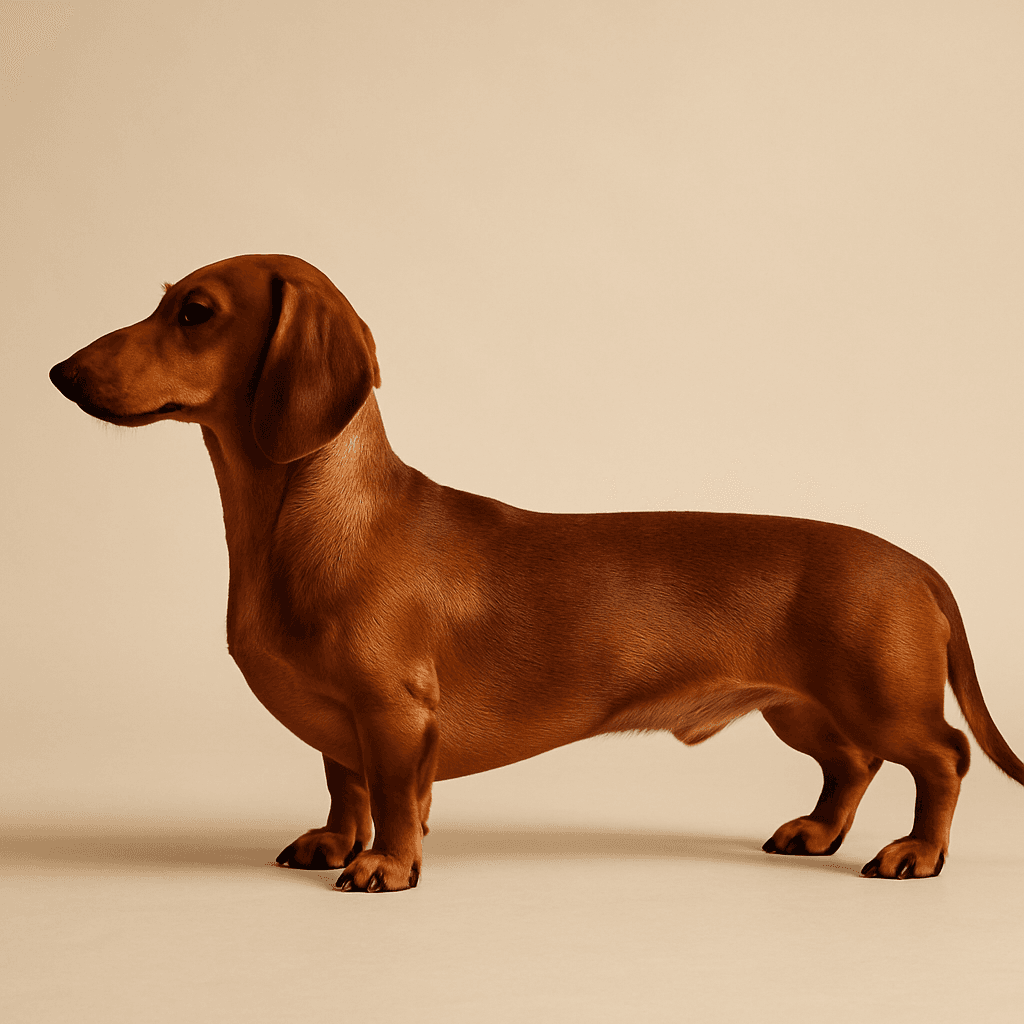
Dachshunds are bold, curious and surprisingly stubborn dogs in a long, low package that has made them one of the most recognisable breeds in the world. Registered with the Kennel Club in the Hound Group, they were originally bred in Germany to hunt badgers underground, and that heritage is evident in their fearless character, independent thinking and remarkable tenacity. The breed comes in two sizes and three coat types in the UK. Miniature Dachshunds weigh under 5kg; Standard Dachshunds typically weigh between 7 and 14kg. Coat types are smooth, long and wire, each with slightly different grooming requirements and, some would argue, slightly different temperaments. All six KC-recognised varieties share the same fundamental character and the same most significant health vulnerability. That vulnerability is intervertebral disc disease, commonly known as IVDD. Dachshunds are a chondrodystrophic breed: the genetic mutation that gives them their short legs also affects the composition of their spinal discs, making them prone to premature calcification and herniation. Research suggests that up to 25 per cent of Dachshunds will experience a disc-related episode during their lifetime. This is the single most important health fact for any prospective Dachshund owner to understand. Managing IVDD risk requires lifestyle changes that must be implemented from puppyhood: no jumping on or off furniture, no negotiating stairs where this can be avoided, no high-impact exercise. Ramps for access to beds, sofas and car boots are not optional extras: they are the primary means of reducing the cumulative spinal strain that leads to disc problems. This is not a breed you can manage reactively: prevention is everything. Despite this, Dachshunds are excellent companion dogs that adapt well to a wide range of living environments including flats, provided stairs are managed and daily walks are provided. They are affectionate with their families, often strongly bonded to one person, and can be surprisingly vocal. Miniature Dachshunds in particular are among the higher-priced small breeds in the UK, typically £800 to £2,000 from a health-tested breeder. Their popularity makes them a target for irresponsible breeding: always buy from a breeder who tests for IVDD-relevant conditions and is aware of back health in their lines. Lifespan is typically 12 to 16 years. The Dachshund's combination of long body, short legs and independent spirit has produced one of the most characterful breeds in the UK. For owners who understand the IVDD risk and implement the necessary lifestyle changes from puppyhood, the Dachshund is a devoted, entertaining companion capable of fitting comfortably into a wide range of households. The key is preparation: buy from a breeder who prioritises back health, install ramps before the puppy arrives, and treat spine management as a non-negotiable part of ownership.
Quick facts
Meet Our Dachshunds
Register your dog on My Dog and it will appear here automatically.
Dachshund Photos
No photos yet. Be the first to share yours.
Add a photoWhat Dachshund Owners Need to Know About Health
IVDD is the primary health concern for every Dachshund owner and should be understood thoroughly before buying or adopting this breed. **Intervertebral Disc Disease (IVDD)** affects up to 25 per cent of Dachshunds during their lifetime. The chondrodystrophic gene that shortens the legs also causes early calcification of the spinal discs, making them brittle and prone to herniation. When a disc herniates, it can press on the spinal cord, causing pain, weakness in the hindlimbs, or in severe cases, complete paralysis. Surgical treatment costs between £3,000 and £7,000 and is time-sensitive: a dog showing signs of paralysis needs emergency assessment. Recovery with surgery is good if treated promptly; delayed treatment risks permanent damage. Prevention involves no jumping from furniture, no staircases where possible, no high-impact play, and the use of ramps for access to beds, sofas and vehicles. The Dachshund Breed Council provides detailed IVDD guidance. **Progressive Retinal Atrophy (PRA)** occurs in several Dachshund varieties. A DNA test is available for Cord1-PRA, most common in Miniature Smooth-Haired Dachshunds. Responsible breeders test for this and should be able to provide DNA test results. **Lafora Disease** is a hereditary form of epilepsy occurring primarily in Miniature Wire-Haired Dachshunds. A DNA test is available: ask breeders of this variety for test results on both parents. **Hereditary Cataracts** occur in some lines and are monitored through the KC Eye Scheme. Monthly insurance for a Dachshund typically costs £30 to £60 for comprehensive lifetime cover, though premiums have increased as awareness of IVDD costs has grown. Typical lifespan is 12 to 16 years, making Dachshunds one of the longer-lived breeds.
Dachshunds are one of the breeds where pet insurance is strongly recommended from day one. Compare Dachshund insurance
Activity Feed
How much exercise does your Dachshund really need each day?
Mine is a Standard and needs around 45 to 60 minutes daily, but how that exercise is delivered matters just as much as how much. High-impact activity, sustained running on hard surfaces and jumping are all genuine risk factors for IVDD, so I am deliberate about terrain and pace. We walk on grass and soft paths wherever possible. I avoid repetitive pavement pounding and never let him jump up or down from anything. What I have found genuinely useful is swimming: it provides real cardiovascular exercise without any spinal loading and he took to it enthusiastically. I also use scent work and puzzle feeders on days when getting out is difficult, because mental exercise is meaningful for this breed without any physical risk. The spine is always in the back of my mind as an owner: appropriate exercise protects it, sedentary weight gain destroys it.
30 June 2026
Any health issues to watch for with Dachshunds?
IVDD, without question. Up to 25 per cent of Dachshunds will experience intervertebral disc disease during their lifetime, and every owner needs to understand this before they bring one home, not after. The chondrodystrophic gene that creates those wonderful short legs also causes early disc calcification. A herniated disc can cause paralysis. Emergency surgery costs between £3,000 and £7,000 and is time-sensitive: delayed treatment risks permanent damage. Prevention is the only real strategy, which means no jumping, no sustained stair climbing, ramps for furniture and vehicle access, and keeping body weight absolutely in check. Beyond IVDD, Progressive Retinal Atrophy occurs in several varieties and DNA testing is available. Miniature Wire-Haireds can carry Lafora Disease, a hereditary epilepsy, and responsible breeders of that variety test for it. Insurance is not optional with a Dachshund.
30 June 2026
What's the one thing you wish you'd known before getting a Dachshund?
That housetraining would take months, not weeks. I knew about IVDD. I knew about stubbornness. What caught me genuinely off-guard was how long it took to housetrain mine reliably. Small dog, small accidents: they are easy to miss, which means the dog gets less feedback about what is and is not acceptable. I had to be completely consistent with outdoor trips after every meal, nap and play session for well over three months before I had genuine confidence. A strict routine and absolute patience, not punishment, is the only thing that works. The other thing I would emphasise is that the stubbornness is not defiance: it is a working characteristic from a breed that made independent decisions underground without any handler guidance. Framing it that way made me a much better trainer of mine.
30 June 2026
What do you feed your Dachshund, and why?
A complete small to medium breed kibble in measured portions, twice a day, with every treat counted within the daily calorie allowance. Weight management in this breed is not a lifestyle preference: it is a health necessity. Every extra kilogram a Dachshund carries is additional load on a spine that is already structurally compromised. I weigh his food rather than estimating, and I check his body condition by feel every week. He should have a visible waist from above and I should be able to feel his ribs without pressing. He finds this standard of scrutiny deeply unfair and communicates it clearly. I use a slow feeder bowl because he used to bolt his food at a rate that made me nervous. Some Dachshunds develop digestive sensitivity as they get older: if you see persistent loose stools or discomfort, it is worth a vet consultation rather than just managing it.
30 June 2026
Dachshund of the Month
🏆 September 2026 -- Be the first nominee
Could be your dog.
The first dog registered in this community earns the first Dog of the Month nomination automatically.
Register your dogUpcoming Dachshund Meetups
No meetups planned yet. Be the first to organise one.
Sign in to organise a meetupCommunity Members
Be the first to join and become the Dachshund Founding Member.
Join Club