


Be the first to join. Keep the badge forever.
The first members of this community earn permanent Founding Member status. It shows on your profile and your dog's profile for as long as you're here.
- ✓Founding Member badge on your profile
- ✓Your dog featured first
- ✓First Dog of the Month nomination
- ✓Always free
⭐ Founding Member spots open
First to join gets the badge
🐕 Be the first dog registered
Add your Lab to the community
📷 Add the first photo
Start the photo wall
8
Discussions
0 members
8 discussions
About the Dalmatian
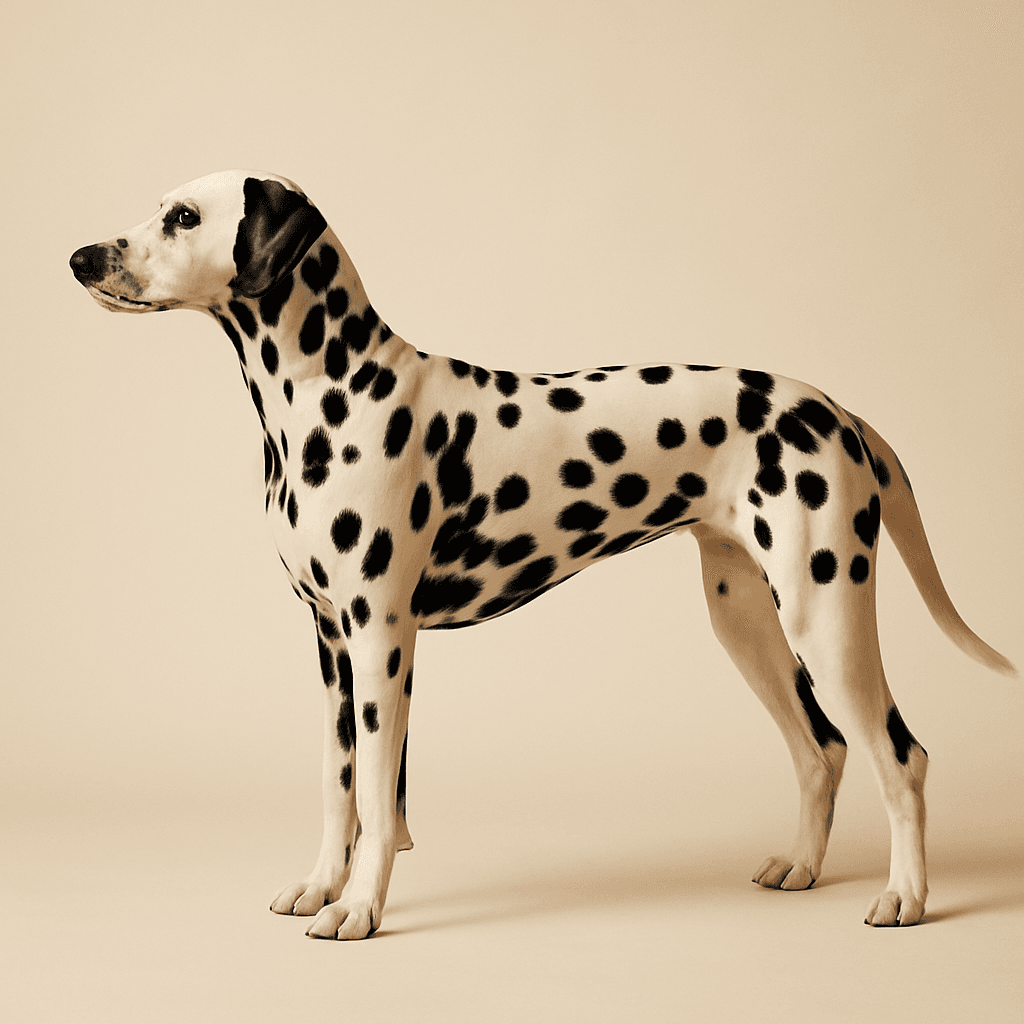
The Dalmatian is one of the most visually distinctive breeds in the world, registered by the Kennel Club in the Utility Group. Its striking white coat with black or liver spots has made it one of the most recognisable dogs globally. It is also a breed with significant practical demands and two breed-specific health conditions that every prospective owner must understand before buying. Dalmatians are high-energy working dogs. They were bred to run alongside carriages for many miles and retain that stamina and drive in the modern domestic environment. An adult Dalmatian needs a minimum of two hours of vigorous exercise every day. This is not a guideline: it is a practical reality. Owners who do not match this requirement will find themselves with a destructive, hyperactive dog. The frequency with which Dalmatians appear in rescue is a direct reflection of the gap between the breed's visual appeal and the exercise reality. On the health front, hereditary deafness is the primary concern. Around 8 to 12 percent of Dalmatians are born bilaterally deaf and approximately 20 to 25 percent unilaterally deaf. BAER testing by the breeder is the only way to identify this. Never buy from a breeder who does not BAER test their litters. The second major health consideration is the breed's unique predisposition to urate urinary stones, arising from an inability to fully metabolise purines. A lifelong low-purine diet and high water intake are important preventive measures. High-purine organ meats and some protein-dense foods should be avoided. Given these demands, why do so many owners find the Dalmatian deeply rewarding? Because for owners who genuinely match the breed's exercise needs and invest in training and socialisation, the Dalmatian is a warm, loyal and energetic companion with a personality that is hard to match. They are intelligent, people-oriented, and fully engaged with the family. Purchase prices from BAER-tested KC-registered breeders typically range from £800 to £1,500. Monthly insurance is £30 to £55. Lifespan is 10 to 13 years. Dalmatian Welfare rehomes dogs nationally. Research the exercise requirement honestly. Confirm BAER testing on the litter. Understand the dietary management. The possibility of urinary stone treatment or surgery means lifetime insurance is important. Do all of that and the Dalmatian is a spectacular and rewarding companion.
Quick facts
Meet Our Dalmatians
Register your dog on My Dog and it will appear here automatically.
Dalmatian Photos
No photos yet. Be the first to share yours.
Add a photoActivity Feed
Any health issues to watch for with Dalmatians?
Two breed-specific issues that every prospective owner needs to understand before buying. First: deafness. Around 8 to 12 percent of Dalmatians are born bilaterally deaf, and a further 20 to 25 percent deaf in one ear, it is linked to the same piebald gene that creates the coat. You cannot tell by looking. Every puppy should be BAER tested; ask to see the individual result for your puppy, not just confirmation the litter was tested. Second: urate urinary stones. Dalmatians cannot fully metabolise purines, which means high uric acid in the urine and a real risk of bladder or urethral stones. Low-purine diet and high water intake are ongoing management strategies, not optional extras. Hip dysplasia also occurs in the breed. Budget realistically for insurance, monthly premiums typically run to £30 to £55.
30 June 2026
How much exercise does your Dalmatian really need each day?
Two hours minimum, and that is on a quiet day. My Dalmatian was bred to run alongside carriages for miles and that endurance is still very much present. A steady plod round the block does nothing for him. He needs actual running, I cycle with him three mornings a week and that is genuinely the best investment I have made. We also do a longer off-lead session in the afternoon in a securely fenced area. I worked hard on recall before I trusted him off lead in open spaces, which I would recommend to anyone. Mental stimulation sits alongside the physical: a session of obedience or nose work after a run is noticeably more effective than training a fresh, bouncing Dalmatian. Under-exercise is the single biggest reason Dalmatians end up in rescue. It is not an exaggeration.
30 June 2026
What's the one thing you wish you'd known before getting a Dalmatian?
That the exercise requirement is not something you can work around on busy weeks. I knew intellectually that Dalmatians were high-energy before I got mine. I did not fully grasp what two-plus hours of vigorous exercise every single day actually looks like in practice when you have a full week at work. The consequences of under-exercise are immediate and obvious: destructive chewing, hyperactivity indoors, jumping on everyone. I had to restructure my mornings significantly. What I was not prepared for was how perceptive he is, he reads my mood accurately and becomes unsettled if I am stressed. Being calm and consistent with a Dalmatian matters more than I expected. Get the exercise right and you have an extraordinarily warm, engaged companion. Get it wrong and you have a live problem.
30 June 2026
What do you feed your Dalmatian, and why?
I feed a good quality dry complete food with a carefully checked ingredient list, specifically avoiding organ meats, game and high-purine ingredients because of the breed's inability to metabolise purines properly. I supplement with wet food at one meal to increase water intake, which reduces the urate stone risk significantly. He also has a water fountain because encouraging hydration is a genuine health intervention for this breed. I feed around 300 grams of dry food daily split across two meals. I have had the conversation about taurine and L-carnitine with my vet given the Dalmatian's cardiac considerations, and we decided not to supplement without a specific indication. If you see your Dalmatian straining to urinate, or blood in the urine, get them to a vet promptly, urinary stones can cause life-threatening blockages.
30 June 2026
Dalmatian of the Month
🏆 September 2026 -- Be the first nominee
Could be your dog.
The first dog registered in this community earns the first Dog of the Month nomination automatically.
Register your dogUpcoming Dalmatian Meetups
No meetups planned yet. Be the first to organise one.
Sign in to organise a meetupCommunity Members
Be the first to join and become the Dalmatian Founding Member.
Join Club