


Be the first to join. Keep the badge forever.
The first members of this community earn permanent Founding Member status. It shows on your profile and your dog's profile for as long as you're here.
- ✓Founding Member badge on your profile
- ✓Your dog featured first
- ✓First Dog of the Month nomination
- ✓Always free
⭐ Founding Member spots open
First to join gets the badge
🐕 Be the first dog registered
Add your Lab to the community
📷 Add the first photo
Start the photo wall
8
Discussions
0 members
8 discussions
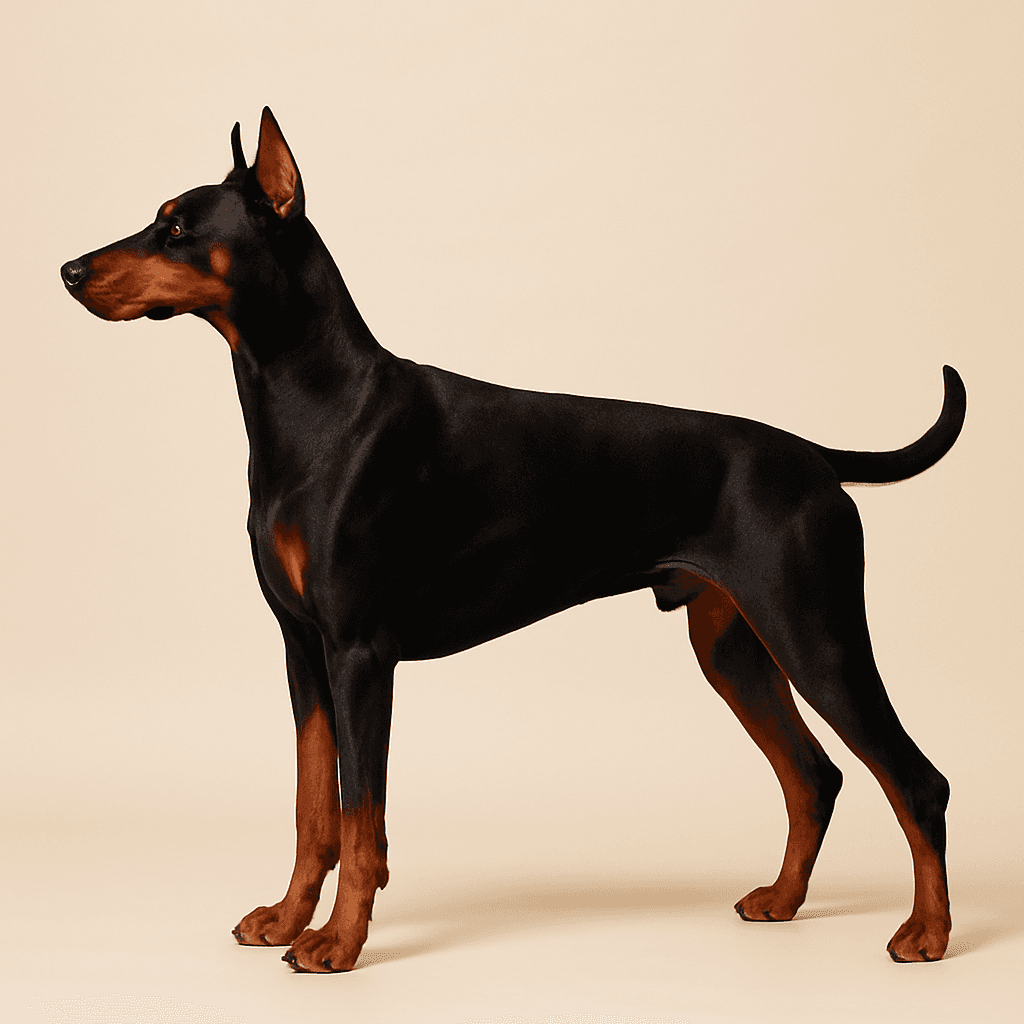
About the Dobermann
The Dobermann is an elegant, athletic and intensely loyal working dog registered by the Kennel Club in the Working Group. Developed in Germany in the 1890s by tax collector Louis Dobermann, who wanted a medium-large protection dog to accompany him on his rounds, the modern Dobermann retains that combination of athleticism, intelligence and deep loyalty to its owner that defined the breed from its earliest development. Dobermanns are a breed for committed, experienced owners. They are not difficult dogs in the sense of being aggressive or unpredictable when well-raised, but they have high exercise needs, a strong bond with their owner that requires proper management to prevent separation anxiety, and the most significant inherited cardiac condition of any large breed in the UK. Dilated Cardiomyopathy (DCM) is the defining health challenge for the Dobermann. It is a condition in which the heart muscle weakens and the chambers enlarge, progressively reducing the heart's ability to pump blood effectively. It is inherited in the Dobermann at very high rates, with research suggesting that the majority of the breed carry the relevant gene mutation. DCM can present as sudden collapse and death with no prior warning, or as a gradual decline in exercise tolerance. Annual cardiac screening through echocardiography and Holter monitor is the standard protocol. All breeding dogs should be screened, but owners of pet Dobermanns should also discuss cardiac monitoring with their vet from middle age onwards. Von Willebrand Disease (vWD) is a blood clotting disorder that occurs in the breed. A DNA test is available. Responsible breeders should test both parents. Affected dogs bleed more than normal from wounds and after surgery: this is manageable once known but must be communicated to any vet treating the dog. Dobermanns are not banned under the Dangerous Dogs Act 1991. They are subject to the standard requirement that all dogs be under control in public. For owners who understand and prepare for the health realities, the Dobermann is a remarkable companion. They are devoted, intelligent and highly trainable. Purchase prices from health-tested KC-registered breeders typically range from £1,000 to £2,000. Lifespan is typically 10 to 12 years, though DCM reduces average lifespan in affected individuals. The Dobermann Trust and Dobermann rescue organisations operate nationally. This is a breed that demands serious research and preparation, particularly around the cardiac health picture. Go in with full awareness, buy from a breeder who screens rigorously, set up annual cardiac monitoring from around age four, and you will have one of the most loyal and capable companions in the working dog world.
Quick facts
Meet Our Dobermanns
Register your dog on My Dog and it will appear here automatically.
Dobermann Photos
No photos yet. Be the first to share yours.
Add a photoActivity Feed
How much exercise does your Dobermann really need each day?
Two hours of vigorous activity, not just steady walking. My Dobermann runs with me, we do agility training twice a week, and he has structured off-lead sessions in a secure area. Road walking alone does not touch his energy. What I pay attention to now that he is older is his exercise tolerance, any sign of tiring faster than usual, or laboured breathing after normal effort, goes straight to the vet given the breed's cardiac history. Puppies need protecting: I was strict about the five-minutes-per-month-of-age guideline and avoided jumping and hard repetitive surfaces until his growth plates closed at around 18 months. Mental stimulation sits alongside physical exercise and is equally important. A physically tired Dobermann that is mentally under-stimulated will find his own entertainment, and you will not like it.
30 June 2026
Any health issues to watch for with Dobermanns?
Dilated cardiomyopathy is the one that every Dobermann owner needs to understand thoroughly. The heart muscle weakens progressively, and in Dobermanns DCM can present as sudden collapse with no prior warning or as gradual exercise intolerance. Studies suggest the majority of Dobermanns carry the associated mutation. I have my dog on annual cardiac screening from age four, echocardiography plus 24-hour Holter monitoring is the recommended protocol. Treatment manages rather than reverses the disease, but it can meaningfully extend quality life when caught early. Von Willebrand Disease is a blood clotting disorder with a DNA test available, check both parents. Hip dysplasia is assessed via the KC/BVA scheme. Wobbler Syndrome affects the cervical spine in some individuals. Monthly insurance typically runs £50 to £100. Lifespan is 10 to 12 years in well-managed individuals.
30 June 2026
What's the one thing you wish you'd known before getting a Dobermann?
That their emotional intelligence is astonishing and occasionally inconvenient. My Dobermann reads my mood more accurately than most people do. If I am stressed or uncertain he picks it up immediately and his behaviour shifts in response. In the early months when I was still finding my feet with a working breed of this capability, his sensitivity to my inconsistency made things harder than they needed to be. Calm, clear, confident leadership is not just good practice, it is genuinely what this dog needs to feel settled. The other thing I underestimated was the adolescent phase. He was a boisterous teenager for longer than I expected, and consistent training throughout that period was the only thing that prevented adolescent behaviours from becoming permanent. Dobermanns return serious investment in training with something exceptional.
30 June 2026
What do you feed your Dobermann, and why?
A high-quality large breed complete dry food, fed twice daily. Body condition I monitor weekly: ribs easy to feel, not visible, not buried under fat. He should be lean and muscular, not carrying excess weight, that extra load on the heart and joints matters for a breed with cardiac risk. I had a conversation with my veterinary cardiologist about taurine and L-carnitine supplementation, which some research has linked to DCM. We decided not to supplement without a specific clinical indication, but it is a conversation worth having with your vet rather than making that call yourself. I avoid exercise for an hour before and after meals. Deep-chested dogs and bloat is a real concern and I am not complacent about it.
30 June 2026
Dobermann of the Month
🏆 September 2026 -- Be the first nominee
Could be your dog.
The first dog registered in this community earns the first Dog of the Month nomination automatically.
Register your dogUpcoming Dobermann Meetups
No meetups planned yet. Be the first to organise one.
Sign in to organise a meetupCommunity Members
Be the first to join and become the Dobermann Founding Member.
Join Club