

Be the first to join. Keep the badge forever.
The first members of this community earn permanent Founding Member status. It shows on your profile and your dog's profile for as long as you're here.
- ✓Founding Member badge on your profile
- ✓Your dog featured first
- ✓First Dog of the Month nomination
- ✓Always free
⭐ Founding Member spots open
First to join gets the badge
🐕 Be the first dog registered
Add your Lab to the community
📷 Add the first photo
Start the photo wall
8
Discussions
0 members
8 discussions
About the German Shepherd
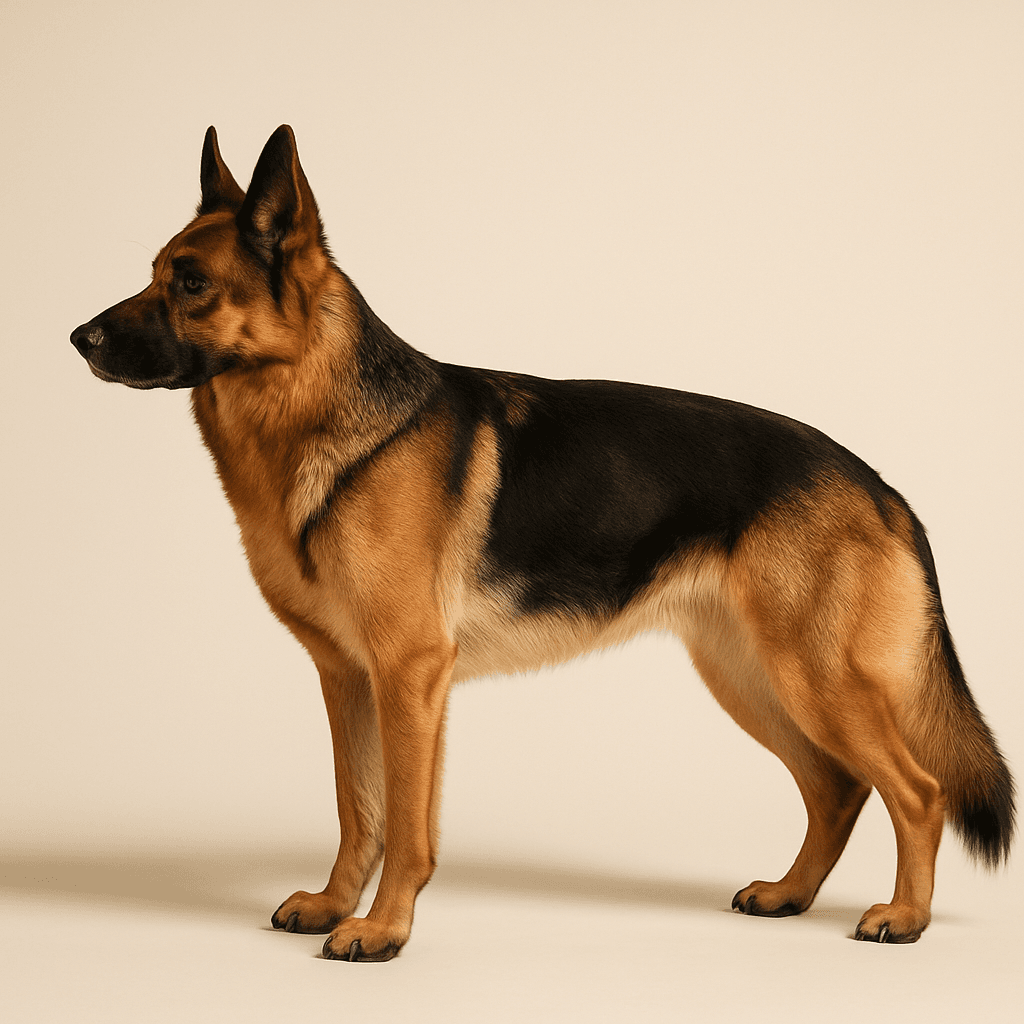
The German Shepherd Dog is one of the world's most versatile working breeds and one of the UK's most consistently popular, recognised by the Kennel Club in the Pastoral Group. Intelligent, loyal and deeply bonded to their families, German Shepherds have served as police and military dogs, search and rescue animals, assistance dogs, and household companions for over a century. Their ability to learn and their work ethic are genuinely exceptional: a German Shepherd with a job to do and a confident, experienced owner is a remarkable animal. A German Shepherd without sufficient mental stimulation and structured activity is a very different prospect. This is a breed that needs a purpose, not simply walks. Bored, under-stimulated German Shepherds can develop anxiety, destructive behaviour, excessive barking, and in some cases, reactivity. The working dog mentality that makes them so capable also means they are not well-suited to owners who are unable to dedicate significant time to training and engagement. German Shepherds are typically loyal and gentle with their own family, including children, but can be reserved or wary with strangers. This wariness is a characteristic of the breed rather than a fault: a well-socialised German Shepherd that has learned to read situations accurately is a confident, stable animal. Poor socialisation, on the other hand, can produce a dog that is fearful and reactive, which is both a welfare issue and a management challenge. Health considerations are significant. Hip dysplasia is endemic in the breed and is the primary reason the KC Hip Scoring scheme was developed. Exocrine Pancreatic Insufficiency (EPI) is a breed-specific digestive condition, and Degenerative Myelopathy is a progressive neurological condition that affects some German Shepherds in later life. Buying from a health-tested breeder is essential. Purchase prices from KC-registered, health-tested breeders typically range from £800 to £2,000, with working-line dogs from proven lines sometimes exceeding this. German Shepherds are in very high numbers in UK rescue, driven largely by owners who chose the breed without fully understanding its demands. German Shepherd Rescue Elite is one of the most prominent organisations working with the breed in the UK. In the right home, with experienced ownership, consistent training and structured daily activity, the German Shepherd is an outstanding companion and working animal. Few breeds match their combination of intelligence, loyalty and versatility. The commitment required is substantial, but for the right owner, the reward fully matches it. Typical lifespan is 9 to 13 years.
Quick facts
Meet Our German Shepherds
Register your dog on My Dog and it will appear here automatically.
German Shepherd Photos
No photos yet. Be the first to share yours.
Add a photoWhat German Shepherd Owners Need to Know About Health
German Shepherds have several known hereditary health issues that prospective owners should understand and that responsible breeders test for. **Hip dysplasia** is endemic in the breed and is the most important health consideration. The KC/BVA Hip Scoring scheme requires breeding dogs to be X-rayed and scored by a panel of experts; the breed mean score is around 18 to 19 (lower is better). Breeders should aim well below the breed mean. Hip dysplasia causes pain and reduced mobility and ultimately requires management or surgical intervention costing several thousand pounds. Elbow dysplasia is also assessed through the KC/BVA Elbow Grading scheme and should be evaluated in breeding dogs. **Exocrine Pancreatic Insufficiency (EPI)** is a breed-specific digestive condition in which the pancreas fails to produce sufficient digestive enzymes. Dogs with EPI cannot properly digest or absorb nutrients, leading to severe weight loss, large-volume loose stools and increased appetite despite eating normally. EPI is managed with daily enzyme supplementation: this is a lifelong cost but the condition is very manageable once diagnosed. Diagnosis and initial management typically cost £200 to £500. **Degenerative Myelopathy (DM)** is a progressive neurological condition that causes gradual weakness and paralysis of the hindlimbs, typically presenting in middle-aged to older dogs. A DNA test is available that identifies dogs at risk. There is no cure, but physiotherapy and mobility aids can support quality of life. **Gastric Dilatation-Volvulus (GDV or bloat)** is a life-threatening emergency in which the stomach fills with gas and twists. German Shepherds, as a deep-chested breed, are at elevated risk. Emergency surgical treatment costs £3,000 to £8,000. **Perianal fistulas** are chronic ulcerating lesions around the anus that are disproportionately common in the breed and often require long-term management. Monthly insurance typically costs £50 to £100 for comprehensive lifetime cover. Typical lifespan is 9 to 13 years.
German Shepherds are one of the breeds where pet insurance is strongly recommended from day one. Compare German Shepherd insurance
Activity Feed
How much exercise does your German Shepherd really need each day?
Two hours, and I treat that as the floor, not the target. My German Shepherd gets a long morning walk, usually 45 to 60 minutes of varied terrain with off-lead time in a safe area, and a second session in the afternoon or evening. But the thing I have learned is that pure walking is not enough. She needs mental engagement alongside physical exercise or she is still restless by evening. I add scent work, retrieve training and structured obedience into the week and that combination is what actually settles her. Scent work in particular tires her far more efficiently than distance ever does. For puppies, the guidance I followed was five minutes per month of age twice daily, and I deliberately avoided road running or repetitive impact exercise until she was 18 months old. With the hip dysplasia rates in the breed, protecting growing joints felt like a sensible investment. She is not a breed for a small flat or a low-activity household.
30 June 2026
Any health issues to watch for with German Shepherds?
Hip dysplasia is the one to understand first. It is endemic in the breed and responsible breeders score both parents through the KC and BVA Hip Scoring scheme. The breed mean sits around 18 to 19; I would want to see both parents scoring well below that. Elbow dysplasia should also be graded. Beyond joints, Exocrine Pancreatic Insufficiency is a breed-specific condition worth knowing about. EPI means the pancreas stops producing enough digestive enzymes, and the signs are dramatic weight loss, loose voluminous stools and hunger despite eating well. It is manageable with daily enzyme supplementation, but it is a lifelong cost. Degenerative Myelopathy is a progressive neurological condition that can be tested for via DNA. Bloat is a genuine emergency risk in deep-chested breeds, and knowing the signs, a rapidly bloating abdomen, distress, unproductive retching, could genuinely save your dog's life. Monthly insurance typically runs £50 to £100 for comprehensive lifetime cover. Do not cut corners on this.
30 June 2026
What's the one thing you wish you'd known before getting a German Shepherd?
How completely critical those first 16 weeks are. Not just important, genuinely critical. My German Shepherd's adult confidence, her calmness around strangers, her ability to handle new environments without anxiety: all of it was shaped in that early socialisation window. I took it seriously and it paid off. I have met German Shepherds whose owners did not, and the difference in the adult dog is stark. Fear-based reactivity in a large, fast, powerful dog is a serious management problem that is very hard to fully resolve later. The other thing I wish someone had told me is that this breed learns at speed in both directions. She picked up every good habit I taught her quickly, and she picked up every bad habit I allowed just as quickly. Consistency is not optional with a dog this intelligent. I would also say: get a trainer involved from puppyhood and look for someone who understands the breed. The investment pays for itself many times over.
30 June 2026
What do you feed your German Shepherd, and why?
I use a high-quality complete large breed dry food, and I was careful during the growth phase to use a large breed puppy formula specifically. Large breed puppy foods are formulated to support controlled growth, which matters for a breed with known joint problems. I did not want to accelerate her growth with a food too high in calories or calcium. As an adult, she does well on a high-protein diet. I know German Shepherd owners who feed raw successfully, but I have not gone that route because getting the nutritional balance right without professional guidance makes me uncomfortable. The one thing I do consistently is avoid feeding her within an hour of exercise in either direction, because of the bloat risk in deep-chested breeds. I also feed two meals rather than one large meal daily, again to reduce bloat risk. I keep her lean, which protects her hips. Body condition is something I assess weekly with my hands, not just my eyes.
30 June 2026
German Shepherd of the Month
🏆 September 2026 -- Be the first nominee
Could be your dog.
The first dog registered in this community earns the first Dog of the Month nomination automatically.
Register your dogUpcoming German Shepherd Meetups
No meetups planned yet. Be the first to organise one.
Sign in to organise a meetupCommunity Members
Be the first to join and become the German Shepherd Founding Member.
Join Club